Enhancing Student Learning with AI-Powered Image Features
Andy Szeto
Plaza de Toros de la Real Maestranza de Caballería de Sevilla, a Bullring in Seville, Spain. Photo Credit: Andy Szeto
Artificial[HB1] intelligence (AI) is transforming the way we approach education, providing tools that enhance student engagement and make abstract concepts more accessible. One such innovation is AI-powered image recognition, which has the potential to revolutionize real-world learning experiences, from understanding historical documents to visualizing complex ideas.
Instant insights: enhancing real-world learning
My recent experience in Seville, Spain, underscores how AI can make learning more dynamic and personal. While traveling with my family in Seville, Spain in August 2024, my soon-to-be teenage daughter turned to me as we stood inside a bullfighting ring and asked, “Hey dad, what do the two red circles mean?” I acknowledged my lack of knowledge on the matter but soon recognized that AI could provide valuable assistance.
Using my paid version of ChatGPT, I uploaded a picture of the bullring, and within moments, the answer appeared. The red circles in the Plaza de Toros de la Real Maestranza are reference points used during bullfighting events, helping the matador and participants position themselves during key stages of the fight. ChatGPT’s photo upload feature, available in its paid version, allowed artificial intelligence to analyze the image quickly and provide a detailed answer to my question, which amazed us both. My daughter was excited to learn this fact, while I marveled at the power of AI in delivering such precise information. This moment highlighted how AI could revolutionize education, by promoting independent learning and engaging students with real-world questions, both inside and outside the classroom.
AI in historical research
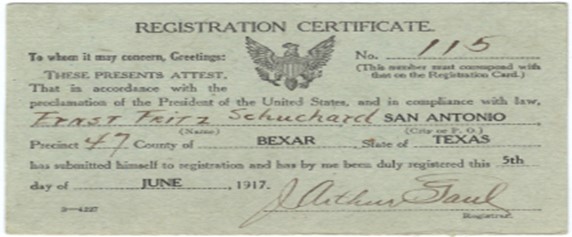
This small but powerful moment made me reflect on the broader implications of AI in education. Beyond answering real-world questions, AI can also assist students in engaging with historical materials in new ways, such as transcribing handwritten documents or visualizing historical events. Students can utilize AI image recognition features to enhance their understanding of historical archival materials by uploading images of primary sources, such as draft cards, census records, or letters, into an AI system. These AI tools can process and analyze a wide range of documents, extracting key details such as names, dates, locations, and occupations that are often embedded in handwritten or faded text. This process allows students to work more independently with primary sources, reducing the manual effort needed to transcribe difficult-to-read documents, particularly those written in older or cursive styles.
While the technology is not flawless—certain handwriting styles, ink smudges, or document wear can cause errors—it offers substantial support, especially for novice researchers who might otherwise find these documents inaccessible. For example, students could create a prompt like, ‘Find attached an image, and extract every piece of information from the draft card,’ to encourage the AI to analyze the content in detail. This could include not just the soldier’s name and registration date, but also contextual clues like regional differences in draft registration forms or patterns in the types of exemptions requested.
Furthermore, by leveraging AI’s ability to scan and highlight particular elements, such as identifying a certain region mentioned or flagging unfamiliar terms, students can dive deeper into their analysis. In a classroom setting, teachers can encourage students to compare their own interpretations of a primary source with the AI-generated output, sparking discussions on the reliability and limits of technology in historical research. Through this process, students gain a more hands-on approach to examining archival documents, enhancing their critical thinking skills and historical inquiry capabilities (UTSA Institute of Texan Cultures, 2017)
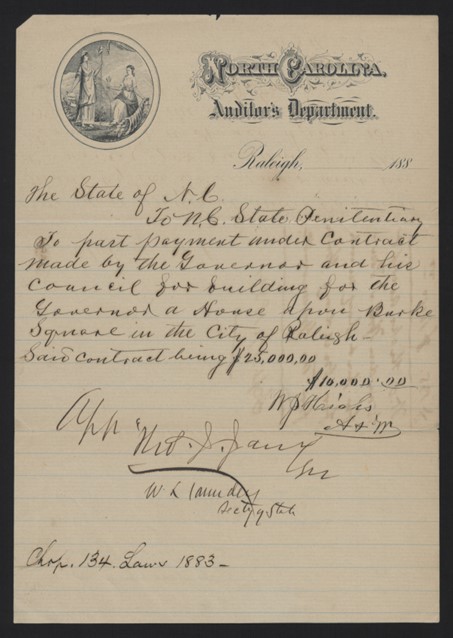
Similarly, AI can help students transcribe historical handwriting, assisting them in reading handwriting from primary sources. For instance, a student may struggle to read government records, such as those about the Governor’s Mansion in North Carolina, detailing the cost of a house in Raleigh for the governor. In this case, AI can assist with the transcription (North Carolina Digital Collections, 2024). Additionally, AI can help students with cursive handwriting, making it easier for them to understand cursive text, which is often seen in older documents. Again, this technology, like extraction, is not perfect but is useful in supporting students as they delve into historical records. This allows for a deeper exploration of historical documents by aiding in the extraction of text and details that might otherwise be difficult to read manually.
WWI Draft Registration Certificate for Ernst Fritz Schuchard, issued June 5, 1917, in Bexar County, Texas
Governor’s Mansion: Payment to Penitentiary for Construction of Governor’s Mansion and Payment for Yard Work
An AI-generated Image depicting Election Day, November 1884, inspired by Walt Whitman’s poem.
Visualizing historical events and concepts
Beyond text recognition, AI’s image generation capabilities further enrich student learning by bringing historical concepts to life. By transforming abstract texts, like Whitman’s poetry, into visual scenes, students can engage more emotionally and intellectually with the material. Using AI’s image generation feature to create an illustration inspired by Walt Whitman’s poem Election Day, November 1884 offers a powerful and engaging experience. The poem reflects the importance of civic duty and voting rights during a significant moment in 19th-century America, when the concept of suffrage was expanding, but not yet fully inclusive. Through imagery rooted in historical contexts—voters gathered at polling places, and the somber, reflective mood of Whitman’s work—the visuals deepen students’ understanding of the era’s political and social dynamics.
This process highlights how visual learning can enhance comprehension of abstract or complex ideas, such as the evolution of voting rights and the struggles for representation. By turning Whitman’s words into visual scenes, students can grasp the weight of these moments in American history more profoundly. The combination of poetry and historical imagery helps students emotionally engage with the topic, making the importance of suffrage and the responsibilities of citizenship more tangible.
Beyond aiding comprehension, AI-generated image tools offer creative opportunities for students to engage with historical texts and events. For example, students can generate visuals that reflect their interpretations of political movements or historical milestones, giving a personal touch to their learning. By visualizing historical settings, they can immerse themselves in the world of 19th-century America, imagining what it might have felt like to be at the center of political change. This not only brings history to life but also encourages students to think critically about the significance of voting rights in a democratic society.
Data interpretation and visualization
Using the image analysis feature to teach data interpretation and visualization is an effective way to engage students in real-world data analysis across multiple disciplines, including economics. For instance, beginning with a handwritten data table, such as voter turnouts for a local election by demographic groups from 2011 to 2015, teachers can guide students in reading, interpreting, and analyzing the data from the image. This activity can extend into mathematics by encouraging students to calculate growth rates, percentages, and year-over-year comparisons. For example, students might calculate the percentage increase in voter turnout for Asian Americans in the five-year period or determine the rate of decline for another demographic group, applying key concepts from algebra and statistics.
Once the data is understood, it can be converted into a graph using tools like Python, Excel, or other data analysis software. In this case, a line graph might be created to visualize trends in voter turnouts.
As another example, students can use data analysis tools to explore economic principles, such as by examining a company’s online sales data. They can utilize the image feature to create graphs that illustrate trends, such as a clear rise in online sales alongside a decline in phone sales over the years. This step could serve as a foundation for discussions around key economic concepts like supply and demand, market shifts, and consumer behavior. Students can also analyze the economic factors that may have driven the increase in online sales, such as the availability of faster internet services or changing consumer preferences for convenience.
Conclusion: The transformative power of ai image generators in education
From answering spontaneous questions in a bullring to transcribing historical documents, AI tools help make learning more relevant and personalized. These innovations empower students to interact with their studies in a hands-on way, fostering critical thinking and independent exploration.
AI-powered tools, such as image generators and recognition features, are transforming education by making abstract concepts more tangible and promoting real-world problem-solving. From my personal experience using AI to answer a question in a bullfighting ring in Seville, to students transcribing historical documents or interpreting data, AI fosters engagement and critical thinking across disciplines. It enhances inclusivity by providing personalized support, particularly for multilingual learners. As educators integrate AI into their practices, they can create more dynamic, interactive, and meaningful learning experiences that equip students with the skills needed to thrive in a complex world.
Virtual Reality as part of Inquiry into the Boston Massacre
Russell G. Hammack, Elizabeth K. Wilson, Lisa Matherson
One of the major catalysts that began the American Revolution was the Boston Massacre. This event enraged the local colonial citizens after the increase in taxation and occupation of Boston by the British military. In March 1770, local citizens began to protest against the British by throwing snowballs and rocks on King Street (Reid, 1974). During this event, several British soldiers led by Captain Thomas Preston were detached to quell the conflict (Kellogg, 1918). However, the arrival of the British soldiers only further angered the colonials on King Street. Whether ordered, or unintentionally discharged, the British soldiers fired on the crowd. “On this, the Captain commanded them to fire; and more snowballs coming, he again said, damn you, fire, be the consequence of what it will (The Boston Gazette,1770, p.1). This resulted in the deaths of five colonists, including Crispus Attucks, and the wounding of six others (The Boston Gazette,1770). This article aims to provide social studies teachers the resources using virtual reality experiences as part of an investigative lens to teach the Boston Massacre while integrating the C3 framework of inquiry-based instruction.
Background
In 1767, the British government passed the Townshend Acts, which placed an additional tax on imported goods to the American colonies (Hinderaker, 2017). Although the British crown considered the tax a success, protests and boycotts began throughout the colonies, specifically in Boston. To end the colonial protests, the British government responded in 1769 by sending nearly 2,000 British soldiers to occupy Boston and enforce the tax mandate (Hinderaker, 2017). “Reports of fighting between soldiers and civilians had been a staple of the Patriot press during the period, but, for the most part, local publications portrayed civilians as the victims of military aggression and praised the town and its leaders for restraining their anger at the abuse” (Messer, 2017, p. 509). By 1770, resentment for the British occupation exploded, resulting in the Boston Massacre. “By this fatal manoeuvre three men were laid dead on the spot and two more struggling for life; but what showed a degree of cruelty unknown to British troops, at least since the house of Hanover has directed their operation, was an attempt to fire upon or push with their bayonets the persons who undertook to remove the slain and wounded” (The Boston Gazette,1770, p.1).
Inquiry-based learning
Inquiry-based learning involves student-led investigations with proposed questions, collecting and analyzing data, and forming evidence-based arguments while the teacher is facilitating the inquiry process (Hmelo-Silver, Duncan, & Chinn, 2007). Inquiry allows learners to examine authentic problems and enhance their understanding (Wirkala & Kuhn, 2011). Levy, Thomas, Drago, and Rex (2013), affirm that inquiry promotes academic investigation and the creation of evidence-based argumentation. Inquiry-based instruction builds upon disciplinary questioning, investigative evaluation, and reflection to develop and defend ideas and concepts (NCSS, 2013). Inquiry-based instruction centers on analyzing information, using evidence to develop arguments and support conclusions (Monte-Sano, 2010). Despite the framework, having students ask meaningful questions and draw conclusions from various sources leads to increased social studies content knowledge (Grant & Gradwell, 2010). However, inquiry-design should incorporate content-related questions, summative tasks in which arguments are developed, sources to support arguments that are constructed, and taking informed action where students take action on a contemporary issue (Grant, Swann, & Lee, 2017).
Virtual Reality vs. augmented reality: What is the difference?
The birth of VR and AR, as cited within most research, began in the 1960s with the work of graphics pioneer Ivan Sutherland (Bolter, Engberg, & MacIntyre, 2021). With the technological advances that have happened since that time, many state what Sutherland created was more aligned to AR than VR, but it paved the way for VR. AR and VR were “twins when birthed as they began as variations of the same technological idea” (Bolter, Engber, & MacIntyre, 2021, p 22).
So, what exactly is AR and VR?
Virtual Reality (VR): “an artificial environment which is experienced through sensory stimuli (such as sights and sounds) provided by a computer and in which one’s actions partially determine what happens in the environment” (Jerald, 2015).
Augmented Reality (AR): “AR allows the user to see the real world, with virtual objects superimposed upon or composited with the real world. Therefore, AR supplements reality, rather than completely replacing it” (Azuma, 1997)
Improvements in computing power, software capabilities, and display technologies allowed VR and AR to become mediums with great promise. Afterall, we have seen what Hollywood has been able to do with this technology. Simply watch a George Lucas or Pixar movie. These possibilities have found their way into the world of education, such as the Boston Massacre which we highlight in this article.
The experiential learning of VR
One aspect of using virtual reality is creating a classroom environment where learners can feel more present in a virtual simulation than in other types of traditional learning (Kafai, 2006). Virtual agents allow a personalized learning experience tailored to individuals that might otherwise be expensive or unreachable (Baylor & Kim, 2005). These three-dimension virtual experiences provide sensory information for a more realistic and engaging immersion experience (Pstoka, 1996; Walshe & Driver, 2019). Thus, the user can be part of the virtual environment by performing actions (Bardi, 2019). This type of environment promotes learning about the past through the delivery of digital media and incorporating specific exhibits and artifacts from different historical sites (Harley, Poitras, Jarrell, Duffy, & Lajoie, 2016). “By using realistic virtual depictions of dangerous crises, learners can experience the chaos and affective stressors that are typically accompanied with actual crises” (Bailenson, Yee, Blascovich, Beall, Lundblad, & Jin, 2008, p. 110). This type of augmented reality experience can immerse learners into the past with reeling life settings for engagement (Bronack, 2011). These virtual experiences offer opportunities for student investigations and real-life encounters not experienced in a traditional classroom (Christensen, Horn, & Johnson, 2008). Additionally, 3-D virtual environments can bridge the gap between experiential learning and representation in learning (Jonassen, Peck, & Wilson, 1998).
VR devices
A trip into any store that offers for purchase a VR device will prove that there are a plethora of devices from which to select. The selection choice will depend on the type of experience you wish to have through the use of the device. After researching several articles, reviews, and personal trials, we offer three options below – a high, medium, low, if you will. However, we realize that most educators have very little funding and will look for the cheaper options. The experiences offered by the cheaper options, while not the same as the most expensive, are experiences that can still be valuable to students.
Low
Google Cardboard (https://arvr.google.com/cardboard/) The Google Cardboard is one of the most affordable options at around $10.00. The headset is really a holder for the smartphone, which is where all the content plays. The content available for this headset is mostly free and more readily available than others.
Medium
VR Headset for iPhone & Android + Android Remote 1.0 – for Kids (https://www.amazon.com) This mid-range VR option is $59.99. This headset is a smartphone VR system that supports both apple and android products. The content and applications are also mostly free and more readily available.
High
Oculus Meta Quest 2 – (Meta.com) The Oculus Meta 2, at $399, offers a more robust VR experience in that audio is inside the headset and hand tracking with the controllers. Another option from this device is that you can connect to a PC via a cable to access more experiences from the library of apps and games.
Before purchasing a device, you should review each device and make your selection based on what you wish for your students to gain from the experience.
The IDM
To critically evaluate the Boston Massacre, we propose using a model of inquiry; the Inquiry Design Model (C3 Teachers, 2016). Within this model of inquiry, we plan to implement the richness of a virtual reality experience. “The IDM approach, like the C3 Framework, respected the integrity of the core social studies disciplines but also recognized that authentic learning in social studies classrooms necessitated the interdisciplinary pursuit of a compelling question” (Cuenca, 2021, p.301). For teachers using the IDM, three major components must be considered: developing compelling and supporting questions, exposing students to resources, and developing tasks and informed activation activities (Crowley and King, 2018). “Beginning with a compelling question and standards alignment, the model suggests a series of supporting questions, related formative performance tasks, and sources for completing these tasks” (Molebash, Lee, & Heinecke, p.23, 2019). Cuenca (2021) stated:
Based on the nature of the compelling question, the tasks had different purposes, such as developing research, writing, and/or deliberative skills. Regardless of the purpose of the tasks, the inquiry narratives consistently featured teachers scaffolding tasks to ensure that students were able to address the compelling question they were pursuing. In short, teachers were often asked to facilitate how students organized inquiries to help them progressively become more skilled and independent enquirers (p. 306).
“The assumption is that teachers can take a blueprint and make it their own because they know their students’ strengths, they have their preferred style of teaching, and they understand their teaching context better than a curriculum writer” (Swann, Danner, Hawkins, Grant, & Lee, p.233, 2020). Swann, Lee, and Grant (2018) contend that:
The original IDM blueprint is structured so that students explore a compelling question through supporting questions, formative and summative performance tasks, and a range of disciplinary sources. The inquiry crescendos into an evidence-based argument, which can be broadened through an expressive extension and/or a civic experience. Teachers play an important role in this process by engaging students in the compelling question, scaffolding their source work, and ensuring they are mastering the content and developing skills through the successive formative performance tasks (p.134).
Our IDM
For this specific inquiry-based learning segment, we have decided to use the richness of primary resources infused along with the experiential learning of virtual reality. At the start of the inquiry, teachers can select a topic from their state standards. For this inquiry, we have chosen the Boston Massacre. After selecting a standard and topic, the classroom teacher can begin to develop a compelling question. Our compelling question is: how did the Boston Massacre become one of the sparks that started the American Revolution? The compelling question is an overarching question that will take several days of instruction as part of a learning segment to answer fully. To begin the inquiry with students, there is an introductory activity called staging the question. We decided to have students watch a short video clip and then answer the following question: Who was responsible for the massacre and bloodshed on King Street in Boston?
For each day of instruction, the inquiry is divided into supporting or daily questions. Formative tasks to help answer the supporting questions along with featured resources, such as primary documents and virtual reality resources are used for each supporting question. For the first day, our supporting question is: what events led to the Boston Massacre? Students are asked to construct a timeline leading up to the Boston Massacre, thus, providing information on events and actions before the Boston Massacre. Students are provided with a list of primary resources and applications for developing the timeline. For the second day of the inquiry, students will answer: what were the colonists’ perceptions of the Boston Massacre? Students will be placed into groups, Colonists and British soldiers, and conduct a primary document analysis and watch a VR video on the Boston Massacre using VR headsets. After watching the VR experience on the Boston Massacre, students will be asked to construct a reflective journal on what happened on King Street. This will give students a unique perspective of each group, leading to historical empathy. For the third day of the inquiry, students will be asked: what happened to the British soldiers that killed the colonists on King Street? After examining the featured primary resources, students will be asked to develop a judicial debriefing summarizing the Boston Massacre trial.
To assess students, the IDM offers the opportunity to participate in performance-based assessments geared toward answering the compelling question. Our performance assessment will divide students into three groups: Tensions rising (emphasizing events before the Boston Massacre), the Boston Massacre, and the Boston Massacre Trial. Each group will be assigned the task of conducting a live simulation/reenactment of their event in class. The reenactment should be no longer than 3-5 minutes. In an optional performance-based assessment, as part of the IDM, students will create and design their video of the Boston Massacre using a variety of AR and video resources. For social studies teachers, both assessments could be used as a student option or as a classroom extension.
At the end of the inquiry is the portion that provides tremendous relevancy to the curriculum, the informed action. For this part of the inquiry, we asked students to use their personal experiences with virtual reality and augmented reality and choose a local or community issue of concern. Students will design an augmented reality presentation or show, using Google Street View, displaying the issue in a community forum or school blog. Students might invite parents, teachers, and community leaders to discuss the issue and offer potential solutions.
Inquiry Design Model (IDM) Blueprint™
Compelling Question
How did the Boston Massacre become one of the sparks that started the American Revolution?
Standards and Practices
Social Studies Course of Study- State Standards Grade 5 Standard 7 Determine causes and events leading to the American Revolution, including the French and Indian War, the Stamp Act, the Intolerable Acts, the Boston Massacre, and the Boston Tea Party. Grade 10 Standard 3 Trace the chronology of events leading to the American Revolution, including the French and Indian War, passage of the Stamp Act, the Boston Tea Party, the Boston Massacre, passage of the Intolerable Acts, the Battles of Lexington and Concord, the publication of Common Sense, and the signing of the Declaration of Independence.
Staging the Question
Using a video clip on the Boston Massacre, pose the question to the students, Who was responsible for the massacre and bloodshed on King Street in Boston? https://www.youtube.com/watch?v=m2QNZf_8V_w
Supporting Question 1
Supporting Question 2
Supporting Question 3
What events led to the Boston Massacre?
What were the colonists’ perceptions of the Boston Massacre?
What happened to the British soldiers that killed the colonists on King Street?
Formative Performance Task
Formative Performance Task
Formative Performance Task
Students will construct a timeline leading up to the Boston Massacre; thus, providing information on events and actions prior to the Boston Massacre.
After watching the VR experience on the Boston Massacre, the class will be divided into two groups; Colonists and British soldiers. Based on the students’ perspective of the primary sources provided, including the VR video, students will be asked to construct a reflective journal on what happened on King Street.
After examining the featured sources, students will be asked to develop a judicial debriefing summarizing the Boston Massacre trial.
The teacher will divide students into three specific groups: Tensions rising (emphasizing events before the Boston Massacre), the Boston Massacre, and the Boston Massacre Trial. Each group will be assigned the task of conducting a live simulation/reenactment of their event in class. The reenactment should be no longer than 3-5 minutes.
From using their personal experiences with virtual reality and augmented reality, students will choose a local or community issue of concern. Students will design an augmented reality presentation or show, using Google Street View, displaying the issue in a community forum or school blog. Students might invite parents, teachers, and community leaders to discuss the issue and offer potential solutions. Google Streetview https://www.google.com/streetview/
The purpose of this article is to provide a framework of inquiry, while using virtual reality to investigate the Boston Massacre. By advancing through the inquiry, students can develop a constructivist approach to their own historical knowledge and their personal experiences through the historical immersion of virtual reality (Wadsworth, 2004). In addition, students can further their technology-based skills by developing their own augmented reality video. The informed action portion of the IDM model gives civic meaning by addressing the community issues and problems, thus, promoting active citizenship. By transforming social studies classrooms into places where students can express these civic principles, democratic citizenship begins (Dewey, 1918). Our aspiration is to give social studies teachers the needed instructional resources, especially virtual reality, to be part of the overall historical learning experience for students. By using VR, students can further investigate and build their own historical knowledge.
Bailenson, J. N., Yee, N., Blascovich, J., Beall, A. C., Lundblad, N., & Jin, M. (2008). The Use of Immersive Virtual Reality in the Learning Sciences: Digital Transformations of Teachers, Students, and Social Context. The Journal of the Learning Sciences, 17(1), 102–141.
Baylor, A. L., & Kim, Y. (2005). Simulating instructional roles through pedagogical agents. International Journal of Artificial Intelligence in Education, 15(1), 95-115.
Bronack, S. C. (2011). The role of Immersive Media in online education. The Journal of Continuing Higher Education, 59(2), 113–117. https://doi.org/10.1080/07377363.2011.583186
Crowley, R., & King, K. (2018). Making Inquiry Critical: Examining Power and Inequity in the Classroom. Social Education, 82(1), 14–17.
Cuenca, A. (2021). Proposing Core Practices for Social Studies teacher education: A qualitative content analysis of inquiry-based lessons. Journal of Teacher Education, 72(3), 298–313. https://doi.org/10.1177/0022487120948046
Christensen, C. M., Horn, M. B., & Johnson, C. W. (2008). Disrupting Class: How disruptive innovation will change the way the world learns. McGraw-Hill.
Dewey, J. (1916). Democracy and Education. New York: Macmillan.
Grant, S. G., & Gradwell, J. M. (Eds.) (2010). Teaching history with big ideas: Cases of ambitious teachers. Rowman & Littlefield.
Grant, S. G., Swann, K., & Lee, J. (2017). Inquiry-based practice in Social Studies Education: Understanding the inquiry design model. Routledge.
Harley, J. M., Poitras, E. G., Jarrell, A., Duffy, M. C., & Lajoie, S. P. (2016). Comparing virtual and location-based augmented reality mobile learning: emotions and learning outcomes. Educational Technology Research and Development, 64(3), 359–388.
Hinderaker, E. (2017). Boston’s Massacre. Cambridge, MA: The Belknap Press.
Hmelo-Silver, C. E., Duncan, R. G., & Chinn, C. A. (2007). Scaffolding and achievement in problem-based and inquiry learning: A Response to Kirschner, Sweller, and Clark (2006). Educational Psychologist, 42(2), 99-107.
Jonassen, D. H., Peck, K. L., & Wilson, B. G. (1998). Learning with Technology: A Constructivist Perspective. Merrill.
Kafai, Y. B. (2006). Playing and making games for learning: Instructionist and Constructionist perspectives for game studies. Games and Culture, 1(1), 36–40. https://doi.org/10.1177/1555412005281767
Kellogg, L. P. (1918). The Paul Revere Print of the Boston Massacre. The Wisconsin Magazine of History, 1(4), 377–387.
Levy, B. L., Thomas, E. E., Drago, K., & Rex, L. A. (2013). Examining Studies of Inquiry-Based Learning in Three Fields of Education. Journal of Teacher Education,64(5), 387-408. https://doi.org/10.1177/002248711349643
Messer, P. (2017). “A scene of Villainy acted by a dirty Banditti, as must astonish the Public”: The Creation of the Boston Massacre. The New England Quarterly, 90(4), 502–539.
Molebash, P., Lee, J., & Heinecke, W. (2019). Teaching and Learning Inquiry Framework. Journal of Curriculum and Teaching, 8(1), 20–31. https://doi.org/10.5430/jct.v8n1p20
Monte-Sano, C. (2010). Disciplinary literacy in history: An exploration of the historical nature of adolescents’ writing. Journal of the Learning Sciences, 19(4), 539-568.
National Council for the Social Studies. (2013). College, career, and civic life (C3) framework for state social studies standards. Washington, DC: NCSS.
Psotka, J. (1996). Immersive training systems: Virtual reality and education and training. Instructional Science, 23, 405-423.
Reid, J. P. (1974). A Lawyer Acquitted: John Adams and the Boston Massacre Trials. The American Journal of Legal History, 18(3), 189–207.
Swann, K., Danner, A., Hawkins, M., Grant, S. G., & Lee, J. (2020). Zooming Inquiry: Online Teaching with the Pomodoro Technique. Social Education, 84(4), 229–235.
Swann, K., Lee, J., & Grant, S. G. (2018). Questions, Tasks, Sources: Focusing on the Essence of Inquiry. Social Education, 82(3), 133–137.
Walshe, N., & Driver, P. (2019). Developing reflective trainee teacher practice with 360-degree video. Teaching and Teacher Education, 78, 97–105.
Wadsworth, B. J. (2004). Piaget’s theory of cognitive and affective development: Foundations of Constructivism. Longman. Wirkala, C., & Kuhn, D. (2011). Problem-based learning in K-12 education: Is it effective and how does it achieve its effects? American Educational Research Journal, 48(5), 1157-1186
Reviewed by Hank Bitten, NJCSS Executive Director and contributing author.
I am writing to you as a contributing author to Interdisciplinary Teaching and Teacher Education rather than as a reviewer. Through this blog post I am hoping to expand your classroom experience, ask you to begin talking about classroom instruction with your colleagues, and challenge you to develop partnerships or connection groups within and outside of your school. I have the perspective of an educator with more than a half-century of experience as a teacher in elementary, middle, high school, and college classrooms and five school districts.
Public education took a step forward in 1852 when Massachusetts became the first state to pass an Act Concerning the Attendance of Children at School. This was a monumental change because every village and city in Massachusetts was required to have a primary school to teach math and grammar. Students were required to be in school for three months with six weeks or more of continued instruction. Parents who did not send their children between age 8 to 14 to school were fined $20, a little more than a week’s wage for a factory worker. Lessons were passive and based on memory and practice.
Fifty years later in the beginning years of the 20th century, John Dewey dramatically shifted the focus to inquiry and problem-solving. Dewey’s instructional philosophy included brainstorming for solutions, testing hypothesis, experiential learning, and models of student government. His model was revolutionary, emphasized an understanding of the big ideas rather than simplistic true and false or multiple choice answers.
William James, a psychologist, understood the influences of the media on children. Children were exposed to advertising and pictures in newspapers and magazines. The media in the beginning of the 20th century was perhaps just as powerful as today’s social media digital platforms as publications overwhelmed the mailbox of the home instead of the inbox on the phone. James understood motivation, the importance of emotional engagement in learning, and the importance of the educational environment on the character and behavior of students.
My college instruction in the 1960s was influenced by Jerome Bruner. The emphasis was on cognitive growth and a constructivist model of learning. We were taught concepts and how to use relevant experiences to bring meaning to the content in the curriculum. One of the lessons I applied from Jerome Bruner to the teaching of social studies was the influence of culture on how students learn.
My education as a teacher was influenced by the sociologist James Coleman. I developed simulations for understanding the big ideas of revolution, social classes, perspectives, and historical changes. I applied my college experiences of debate, Model United Nations, Model Congress, and Mock Trial to simulations of battles, problems in society, and decisions of presidents. My graduate studies focused on the French Revolution and the insights of The Anatomy of a Revolution by Crane Brinton.
It is in the context of my simulation game, France, 1789, that interdisciplinary instruction became the focus of my teaching of world history, United States History, and African American History. I integrated literature, art, film, and music into my lessons. The engagement of my students was visible and they were applying knowledge and memory to their experiences.
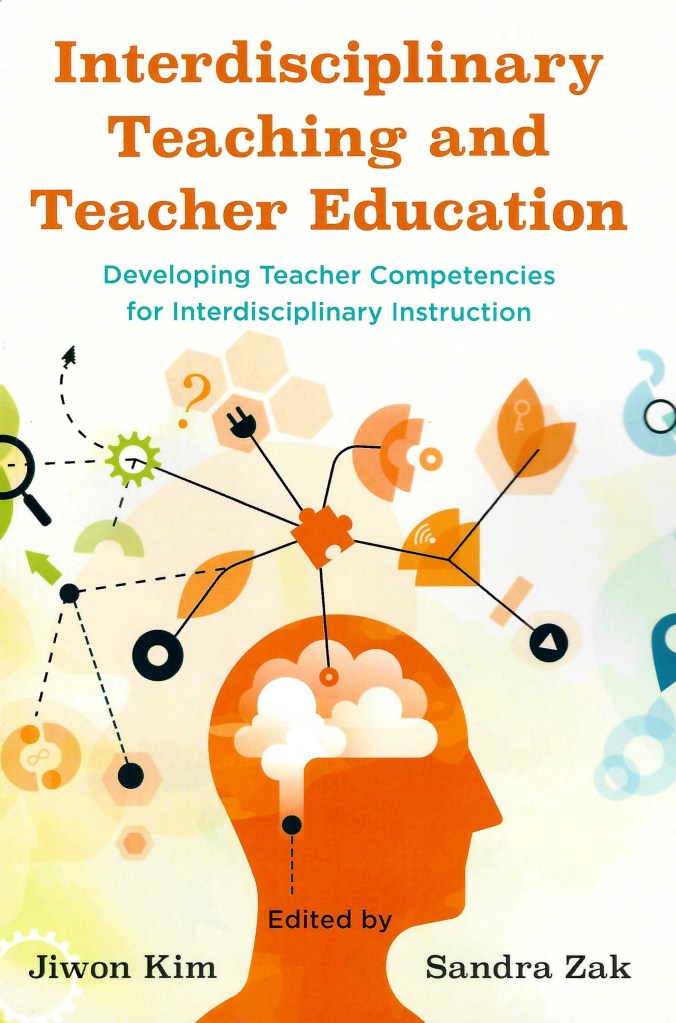
Dr. Jiwon Kim and Dr. Sandra Zak provide a practical guide with explicit examples of how interdisciplinary models in classrooms and school are essential to learning in a Tik Tok culture and why teachers in departments, faculty in smaller schools, and professors of education need to have discussions about the effectiveness of teaching and the extent that students are learning.
The main concern of social studies teachers is that their students cannot write. We observe children asking Google for answers, completing assignment worksheets in Google Classroom, and engaging with short videos on BrainPOP and YouTube. My response to teachers who share with me their observations about how their students are learning in middle school and high school is that they need to be taught how to think before they can write. They need to be asked open-ended questions before they can express what they are thinking. They need to build memory through interdisciplinary learning experiences.
Interdisciplinary education and interdisciplinary instruction are similar and yet very different experiences for students. In Chapter 3, Christine Grabowski presents graphic models for planning and practical examples of interdisciplinary connections between social studies, math, reading, and art. Below are examples relating to civic engagement and spatial recognition.
In Chapter 4, I provide explicit examples for teaching climate, U.S. History, Civics, and world history. Intradisciplinary models with integration of geography, economics, and culture provide students with both relevance and engagement. Below is an example of the diverse contributions of people from New Jersey who have impacted the lives of ordinary people.
Here is an example from social studies for a lesson on the contributions of people from New Jersey and their connections with art, music, science, and English Language Arts: Social Studies 6.1.5. Civics CM.5 Investigate the lives of New Jersey individuals with diverse experiences who have contributed to the improvement of society:
Using an assessment model, students in art could analyze cartoon drawings of New Jersey artists in the context of the skills and learning objectives in the curriculum. For example, Caspar the Ghost and Felix the Cat by Joseph Oriolo (Woodcliff Lake, NJ) and Uncle Wiggily Longears by Howard Garis (Newark, NJ).
Students in music might research the lyrics to America the Beautiful or find connections to New Jersey using the music of Dionne Warwick, Bruce Springsteen, or others. Interdisciplinary connections in science can be taught independently with students understanding cause and effect relationships, the contributions of scientists and engineers, and the places in New Jersey where they originated. Examples include Hellmann’s Mayonnaise (Englewood Cliffs), Trident gum (Morris Plains), and Carrier Air Conditioning (Newark).
In English Language Arts, students can read biographies of people from New Jersey who have made a difference or a significant contribution. For example, Gen. Hugh Mercer, Albert Einstein, George Merck, Carl Lewis, Larry Doby, Yogi Berra, Joe Theismann, Paul Robeson.
In Chapter 5, Dr. Mark Pearcy and I present explanations on why interdisciplinary learning is necessary, models for including this in the education of pre-service teachers, and an example of a school district in New Jersey that has multiple opportunities for high school students. Below is an example of curriculum connections in a World History course.
Perhaps the most important contribution of the collaborative efforts of Jiwon Kim and Sandra Zak are the prompts suggested for discussions between teachers and curriculum directors. The importance of shared instruction, differentiated learning, and partnerships with local and academic institutions is a good beginning. I hope you enjoy Interdisciplinary Teaching and Teacher Education as much as I enjoyed contributing to it!
Intentional Use of AI in the Social Studies Classrooms for Multilingual Learners
Andy Szeto
The introduction of ChatGPT in 2022 has opened up numerous exciting possibilities for teachers, making AI increasingly relevant in the classroom. For social studies teachers working with multilingual learners, AI offers valuable tools to enhance content comprehension and engagement. The intersection of social studies language demands and AI’s powerful capabilities represents a perfect synergy. The recent proliferation of AI-powered tools has significantly improved educators’ ability to bring social studies content to life and address the diverse needs of multilingual students. This article explores how AI can support these social studies teachers by providing tailored resources and facilitating effective teaching strategies.
Student Engagement and SWIRL-ed lessons
In modern social studies education, we must move beyond rote memorization of facts, events, and dates to create more engaging and meaningful experiences for students. The integration of AI presents a significant opportunity to enhance SWIRL—speaking, writing, interacting, reading, and listening—within lessons.1
1 Andrea Honigsfeld and Maria G. Dove, Collaborating for English Learners: A Foundational Guide to Integrated Practices, 2nd ed. (Thousand Oaks, CA: Corwin, 2020).
For instance, when exploring the decision of the United States to join the League of Nations after World War I, teachers can utilize historical chatbots to offer students diverse perspectives on the issue, fostering interactive learning. An activity could involve students preparing and participating in a debate, supported by real-time audio translation and captioning to ensure inclusivity. AI can transcribe and translate these debates into multiple languages, allowing all students to engage fully.
Additionally, students can write about the topic in their native language, with AI translating their work for peer review and feedback. Through such applications, AI not only facilitates active participation in all aspects of SWIRL but also enriches the learning experience by bridging language barriers and promoting deeper engagement with historical content. 2 2Tan Huynh, “3 Strategies to Support English Language Learners in Social Studies,” Edutopia, January 24, 2022, https://www.edutopia.org/article/3strategies-support-english-language-learners-socialstudies/ .
Teaching Academic Vocabulary
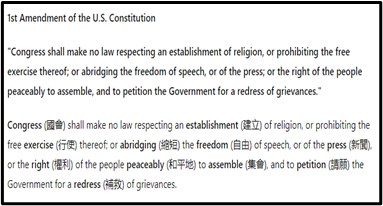
Teaching academic vocabulary in social studies instruction is crucial as it empowers students to comprehend complex concepts, engage in higher-order thinking, and effectively communicate their understanding of historical and contemporary issues.3 AI-powered tools can support multilingual learners by offering customized language resources tailored to individual student language needs. These tools can assist social studies teachers by identifying key vocabulary and facilitating the translation or integration of terms in various languages. For example, a government teacher working with primarily Chinese-speaking students, who is covering the First Amendment and individual rights, might use AI to create a presentation slide with key terms highlighted in a complex text. AI can identify these terms in English, translate them into Chinese, and either embed the translations within the text or provide them as a separate reference.
This screenshot displays an output from ChatGPT used to create a handout featuring key vocabulary words. These words have been identified and translated into Traditional Chinese to assist in understanding and learning.
AI integration in the classroom allows students to use language more expressively and intentionally. It enables teachers to seamlessly plan for the use of academic language while leveraging all of the students’ language resources. In the same example, the teacher can ask students to choose which of the freedoms from the First Amendment they view as most important and discuss their choices with partners in either language, with the aid of AI-powered tools. 3 This approach not only helps students understand critical concepts but also improves their comprehension by offering translations in their native languages, making the content more accessible and inclusive.4
3 Bárbara C. Cruz and Stephen J. Thornton, “Social Studies for English Language Learners: Teaching Social Studies that Matters,” Social Education 73, no.6 (2009): 271–74. 4 WIDA. Focus Bulletin: Translanguaging. Accessed July 20, 2024.
This screenshot displays an output from ChatGPT used to create a handout featuring key vocabulary words. These words have been identified and translated into Traditional Chinese to assist in understanding and learning.
Additionally, research has shown that cognates can significantly aid language acquisition for multilingual students.5 Social studies teachers can use this concept into their pedagogical strategies to enhance student comprehension. AI-powered tools are particularly useful in this context. For instance, an American History teacher, serving students who speak French, English, and Spanish might use such tools to generate a slide illustrating all possible cognates in the Gettysburg Address. This visual aid can facilitate students’ understanding of the document. To be inclusive of all students’ languages, the teacher should ensure that the slide includes cognates relevant to each language spoken in the classroom. The table of cognates, produced automatically and efficiently by AI, serves as a valuable resource for these students.
Screenshot of the output table from the prompt: “Identify any cognates in French and Spanish in the Gettysburg Address.”
Enhanced Media Accessibility
AI-powered tools have greatly improved the accessibility of media content, particularly benefiting language acquisition for multilingual students. These tools can produce transcripts and captions for videos found on online platforms such as YouTube and Vimeo, making it easier for educators to share content in various languages. They can also efficiently create transcripts and captions for student or teacher-created content, presenting material in multiple languages. For instance, a social studies teacher might ask students to share their immigrant arrival stories, which can then be recorded, transcribed, or captioned in multiple languages. This approach honors students’ cultures, facilitates collaboration, and maximizes translanguaging as a pedagogy, helping students understand themselves and others better. Students can also practice public speaking by presenting their stories to the class and receiving constructive feedback from their peers. With AI tools, feedback can be offered in any language, further supporting diverse language needs and enhancing the learning experience.
Flexible Planning and AI-powered Tools
Social studies teachers can foster an environment that supports multilingual learners by being flexible with their planning. This involves allowing students to navigate and utilize different language practices as they learn. For instance, in a World History class studying the social aspects during the Industrial Revolution in England, students who speak various native languages might read primary sources translated, in parts or in whole, in their own language, engage in group debates in English, and annotate texts in any language they choose. Flexibility is crucial here; the goal is to help students process and make sense of what they have learned with direct translation only as needed. AI-powered tools can greatly facilitate this process.
These tools can assist teachers in creating discussion prompts in multiple languages, generating translated texts or primary sources, or even developing multilingual word walls. Such capabilities make it easier to integrate diverse language practices in the classroom and support students’ understanding across different languages.
Flexible Learning Objectives
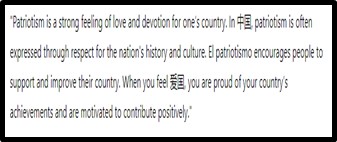
Teachers can design learning objectives that foster bilingualism and multilingualism by emphasizing skills that transcend specific languages. For example, objectives could include: “Students will be able to analyze the concepts of nationalism and patriotism through collaborative research and discussion,” enabling them to engage with diverse perspectives. By utilizing tools like Google Docs or virtual whiteboards, students can collaborate in real-time, contributing in different languages and using AI to translate their contributions effortlessly. AI allows students to navigate and integrate multiple languages in their work, thus enhancing their language acquisition and comprehension. This approach encourages inclusive participation and deepens understanding of social studies concepts across linguistic boundaries.
Sample Output from ChatGPT: Exploring the question ‘What does patriotism mean to you?’—a snapshot of sample student reflection on the essence of national pride and identity. 6 (Katie Novak, “Why UDL Matters for English Language Learners,” Language Magazine, March 9, 2018, https://www.languagemagazine.com/2018/03/09/why-udl-matters-for-english-language-learners/. 7 Anya S. Evmenova, Jered Borup, and Joan Kang Shin, “Harnessing the Power of Generative AI to AI and Universal Design for Learning (UDL)
AI intersects with Universal Design for Learning (UDL) by promoting flexible language use to support diverse learners, aligning with UDL’s principles of Multiple Means of Representation and Engagement.6
AI can enhance this intersection by using students’ languages as a starting point for brainstorming ideas, creating real-life scenarios that honor their cultures, reducing writer’s block, and producing materials with varying demands and levels.7 Additionally, AI can provide personalized feedback in multiple languages, facilitate comparisons between student-generated and AI-generated content for reflective learning, and incorporate speech recognition software to support diverse communication needs. For example, a teacher preparing students for a group debate on whether to join the Patriots’ cause or remain loyal to the British at the onset of the Revolutionary War can encourage engagement by allowing students to research in any language and prepare their talking points in both English and their native languages. The debates can then be conducted in the languages of the students’ choosing, with real-time translation and speech recognition software available to support their participation, making the activity inclusive and accessible for all learners. 8 (Support ALL Learners,” Journal of Educational Technology, 2024, https://doi.org/10.1007/s11528 024-00966-x. (Published May 14, 2024). 8 Cioè-Peña, M. (2022). TrUDL, a path to full inclusion: The intersectional possibilities of translanguaging and Universal Design for Learning.)
Academic writing
The use of AI in education empowers social studies teachers to effectively support multilingual students in academic writing. AI-powered resources, such as Ethiqly and Khanmigo’s Writing Coach, can assist with the writing process by providing sentence starters, suggesting outlines, and brainstorming ideas for multilingual learners.9 In multilingual classrooms where teachers may not be fluent in all languages spoken by their students, this is especially helpful.
AI can also translate and interpret various languages simultaneously, enabling teachers to enhance students’ understanding and expression in their native tongues. For example, a government teacher can use AI to create sentence starters or templates when asking students to write an argumentative essay on voting rights. These supports can be provided in their native language, in English, or both, as AI offers the flexibility and simplicity needed to accommodate diverse linguistic needs.
Conclusion
The integration of AI in social studies classrooms has emerged as a transformative tool for supporting multilingual learners, offering unprecedented opportunities to enhance engagement, comprehension, and participation. By leveraging AI’s capabilities, educators can create dynamic and inclusive learning environments that address the diverse linguistic needs of their students. Whether through enhanced media accessibility, flexible lesson planning, or personalized academic support, AI tools enable teachers to break down language barriers and foster a deeper connection to historical content. 8 TESOL Quarterly, 56(2), 799–812. https://doi.org/10.1002/tesq.3074 9 “AI and Education: Will Chatbots Soon Tutor Your Children?” The New York Times, January 11, 2024,
As we continue to explore the potential of AI in education, it is essential to prioritize intentional and thoughtful integration, ensuring that these tools complement and enhance traditional teaching methods. By embracing AI’s potential, educators can empower multilingual learners, enrich their educational experiences, and contribute to a more inclusive and equitable learning environment. Through ongoing innovation and adaptation, AI can play a pivotal role in advancing social studies education and supporting the diverse needs of multilingual learners. https://www.nytimes.com/2024/01/11/technology/ai chatbots-khan-education-tutoring.html.