An Education: How I Changed My Mind About Schools and Almost Everything Else
by Diane Ravitch
Reviewed by Dr. Alan Singer, Hofstra University
According to Randi Weingarten, president of the American Federation of Teachers, “Diane Ravitch’s telling of her remarkable journey — from a child of working-class immigrants to one of the most vital national education treasures and leaders — tells us so much about her unwavering support for public education and its role in our society. That would be beautiful enough, but the second thrill is how she brings her curiosity — an essential trait we nurture in students — to question her own views and change her mind. The result is this clarion call to protect and strengthen public schooling in America as the foundation of our young people — and our democracy. If you care about the future, read this book.”
Diane Ravitch has spent five decades analyzing and advocating for national and state education policies designed to reform and reshape public schools. Her work supporting school choice made her the intellectual darling of the right. But when she renounced school choice as a failure, she was abandoned by many old friends and colleagues. Today she is a champion for public schools, a foe of standardized testing, and proclaims herself to be “woke.” Her latest book, An Education: How I Changed My Mind About Schools and Almost Everything Else is published by Columbia University Press
Ravitch was one of eight children from a Jewish family in Houston, Texas, where she grew up with no television, no air conditioning, and, often, no shoes. In college she met and married a man from a wealthy and connected New York City family, where they lived and raised a family. She began working for a socialist magazine, which led to writing about education and, eventually, a PhD in education history.
Ravitch’s writings favored strengthening and expanding school choice and rigorous testing, ideas that aligned well with conservative donors and think tanks who supported her work and led to positions in the George H.W. Bush and Clinton administrations. Meanwhile, a chance encounter at an education conference with a New York City high school social studies teacher, Mary Butz, led to a clandestine romance. Ravitch’s new relationship upended her previous “life of comfort and plenty” and led to her marriage to Mary.
New York Mayor Michael Bloomberg sought Ravitch’s support and counsel for the changes he and school commissioner Joel Klein instituted during his administration, but it was at this time that Ravitch began to question the results of standardized testing and school choice programs like charter schools. Improved test scores at lauded schools proved illusory and charter schools only seemed to thrive because they were able to weed out the most challenged pupils. Gradually, Ravitch abandoned her long-held views on the power of testing or the promise of choice. She began to write and speak out in favor of saving America’s besieged public schools.
Ravitch’s involvement in education idea and policy have earned her a reputation as education’s best-known living historian and its most controversial figure. An Education is the story of the making, unmaking, and remaking of a public intellectual and a remarkable testament to the importance of a mind open to truth and possibility in a world, she writes, “of masks and artifice”.
An Interview on Teaching about Controversial Subjects in Today’s Political Climate
by Sepideh Yasrebi and Alan Singer
Sepideh Yasrebi: Given your extensive work on curriculum design in social studies education both as a former teacher and an academic, how do you understand the role of narrative—both dominant and counter-narratives—in representing or resisting ideology in the classroom?
Alan Singer: I think your point is that history is very much a story about the past. The difference between history as practiced by historians and cultural indoctrination as championed in Donald Trump’s vision of teaching patriotic history is that historians start with questions about the past and present and examine the past seeking answers to their questions in an effort to understand the present. Historians always have a point of view, but in a scientific approach to understanding the past, you always must be prepared to rethink your views based on data and analysis.
What this means in the social studies classroom is that we don’t want students to just accept what the textbook or curriculum says, but we want them to raise their own questions with the material they are being presented with. We also want to provide them with material from different perspectives so that they learn to weigh the validity of different explanations. Our goal is for them to think like historians to prepare them to be active citizens in a democratic society. At the end of the Constitutional Convention, Benjamin Franklin was asked what type of government the delegates had created. Franklin’s reply reverberates today. Franklin said, “A republic, if you can keep it.” We need to equip students so the United States will remain a democracy, if they can keep it.
Sepideh Yasrebi: Fredric Jameson’s concept of cognitive mapping invites individuals to represent, however incompletely, their relationship to the broader social and ideological totality. How might this idea be translated into meaningful classroom practice? In other words, how can social studies curriculum and pedagogy help students connect their lived experiences to larger historical and structural forces in ways that foster critical historical thinking and agency?
Alan Singer: I used to promise high school students that at one point during the school year, they, their families, and the groups they identified with would be part of the curriculum – and the students held me to it. Sometimes it was difficult to include some of the most recent immigrant groups, but when we came to changes in immigration to the United States in 1965, I invited students from newer immigrant groups to be part of a panel where they explained their families experience leaving their homeland and coming to the United States. The class would then compare the push and pull factors of the newer immigrant groups with groups we had studied in early waves of immigration. Working with teacher in the Hofstra program, we adapted this idea for elementary and middle school students. In those grades we created family artifact museums. Each student brought a material object to class that was important to their family culture. They created a museum card describing the artifact, and students traveled around the room learning about each other’s cultures.
Sepideh Yasrebi: Are national and state social studies standards helpful or a hindrance in achieving social studies learning goals?
There are no national social studies standards in the United States so each state Department of Education develops their own. I am most familiar with New York State and New Jersey social studies standards which both strongly support document-based instruction, promoting critical thinking, and preparing students for full participation as citizens. National organizations like the National Council for the Social Studies, the American Historical Association, and the Organization of American Historians also promote these goals. Unfortunately, even though they are in the standards does not mean that we see them in practice in classrooms. Too much of teaching centers on preparing students for state and national reading skill exams that are used to evaluate school districts, schools, and teachers.
Sepideh Yasrebi: What tensions do you observe between traditional “fact-based” approaches to history education and more interpretive, narrative-driven models—especially in today’s sociopolitical climate? How do you navigate these tensions in teacher preparation program?
Alan Singer: I think the two keys are building respectful classroom communities where students can have open dialogues and creation of document packages with different perspectives on difficult issues for students and teachers to evaluate. I generally will only offer my opinion as part of a community discussion if I believe it opens up the discussion. Generally, I will include documents that express views similar to my own in the package so I never have to express my ideas, they are already there for students to evaluate.
Sepideh Yasrebi: How do you teach preservice teachers to allow their students to be critical thinkers in a society that does not seem to value critical thinking?
Alan Singer: I recognize that the function of schooling in any society is to perpetuate that society by inculcating the hegemonic values of that society. In the United States schools are expected to reinforce dominant beliefs including that the system is fair, people achieve success based on merit, and that anyone can achieve through hard work. Part of this belief system is that if an individual fails it is their own fault or because of their own inadequacy. Too often I have heard teachers say “I didn’t fail you. You failed you. I only entered the grade.” A critical approach to history and social studies includes questioning these beliefs. Martin Luther King Jr. called on people challenging the dominant ideas of society to employ “creative maladjustment,” identify with the expressed values of society, but interpret them in your own way. Herbert Kohl applied the idea of creative maladjustment to the classroom. He recommended that teachers use the language of the standards but interpret them in ways that allow you to connect with your students and engage them in necessary conversations about the past and present.
Sepideh Yasrebi: In this study, I define narrative competence not just as the ability to tell stories, but as the capacity to critically situate those stories within broader historical and ideological contexts. From your perspective, how can curriculum and pedagogy foster this kind of competence in students? Are there particular texts, historical narratives, or teaching practices you’ve found especially effective in supporting this work—or that you help teacher candidates implement in their own classrooms?
Alan Singer: I see reading as a conversation with an author or document. I tell students that they are not just reading to learn information and answer the questions that I ask, but to formulate their own questions, ask the author, see if the answer is in the text, and if they are not satisfied with an answer, develop a strategy to discover what they want to know. Similarly, writing is a form of edited thinking. Write down your ideas. Don’t be afraid of spelling, grammar, or uncertainty. But after you write them down, edit them so they make sense to you. Then edit them again into formal language that will make your ideas accessible to other people. This makes it possible to extend our conversation to a broader audience. To facilitate this approach, I organize teams of writing buddies who read each other’s work, suggest corrections, but also point out points that need greater explanation.
Again, the practices you want to see in classrooms will only happen when there is respectful dialogue. Our goal is to learn together, to share ideas, not to win or to silence others. That type of community can take a while to build, but it is essential if students are to become critical historians and responsible citizens in a democratic society. I never lecture. When I talk to much it means I failed to design an effective lesson plan. My role in the classroom is to introduce material and question students as they evaluate primary and secondary source material. What does the text say? What does the text mean? What are your views of the text? What is the evidence presented to support the author’s view? What is the evidence to support your views?
Sepideh Yasrebi: What does a culturally sustaining approach to social studies education look like to you, particularly in relation to multilingual and racialized students whose identities have often been marginalized in U.S. schools? Do you believe CSP has been meaningfully incorporated into social studies teacher education? What are the shortcomings?
Alan Singer: I discussed this earlier with suggestions for student panels and a family artifact museum. I want to share an anecdote that helped me better understand a culturally sustaining approach to teaching. I grew up in the 1950s in the shadow of the European Holocaust. We were a Jewish family that never discussed the Nazi extermination of Jews. It wasn’t until I was in college that I learned from my grandfather that his father and most of their village were murdered by German troops including my grandfather’s brother’s wife and her two children. Growing up in the shadow of the Holocaust there was family silence and embarrassment at our victimization when we learned about it in high school. It wasn’t until Israel emerged as a significant force in world affairs in the 1960s that my peers and I stopped seeing Jews as just victims. When I was a high school social studies teacher, I always included an extended unit on slavery in the United States. One year an African American young woman challenged me in class and wanted to know why the only time Black people were included in the curriculum was to show how they were slaves. I asked her to talk to me after class to discuss how we could approach this differently. She and some of her friends met with me and I realized their reaction to learning about enslavement was very similar to mine learning about the Holocaust in high school. We decided together that I needed to change the focus of the unit from oppression to include resistance, especially by Black abolitionists.
This was my journey, but in answer to your question, it is not forcefully incorporated into state and national curricula and it is not the experience and understanding that many other teachers bring to the classroom. One group that promotes this approach to teaching is Rethinking Schools which also sponsors the Zinn Education Project.
Sepideh Yasrebi: How do you mentor future teachers to critically reflect on their own ideological positionings? How can teacher education programs support this view?
Alan Singer: Many of the prospective teachers in my teacher education program are very nervous about addressing controversial topics like racism, responses to immigration, or actions by the Trump administration that are constitutionally questionable in the classroom. No one wants to be targeted by Fox News or risk losing their job because of parental complaints. I stress that they have to know their stuff and be prepared to explain why they introduced the topics, questions, and documents they use in their lessons. The first step when they plan a lesson is to ask themselves, what is important to know and why? I also recommend that if they are unsure about a lesson, they should discuss their ideas with their department chair so if there are complaints, the department chair can explain the lesson approach, how it included multiple perspectives on the topic, and addressed state learning standards. I prepared a lesson on the Supreme Court’s 6-3 ruling barring federal district court universal injunctions that opened the way for the Trump administration to ignore the 14th amendment’s granting of citizenship to all people born in the United States. In the lesson, students are provided with excerpts from the majority opinion of the Supreme Court written by Justice Amy Coney Barrett and dissenting opinions by Justices Sonia Sotomayor and Ketanji Brown Jackson. I strongly agree with Sotomayor and Jackson that the Court’s decision, by granting the Trump administration the unchecked power to pursue highly questionable goals, is a threat to the rule of law in the United States, but I don’t plan to add my views to the discussion. The lesson is designed to show prospective teachers how to organize a conversation on a controversial topic like this and how to include multiple perspectives in their document packages.
Virtual Reality as part of Inquiry into the Boston Massacre
Russell G. Hammack, Elizabeth K. Wilson, Lisa Matherson
One of the major catalysts that began the American Revolution was the Boston Massacre. This event enraged the local colonial citizens after the increase in taxation and occupation of Boston by the British military. In March 1770, local citizens began to protest against the British by throwing snowballs and rocks on King Street (Reid, 1974). During this event, several British soldiers led by Captain Thomas Preston were detached to quell the conflict (Kellogg, 1918). However, the arrival of the British soldiers only further angered the colonials on King Street. Whether ordered, or unintentionally discharged, the British soldiers fired on the crowd. “On this, the Captain commanded them to fire; and more snowballs coming, he again said, damn you, fire, be the consequence of what it will (The Boston Gazette,1770, p.1). This resulted in the deaths of five colonists, including Crispus Attucks, and the wounding of six others (The Boston Gazette,1770). This article aims to provide social studies teachers the resources using virtual reality experiences as part of an investigative lens to teach the Boston Massacre while integrating the C3 framework of inquiry-based instruction.
Background
In 1767, the British government passed the Townshend Acts, which placed an additional tax on imported goods to the American colonies (Hinderaker, 2017). Although the British crown considered the tax a success, protests and boycotts began throughout the colonies, specifically in Boston. To end the colonial protests, the British government responded in 1769 by sending nearly 2,000 British soldiers to occupy Boston and enforce the tax mandate (Hinderaker, 2017). “Reports of fighting between soldiers and civilians had been a staple of the Patriot press during the period, but, for the most part, local publications portrayed civilians as the victims of military aggression and praised the town and its leaders for restraining their anger at the abuse” (Messer, 2017, p. 509). By 1770, resentment for the British occupation exploded, resulting in the Boston Massacre. “By this fatal manoeuvre three men were laid dead on the spot and two more struggling for life; but what showed a degree of cruelty unknown to British troops, at least since the house of Hanover has directed their operation, was an attempt to fire upon or push with their bayonets the persons who undertook to remove the slain and wounded” (The Boston Gazette,1770, p.1).
Inquiry-based learning
Inquiry-based learning involves student-led investigations with proposed questions, collecting and analyzing data, and forming evidence-based arguments while the teacher is facilitating the inquiry process (Hmelo-Silver, Duncan, & Chinn, 2007). Inquiry allows learners to examine authentic problems and enhance their understanding (Wirkala & Kuhn, 2011). Levy, Thomas, Drago, and Rex (2013), affirm that inquiry promotes academic investigation and the creation of evidence-based argumentation. Inquiry-based instruction builds upon disciplinary questioning, investigative evaluation, and reflection to develop and defend ideas and concepts (NCSS, 2013). Inquiry-based instruction centers on analyzing information, using evidence to develop arguments and support conclusions (Monte-Sano, 2010). Despite the framework, having students ask meaningful questions and draw conclusions from various sources leads to increased social studies content knowledge (Grant & Gradwell, 2010). However, inquiry-design should incorporate content-related questions, summative tasks in which arguments are developed, sources to support arguments that are constructed, and taking informed action where students take action on a contemporary issue (Grant, Swann, & Lee, 2017).
Virtual Reality vs. augmented reality: What is the difference?
The birth of VR and AR, as cited within most research, began in the 1960s with the work of graphics pioneer Ivan Sutherland (Bolter, Engberg, & MacIntyre, 2021). With the technological advances that have happened since that time, many state what Sutherland created was more aligned to AR than VR, but it paved the way for VR. AR and VR were “twins when birthed as they began as variations of the same technological idea” (Bolter, Engber, & MacIntyre, 2021, p 22).
So, what exactly is AR and VR?
Virtual Reality (VR): “an artificial environment which is experienced through sensory stimuli (such as sights and sounds) provided by a computer and in which one’s actions partially determine what happens in the environment” (Jerald, 2015).
Augmented Reality (AR): “AR allows the user to see the real world, with virtual objects superimposed upon or composited with the real world. Therefore, AR supplements reality, rather than completely replacing it” (Azuma, 1997)
Improvements in computing power, software capabilities, and display technologies allowed VR and AR to become mediums with great promise. Afterall, we have seen what Hollywood has been able to do with this technology. Simply watch a George Lucas or Pixar movie. These possibilities have found their way into the world of education, such as the Boston Massacre which we highlight in this article.
The experiential learning of VR
One aspect of using virtual reality is creating a classroom environment where learners can feel more present in a virtual simulation than in other types of traditional learning (Kafai, 2006). Virtual agents allow a personalized learning experience tailored to individuals that might otherwise be expensive or unreachable (Baylor & Kim, 2005). These three-dimension virtual experiences provide sensory information for a more realistic and engaging immersion experience (Pstoka, 1996; Walshe & Driver, 2019). Thus, the user can be part of the virtual environment by performing actions (Bardi, 2019). This type of environment promotes learning about the past through the delivery of digital media and incorporating specific exhibits and artifacts from different historical sites (Harley, Poitras, Jarrell, Duffy, & Lajoie, 2016). “By using realistic virtual depictions of dangerous crises, learners can experience the chaos and affective stressors that are typically accompanied with actual crises” (Bailenson, Yee, Blascovich, Beall, Lundblad, & Jin, 2008, p. 110). This type of augmented reality experience can immerse learners into the past with reeling life settings for engagement (Bronack, 2011). These virtual experiences offer opportunities for student investigations and real-life encounters not experienced in a traditional classroom (Christensen, Horn, & Johnson, 2008). Additionally, 3-D virtual environments can bridge the gap between experiential learning and representation in learning (Jonassen, Peck, & Wilson, 1998).
VR devices
A trip into any store that offers for purchase a VR device will prove that there are a plethora of devices from which to select. The selection choice will depend on the type of experience you wish to have through the use of the device. After researching several articles, reviews, and personal trials, we offer three options below – a high, medium, low, if you will. However, we realize that most educators have very little funding and will look for the cheaper options. The experiences offered by the cheaper options, while not the same as the most expensive, are experiences that can still be valuable to students.
Low
Google Cardboard (https://arvr.google.com/cardboard/) The Google Cardboard is one of the most affordable options at around $10.00. The headset is really a holder for the smartphone, which is where all the content plays. The content available for this headset is mostly free and more readily available than others.
Medium
VR Headset for iPhone & Android + Android Remote 1.0 – for Kids (https://www.amazon.com) This mid-range VR option is $59.99. This headset is a smartphone VR system that supports both apple and android products. The content and applications are also mostly free and more readily available.
High
Oculus Meta Quest 2 – (Meta.com) The Oculus Meta 2, at $399, offers a more robust VR experience in that audio is inside the headset and hand tracking with the controllers. Another option from this device is that you can connect to a PC via a cable to access more experiences from the library of apps and games.
Before purchasing a device, you should review each device and make your selection based on what you wish for your students to gain from the experience.
The IDM
To critically evaluate the Boston Massacre, we propose using a model of inquiry; the Inquiry Design Model (C3 Teachers, 2016). Within this model of inquiry, we plan to implement the richness of a virtual reality experience. “The IDM approach, like the C3 Framework, respected the integrity of the core social studies disciplines but also recognized that authentic learning in social studies classrooms necessitated the interdisciplinary pursuit of a compelling question” (Cuenca, 2021, p.301). For teachers using the IDM, three major components must be considered: developing compelling and supporting questions, exposing students to resources, and developing tasks and informed activation activities (Crowley and King, 2018). “Beginning with a compelling question and standards alignment, the model suggests a series of supporting questions, related formative performance tasks, and sources for completing these tasks” (Molebash, Lee, & Heinecke, p.23, 2019). Cuenca (2021) stated:
Based on the nature of the compelling question, the tasks had different purposes, such as developing research, writing, and/or deliberative skills. Regardless of the purpose of the tasks, the inquiry narratives consistently featured teachers scaffolding tasks to ensure that students were able to address the compelling question they were pursuing. In short, teachers were often asked to facilitate how students organized inquiries to help them progressively become more skilled and independent enquirers (p. 306).
“The assumption is that teachers can take a blueprint and make it their own because they know their students’ strengths, they have their preferred style of teaching, and they understand their teaching context better than a curriculum writer” (Swann, Danner, Hawkins, Grant, & Lee, p.233, 2020). Swann, Lee, and Grant (2018) contend that:
The original IDM blueprint is structured so that students explore a compelling question through supporting questions, formative and summative performance tasks, and a range of disciplinary sources. The inquiry crescendos into an evidence-based argument, which can be broadened through an expressive extension and/or a civic experience. Teachers play an important role in this process by engaging students in the compelling question, scaffolding their source work, and ensuring they are mastering the content and developing skills through the successive formative performance tasks (p.134).
Our IDM
For this specific inquiry-based learning segment, we have decided to use the richness of primary resources infused along with the experiential learning of virtual reality. At the start of the inquiry, teachers can select a topic from their state standards. For this inquiry, we have chosen the Boston Massacre. After selecting a standard and topic, the classroom teacher can begin to develop a compelling question. Our compelling question is: how did the Boston Massacre become one of the sparks that started the American Revolution? The compelling question is an overarching question that will take several days of instruction as part of a learning segment to answer fully. To begin the inquiry with students, there is an introductory activity called staging the question. We decided to have students watch a short video clip and then answer the following question: Who was responsible for the massacre and bloodshed on King Street in Boston?
For each day of instruction, the inquiry is divided into supporting or daily questions. Formative tasks to help answer the supporting questions along with featured resources, such as primary documents and virtual reality resources are used for each supporting question. For the first day, our supporting question is: what events led to the Boston Massacre? Students are asked to construct a timeline leading up to the Boston Massacre, thus, providing information on events and actions before the Boston Massacre. Students are provided with a list of primary resources and applications for developing the timeline. For the second day of the inquiry, students will answer: what were the colonists’ perceptions of the Boston Massacre? Students will be placed into groups, Colonists and British soldiers, and conduct a primary document analysis and watch a VR video on the Boston Massacre using VR headsets. After watching the VR experience on the Boston Massacre, students will be asked to construct a reflective journal on what happened on King Street. This will give students a unique perspective of each group, leading to historical empathy. For the third day of the inquiry, students will be asked: what happened to the British soldiers that killed the colonists on King Street? After examining the featured primary resources, students will be asked to develop a judicial debriefing summarizing the Boston Massacre trial.
To assess students, the IDM offers the opportunity to participate in performance-based assessments geared toward answering the compelling question. Our performance assessment will divide students into three groups: Tensions rising (emphasizing events before the Boston Massacre), the Boston Massacre, and the Boston Massacre Trial. Each group will be assigned the task of conducting a live simulation/reenactment of their event in class. The reenactment should be no longer than 3-5 minutes. In an optional performance-based assessment, as part of the IDM, students will create and design their video of the Boston Massacre using a variety of AR and video resources. For social studies teachers, both assessments could be used as a student option or as a classroom extension.
At the end of the inquiry is the portion that provides tremendous relevancy to the curriculum, the informed action. For this part of the inquiry, we asked students to use their personal experiences with virtual reality and augmented reality and choose a local or community issue of concern. Students will design an augmented reality presentation or show, using Google Street View, displaying the issue in a community forum or school blog. Students might invite parents, teachers, and community leaders to discuss the issue and offer potential solutions.
Inquiry Design Model (IDM) Blueprint™
Compelling Question
How did the Boston Massacre become one of the sparks that started the American Revolution?
Standards and Practices
Social Studies Course of Study- State Standards Grade 5 Standard 7 Determine causes and events leading to the American Revolution, including the French and Indian War, the Stamp Act, the Intolerable Acts, the Boston Massacre, and the Boston Tea Party. Grade 10 Standard 3 Trace the chronology of events leading to the American Revolution, including the French and Indian War, passage of the Stamp Act, the Boston Tea Party, the Boston Massacre, passage of the Intolerable Acts, the Battles of Lexington and Concord, the publication of Common Sense, and the signing of the Declaration of Independence.
Staging the Question
Using a video clip on the Boston Massacre, pose the question to the students, Who was responsible for the massacre and bloodshed on King Street in Boston? https://www.youtube.com/watch?v=m2QNZf_8V_w
Supporting Question 1
Supporting Question 2
Supporting Question 3
What events led to the Boston Massacre?
What were the colonists’ perceptions of the Boston Massacre?
What happened to the British soldiers that killed the colonists on King Street?
Formative Performance Task
Formative Performance Task
Formative Performance Task
Students will construct a timeline leading up to the Boston Massacre; thus, providing information on events and actions prior to the Boston Massacre.
After watching the VR experience on the Boston Massacre, the class will be divided into two groups; Colonists and British soldiers. Based on the students’ perspective of the primary sources provided, including the VR video, students will be asked to construct a reflective journal on what happened on King Street.
After examining the featured sources, students will be asked to develop a judicial debriefing summarizing the Boston Massacre trial.
The teacher will divide students into three specific groups: Tensions rising (emphasizing events before the Boston Massacre), the Boston Massacre, and the Boston Massacre Trial. Each group will be assigned the task of conducting a live simulation/reenactment of their event in class. The reenactment should be no longer than 3-5 minutes.
From using their personal experiences with virtual reality and augmented reality, students will choose a local or community issue of concern. Students will design an augmented reality presentation or show, using Google Street View, displaying the issue in a community forum or school blog. Students might invite parents, teachers, and community leaders to discuss the issue and offer potential solutions. Google Streetview https://www.google.com/streetview/
The purpose of this article is to provide a framework of inquiry, while using virtual reality to investigate the Boston Massacre. By advancing through the inquiry, students can develop a constructivist approach to their own historical knowledge and their personal experiences through the historical immersion of virtual reality (Wadsworth, 2004). In addition, students can further their technology-based skills by developing their own augmented reality video. The informed action portion of the IDM model gives civic meaning by addressing the community issues and problems, thus, promoting active citizenship. By transforming social studies classrooms into places where students can express these civic principles, democratic citizenship begins (Dewey, 1918). Our aspiration is to give social studies teachers the needed instructional resources, especially virtual reality, to be part of the overall historical learning experience for students. By using VR, students can further investigate and build their own historical knowledge.
Bailenson, J. N., Yee, N., Blascovich, J., Beall, A. C., Lundblad, N., & Jin, M. (2008). The Use of Immersive Virtual Reality in the Learning Sciences: Digital Transformations of Teachers, Students, and Social Context. The Journal of the Learning Sciences, 17(1), 102–141.
Baylor, A. L., & Kim, Y. (2005). Simulating instructional roles through pedagogical agents. International Journal of Artificial Intelligence in Education, 15(1), 95-115.
Bronack, S. C. (2011). The role of Immersive Media in online education. The Journal of Continuing Higher Education, 59(2), 113–117. https://doi.org/10.1080/07377363.2011.583186
Crowley, R., & King, K. (2018). Making Inquiry Critical: Examining Power and Inequity in the Classroom. Social Education, 82(1), 14–17.
Cuenca, A. (2021). Proposing Core Practices for Social Studies teacher education: A qualitative content analysis of inquiry-based lessons. Journal of Teacher Education, 72(3), 298–313. https://doi.org/10.1177/0022487120948046
Christensen, C. M., Horn, M. B., & Johnson, C. W. (2008). Disrupting Class: How disruptive innovation will change the way the world learns. McGraw-Hill.
Dewey, J. (1916). Democracy and Education. New York: Macmillan.
Grant, S. G., & Gradwell, J. M. (Eds.) (2010). Teaching history with big ideas: Cases of ambitious teachers. Rowman & Littlefield.
Grant, S. G., Swann, K., & Lee, J. (2017). Inquiry-based practice in Social Studies Education: Understanding the inquiry design model. Routledge.
Harley, J. M., Poitras, E. G., Jarrell, A., Duffy, M. C., & Lajoie, S. P. (2016). Comparing virtual and location-based augmented reality mobile learning: emotions and learning outcomes. Educational Technology Research and Development, 64(3), 359–388.
Hinderaker, E. (2017). Boston’s Massacre. Cambridge, MA: The Belknap Press.
Hmelo-Silver, C. E., Duncan, R. G., & Chinn, C. A. (2007). Scaffolding and achievement in problem-based and inquiry learning: A Response to Kirschner, Sweller, and Clark (2006). Educational Psychologist, 42(2), 99-107.
Jonassen, D. H., Peck, K. L., & Wilson, B. G. (1998). Learning with Technology: A Constructivist Perspective. Merrill.
Kafai, Y. B. (2006). Playing and making games for learning: Instructionist and Constructionist perspectives for game studies. Games and Culture, 1(1), 36–40. https://doi.org/10.1177/1555412005281767
Kellogg, L. P. (1918). The Paul Revere Print of the Boston Massacre. The Wisconsin Magazine of History, 1(4), 377–387.
Levy, B. L., Thomas, E. E., Drago, K., & Rex, L. A. (2013). Examining Studies of Inquiry-Based Learning in Three Fields of Education. Journal of Teacher Education,64(5), 387-408. https://doi.org/10.1177/002248711349643
Messer, P. (2017). “A scene of Villainy acted by a dirty Banditti, as must astonish the Public”: The Creation of the Boston Massacre. The New England Quarterly, 90(4), 502–539.
Molebash, P., Lee, J., & Heinecke, W. (2019). Teaching and Learning Inquiry Framework. Journal of Curriculum and Teaching, 8(1), 20–31. https://doi.org/10.5430/jct.v8n1p20
Monte-Sano, C. (2010). Disciplinary literacy in history: An exploration of the historical nature of adolescents’ writing. Journal of the Learning Sciences, 19(4), 539-568.
National Council for the Social Studies. (2013). College, career, and civic life (C3) framework for state social studies standards. Washington, DC: NCSS.
Psotka, J. (1996). Immersive training systems: Virtual reality and education and training. Instructional Science, 23, 405-423.
Reid, J. P. (1974). A Lawyer Acquitted: John Adams and the Boston Massacre Trials. The American Journal of Legal History, 18(3), 189–207.
Swann, K., Danner, A., Hawkins, M., Grant, S. G., & Lee, J. (2020). Zooming Inquiry: Online Teaching with the Pomodoro Technique. Social Education, 84(4), 229–235.
Swann, K., Lee, J., & Grant, S. G. (2018). Questions, Tasks, Sources: Focusing on the Essence of Inquiry. Social Education, 82(3), 133–137.
Walshe, N., & Driver, P. (2019). Developing reflective trainee teacher practice with 360-degree video. Teaching and Teacher Education, 78, 97–105.
Wadsworth, B. J. (2004). Piaget’s theory of cognitive and affective development: Foundations of Constructivism. Longman. Wirkala, C., & Kuhn, D. (2011). Problem-based learning in K-12 education: Is it effective and how does it achieve its effects? American Educational Research Journal, 48(5), 1157-1186
Reviewed by Hank Bitten, NJCSS Executive Director and contributing author.
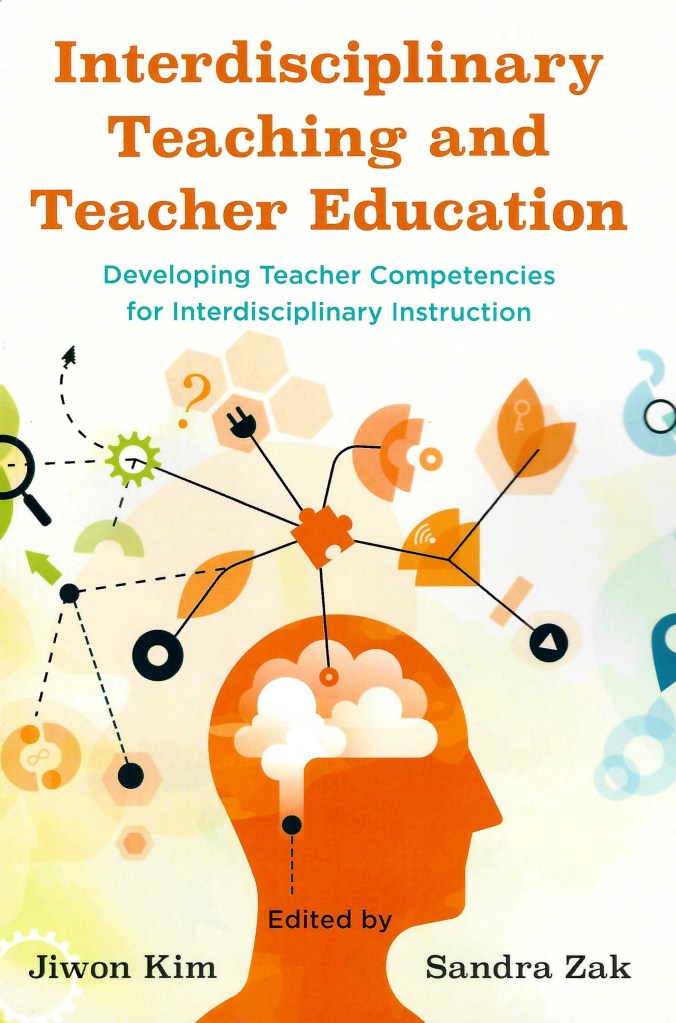
I am writing to you as a contributing author to Interdisciplinary Teaching and Teacher Education rather than as a reviewer. Through this blog post I am hoping to expand your classroom experience, ask you to begin talking about classroom instruction with your colleagues, and challenge you to develop partnerships or connection groups within and outside of your school. I have the perspective of an educator with more than a half-century of experience as a teacher in elementary, middle, high school, and college classrooms and five school districts.
Public education took a step forward in 1852 when Massachusetts became the first state to pass an Act Concerning the Attendance of Children at School. This was a monumental change because every village and city in Massachusetts was required to have a primary school to teach math and grammar. Students were required to be in school for three months with six weeks or more of continued instruction. Parents who did not send their children between age 8 to 14 to school were fined $20, a little more than a week’s wage for a factory worker. Lessons were passive and based on memory and practice.
Fifty years later in the beginning years of the 20th century, John Dewey dramatically shifted the focus to inquiry and problem-solving. Dewey’s instructional philosophy included brainstorming for solutions, testing hypothesis, experiential learning, and models of student government. His model was revolutionary, emphasized an understanding of the big ideas rather than simplistic true and false or multiple choice answers.
William James, a psychologist, understood the influences of the media on children. Children were exposed to advertising and pictures in newspapers and magazines. The media in the beginning of the 20th century was perhaps just as powerful as today’s social media digital platforms as publications overwhelmed the mailbox of the home instead of the inbox on the phone. James understood motivation, the importance of emotional engagement in learning, and the importance of the educational environment on the character and behavior of students.
My college instruction in the 1960s was influenced by Jerome Bruner. The emphasis was on cognitive growth and a constructivist model of learning. We were taught concepts and how to use relevant experiences to bring meaning to the content in the curriculum. One of the lessons I applied from Jerome Bruner to the teaching of social studies was the influence of culture on how students learn.
My education as a teacher was influenced by the sociologist James Coleman. I developed simulations for understanding the big ideas of revolution, social classes, perspectives, and historical changes. I applied my college experiences of debate, Model United Nations, Model Congress, and Mock Trial to simulations of battles, problems in society, and decisions of presidents. My graduate studies focused on the French Revolution and the insights of The Anatomy of a Revolution by Crane Brinton.
It is in the context of my simulation game, France, 1789, that interdisciplinary instruction became the focus of my teaching of world history, United States History, and African American History. I integrated literature, art, film, and music into my lessons. The engagement of my students was visible and they were applying knowledge and memory to their experiences.
Dr. Jiwon Kim and Dr. Sandra Zak provide a practical guide with explicit examples of how interdisciplinary models in classrooms and school are essential to learning in a Tik Tok culture and why teachers in departments, faculty in smaller schools, and professors of education need to have discussions about the effectiveness of teaching and the extent that students are learning.
The main concern of social studies teachers is that their students cannot write. We observe children asking Google for answers, completing assignment worksheets in Google Classroom, and engaging with short videos on BrainPOP and YouTube. My response to teachers who share with me their observations about how their students are learning in middle school and high school is that they need to be taught how to think before they can write. They need to be asked open-ended questions before they can express what they are thinking. They need to build memory through interdisciplinary learning experiences.
Interdisciplinary education and interdisciplinary instruction are similar and yet very different experiences for students. In Chapter 3, Christine Grabowski presents graphic models for planning and practical examples of interdisciplinary connections between social studies, math, reading, and art. Below are examples relating to civic engagement and spatial recognition.
In Chapter 4, I provide explicit examples for teaching climate, U.S. History, Civics, and world history. Intradisciplinary models with integration of geography, economics, and culture provide students with both relevance and engagement. Below is an example of the diverse contributions of people from New Jersey who have impacted the lives of ordinary people.
Here is an example from social studies for a lesson on the contributions of people from New Jersey and their connections with art, music, science, and English Language Arts: Social Studies 6.1.5. Civics CM.5 Investigate the lives of New Jersey individuals with diverse experiences who have contributed to the improvement of society:
Using an assessment model, students in art could analyze cartoon drawings of New Jersey artists in the context of the skills and learning objectives in the curriculum. For example, Caspar the Ghost and Felix the Cat by Joseph Oriolo (Woodcliff Lake, NJ) and Uncle Wiggily Longears by Howard Garis (Newark, NJ).
Students in music might research the lyrics to America the Beautiful or find connections to New Jersey using the music of Dionne Warwick, Bruce Springsteen, or others. Interdisciplinary connections in science can be taught independently with students understanding cause and effect relationships, the contributions of scientists and engineers, and the places in New Jersey where they originated. Examples include Hellmann’s Mayonnaise (Englewood Cliffs), Trident gum (Morris Plains), and Carrier Air Conditioning (Newark).
In English Language Arts, students can read biographies of people from New Jersey who have made a difference or a significant contribution. For example, Gen. Hugh Mercer, Albert Einstein, George Merck, Carl Lewis, Larry Doby, Yogi Berra, Joe Theismann, Paul Robeson.
In Chapter 5, Dr. Mark Pearcy and I present explanations on why interdisciplinary learning is necessary, models for including this in the education of pre-service teachers, and an example of a school district in New Jersey that has multiple opportunities for high school students. Below is an example of curriculum connections in a World History course.
Perhaps the most important contribution of the collaborative efforts of Jiwon Kim and Sandra Zak are the prompts suggested for discussions between teachers and curriculum directors. The importance of shared instruction, differentiated learning, and partnerships with local and academic institutions is a good beginning. I hope you enjoy Interdisciplinary Teaching and Teacher Education as much as I enjoyed contributing to it!




 njcssjournal