
Enhancing Student Learning with AI-Powered Image Features
Andy Szeto

Plaza de Toros de la Real Maestranza de Caballería de Sevilla, a Bullring in Seville, Spain. Photo Credit: Andy Szeto
Artificial[HB1] intelligence (AI) is transforming the way we approach education, providing tools that enhance student engagement and make abstract concepts more accessible. One such innovation is AI-powered image recognition, which has the potential to revolutionize real-world learning experiences, from understanding historical documents to visualizing complex ideas.
Instant insights: enhancing real-world learning
My recent experience in Seville, Spain, underscores how AI can make learning more dynamic and personal. While traveling with my family in Seville, Spain in August 2024, my soon-to-be teenage daughter turned to me as we stood inside a bullfighting ring and asked, “Hey dad, what do the two red circles mean?” I acknowledged my lack of knowledge on the matter but soon recognized that AI could provide valuable assistance.
Using my paid version of ChatGPT, I uploaded a picture of the bullring, and within moments, the answer appeared. The red circles in the Plaza de Toros de la Real Maestranza are reference points used during bullfighting events, helping the matador and participants position themselves during key stages of the fight. ChatGPT’s photo upload feature, available in its paid version, allowed artificial intelligence to analyze the image quickly and provide a detailed answer to my question, which amazed us both. My daughter was excited to learn this fact, while I marveled at the power of AI in delivering such precise information. This moment highlighted how AI could revolutionize education, by promoting independent learning and engaging students with real-world questions, both inside and outside the classroom.
AI in historical research
This small but powerful moment made me reflect on the broader implications of AI in education. Beyond answering real-world questions, AI can also assist students in engaging with historical materials in new ways, such as transcribing handwritten documents or visualizing historical events. Students can utilize AI image recognition features to enhance their understanding of historical archival materials by uploading images of primary sources, such as draft cards, census records, or letters, into an AI system. These AI tools can process and analyze a wide range of documents, extracting key details such as names, dates, locations, and occupations that are often embedded in handwritten or faded text. This process allows students to work more independently with primary sources, reducing the manual effort needed to transcribe difficult-to-read documents, particularly those written in older or cursive styles.
While the technology is not flawless—certain handwriting styles, ink smudges, or document wear can cause errors—it offers substantial support, especially for novice researchers who might otherwise find these documents inaccessible. For example, students could create a prompt like, ‘Find attached an image, and extract every piece of information from the draft card,’ to encourage the AI to analyze the content in detail. This could include not just the soldier’s name and registration date, but also contextual clues like regional differences in draft registration forms or patterns in the types of exemptions requested.
Furthermore, by leveraging AI’s ability to scan and highlight particular elements, such as identifying a certain region mentioned or flagging unfamiliar terms, students can dive deeper into their analysis. In a classroom setting, teachers can encourage students to compare their own interpretations of a primary source with the AI-generated output, sparking discussions on the reliability and limits of technology in historical research. Through this process, students gain a more hands-on approach to examining archival documents, enhancing their critical thinking skills and historical inquiry capabilities (UTSA Institute of Texan Cultures, 2017)
Similarly, AI can help students transcribe historical handwriting, assisting them in reading handwriting from primary sources. For instance, a student may struggle to read government records, such as those about the Governor’s Mansion in North Carolina, detailing the cost of a house in Raleigh for the governor. In this case, AI can assist with the transcription (North Carolina Digital Collections, 2024). Additionally, AI can help students with cursive handwriting, making it easier for them to understand cursive text, which is often seen in older documents. Again, this technology, like extraction, is not perfect but is useful in supporting students as they delve into historical records. This allows for a deeper exploration of historical documents by aiding in the extraction of text and details that might otherwise be difficult to read manually.
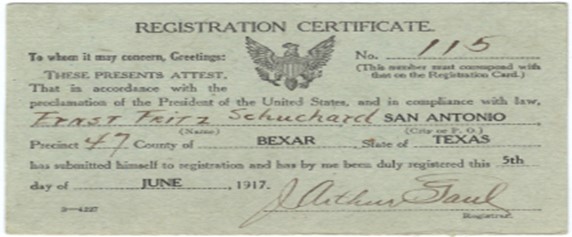
WWI Draft Registration Certificate for Ernst Fritz Schuchard, issued June 5, 1917, in Bexar County, Texas
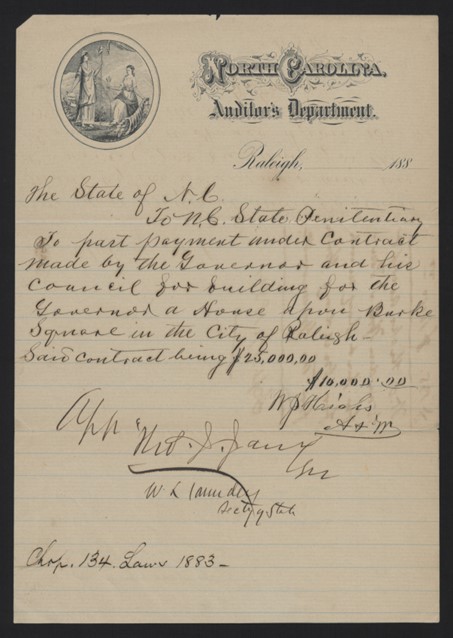 |  |
| Governor’s Mansion: Payment to Penitentiary for Construction of Governor’s Mansion and Payment for Yard Work | An AI-generated Image depicting Election Day, November 1884, inspired by Walt Whitman’s poem. |
Visualizing historical events and concepts
Beyond text recognition, AI’s image generation capabilities further enrich student learning by bringing historical concepts to life. By transforming abstract texts, like Whitman’s poetry, into visual scenes, students can engage more emotionally and intellectually with the material. Using AI’s image generation feature to create an illustration inspired by Walt Whitman’s poem Election Day, November 1884 offers a powerful and engaging experience. The poem reflects the importance of civic duty and voting rights during a significant moment in 19th-century America, when the concept of suffrage was expanding, but not yet fully inclusive. Through imagery rooted in historical contexts—voters gathered at polling places, and the somber, reflective mood of Whitman’s work—the visuals deepen students’ understanding of the era’s political and social dynamics.
This process highlights how visual learning can enhance comprehension of abstract or complex ideas, such as the evolution of voting rights and the struggles for representation. By turning Whitman’s words into visual scenes, students can grasp the weight of these moments in American history more profoundly. The combination of poetry and historical imagery helps students emotionally engage with the topic, making the importance of suffrage and the responsibilities of citizenship more tangible.
Beyond aiding comprehension, AI-generated image tools offer creative opportunities for students to engage with historical texts and events. For example, students can generate visuals that reflect their interpretations of political movements or historical milestones, giving a personal touch to their learning. By visualizing historical settings, they can immerse themselves in the world of 19th-century America, imagining what it might have felt like to be at the center of political change. This not only brings history to life but also encourages students to think critically about the significance of voting rights in a democratic society.
Data interpretation and visualization
Using the image analysis feature to teach data interpretation and visualization is an effective way to engage students in real-world data analysis across multiple disciplines, including economics. For instance, beginning with a handwritten data table, such as voter turnouts for a local election by demographic groups from 2011 to 2015, teachers can guide students in reading, interpreting, and analyzing the data from the image. This activity can extend into mathematics by encouraging students to calculate growth rates, percentages, and year-over-year comparisons. For example, students might calculate the percentage increase in voter turnout for Asian Americans in the five-year period or determine the rate of decline for another demographic group, applying key concepts from algebra and statistics.
Once the data is understood, it can be converted into a graph using tools like Python, Excel, or other data analysis software. In this case, a line graph might be created to visualize trends in voter turnouts.
As another example, students can use data analysis tools to explore economic principles, such as by examining a company’s online sales data. They can utilize the image feature to create graphs that illustrate trends, such as a clear rise in online sales alongside a decline in phone sales over the years. This step could serve as a foundation for discussions around key economic concepts like supply and demand, market shifts, and consumer behavior. Students can also analyze the economic factors that may have driven the increase in online sales, such as the availability of faster internet services or changing consumer preferences for convenience.
Conclusion: The transformative power of ai image generators in education
From answering spontaneous questions in a bullring to transcribing historical documents, AI tools help make learning more relevant and personalized. These innovations empower students to interact with their studies in a hands-on way, fostering critical thinking and independent exploration.
AI-powered tools, such as image generators and recognition features, are transforming education by making abstract concepts more tangible and promoting real-world problem-solving. From my personal experience using AI to answer a question in a bullfighting ring in Seville, to students transcribing historical documents or interpreting data, AI fosters engagement and critical thinking across disciplines. It enhances inclusivity by providing personalized support, particularly for multilingual learners. As educators integrate AI into their practices, they can create more dynamic, interactive, and meaningful learning experiences that equip students with the skills needed to thrive in a complex world.
References
North Carolina Digital Collections. Governor’s Mansion: Payment to Penitentiary for Construction of Governor’s Mansion and Payment for Yard Work, Raleigh, North Carolina. Accessed October 6, 2024. https://digital.ncdcr.gov/Documents/Detail/governors-mansion-payment-to-penitentiary-for-construction-of-governors-mansion-and-payment-for-yard-work/5836538.
UTSA Institute of Texan Cultures. (2017). Object: Draft card. Retrieved from https://texancultures.utsa.edu/collections-blog/object-draft-card/
 njcssjournal