
JEWISH AMERICANS: IDENTITY, HISTORY, AND EXPERIENCE
Institute Curriculum Services
In this lesson, students learn about the bonds that unite Jewish Americans as an ethnic group, and the rich diversity that exists within the community. In addition, students will deepen their understanding of the multifaceted nature of identity across groups.
Essential Questions
● How are Jewish Americans an ethnic group?
● What visible and invisible components make up each person’s unique identity?
● How do the multiple components that make up identity help us understand the diversity of Jewish Americans?
● What are key positive and negative experiences of Jewish Americans both historically and today?
Learning Outcomes Students will be able to:
● Explain how Jewish Americans are an ethnic group that is connected through a shared history, ancestry, culture, religion, sacred texts, and more.
● Understand that Jewish Americans are remarkably diverse in appearance, skin color, ethnic subgroup, and religious practice.
● Analyze the visible and invisible components of individual and group identities and make connections to their personal identities.
● Develop a better understanding of other people, cultures, and ethnic groups, how all groups have commonalities and differences within them, and the parallels that exist between Jewish Americans and other groups.
● Determine central ideas or information from primary and secondary sources.
Materials Needed MULTIMEDIA RESOURCES
Video: “Diverse Jewish Stories: Jonah” (3:08 minutes), Be’chol Lashon, 4/17/2019.
Video: “Types of Jews: Ashkenazi, Sephardi, Mizrahi and More,” (1:40 minutes), My Jewish Learning, 70 Faces Media, 9/28/2017.
PRIMARY SOURCES
These sources are available as PDFs or online in a digital format.
JEWISH AMERICANS: IDENTITY, HISTORY, AND EXPERIENC
● I Am Jewish: Personal Reflections Inspired by the Last Words of Daniel Pearl, Ruth Pearl and Judea Pearl eds., Woodstock, VT: Jewish Lights Publishing, 2004. (9 excerpts)
HANDOUTS
Identity Iceberg document, available online
Jewish American Diversity Fact Sheet, available online
Jewish Americans: Identity, History, and Experience Fact Sheet, available online
Lesson Plan
1. INTRODUCTION
Introduce the topic and emphasize that this lesson examines what unites the Jewish American community, as well as its diversity. While individual identity is personal, Jewish American group identity is based on ties of history, culture, ancestry, religion, language, celebrations, communal and familial traditions, common values, and a sense of a common ethnic peoplehood.
Further explain that this lesson explains some of the challenges Jewish Americans faced historically and continue to face today, including prejudice, discrimination, and antisemitism. It also explains experiences of acculturation and assimilation, and associated benefits and losses. Ultimately, students will be introduced to Jewish American history to deepen understanding of Jewish American experiences over time and Jewish American contributions to American society.
2. IDENTITY ICEBERG ACTIVITY
Provide students with the identity iceberg worksheet and explain that only a small part of an iceberg is visible above the waterline, while most of the iceberg’s mass lies below the waterline and is invisible. Tell students, that like an iceberg, some parts of identity are visible to others, while other parts are invisible.
Watch the video: “Diverse Jewish Stories: Jonah” (3:08 minutes) and ask students what they can determine about Jonah’s identity from what they viewed.
Explain that they are going to investigate various components of an individual’s identity. For this activity, students may choose to focus on their own identity, an imaginary student identity, or a celebrity’s identity. Emphasize that it is optional to use themselves as the subject in this activity, and that no one should disclose private information unless they would like to do so.
Either in small groups or as a whole group, students can brainstorm categories that will be used on the identity iceberg worksheet, or you can share suggested categories below, that include visible, sometimes visible, and invisible aspects of identity.
Suggested categories:
● Gender
● Race
● Ethnic appearance
● Visible religious signs: religious head coverings (kippah, yarmulke, hijab, turban); tzitzit (Jewish ritual fringes); cross, Star of David necklace, kirpan (Sikh religious knife), other)
● Age (child, middle schooler, teen, young adult, middle age, elderly, etc.)
JEWISH AMERICANS: IDENTITY, HISTORY, AND EXPERIENC
● Body type
● Ability/Disability
● Sexual orientation
● Clothing (casual, formal, brands, ethnic clothing)
● Language(s) (accent, second language, regional dialect, formality of speech)
● Religion/level of religious practice/spirituality/philosophy
● Family’s national origin/immigrant/refugee/forced migration
● Nationality/citizenship
● Violence, trauma, or intergenerational trauma
● Activity, passion, or a job that is an important part of identity
● Other cultural or group or family aspect of identity
With the list of identities categories handy, ask students to write in categories of identity on a blank identity iceberg worksheet that are:
● usually visible to others above the water line, in the top third
● sometimes visible, and sometimes invisible, close to the waterline
● usually invisible to others, in the bottom third of the iceberg
Ask for student volunteers to share their identity icebergs with the class. Identify commonalities and differences across the student examples.
Making Connections
Think about groups whose identities are sometimes visible and sometimes invisible. What happens when members of these groups publicly express their identities?
3. JEWISH AMERICAN DIVERSITY ACTIVITY
As a set induction on Jewish diversity, watch the video “Types of Jews: Ashkenazi, Sephardi, Mizrachi, and More,” (1:40 minutes), My Jewish Learning, 7- Faces Media, 9/28/2017.
The following are two options for an activity centered on learning about Jewish American diversity.
Option A: Arrange students into small groups. Provide each group with the Jewish American Diversity Fact Sheet (2 pages) and review the contents together. Instruct the groups to cut the document so that each fact is its own strip of paper. Next, have the students put the facts into groupings that they think go together, encouraging them to have no more than six groups. Once the facts have been grouped, have the students provide a title for each of the groupings. They then should review each grouping and revise until they are satisfied with their sorting. Finally, have each group share the titles they came up with, the facts they included with that title, and explanation as to how they arrived at the title and the facts that they have associated with it.
Option B: Have students read the Jewish American Diversity Fact Sheet (2 pages).
In small groups or as a class, have students discuss and respond to the following questions:
● In what ways are Jewish Americans a diverse ethnic group?
o Suggested responses: racial and physical appearance, ethnic subgroup, language, food and cultural traditions, religious observance, origins, etc.
● What bonds Jewish Americans across diversity?
JEWISH AMERICANS: IDENTITY, HISTORY, AND EXPERIENC
o Suggested responses: shared Jewish history, ancestry, values, sacred texts, religious rituals, traditions, celebrations, culture, and a sense of common peoplehood.
● What is meant by the term “Jewish peoplehood”?
o Suggested responses: Jewish peoplehood refers to the idea that all Jews are connected to one another across time and geography and share a common destiny. Other identity categories fail to capture the complexity of Jewish group identity.
● What did you learn that surprised you?
o Suggested responses: Jews are incredibly diverse and are multiracial. There is not one way of being Jewish, but many, and there is no single physical appearance that characterizes what Jews look like. At the same time, Jews feel a strong sense of common peoplehood.
● Where have Jewish Americans come from?
o Suggested responses: Jewish Americans have ancestry from many different countries, and some Jewish Americans have lived in the U.S. for centuries. Many Jewish Americans are of Eastern and Central European Jewish descent. There is a significant Middle Eastern Jewish population in many parts of the U.S. (from Iran, Iraq, Israel, Lebanon, Syria, Turkey, and Yemen). Jewish Americans also have roots in North Africa (Egypt, Libya, Tunisia, Algeria, Morocco), East Africa (Ethiopia), Central Asia (Bukharan Jews from Uzbekistan and Tajikistan), Central and South America, and beyond. Regardless of recent origins, Jewish Americans, like Jews everywhere, are connected to each other and to their ancestral homeland of Israel; Judaism highlights this connection in daily prayers and Jewish holidays.
Making Connections
In what ways are other American ethnic groups diverse? Consider the diversity among other American ethnic groups and pan-ethnic groups (groups with origins in a large diverse region). Consider diversity among African Americans, Asian Americans, Latino/a Americans, and Native Americans.
o Suggested responses: racial and physical appearance, language, food and cultural traditions, religious observance, origins, ethnic subgroups, etc.
Additional Resources for Jewish American Diversity Activity
The following additional videos and texts can be viewed by students to provide examples of Jewish American racial, ethnic, and religious diversity, and may help to answer the previous questions on Jewish American diversity.
● Report summary: “Ten Key Findings About Jewish Americans,” (2 pages) Jewish Americans in 2020, Pew Research Center, Becka A. Alper and Alan Cooperman, 5/11/2021.
● Video Series on Jewish Americans: Faces of American Jewry, is a 2021 series of 2-3 minute long videos on Jewish Americans produced by the American Jewish Committee.
● Video: “Faces of American Jewry: Saba Soomekh,” (2:28 minutes), American Jewish Committee, 06/17/2021.
● Reading: “Being Jewish in the United States,” (2 pages), Facing History and Ourselves. Judaism’s religious diversity in three short readings by three teens on their relationship to Judaism with discussion questions.
● Article: “Yes, There Are Jews in Mexico. We’ve Been Here for a Very Long Time,” (2 pages) Ces Heredia, Alma, 5/26/2021.
● Article: “Latino, Hispanic or Sephardic? A Sephardi Jew explains some commonly confused terms,” (2 pages), Sarah Aroeste, Be’chol Lashon, 12/13/2018.
JEWISH AMERICANS: IDENTITY, HISTORY, AND EXPERIENC
● Video: “Sephardic Jews in America,” (1:45 minutes), World Jewish Congress, 10/04/2019.
● Video: “LUNAR: The Jewish-Asian Film Project: Season One overview Trailer,” (3:01 minutes), Be’chol Lashon, 1/21/2021. This 2020-2021 short-form video series about Asian American Jewish young adults has 10 more episodes 3-16 minutes long, see https://globaljews.org/videos/lunar/
● Video: “Chinese American Rabbi,” (4:14 minutes), Rabbi Jacqueline Mates-Muchin, Voice of America News, 4/02/2021, includes transcript.
● Video: “Faces of American Jewry: Arun Viswanath,” (3:01 minutes), American Jewish Committee, 06/15/2021.
● Article: “Justice Raquel Montoya-Lewis Native American Jewish justice Raquel Montoya-Lewis explains how to make history,” Times of Israel, 2/18/2020.
● Video: Michael J. Twitty, “Kosher/Soul Black-Jewish Identity Cooking,” (3:26 minutes), Green World, Elon University, 11/10/2016.
● Video: “The Poetry of Jewish Black Identity” (4:44 minutes), Aaron Levy Samuels, My Jewish Learning, 12/17/2013.
4. I AM JEWISH: PERSONAL REFLECTIONS INSPIRED BY THE LAST WORDS OF DANIEL PEARL ACTIVITY
This activity is based on excerpts from the book, I Am Jewish: Personal Reflections Inspired by the Last Words of Daniel Pearl.
Tell students that Daniel Pearl was a Jewish American journalist, raised in California. Pearl was working as the South Asia Bureau Chief of The Wall Street Journal, based in Mumbai, India. In early 2002, soon after 9/11, he was kidnapped and later beheaded by terrorists in Pakistan for being Jewish. After losing their son, Daniel Pearl’s parents asked a diverse group of Jews to reflect on what being Jewish means to them in memory of Pearl, reflecting on Pearl’s last words which were: “My father is Jewish, my mother is Jewish, I am Jewish.”
Divide students into small groups and assign each group to read two or three brief excerpts from I Am Jewish: Personal Reflections Inspired by the Last Words of Daniel Pearl. Provide them with the PDFs or digital versions so that they can respond to the following prompts on the excerpts regarding individual and group identity:
1. What elements of identity does the author stress? (culture, family, ancestry, history, religion, social justice, community, etc.)
2. Highlight or underline one key sentence or phrase from each excerpt to share with the class. 3. Why do Jews not fit neatly into racial and religious categories?
Ask students to share one word that jumps out on what being Jewish means to the writers and compile them in a shared visual medium for the class.
Additional Resource for I Am Jewish Activity
The following additional video can also be viewed by students and used to answer the activity questions.
Video: “I Love Being Jewish,” (7:24 minutes) Jane Parven, high school student Jane Parven discusses her Jewish American identity, antisemitism, and goal of eliminating all forms of hate. 3/14/2018, Massachusetts
5. JEWISH AMERICANS: IDENTITY, HISTORY, AND EXPERIENCE ACTIVITY
Have students read the Jewish Americans: Identity, History, and Experience Fact Sheet (4 pages).
You may first want to explain and define the key terms from the Fact Sheet before students read it, or you may check comprehension of the following key terms during the discussion: acculturation, assimilation, racialization, White Supremacy, and antisemitism.
Next, in small groups or as a class, ask students to discuss and respond to the following questions:
● What does acculturation and assimilation mean? Why do people acculturate or assimilate?
o Suggested responses to second question: To fit in, make friends, succeed in school, get a job, not feel different, or because after living and going to school in the new culture and language, they feel part of the dominant culture.
● What does a member of an ethnic group gain from assimilation? What does a member of an ethnic group lose from assimilation?
o Suggested responses: Gains: a sense of belonging, success in school and jobs, a new positive hyphenated culture and identity. Losses: lack of connection to their parents’ culture, gap between generations, loss of language, traditions, and religious practices.
● What are some of the ways Jews have been racially categorized? What does racialization mean? o Suggested responses: While Jews are not a racial group, they have been categorized as non-white, as the “Hebrew race,” seen by Nazis as an inferior race, seen by White Supremacists as non-white, as threatening to replace white people, and as a threat to racial purity. Racialization is when a dominant group decides another group is a separate lower race.
● What were some of the push factors for Jewish immigration in the 19th and 20th centuries? Why were Jewish refugees from Nazi Germany refused entry to the U.S.? How has immigration shaped the Jewish American experience?
o Suggested responses: Jews came to the U.S. as immigrants and refugees fleeing persecution, pogroms, poverty, war, and revolution in the 19th and 20th centuries. Anti-Jewish prejudice in the U.S. in the 1930s and U.S. immigration law prevented most Jewish refugees from being admitted during the Holocaust, dooming Jews to their deaths in Nazi-occupied Europe. Jewish immigration experiences and family histories of escaping persecution have made many Jewish Americans empathetic to the plight of other immigrant and refugee groups in the U.S. today.
● In what way(s) do you think the Holocaust shifted perceptions of Jews in American society?
o Suggested responses: Before the Holocaust, Jews experienced a lot of open discrimination. After learning how prejudice led to the genocide of the Holocaust, more overt forms of anti-Jewish discrimination decreased but hatred of Jews did not go away.
● Based on what we have learned about changes in how Jews have been racially categorized, what conclusions can we draw about race as a social construct?
o Suggested responses: If light-skinned Jews can be categorized as non-white or white, then racial categories and boundaries are socially constructed and can and do change.
● What are some of the noteworthy contributions Jewish Americans have made to American society?
o Suggested responses: Jews have been leaders in the labor, civil rights, feminist, and other rights movements; contributors and founders in the film industry, in American music, literature, and comedy, and in science, and medicine.
● What is antisemitism? How does anti-Jewish hate show up in different ways?
JEWISH AMERICANS: IDENTITY, HISTORY, AND EXPERIENC
o Suggested responses: Antisemitism is anti-Jewish prejudice or hate. It often shows up through Holocaust or Nazi imagery that is used to intimidate or threaten Jewish students. It shows up with Jewish students being excluded from diversity discussions or allyship, or in being excluded for not disassociating themselves from Israel. It also shows up in accusations that the Jewish “race” threatens white purity. Historically, Jews faced discrimination in jobs, education, housing, and social acceptance.
Making Connections
What parallels are there between Jewish Americans and other American ethnic groups?
o Suggested responses: Experiences of immigration and being refugees, prejudice and discrimination, assimilation and acculturation, connection to origins and traditions, contributions, and communal pride.
How have other groups responded to prejudice and discrimination?
o Suggested responses: Activism, legislation, education, ethnic pride, celebratory events, seeking representation, standing up for others experiencing discrimination.
6. CONCLUSION
In an Exit Slip, or as a group discussion, have students reflect on what they have learned in this lesson. The following questions can help guide the discussion:
1. Name some ways Jewish Americans are connected as an ethnic group, how are they internally diverse, and what you have learned about Jewish American history and experiences?
2. When you think about your individual and group identities, what are some things that connect the group, and some ways your identity reflects diversity within that group?
3. How are the experiences of Jewish Americans distinct from other groups’ experiences?
7. EXTENSION ACTIVITIES
1. Through the resources from this lesson and external research, students have been provided with detailed information on the positive impact Jewish Americans have made on society. To spotlight these contributions, have students create social media style posts that highlight three reasons Jewish Americans should be recognized and celebrated alongside other American ethnic groups, for example with Jewish American Heritage Month, celebrated in May (no actual social media accounts are needed, as this can be done using templates here , or use your own).
2. Have students conduct research about Jewish American contributions to American society and evaluate how these contributions have impacted their lives or the lives of others. Students could focus on contributions in particular fields, such as science, medicine, literature, art, music, politics, law, business, sports, entertainment, etc. Students can use people from the Jewish Americans: Identity, History, and Experience Fact Sheet or follow their own interests. Their research and discoveries can be presented in a variety of ways, such as a multimedia presentation, a digital or traditional poster, a speech, a written biography, etc. Students can use people from the Jewish Americans: Identity, History, and Experience Face Sheet, the Weitzman National Museum of American Jewish History Hall of Fame virtual exhibit, or follow their own interests.
3. Ask students to choose one aspect of their own identity and write a one-paragraph reflection on why that aspect of their identity is important to them. Please complete: “I am (choose an aspect of identity) because …, and it is important to me because ….”
4. Have students locate current public figures (entertainment, sports, politicians, etc.) who are Jewish and complete an identity iceberg on them, as well as a Venn diagram between themselves and that figure. For example Mayim Bialik, Sue Bird, Daveed Diggs, Julian Edelman, Merrick Garland, Rashida Jones, Debra Messing, Ben Platt, Maya Rudolph, Adam Sandler, Steven Spielberg, etc.
LESSON HANDOUTS/ACTIVITIES
Identity Iceberg document
Jewish American Diversity Fact Sheet
Faces of Jewish American Diversity
Identity Iceberg
I Am Jewish: Personal Reflections Inspired by the Last Words of Daniel Pearl
Jewish Americans: Identity, History, and Experience Fact Sheet

Jewish American Diversity Fact Sheet
Jewish Americans have come to the United States from all over the world and have brought a rich variety of different Jewish cultural traditions with them.
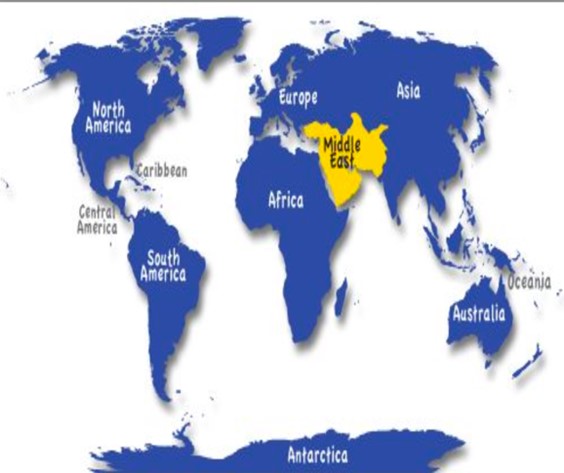
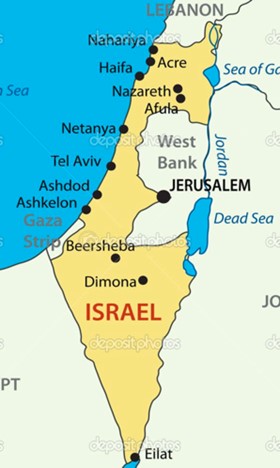
The Jewish people originated about 3,000 years ago in Southwest Asia, in the land of Israel.
Jewish Americans, like Jews everywhere, feel a strong connection to each other and to the ancestral homeland of Israel. Jewish tradition and rituals reinforce these connections in many ways, from the content and direction of daily prayers to Jewish holidays. For example, Jews around the world conclude the Passover Seder with “Next year in Jerusalem.”
Jews are a distinct ethnic group connected by rich traditions, thousands of years of history, ancestry, language, and religion. Jewish American ethnic identity may be expressed through food, language, holidays, celebrations, a feeling of connectedness to other Jews (Jewish peoplehood), remembrances of historical and ancestral experiences, connections to Israel, a commitment to social justice, and cultural elements such as music, literature, art, and philosophy that are also part of Jewish life.
Jews do not fit exclusively into predefined categories, and frequently self-identify as both an ethnic group and a people.
o Jewish Americans are an ethnic group among diverse American ethnic groups.
o The concept of Jewish peoplehood means that Jews around the world are connected to each other across time and geography and share a common destiny.
There are several major Jewish ethnic subgroups:
o Mizrahi Jews are racially diverse Arabic- and Farsi-speaking Jews indigenous to the Middle East and North Africa for over 2,500 years.
o Sephardic Jews are originally Judeo-Spanish or Ladino-speaking Jews expelled from Spain and Portugal to North Africa, the Ottoman Empire, and Central and South America, beginning with Spain’s expulsion in 1492.
o Ethiopian Jews are Amharic-speaking Jews originally from Ethiopia.
o Ashkenazi Jews are or were Yiddish-speaking Eastern and Central European Jews.
Major languages and literature of Jewish expression include English, Hebrew, Arabic, Yiddish, Ladino, and Farsi. Hebrew, the language of Jewish scripture, is often a lingua franca that has united different Jewish ethnic subgroups.
The physical appearance of Jewish Americans is very diverse, and skin color can range from light skinned to dark skinned, and includes Middle Eastern Jews, African American Jews, Asian American Jews, Latino/a/x Jews, and Native American Jews. Jewish families include multiracial households and there are diverse appearances both within families and within communities.
The majority of Jewish Americans emigrated from Eastern Europe, and while their racial appearance often reflects this, there is a range of physical appearances, reflecting the movement of Jews over time and place.
For many Jews, Jewish identity is primary, but they may be classified by others based on their skin color. Therefore, Jews often experience a divergence between internal identity and external classification.
Other Jewish Americans or their families emigrated from the Middle East (Iran, Iraq, Israel, Lebanon, Syria, Turkey, Yemen), North Africa (Egypt, Libya, Tunisia, Algeria, Morocco), East Africa (Ethiopia), Central Asia (Bukharan Jews from Uzbekistan and Tajikistan), Central and South America, and beyond, and are of Mizrachi and Sephardic heritage.
American Judaism has a range of religious denominations, including Reform, Reconstructionist, Conservative, and Orthodox, with a range of observances and practices. At the same time, Jews
are united by shared sacred texts, like the Torah, by celebrations, traditions, and a feeling of connection to other Jews around the world.
A 2020 Pew Research Center survey found that among younger Jewish adults 18-29, 29% identify as Reform, 17% identify as Orthodox, 8% identify as Conservative, and 41% don’t identify with any particular denomination. See https://www.pewresearch.org/fact-tank/2021/05/11/10-key-findings-about-jewish-americans/.
Jewish Americans have a wide range of opinions and beliefs about what it means to be Jewish, how Jewish identity is defined, and the extent to which they identify with the religion of Judaism.
Across Jewish denominations, ancestry marks a person as Jewish regardless of the individual’s personal level of religious observance. Traditionally, a person is considered Jewish if born to a Jewish mother. Reform Jews among others consider a person with a Jewish father to also be Jewish.
Jews consider a person who converts to Judaism, without Jewish ancestry, to be as Jewish as any other Jew.
Jews are part of the Jewish American community by birth, adoption, marriage, and by throwing their lot in with the Jewish people through conversion or being part of a Jewish family
Faces of Jewish American Diversity
I Am Jewish: Personal Reflections Inspired by the Last Words of Daniel Pearl
| PERSONAL REFLECTION OF: Douglas Rushkoff | ANALYSIS AREA: *Be sure to provide complete sentences and unbold your responses. |
| Douglas Rushkoff is a writer, journalist, and professor of media studies. “Jews are not a tribe but an amalgamation of tribes around a single premise that human beings have a role. Judaism dared to make human beings responsible for this realm. Instead of depending on the gods for food and protection, we decided to enact God, ourselves, and to depend on one another. So out of the death cults of Mitzrayim [Egypt] came a repudiation of idolatry and a way of living that celebrated life itself. To say “l’chaim [to life]” was new, revolutionary, even naughty. It overturned sacred truths in favor of sacred living.… It’s important to me that those, who throughout our history, have attacked the Jews on the basis of blood not be allowed to redefine our indescribable process or our internally evolving civilization. We are attacked for our refusal to accept the boundaries, yet sometimes we incorporate these very attacks into our thinking and beliefs. It was Pharaoh who first used the term Am Yisrael [People of Israel] in Torah, fearing a people who might replicate like bugs and not support him in a war. It was the Spanish of the Inquisition who invented the notion of Jewish blood, looking for a new reason to murder those who had converted to Catholicism. It was Hitler, via Jung, who spread the idea of a Jewish “genetic memory” capable of instilling an uncooperative nature in even those with partial Jewish ancestry. And it was Danny Pearl’s killers who defined his Judaism as a sin of birth. I refuse these definitions. Yes, our parents pass our Judaism on to us, but not through their race, blood, or genes — it is through their teaching, their love, and their spirit. Judaism is not bestowed; it is enacted. Judaism is not a boundary; it is the force that breaks down boundaries. And Judaism is the refusal to let anyone tell us otherwise.” (pages 90–91) | 1. Highlight or bold/underline a sentence or phrase from the excerpt that leaves a lasting impression on you. Explain your selection. 2. What elements of their identity does the author stress (culture, family, ancestry, history, religion, social justice, community, etc.)? 3. What do you think being Jewish means to the person in the excerpt? 4. Why do Jewish Americans not fit neatly into racial and religious categories? |
| PERSONAL REFLECTION OF: Justice Ruth Bader Ginsburg | ANALYSIS AREA: *Be sure to provide complete sentences and unbold your responses. |
| Justice Ruth Bader Ginsburg was a Justice of the U. S. Supreme Court from 1993 to 2020 and advocate for women’s rights. “I say who I am in certain visible signs. The command from Deuteronomy appears in artworks, in Hebrew letters, on three walls and a table in my chambers. “Zedek, zedek, tirdof,” Justice, Justice shalt thou pursue,” these artworks proclaim; they are ever-present reminders to me what judges must do “that they may thrive.” There is also a large silver mezuzah [Torah verses in a small case] on my door post… I am a judge, born, raised, and proud of being a Jew. The demand for justice runs through the entirety of Jewish history and Jewish tradition. I hope, in all the years I have the good fortune to serve on the bench of the Supreme Court of the United States, I will have the strength and courage to remain steadfast in the service of that demand.” (pages 201–202) | 1. Highlight or bold/underline a sentence or phrase from the excerpt that leaves a lasting impression on you. Explain your selection. 2. What elements of their identity does the author stress (culture, family, ancestry, history, religion, social justice, community, etc.)? 3. What do you think being Jewish means to the person in the excerpt? 4. Why do Jewish Americans not fit neatly into racial and religious categories? |
| PERSONAL REFLECTION OF: Naim Dangoor | ANALYSIS AREA: *Be sure to provide complete sentences and unbold your responses. |
| Naim Dangoor was a leader of Iraqi Jewry outside Iraq. The location of Babylonia is primarily modern-day Iraq. “When I was a young boy a teacher at school asked me, “Why are you a Jew?” I, with all the practicality of youth, replied, because I was born one!” There is, however, something in this sentiment that rings truer than one might think Judaism is a birthright, a glorious gift from one’s forefathers of faith, culture, and heritage. For me, it is this: my strong Babylonian heritage, the heritage that Daniel Pearl also shared, his mother having been born in Baghdad, that makes me so proud to be a Jew. Babylonia was one of the main birthplaces of the Jewish people, from where Abraham emerged as a founder, and later from where the Babylonian Talmud, forming the framework for Rabbinic Judaism, was created. Its glorious Jewish intellectual eminence fanned out across the known world for more than a thousand years. Currently the descendants of this tradition are spread throughout the globe.” (pages 97–98) | 1. Highlight or bold/underline a sentence or phrase from the excerpt that leaves a lasting impression on you. Explain your selection. 2. What elements of their identity does the author stress (culture, family, ancestry, history, religion, social justice, community, etc.)? 3. What do you think being Jewish means to the person in the excerpt? 4. Why do Jewish Americans not fit neatly into racial and religious categories? |
| PERSONAL REFLECTION OF: Norman Lear | ANALYSIS AREA: *Be sure to provide complete sentences and unbold your responses. |
| Norman Lear is a writer, producer, and social activist. “I identify with everything in life as a Jew. The Jewish contribution over the centuries to literature, art, science, theater, music, philosophy, the humanities, public policy, and the field of philanthropy awes me and fills me with pride and inspiration. As to Judaism, the religion: I love the congregation and find myself less interested in the ritual. If that describes me to others as a “cultural Jew,” I have failed. My description, as I feel it, would be: total Jew.” (page 34) | 1. Highlight or bold/underline a sentence or phrase from the excerpt that leaves a lasting impression on you. Explain your selection. 2. What elements of their identity does the author stress (culture, family, ancestry, history, religion, social justice, community, etc.)? 3. What do you think being Jewish means to the person in the excerpt? 4. Why do Jewish Americans not fit neatly into racial and religious categories? |
| PERSONAL REFLECTION OF: Rabbi Angela Warnick Buchdah | ANALYSIS AREA: *Be sure to provide complete sentences and unbold your responses. |
| Rabbi Angela Warnick Buchdahl is an Asian American Rabbi ordained by Hebrew Union College. She spent her college summers working as head song leader at Camp Swig, a Reform Jewish camp in Saratoga, California. “My father is a Jew and my mother is a Korean Buddhist. As the child of a mother who carried her own distinct ethnic and cultural traditions — and wore them on her face — I internalized the belief that I can never be “fully Jewish” because I could never be “purely” Jewish. My daily reminders included strangers’ comments “Funny you don’t look Jewish”), other Jews’ challenges to my halakhic [Jewish law] status, and every look in the mirror. Jewish identity is not solely a religious identification, but also a cultural and ethnic marker. While we have been a “mixed multitude” since Biblical times, over the centuries the idea of a Jewish race became popularized. After all, Jews have their own language, foods, even genetic diseases. But what does the Jewish “race” mean to you if you are Black and Jewish? Or Arab and Jewish? Or even German and Jewish, for that matter? How should Jewish identity be understood, given that Am Yisrael [people of Israel] reflects the faces of so many nations? Years ago… I called my mother to declare that I no longer wanted to be Jewish. I did not look Jewish. I did not carry a Jewish name, and I no longer wanted the heavy burden of having to explain and prove myself every time I entered a new Jewish community. My Buddhist mother’s response was profoundly simple: “Is that possible?” At that moment I realized I could no sooner stop being a Jew than I can stop being Korean, or female, or me. Judaism might not be my “race” but it is an internal identification as indestructible as my DNA. Jewish identity remains a complicated and controversial issue in the Jewish community. Ultimately, Judaism cannot be about race, but must be a way of walking in this world that transcends racial lines. Only then will the “mixed multitude” truly be Am Yisrael.” (pages 19-20) | 1. Highlight or bold/underline a sentence or phrase from the excerpt that leaves a lasting impression on you. Explain your selection. 2. What elements of their identity does the author stress (culture, family, ancestry, history, religion, social justice, community, etc.)? 3. What do you think being Jewish means to the person in the excerpt? 4. Why do Jewish Americans not fit neatly into racial and religious categories? |
| PERSONAL REFLECTION OF: Rabbi Eric H. Yoffie | ANALYSIS AREA: *Be sure to provide complete sentences and unbold your responses. |
| Rabbi Eric H. Yoffie is President Emeritus of the Union for Reform Judaism who focuses on interfaith relations and social justice. “I am Jewish. This means, above all else, that I was present at Sinai and that when the Torah was given on that mountain, my DNA was to be found in the crowd… A people is usually defined by race, origin, language, territory or statehood, and none of these categories is an obvious common denominator for the worldwide Jewish people. Peoplehood is a puzzling concept for modern Jews, particularly the younger ones, who often cannot understand what connects them to other Jews in Moscow, Buenos Aires, and Tel Aviv. But I am convinced, to the depth of my being, that Jewish destiny is a collective destiny… It is the covenant at Sinai that links all Jews, including non-observant ones, in a bond of shared responsibility. And if we hope to strengthen the unity and interdependence of the Jewish people, we will have to revive the religious ideas on which these notions are based.” (pages 114–115) | 1. Highlight or bold/underline a sentence or phrase from the excerpt that leaves a lasting impression on you. Explain your selection. 2. What elements of their identity does the author stress (culture, family, ancestry, history, religion, social justice, community, etc.)? 3. What do you think being Jewish means to the person in the excerpt? 4. Why do Jewish Americans not fit neatly into racial and religious categories? |
| PERSONAL REFLECTION OF: Sarah Rosenbuam | ANALYSIS AREA: *Be sure to provide complete sentences and unbold your responses. |
| Sarah Rosenbuam is a 15 years old from Southern California. “When I say that I am Jewish, I am identifying myself as part of a tradition, connected to our foremothers and fathers, and carrying on to the future a culture, a religion, a way of life. I feel pride and am overwhelmed with joy when I declare that I am part of this incredible people, our people Israel.” (page 54) | 1. Highlight or bold/underline a sentence or phrase from the excerpt that leaves a lasting impression on you. Explain your selection. 2. What elements of their identity does the author stress (culture, family, ancestry, history, religion, social justice, community, etc.)? 3. What do you think being Jewish means to the person in the excerpt? 4. Why do Jewish Americans not fit neatly into racial and religious categories? |
| PERSONAL REFLECTION OF: Senator Dianne Feinstein | ANALYSIS AREA: *Be sure to provide complete sentences and unbold your responses. |
| Senator Dianne Feinstein is the senior US Senator from California since 1992. “I was born during the Holocaust. If I had lived in Russia or Poland — the birthplaces of my grandparents — I probably would not be alive today, and I certainly wouldn’t have had the opportunities afforded to me here. When I think of the six million people who were murdered, and the horrors that can take hold of a society, it reinforces my commitment to social justice and progress, principles that have always been central to Jewish history and tradition. For those of us who hold elected office, governing in this complex country can often be difficult. My experience is that bigotry and prejudice in diverse societies ultimately leads to some form of violence, and we must be constantly vigilant against this. Our Jewish culture is one that values tolerance with an enduring spirit of democracy. If I’ve learned anything from the past and from my heritage, it’s that it takes all of us who cherish beauty and humankind to be mindful and respectful of one another. Every day we’re called upon to put aside our animosities, to search together for common ground, and to settle differences before they fester and become problems. Despite terrible events, so deeply etched in their souls, Jews continue to be taught to do their part in repairing the world. That is why I’ve dedicated my life to the pursuit of justice; sought equality for the underdog; and fought for the rights of every person regardless of their race, creed, color, sex, or sexual orientation, to live a safe, good life. For me that’s what it means to be a Jew, and every day I rededicate myself to that ideal.” (pages 228–229) | 1. Highlight or bold/underline a sentence or phrase from the excerpt that leaves a lasting impression on you. Explain your selection. 2. What elements of their identity does the author stress (culture, family, ancestry, history, religion, social justice, community, etc.)? 3. What do you think being Jewish means to the person in the excerpt? 4. Why do Jewish Americans not fit neatly into racial and religious categories? |
| PERSONAL REFLECTION OF: Senator Joe Lieberman | ANALYSIS AREA: *Be sure to provide complete sentences and unbold your responses. |
| Senator Joe Lieberman is a former U.S. Senator from Connecticut from 1989 to 2013, and a Vice-Presidential candidate in 2000. “What does being Jewish mean to me? To me, being Jewish means having help in answering life’s most fundamental questions. How did I come to this place? And, now that I am here, how should I live? My faith, which has anchored my life, begins with a joyful gratitude that there is a God who created the universe and then, because He continued to care for what He created, gave us laws and values to order and improve our lives. God also gave us a purpose and a destiny —to do justice and to protect, indeed to perfect, the human community and natural environment. Being Jewish in America also means feeling a special love for this country, which has provided such unprecedented freedom and opportunity to the millions who have come and lived here. My parents raised me to believe that I did not have to mute my religious faith or ethnic identity to be a good American, that, on the contrary, America invites all its people to be what they are and believe what they wish…. Jews around the world and all who love freedom— the freedom to think, to speak, to write, to question, to pray—will hold Daniel [Pearl] near to our hearts, and from his courage we will draw internal light and strength.” (pages 107-108) | 1. Highlight or bold/underline a sentence or phrase from the excerpt that leaves a lasting impression on you. Explain your selection. 2. What elements of their identity does the author stress (culture, family, ancestry, history, religion, social justice, community, etc.)? 3. What do you think being Jewish means to the person in the excerpt? 4. Why do Jewish Americans not fit neatly into racial and religious categories? |
Jewish Americans: Identity, History, and Experience Fact Sheet
● The first Jews to arrive in 1654 to what became the United States were Sephardic Portuguese Jews from Brazil, who fled the Portuguese expulsion and Inquisition. The American Jewish community was predominantly Sephardic through the first decades of the U.S.
● From 1840 to 1880, Jewish immigrants were primarily from Central Europe and Germany, fleeing poverty, persecution, anti-Jewish violence, and revolution. During this time, the Reform Movement transformed Jewish practice in America, created the first prayer book for Americans, and established a rabbinical school. By 1880, the majority of U.S. synagogues were Reform congregations.
● Between 1880 and 1924, 2 million Jewish immigrants came to the U.S. from Eastern Europe, pushed by persecution, pogroms, war, and poverty. White supremacist prejudice against Jews and Catholics from Eastern and Southern Europe motivated the passing of the Johnson-Reed Immigration Act of 1924, greatly restricting Jewish immigration through 1965.
● In official U.S. immigration and naturalization law from 1898 to 1941, Jews were categorized as part of the “Hebrew race.” This racialization deemed Jews non-white.
○ Racialization is when a group becomes categorized as a stigmatized group, and that group is seen as a separate lower race by another dominant group.
● Yiddish became a major language of Jewish newspapers, theatre, and culture, while at the same time public schools became the vehicle for acculturation, Americanization, and learning English, with many Jews entering teaching.
● American Judaism was changed by the large wave of Ashkenazi immigrants 1880-1924 from Eastern Europe, and in the next three decades, by the growth of the Orthodox (1920s-50s) and Conservative (1950s) movements. These movements established synagogues, rabbinical schools, seminaries, and universities. For many decades, American Judaism was defined by the Reform, Conservative, and Orthodox denominations.
● In addition to targeting African Americans, the white supremacist racism of the Ku Klux Klan (KKK) deemed Jews as non-white, a separate and lesser race that was a threat to American “racial purity,” and targeted Jews with exclusionary immigration legislation and intimidation in large marches on Washington, D.C.
○ White supremacy is the belief that white people are a superior race and should dominate society. White supremacists target other racial and ethnic groups, such as African Americans and Jews, who they view as inferior.
● In the first half of the 20th century, Jews were usually not considered white in American society and, as a result, experienced discrimination in employment, housing, education, and social acceptance.
● From the 1880s through the 1960s, antisemitic employment discrimination with overt and covert “no Jews allowed” notices often led Jews to enter new industries with less discrimination. Housing covenants prohibited Jews or “Hebrews” from purchasing houses in many areas. Elite universities also had quotas, limiting the number of Jews who could attend them until the early 1960s.
● Jewish American allies to the African American community played a significant role in the founding and funding of the NAACP, Rosenwald Schools, and the Southern Poverty Law Center. Julius Rosenwald partnered with Booker T. Washington to build over 5,000 schools for African American students between 1917 and 1932, and by 1928, one-third of the South’s rural Black school children and teachers were served by Rosenwald Schools. In 1931, lawyer Samuel Leibowitz defended the Scottsboro boys.
● Motivated by Jewish tradition’s concern for the worker, and oppressive working conditions for Jewish immigrants, the U.S. labor movement included many Jewish labor organizers, such as Samuel Gompers (founder of American Federation of Labor (AFL) and president 1886-1924); Rose Schneiderman (active 1904-1940s in the Women’s Trade Union League); and Pauline M. Newman (active 1907-1983), Clara Lemlich (active 1909-1951), and David Dubinsky (active 1932-1966 as president) in the International Ladies Garment Worker Union (ILGWU).
● Jews were pioneers in the new film industry in California in the early decades of the 20th century. This included studio heads Harry Cohn (Columbia Pictures 1919-1958), Samuel Goldwyn (active 1913-1959), Louis B. Mayer (active MGM 1915-1951), Carl Laemmle (Universal Pictures active 1909-1939), the Warner Brothers (active 1918-1973), and Adolph Zukor (Paramount Pictures active 1903-1959). Though there was less overt discrimination in California, anti-Jewish prejudice in the U.S. led many studio heads and producers to shy away from Jewish themes in movies for many decades.
● Jewish songwriters enthusiastically embraced American music and contributed to the Great American songbook (1911-1960), Tin Pan Alley (1885-1940), Broadway musicals (1949-2018), and folk and protest music (1930s-1970s). Among these were: George and Ira Gershwin, Irving Berlin, Rodgers and Hammerstein, Aaron Copland, Stephen Sondheim, Leonard Bernstein, Bob Dylan, Arlo Guthrie, Phil Ochs, Art Garfunkel, Paul Simon, Peter Yarrow, Carole King, Country Joe McDonald, and Ramblin’ Jack Elliott.
● In the 1920s and 1930s, anti-Jewish conspiracy theories (later used in Nazi propaganda) were openly distributed in the U.S., for example by Henry Ford’s newspaper (The Dearborn Independent) and Father Edward Coughlin’s radio show.
● Drawing upon white supremacist ideas about Jews and pseudoscientific eugenics “theories,” Nazi racial theories deemed Jews a separate non-white race (racialization), and the lowest race in their racial hierarchy, leading to the genocide of the Holocaust.
● In the 1930s, growing anti-Jewish prejudice in the U.S. led to the U.S. government’s refusal of entry to Jewish refugees from Nazi Germany until 1944, after millions of Jews were already murdered.
○ Refugees are people with a history of persecution or a well-founded fear of future persecution on account of their race, religion, nationality, membership in a particular social group, or political opinion.
○ Immigrants are people who have left their country of origin and arrived in another country.
● Some Jews changed their Jewish sounding names to avoid discrimination, be more accepted by American society, not feel different or other, or because they had internalized other people’s negative attitudes about Jews. Starting with immigrants, and common with actors, this practice of name-changing continues to the present day. At the same time, today, many Jewish Americans proudly select Jewish ethnic names, as an expression of pride in their heritage.
● In the decades after the Holocaust, American attitudes toward Jews gradually changed, and overt anti-Jewish discrimination decreased. Descendants of light-skinned Jewish immigrants were able to acculturate or assimilate which brought gains and losses.
○ Acculturation refers to the adoption of many of the practices and values of the majority or dominant culture while still retaining a connection to one’s culture of origin, or a balance between cultures.
○ Assimilation is a process by which a minority group or culture comes to resemble that of the majority culture.
● Assimilation allowed the children of light-skinned Jewish immigrants to change their position on the racial hierarchy from their immigrant parents, though they remained vulnerable to antisemitism. Assimilation also brought loss of community, identity, cultural traditions, and practic
● During the civil rights movement, a large percentage of allies were Jewish activists, disproportionate to their small percentage in the U.S. population. Nearly half the country’s civil rights lawyers were Jewish, and more than half of the non-African American civil rights workers were Jewish, including two of the three men murdered during the 1964 Freedom Summer.
● Jewish women played critical roles in the second wave feminist movement in the 1960s and 1970s: Betty Friedan, Bella Abzug, Gloria Steinem, Letty Cottin Pogrebin, and Supreme Court Justice Ruth Bader Ginsberg when she worked for the ACLU.
● Jews have also been at the forefront of the LGBTQ rights movement, contributing to major milestones such as the advancement of marriage equality and the fight for HIV/AIDS recognition: Evan Wolfson, Edie Windsor, Roberta Kaplan, and Larry Kramer. Pioneering LGBTQ Jewish elected officials include Harvey Milk in California, and Barney Frank from Massachusetts.
● While anti-Jewish prejudice became less socially accepted over time, antisemitism persisted and persists in various forms today.
○ Antisemitism is hatred, discrimination, fear, and prejudice against Jews based on stereotypes and myths that target their ethnicity, culture, religion, traditions, right to self-determination, or connection to the State of Israel.
● Today, white supremacists continue to racialize Jews as non-white. This was evident when the Unite the Right March in Charlottesville chanted “The Jews will not replace us” with “us” referring to white Americans. See https://www.washingtonpost.com/news/acts-of-faith/wp/2017/08/14/jews-will-not-replace-us-why-white-supremacists-go-after-jews/.
● Antisemitism is found across the political spectrum, and manifests differently. In schools, it often shows up through Holocaust or Nazi imagery that is used to intimidate or threaten Jewish students. It also shows up with Jewish students being excluded from diversity discussions or allyship, or for not disassociating themselves from Israel.
● Jews and Jewish institutions continue to be targets of anti-Jewish hate, which can include vandalism, bomb threats, harassment and bullying, physical assaults and violent attacks such as bombings and shootings. For example, in Pittsburgh, PA in 2018, and in Poway, CA in 2019, there were two synagogue shootings with a total of 12 fatalities.
● In different contexts, Jewish Americans may have very different experiences.
○ Light-skinned Jews may experience the benefits of conditional whiteness on the basis of their appearance, for example, in safer encounters with law enforcement. At the same time, they may experience antisemitic prejudice and discrimination on the basis of their Jewishness from people on both extremes of the political spectrum.
○ Jews of color, like all communities of color, face systemic racism, and also face antisemitic prejudice and discrimination on the basis of their Jewishness.
● Jews of all skin colors who are visibly Jewish, from their appearance, name, self-identification, or religious clothing or symbols, e.g., a Star of David necklace or kippah, experience more overt antisemitism.
● Reflecting Jewish tradition’s fondness for the written word, Jewish Americans have contributed extensively to American literature. Among these literary figures are:
○ poets Emma Lazarus, Allen Ginsberg, Adrienne Rich, and Louise Glück.
○ playwrights Ben Hecht, Lillian Hellman, Clifford Odets, Arthur Miller, Neil Simon, David Mamet, and Tony Kushner.
○ writers Mary Antin, Anzia Yezierska, Isaac Bashevis Singer, Isaac Asimov, Saul Bellow, Herman Wouk, Norman Mailer, Bernard Malamud, Elie Wiesel, Philip Roth, Cynthia Ozick, Judy Blume, Art Spiegelman, Anita Diamant, Faye Kellerman, Nathan Englander, Jonathan Safran Foer, and Dara Hor
● Jewish comedians have also played an important role in shaping American popular culture, drawing on their experiences as outsiders looking in on American society. Examples include: Groucho Marx and the Marx brothers, Three Stooges, Jack Benny, Sid Cesar, Mel Brooks, Joan Rivers, Jerry Seinfeld, Sarah Silverman, and Jon Stewart.
● Jewish Americans have made significant contributions to life saving medical advances that have saved millions of American lives including: chlorination of drinking water (Abel Wolman in 1918); polio vaccine (Jonas Salk in 1955, and Albert Sabin in 1961-64); measles vaccine (Samuel Katz in 1958); heart pacemaker and defibrillator (Paul Zoll 1956 and 1960); the mammogram (Jacob Gershon-Cohen in 1964); the Heimlich maneuver (Henry Heimlich in 1974); and identifying that virus genes can cause cancer (Harold Varmus in the 1970s).












 njcssjournal