Unpack the news coming out of Venezuela with expert-informed resources that focus on history and fundamental foreign policy concepts.
People celebrate after the U.S. struck Venezuela and captured its President Nicolas Maduro and his wife Cilia Flores, in Santiago, Chile on January 3, 2026.
Given the uncertainty surrounding Venezuela, it is important to present this moment in foreign policy in a nonpartisan, fact-based manner to encourage students to think critically and form their own opinions.
In this blog, you’ll find three ways to incorporate this topic into your teaching by
viewing events through a historical lens;
focusing on fundamental concepts of foreign policy; and
conducting a hypothetical simulation on the foreign policy tool of intelligence and covert action.
A Summary of the Past Decade in Venezuela
Venezuela has been struggling for years. Once South America’s wealthiest country, Venezuela’s economy collapsed in 2014 under President Nicolás Maduro due to expensive social policies, corruption, and overreliance on oil exports. The legitimacy of Maduro’s role as president has been called into question numerous times because of fraudulent elections and arrests of opposition leaders.
For almost two decades, the United States has imposed sanctions on Venezuela for a variety of reasons, including for lack of cooperation on counterterrorism and anti-narcotics efforts, as well as human rights violations. Under the Biden Administration, some sanctions were rolled back in an effort to curb energy prices and help the Venezuelan people. However, after Maduro’s government claimed victory in the 2024 election despite evidence that the opposition won the majority of votes, the tide changed again. Within the first year of his second term, President Trump began deploying a significant military presence off the coast of Venezuela, escalating tensions.
History of U.S. Foreign Policy in South and Latin America
The U.S. has been involved in Latin America almost as long as the United States has existed as a country. The Monroe Doctrine of 1823 declared that European nations should not interfere in the region, as it was in the United States’ sphere of influence. President Theodore Roosevelt went further than his contemporaries, announcing through the Roosevelt Corollary that the United States would intervene in countries in the region. These two declarations set the stage for decades of intervention aimed at advancing U.S. interests.
A 1905 political cartoon by Louis Dalrymple depicts Uncle Sam straddling the Americas while wielding a big stick labeled “Monroe Doctrine.” Source: Bettmann Archive via Getty Images
From the Spanish-American War to supporting an armed insurrection to creating the Panama Canal, the U.S. became increasingly involved in Latin America as it sought to establish itself as a global power. There were a few years when the U.S. attempted to prioritize a more diplomatic approach in the region and focused on fostering democracy and developing local economies.
The Cold War quickly saw a return to U.S. interventionism. During this period, the United States and the Soviet Union supported opposing governments worldwide to promote their ideologies, exploited local politics for economic advantage, and brought the world to the brink of nuclear war. Some of the governments that the U.S. supported to achieve its goals were violent, oppressive, and often inflicted lasting harm on their populations.
The U.S. operation to capture Maduro could signal a return to the kind of interventionism that defined previous decades of U.S. involvement in Latin America.
Foreign Policy Concepts Relevant to Venezuela
With a range of perspectives on what has occurred in Venezuela over the past few days, understanding fundamental foreign policy concepts can help students form their own conclusions.
Discussions about Saturday’s operation have centered on several core foundational concepts in international relations, including sovereignty, international law, and the authorization of force. Use CFR Education resources to help your students understand the basics before they consider whether they believe the concepts apply in this situation.
In principle, sovereignty means countries get to control what happens inside their borders and shouldn’t interfere within other countries. However, as with most things, established principles don’t always hold true. Countries occasionally violate other countries’ sovereignty to varying degrees – sometimes for humanitarian reasons, and sometimes to pursue economic or security goals.
The concept of sovereignty has become increasingly complicated in a more interconnected world, where many of today’s most pressing issues do not respect geographic boundaries. What does sovereignty look like when greenhouse gasemissions, viruses, and information ignore borders? While sovereignty serves as a central organizing principle at the heart of modern international relations, there are few clear rules or procedures for determining who is entitled to form a sovereign country or what constitutes a violation of sovereignty.
As with sovereignty, international law has helped maintain order by setting standards that other countries and domestic publics alike can use to hold governments accountable. Some types of international law are codified in the form of treaties and formalized agreements. Other international law is customary, comprising international obligations that arise from established international practices rather than from formal written treaties.
The United Nations (UN) Charter prohibits the use of military force, except in two cases: self-defense and instances where the UN Security Council authorizes the use of force. If war does break out, international humanitarian law encompasses a set of rules that aim to mitigate the conflict’s impact on civilians. These principles are codified in the Geneva Conventions of 1949, which 196 countries have ratified.
Primary Source Tip: Have your students read Article 2(4) in Chapter I of the UN Charter and discuss the extent to which it leaves room for interpretation regarding the use of military force and self-defense.
According to the Constitution, Congress has the exclusive power to declare war. It also empowers Congress to authorize military force without having to declare war, as Congress did—among other times—in Afghanistan and Iraq in the early 2000s. While Congress can greenlight military force, the president serves as the commander-in-chief of the military and has discretion over how it performs its duties. Presidents have used this authority to deploy the country’s armed forces, conduct intelligence, and carry out covert operations.
In 1973, Congress passed the War Powers Resolution to ensure that presidents can act effectively in a military context by acting unilaterally for specific periods of time before obtaining congressional approval. However, past presidents of both parties have violated the War Powers Resolution without facing action from Congress.
Primary Source Tip: Have your students read Article I, Section 8, and Article II, Section 2, of the Constitution before reading the CFR Education piece to see how these Sections of the Constitution have evolved over time. Then ask them to discuss whether they see Venezuela as representing continuity or change in the evolving way in which presidents pursue American interests.
Hypothetical Scenarios
It can be challenging to understand the foreign policy forces at play in Venezuela while also keeping up with the constant news updates. You can drive home the relevant issues of intelligence and covert action without having to refer back to the news for policy changes with one of the hypothetical situations in CFR Education’s simulations library.
In the simulation below, students are put in the shoes of the National Security Council (NSC) to advise the president on deciding whether to use covert action as a tool of foreign policy. After conducting the simulation, ask students to reflect: What is this tool suitable for? Does it fulfill its stated goals? What are the pros and cons of employing covert action? Do students see similarities or differences between the hypothetical simulation and the events this past weekend in Venezuela?
Teach the Headlines with CFR Education
Rapidly changing global affairs can be challenging to understand, which is why it is essential to scaffold these events for your students by studying history, principles of foreign policy, and simulations that model global situations.
You can rely on CFR Education for nonpartisan resources that will help you tackle this situation as well as the other global events heading our way.
Newsletter to teach today’s most pressing global issues!
Proven Climate Solutions: Leading Voices on How to Accelerate Change
Edited by BF Nagy
Reviewed by Hank Bitten, NJCSS Executive Director
Our world made a monumental change during the Industrial Revolution when homes and buildings converted from wood-burning fireplaces to coal and oil furnaces allowing for heat and hot water. This change came 4,000 years after the invention of fire and revolutionized the way people live. Eventually, it brought electricity and light into their homes. Every aspect of home life became more efficient than it had been when people split wood for fireplaces.
Around 1950 the world converted to natural gas. As a young boy I shoveled coal into the two furnaces in our basement around 6:00 a.m. each morning. In 1957, I remember the backhoes and tractors digging up our Paterson, N.J. street to install natural gas lines. By 1970, most areas of New Jersey were using natural gas for heating and cooking. This change took about 20 years.
By 2,000, we began to realize that combustion engines and fossil fuels were harming our environment and were a cause of respiratory and cancer-related deaths. We understood that “natural” gas was not natural because the release of methane was even more harmful than the soot and smoke from coal and oil. We began to look for new sources of energy in solar, wind, nuclear, biomass, geothermal, tidal, and hydrogen.
From the perspective of a social studies educator, our students need to focus on the solutions to these problems. Proven Climate Solutions includes nineteen concise chapters that take less than ten minutes to read. Each chapter provides a solution on the technology, economics, and empirical examples of how and where they are working. For teachers who use classroom debates or a simulated congress, the chapters in the book provide information on the advantages of solar and wind over every other source of renewable energy!
An example of factual information for a classroom debate is in the chapter, “Opportunity Costs and Distractions” by BF Nagy, editor of this book. Here are some examples:
“In 2022, massive leaks of oil in Thailand, Peru, Ecuador, and Nigeria led to explosions, fatalities, fires, and extensive water pollution.” (Page 50)
“The world’s biggest tanker containing 1.1 million barrels of oil began leaking after being abandoned in the Red Sea near Yemen by a Chevron subsidiary.” (Page 50)
“In 2023, Massachusetts state regulators denied a permit modification that would allow discharge of more than one million gallons of toxic wastewater into cape Code Bay.” (Page 50)
“Nuclear power costs about $180 per megawatt/hour compared with $50 for wind and $60 for solar.” (Page 51)
“Just two generations ago, in 1979, the United States built the Runit Dome in the Marshall Islands. Below an eighteen-inch concrete cap, they stored 111,000 cubic yards of radioactive debris from twelve years of nuclear tests. It is already cracking and leaking into the sea.” (Page 52)
The chapter on VPP (Virtual Power Plants) fascinated me because I had never heard about them. As I learned more about the need to use a decentralized electric grid and the technology that is making this feasible, I realized the connections for students in their lessons on the Industrial Revolution and the efficiency of how VPP and DERs (Distributed Energy Resources) are making a difference in our economy and environment. In addition, they foster community engagement and shared resources.
The information on artificial intelligence in constructing pre-fab housing units, passive house designs meeting low carbon standards, virtual power plants, and the recent research on battery technology will engage students in thinking ten years into the future. The possibilities of airplanes and homes powered by batteries is transformative in the ways we are currently conditioned to think about travel, energy, and home heating systems.
“Sendero Verde means ‘green path’ and is among the signature achievements of two brilliant women: engineer Lois A. from Steven Winter Associates and architect Deborah M. from Handel Architects.
The duo designed Sendero Verde within the confines of an affordable housing budget, and their companies also collaborated on The House, a twenty-six story passive house certified student residence for Cornell University’s tech school on New York’s Roosevelt Island. Another of their projects is the massive fifty-three story Winthrop Center in Boston, which in the early 2020s, was considered the biggest passive house office project in the world.” (Page 110)
“The House” Cornell University’s Student Residence using a Passive House design.
Teachers who use an interdisciplinary approach will find helpful research on the new carbon sinks being formed as the ice caps are melting. These polar foodwebs are helpful as deforestation has reduced the amount of carbon being absorbed by rainforests. The information on biodiversity and the impact of how our planet is adapting to a warmer climate with melting ice is an area of research that students should find interesting.
“Less than half of all carbon captured by polar phytoplankton or macro algae is stored in foodwebs, and nearly all the rest is recycled into the water column by bacteria in what is termed the microbial loop (rotting). Vast numbers and biomass of water column (pelagic) zooplankton, such as copepods or krill, which are shrimp-like crustaceans, store much of this carbon.” (Page 136)
Perhaps the most informative chapter in this book is titled “Circular Food Systems: Feeding the Urban World” because it identifies small innovative companies that are implementing important solutions. Examples for students to research include the White Moustache Yogurt Company, Back of the Yards Algae Sciences, Spare Foods Company, LivinGreen, Evergrain, TripleWin, and Portland Pet Center. When I was a 16-year-old high school student, my Earth Science teacher’s lesson about the impact of the end of civilization as we knew it with the birth of the 3 billionth person had a lasting impact on me. In just ten years, the world’s population will be 9 billion and in 2050 it will likely be 10 billion. As the population increases, the urban density will also increase from 55 percent today to 63 percent by 2050 and provide an urgent need to reduce greenhouse gas emissions. Solutions are needed!
Year
Population
Net Change
Density (P/Km²)
2025
8,231,613,070
69,640,498
55
2026
8,300,678,395
69,065,325
56
2027
8,369,094,344
68,415,949
56
2028
8,436,618,886
67,524,542
57
2029
8,503,285,323
66,666,437
57
2030
8,569,124,911
65,839,588
58
Students need to understand how hydroponic agriculture and circular food systems can sustain life on our planet in the future. Our current dependence on rice, wheat, soybeans, and corn contribute significant amounts of carbon and methane into our atmosphere through their production and distribution. The current agricultural revolution needs to produce food in urban areas and reduce food waste. Source
“The food system we have in place today, one we have nurtured for a half-century and that produces some 43 percent of the world’s calorie supply, is itself in jeopardy due to the growing climate crisis, rising temperatures and prolonged droughts are withering crops; frequent floods are destroying them. The reliance on intensive farming practices such as tilling and heavy fertilizer and pesticide use robs the soils of their productivity, jeopardizing yields necessary to continue feeding rising populations.” (Page 150)
An important thread throughout this book is that proven climate solutions are likely to be local. Heating and electric power will be de-centralized, food production will be on urban rooftops and in parks, and transportation will be redesigned. The school curriculum needs to include case studies from urban ‘smart’ cities. One suggestion for the next edition of Proven Climate Solutions might be to include information on the importance of recycling clothing.
The Hundred Years’ War on Palestine, A History of Settler Colonialism and Resistance, 1917- 2017
by Rashid Khalidi (New York: Holt, 2020)
Review by Alan Singer
A year after the brutal attack on Israel by Hamas on October 7, 2023 and the devastating Israeli military response that has killed over 45,000 Palestinians, I reexamined The Hundred Years’ War on Palestine, A History of Settler Colonialism and Resistance, 1917- 2017 by Columbia University Professor Rashid Khalidi, originally published in 2020. A reviewer for The Nation (Hawa, 2020) described it as “one of the best-researched general surveys of 20th and early 21st century Palestinian life, but it’s also a deeply personal work.” A review in The Guardian (Hughes, 2020) called it “informed and passionate. It pulls no punches in its critique of Jewish-Israeli policies (policies that have had wholehearted US support after 1967), but it also lays out the failings of the Palestinian leadership . . . An elegy for the Palestinians.” The New York Times (Anderson, 2020) reviewer was more critical arguing that Khalidi failed to spell out a resolution to the conflicts between Israel and Palestine and dismissing what he did offer as having an “increasingly fantastic quality.”
Rashid Khalidi’s main arguments are that during the 100-year war on Palestine, the dominant powers, including the United States, favored Zionist ambitions and either ignored or thwarted Palestinian nationalism and that Israel justifies inequality and its aggressive nationalism as part of its need for security. Khalidi’s response is that there are two peoples who legitimately occupy Palestine and there can be no resolution until they both acknowledge the legitimacy of the other. This would require removing external support for the discriminatory and unequal current arrangement. At best the United States has paid lip service to the idea of a two-state solution, but it never placed the needed pressure on Israel to make this possible (245-247).
Khalidi comes from a prominent Palestinian family, so the history of Palestine is interwoven with his family’s history and his own personal experiences. Khalidi was born and educated in New York City while his father was a United Nations official. He has lived and taught in Lebanon and frequently visited Palestine/Israel for research and family visits. His Palestinian family included generations of Islamic and legal scholars and government officials. One noteworthy relative warned of the threat of Zionism to Palestinians as early as 1899 (4). His grandfather was Hussain al-Khalidi, an advocate for Palestinian rights, a mayor of Jerusalem, and member of the Ottoman parliament. A paternal uncle, Husayn al-Khalidi, was mayor of Jerusalem from 1934 to 1937 when he was sent into exile by the British to the Indian Ocean Seychelles archipelago. He was not able to return to Palestine until 1943.
In The Hundred Years’ War on Palestine, Rashid Khalidi writes a history of the region from a Palestinian lens and deconstructs what he considers to be myths about the founding of Israel and its rise as a regional military power. While Khalidi’s title has the history of the struggle of Palestinians for nationhood beginning in 1917, the book actually begins in the 1890s when Theodore Herzl offered a Zionist vision for a Jewish homeland in Palestine. Herzl proposed a settlement plan based on the expulsion of Palestinians that continued to be implemented after the founding of Israel as an independent state in 1948. Herzl believed that European Jews had to “expropriate gently the private property on the estates assigned to us. We shall try to spirit the penniless population across the border by procuring employment for it in transit countries, while denying it employment in our own country” (4).
Yusuf Diya, the late 19th century Palestinian Mayor of Jerusalem, responded to growing Zionist sentiment in an 1899 letter to the chief rabbi of France. Diya argued that “Palestine is an integral part of the Ottoman Empire, and more gravely, it is inhabited by others.” He concluded the letter “in the name of God, let Palestine be left alone” (5). Herzl answered Diya’s letter acknowledging that a Jewish state in Palestine would be a European settler colony and argued it would “form a part of a wall of defense for Europe in Asia, an outpost of civilization against barbarism” (10). In the 1920s, Ze’ev Jabotinsky, a British World War I veteran who promoted a militaristic Zionism, called for military action to support a Jewish state. In 1925, Jabotinsky wrote “If you wish to colonize a land in which people are already living, you must find a garrison for the land, or find a benefactor who will provide a garrison on your behalf . . . Zionism is a colonizing venture, and therefore, it stands or falls on the question of armed forces” (51).
Khalidi believes that the British Empire was never motivated by altruism towards colonized people, but supported Jewish emigration to Palestine because it would buttress Britain’s position in the eastern Mediterranean and solve its own antisemitic “Jewish Problem.” At the same time during and after World War I the British were promising European Zionists a Jewish state in Palestine with the Balfour Declaration, they were also promising Middle Eastern Arab leaders that independent Arab states including a Palestinian state would be carved out of the Ottoman Empire (25). Balfour recognized the contradictory promises that were made, and in a confidential memo to the British cabinet he wrote “we do not propose even to go through the form of consulting the wishes of the present inhabitants of the country . . . the 700,000 Arabs who now inhabit that ancient land” (38).
The hypocrisy of the British position continued when the League of Nations Mandate for Palestine issued in 1922 formalized British control over Palestine. It included a pledge to honor the Balfour Declaration’s promise of a “national home for the Jewish people” in Palestine and while the mandate included a clause that “nothing should be done which might prejudice the civil and religious rights of existing non-Jewish communities,” it never directly referenced Palestinians as a people with a right to self-determination, something British and the Americans continued to do in Middle East peace talks into the 1990s (34).
In the 1930s, as Jewish migration from Europe to Palestine expanded, there was growing Palestinian nationalist resistance to the British Mandate including armed battles between the British military and Palestinian rebels that resulted in about one-sixth of the Palestinian male population killed, wounded, imprisoned, or exiled. In response to the uprisings, a British Commission recommended the division of the mandate into two separate states with the formation of a small Jewish homeland on less than 20% of the territory from which the Palestinian population would be transferred, a euphonism for expelled. Khalidi argues that prior to and during World War II, the Palestinian nationalist movement was weakened by British repression and internal division while the Zionist movement was strengthened by British policy that included creating a Jewish Brigade that marched under their own banner in the British Army and arming and training Jewish settlers to help defeat a wartime Palestinian uprising (43-47). The Jewish Brigade and the armed settlers became the core of the Israeli army during the war for independence.
As the horrors of the Nazi extermination campaign became known, with increasing support from diasporan Jews living in the United States and the American and British governments, Zionists positioned themselves for creation of a post-war Jewish state either in a portion of the Palestinian Mandate or in the entire territory (61). After the war, the British Empire receded as the British were forced to accept Indian independence, faced armed colonial resistance in a number of areas, and Jewish settler opposed continuation of the Palestinian Mandate. Great Britain finally turned the future of Palestine over to the newly established United Nations which issued a proposal highly favorable to the Jewish settlers. The Jewish minority would receive over half of the mandate territory to establish an independent state while the much larger Palestinian population would receive a significantly smaller amount of land. The proposed revision led to the Nakba, the catastrophe, the expulsion of tens of thousands of Palestinians from what would become the Jewish state and war between Israel and neighboring Arab states. Khalidi describes the forced removal of Palestinians from their land and villages as ethnic cleansing (72-75).
According to Khalidi’s chronology, the expulsion of Palestinians began in November 1947, six months before the declaration of Israeli independence in May 1948 and before the invasion of a well-armed Israel by virtually non-existent Arab armies, an invasion that Khalidi dismisses as ill-conceived at best and not necessarily intended to benefit Palestinians. It is a myth that a small and ill-prepared Jewish state defeated seven powerful Arab nations against overwhelming odds to secure its independence. The reality, according to Khalidi, is that Lebanon, Iraq, Saudi Arabia, and Yemen did not significantly participate, Egypt and Syria were overmatched, and Transjordan, later Jordan, used the Israeli war for independence as an opportunity to seize control over West Bank territory that was intended as part of an independent Palestinian state (75-77).
Israel’s military victory was aided by a shift in American foreign policy from balanced support for both a Jewish state and newly emerging Arab governments in the region, to near total diplomatic and military support for Israel. While elements of the American foreign policy establishment initially expressed concern that support for Israel would hurt American oil interests in the region, that did not manifest as a problem until the 1970s when the United States began sending Israel massive amounts of military aid. Decisions were often made because of domestic political concerns. President Truman reportedly told a meeting of U.S. diplomats “I am sorry gentlemen, but I have to answer to hundreds of thousands who are anxious for the success of Zionism. I do not have hundreds of thousands of Arabs among my constituents” (79-80).
After independence, Israel treated the remaining Palestinians within its territory as second-class citizens subject to martial law. Dispossessed Palestinians within Israel were prevented from leasing or purchasing land that they had been driven off that was now reserved for Jewish settlement. Palestinians forced into refugee camps in Gaza, Jordan, Lebanon, and Syria were completely dependent on the United Nations for relief aid and for maintaining the most basic conditions for survival. They were never integrated into host countries and increasingly they identified as Palestinians with a desire to return to their traditional homes. Military incursions into Israel by Palestinian nationalist groups were met with disproportionate force and collective punishment by Israel which only intensified the desire for an independent Palestinian state (83-88).
One of Khalidi’s more controversial assertions is that justifications given by Israel for the 1967 preemptive strike that destroyed the Egyptian, Syrian, and Jordanian air forces are unfounded. Israel claimed that it faced an impending attack that threatened its existence. Khalidi cites a report by U.S. Secretary of Defense Robert McNamara to President Lyndon Johnson and Israeli Foreign Minister Abba Eban stating that no attack was imminent and that if the Arab states actually did attack Israel, they would be easily defeated by a far superior Israeli military. In support of his argument, Khalidi cites Lyndon Johnson’s The Vantage Point: Perspectives of the Presidency (Holt, Rinehart and Winston, 1971) and a Department of State analysis from 1967 (Foreign Relations, 1964-1968, Volume XIX, Arab-Israeli Crisis and War, 1967). At the meeting, President Johnson added “All of our intelligence people are unanimous” that if Egypt did attack “You will whip hell out of them” (97). According to U.S. documents later published, General Earl Wheeler, the chairman of the Joint Chiefs of Staff, informed the President “The UAR’s [United Arab Republic, Egypt and Syria] dispositions are defensive and do not look as if they are preparatory for an invasion of Israel” and a C.I.A. memorandum reported “Israel could almost certainly attain air superiority over the Sinai Peninsula in 24 hours after the initiative or in two or three days if the UAR struck first” (276). Despite U.S. intelligence reports and the meeting between Johnson, McNamara, and Eban, the head of the Israeli intelligence agency informed McNamara that Israel planned to go ahead with a preemptive attack and McNamara gave tacit approval (104). These documents undermine the myth that the preemptive Israel strike on its neighbors in 1967 was necessitated by survival.
Khalidi accuses the America media of being complicit with this country’s one-sided approach to repeated Middle Eastern crises and the treatment of Palestinians. He opens Chapter 4 with a quote from a 1982 communication between Thomas Friedman, at the time the New York Times Beirut Bureau Chief, with editors at the newspaper. Friedman accuses them of being “afraid to tell our readers and those who might complain to you that the Israelis are capable of indiscriminately shelling an entire city” (139), a telling complaint given Israel’s current bombing campaigns in the Gaza Strip and Lebanon and Israel’s claims that the bombings are carefully directed at military targets.
Pointedly, United Nations efforts to mediate the conflict between Israel and its neighbors with Security Council Resolution 242 in 1967 made no mention of Palestinians except to call for a resolution of the refugee crisis. Ignoring the existence of the Palestinian people as a party to the conflict contributed to a claim by Israeli Prime Minister Golda Meir in an interview published in the Sunday Times of London on June 15, 1969 (106). Khalidi quoted an excerpt from the interview; however, the full statement is worth citing because of its total denial of a Palestinian nationality. According to Meir “There was no such thing as Palestinians. When was there an independent Palestinian people with a Palestinian state? It was either Southern Syria, before the First World War, and then it was a Palestine, including Jordan. It was not as though there was a Palestinian people in Palestine considering itself as a Palestinian people and we came and threw them out and took their country from them. They did not exist.”
Israel’s resounding victory in the 1967 war the exposed military weaknesses of the major Arab nations. Khalidi believes their failure to advance the Palestinian cause spurred a sense of political, literary, and artistic Palestinian nationalism and the emergence of Yassar Arafat, the PLO, and Fatah as dominant forces in Palestinian society. Israel countered this resurgence by continually equating Palestinian with terrorist in efforts to discredit the movement in the United States and on the international stage, although the Fatah and the PLO were never a military threat to Israel (110-119). The 1978 Camp David Accords between Egypt and Israel, Khalidi considers them part of a United States Cold War strategy for pulling Egypt out of the Soviet orbit and effectively dividing the Arab bloc, excluded Palestinians from the negotiations (122). They established as a goal respecting the “legitimate rights of the Palestinian people” and the creation of civilian “autonomy” on the Israeli occupied West Bank, but not statehood, something Khalidi criticized in Brokers of Deceit: How the U.S. Has Undermined Peace in the Middle East (Beacon Press, 2013) as “devoid of meaning and content.” Developments since the 1978 agreement bear out Khalidi’s view as Israel has absorbed East Jerusalem, built West Bank settlements that are illegal under international law, effectively blockaded the Gaza Strip, and it has continually blocked efforts to create an independent Palestinian state, even after the PLO and Fatah endorsed a two-state solution, accepting the legitimacy of a Jewish state (126).
Khalidi provides much greater coverage of the Israeli invasion of Lebanon in 1982, than the 1973 Yom Kippur War. In his view it was much more closely linked to the future of Palestine and argues that proponents of a “Greater Israel,” including Ariel Sharon, Menachim Begin, and Yitzhak Shamir, believed the battle to defeat Palestinian forces in Lebanon would destroy the PLO as an effective military force and severely weaken the Palestinian nationalist movement. He quotes former Israeli Chief of Staff Mordechai Gur’s explanation of the war to a Knesset committee that in the “Occupied Territories” it would provide Israel with “greater freedom of action” (142-143). Khalidi also believes that United States Secretary of State Alexander Haig had prior knowledge of the invasion and gave Israel tacit approval.
In an effort to prevent a broader war, the Reagan administration did propose limiting Israeli settlements on the West Bank and the creation of an autonomous Palestinian Authority, but not an independent Palestinian state (151). Despite warnings to Israel, the United States never limited its support for Israeli action in Lebanon, even after the Western press documented Israel’s role in massacres carried out by its local allies at the Sabra and Shatila Palestinian refugee camps (158-162). We see similar warnings by the U.S. today that continued Israeli attacks on civilians in Gaza and Lebanon will lead to reduced U.S. support, but in both cases the United States took no action.
Unanticipated results of the Israeli invasion of Lebanon were the emergence of Hizballah as a new armed opponent of Israel, growing international sympathy for Palestinians, and increased militancy by Palestinians on the West Bank and in Gaza as they realized they could not rely on the either the major powers or Arab nations to mediate conflicts with Israel or to press for creation of the long promised Palestinian state. This new Palestinian awareness led to the spontaneous eruption of the First Intifada in 1987 in Gaza that then spread to the West Bank with street battles between largely unarmed young Palestinian protesters and heavily armed Israeli troops (168-169). The Intifada also exposed a growing rift between the PLO/Fatah leadership in exile and the local Palestinian population directly challenging the Israeli occupation although in 1988, the PLO did issue a Palestinian “Declaration of Independence “(178).
In his discussion of the Madrid Peace Conference in 1991 and Oslo Accords meetings in 1993, Khalidi believes an important concession by Israel was acceptance that the Palestinians were a people and that the PLO were their legitimate representatives. However, the Palestinian delegation at Oslo was a delegation of exiles who had not been in occupied Palestine for decades; they were not well versed on conditions there and were ill-prepared for negotiations. In exchange for receiving limited administrative responsibility for scattered areas across the West Bank and the ability to return from exile, the PLO leadership conceded the continuation of the Israeli occupation. Arafat mistakenly believed that future negotiations based on the Oslo Accords would bring further concessions from Israel, something the Israeli’s were never prepared to do as they drew out the timeframe for reaching new agreements. The United States, solidly in the same camp as Israel, blamed the PLO and Arafat for any delays. U.S. bias and Israeli intransigence torpedoed the accords despite PLO willingness to acquiesce on virtually every front, acquiescence that further alienated the PLO from Palestinian activists on the West Bank and in Gaza (194-199).
Relocated to the West Bank headquarters, the PLO served at consent of the of the Israeli military, and in 2002, during a Second Intifada set off by Palestinian frustration and Israeli provocations, the headquarters of the Palestinian Authority were forcibly closed (199-203). Khalidi views the Second Intifada as a setback for Palestinians because scenes of violence broadcast globally seemed to justify the Israeli intransigence that caused the violence (2019).
Following Oslo, the Israeli occupation completely sealed off the Gaza Strip. Awareness that Oslo agreements would never end the occupation eventually brought Hamas to power in the Gaza and created the conditions that ultimately forced Israel to close its settlements there and withdraw. Meanwhile, the United States in the wake of the attacks on September 11, 2001, stiffened laws against terrorism making an even remote connection to an organization or individual on its terrorist list impossible to maintain, isolating the groups, reinforcing their alienation, and preventing any attempts to modify their goals or actions (221).
Khalidi cites instances where Israeli actions ran counter to U.S. policy goals, especially during the Cold War with the Soviet Union. In these cases, the United States attempted to put a break on aggressive Israeli actions, however American governments were primarily concerned with its relationship with Arab governments and not with Israel’s treatment of Palestinians. Writing before the October 7, 2023 Hamas attack and the Israeli response, Khalidi believed there was a gradual shift taking place in American public opinion recognizing the legitimacy of Palestinian grievances and aspirations. The problem, he saw, was that the political leadership in the country was non-responsive to this shift. The Republican Party was heavily dependent for votes on Evangelical Christian supporters that perceived the State of Israel as signaling the fulfillment of Biblical prophecy and both parties relied on wealthy pro-Israel donors to finance election campaigns. Israel’s success in equating Palestinians with terrorists undermined sympathy for the Palestinian cause after al Qaeda attacked the United States on September 11, 2001 and the Bush administration launched a war on terror that continued into the Obama presidency (228-232).
In his conclusion, Khalidi addresses possibilities for shifting public opinion in the United States to become more favorable to the Palestinian cause. One approach is to identify the Palestinian cause with other liberation movements by colonized indigenous people, specifically South Africa, Ireland, and Native Americans. However, this has been difficult because Zionism claims biblical roots in Palestine and that the ancient Jews are the indigenous population, not Palestinian Arabs. American perceptions of United States history and a positive view of settler colonialism have also made it difficult to change American views about Palestinian statehood (41-242).
A second tactic proposed by Khalidi is challenging the myth that Israel is David hoping for peace but prepared to fight against a powerful Arab Goliath. Khalidi wants to reverse the idea of who is powerful and who is victimized. He also wants to challenge the moral legitimacy of Israel, that it cannot be both Jewish and democratic. The Israeli charter ensures Jewish supremacy which makes it illiberal and discriminatory (243-244).
Khalidi believes that at this point the United States cannot be relied on to broker a fair solution and a massive campaign within the United States is needed to shift public opinion. Palestinians will also need to win support in Europe, Russia, India, China, and Brazil. In Arab countries, Khalidi argues Palestinians must appeal to sympathetic populations rather than unsympathetic regimes (252). It may also be possible to influence Israelis tired of decades of war and the intense fighting and hostage situation in the latest conflict. Palestinians, for their part, need to reject Oslo gradualism, demand an entirely new timetable, and insist on a set of conditions based on the initial United Nations decision to establish two independent states.
Khalidi’s coverage of most of the events in the hundred years’ war on Palestine are comprehensive, however there is almost no discussion of the 1973 Yom Kipper War. I think it is a significant omission because in that war neighboring Arab states did attack Israel in an attempt to regain territory seized by Israel in 1967, and at least at the start, Israel appeared to be vulnerable. For many American Jews and for Israelis the attack on Israel and the successful Israeli counterattack justified their belief that Israel’s survival as a small country was continually threatened by hostile neighbors, could only be ensured through a dominant military supported by U.S. aid, and that the occupation of Gaza Strip, the Golan Heights, and the West Bank were essential for Israel’s defense. I can only conjecture that the 1973 war is of limited importance in Khalidi’s narrative because the United States was already committed to one-sided support for Israel in Middle Eastern conflicts and because it did not significantly change the situation for Palestinians in the occupied territories.
Addressing Israel, Palestine, Gaza, Hamas, Islamophobia, and Antisemitism in the High School Curriculum
Franklin Delano Roosevelt High School, Brooklyn, NY and the Bridging Cultures Group
Many teachers are nervous about discussing the Middle East crisis in class. In a highly heated atmosphere, they are unsure about how to approach the controversies, what is grade appropriate, and they fear criticism no matter what they do or say. The ongoing war launched by Israel on Gaza in response to an attack by Hamas is a topic that should be discussed in classes. Students across the age span have already been exposed to information and misinformation on television broadcasts, through social media, and at family gatherings. Some have participated in marches or rallies. According to the New York State Social Studies Framework, students are expected to begin examining current events starting in third grade where they learn to distinguish between long-term and immediate causes and the effects of an event on their own lives, current events, and history.
In response to teacher and student questions, teachers and administrators at Franklin Delano Roosevelt High School in Brooklyn partnered with Bridging Cultures Group to develop material for integrating lessons on Israel, Gaza, Hamas, Islam, and antisemitism into the curriculum. Study of conflicts in the Middle East are part of the 8th, 10th, and 11th grade social studies curriculum. According to the Social Studies Framework, in 8th grade United States history students should learn that “The period after World War II has been characterized by an ideological and political struggle, first between the United States and communism during the Cold War, then between the United States and forces of instability in the Middle East. Increased economic interdependence and competition, as well as environmental concerns, are challenges faced by the United States.”
In New York, in 10th grade students learn how “Nationalism in the Middle East was often influenced by factors such as religious beliefs and secularism.” Students are expected to “investigate Zionism, the mandates created at the end of World War I, and Arab nationalism” and “the creation of the State of Israel and the Arab-Israeli conflict.”
In 11th grade they examine how “American strategic interests in the Middle East grew with the Cold War, the creation of the State of Israel, and the increased United States dependence on Middle Eastern oil. The continuing nature of the Arab-Israeli dispute has helped to define the contours of American policy in the Middle East.” As part of this unit, “Students will examine United States foreign policy toward the Middle East, including the recognition of and support for the State of Israel, the Camp David Accords, and the interaction with radical groups in the region.”
In 12th grade, New York State students study the organization and role of the United States government. There are no content specifications, and the course is expected to “adapt to present local, national, and global circumstances, allowing teachers to select flexibly from current events to illuminate key ideas and conceptual understandings.”
A teacher’s responsibility is to find or put together documents from different perspectives that students can evaluate together, to ask probing questions and develop an informed opinion on topics in a safe classroom environment.
These are compelling questions that can be addressed in high school Global history classrooms.
What was the origin of Zionism?
How did World War I impact Palestine?
How did the Holocaust and World War II shape the future of Israel and Palestine?
What was the outcome of the 1948 Arab-Israeli War?
What was the origin of the PLO?
What were the results of the Six-Day and Yom Kippur wars?
Why did Palestinians launch an Intifada?
What is the origin of Hamas?
Why is it difficult to resolve conflicts between Israel and Palestine?
Why has the war in Gaza drawn international attention
These are compelling questions that can be addressed in high school United States history classrooms.
How did Middle east conflicts impact on the domestic front?
How did U.S. support for Israel lead to an oil embargo?
What was the impact of the oil embargo on the American people?
How has the United States tried to resolve Middle East conflicts?
The material included in this package are only suggestions. Teachers should adapt lesson ideas and documents to make them appropriate for their students. Some of the material presented in this package is prepared using different formats.
Aim: Why is there a conflict between the Israelis and Palestinians? Do Now: Cartoon analysis.
See: What do you see happening in the cartoon?
Think: Based on your observations, what can you infer about the conflict between Palestine and Israel?
Wonder: Write down questions you have about the conflict between Israel and Palestine.
Historical thinking skills practice: Using the google slides and the video (https://www.youtube.com/watch?v=Bno1m1zhIWs), to explain the historical context of the Israeli – Palestinian conflict. Use the three images below and answer the questions following “Review of Key Ideas.”
Review of key ideas I: The Arab/Palestinian -Israeli Conflict: 1948- present day Key vocabulary: Zionism – the belief that Jews should have their own homeland; Zionism strengthens after the Holocaust. II: Balfour Declaration: The British set up Palestine as the Jewish homeland. III: Mandate Border 1920: Set up by the British; 90% of Palestine inhabited by Arabs. IV: UN Resolution 1947: UN votes to divide Palestine into two countries. Jews agree to plan, Arabs do not. May 14, 1948, the state of Israel was born. V. Since the establishment of Israel, there has been conflict between Israelis and the Palestinians as well as neighboring Arab countries.
Questions
How did this conflict start?
Where is the conflict happening?
Who is fighting?
Historical thinking skills practice: Identify viewpoints and explain how they are similar and different.
Exit Ticket: In your opinion, will the conflict between the Israelis and Palestinians ever end? Is peace possible? Why or why not?
AIM: What were the historical circumstances that led to conflicts between Jews and Palestinians? Lesson Objective: Contextualize the origins of the Israel and Palestinian series of conflicts.
ACTIVITY 1: DO NOW – STUDENT CHOICE Directions: Choose an option below. You don’t have to do both.
OPTION A: The McMahon–Hussein Correspondence
The McMahon–Hussein Correspondence is a series of letters that were exchanged during World War I in which the Government of the United Kingdom agreed to recognize Arab independence in a large region after the war in exchange for the Sharif of Mecca launching the Arab Revolt against the Ottoman Empire. The correspondence had a significant influence on Middle Eastern history during and after the war; a dispute over Palestine continued thereafter.
OPTION A QUESTION: What was the purpose of the McMahon-Hussein Correspondence?
OPTION B: The Sykes-Picot Agreement Sykes-Picot Agreement, (May 1916), secret convention made during World War I between Great Britain and France, with the assent of imperial Russia, for the dismemberment of the Ottoman Empire. The agreement led to the division of Turkish-held Syria, Iraq, Lebanon, and Palestine into various French- and British administered areas. Negotiations were begun in November 1915, and the final agreement took its name from the chief negotiators from Britain and France, Sir Mark Sykes and François Georges Picot. Sergey Dimitriyevich Sazonov was also present to represent Russia, the third member of the Triple Entente.
OPTION B QUESTION: Who controlled Palestine after the dismemberment of the Ottoman Empire in May 1916?
ACTIVITY 2: THINK/PAIR/SHARE Directions: Read the question in the box below. Think about it, talk to your neighbor about it, share it out.
According to what we went over in the do now, after the fall of the Ottoman Empire, who should have control of Palestine? Use evidence from the reading to support your answer.
ACTIVITY 3: CRQ PRACTICE Directions: Analyze the documents below and answer the questions that follow.
DOCUMENT 1: Zionism Zionism is a Jewish nationalist movement that has had as its goal the creation and support of a Jewish national state in Palestine, the ancient homeland of the Jews. Below are quotes from Zionist Theodor Herzl.
“Oppression and persecution cannot exterminate us. No nation on earth has endured such struggles and sufferings as we have . . . Palestine is our unforgettable historic homeland. . . Let me repeat once more my opening words: The Jews who will it shall achieve their State. We shall live at last as free men on our own soil, and in our own homes peacefully die. The world will be liberated by our freedom, enriched by our wealth, magnified by our greatness. And whatever we attempt there for our own benefit will redound mightily and beneficially to the good of all mankind.” – Theodore Herzl, February 1896
1.What is the historical context to the ideas shown in Document 1?
DOCUMENT 2: Balfour Declaration
Balfour Declaration, (November 2, 1917), statement of British support for “the establishment in Palestine of a national home for the Jewish people.” It was made in a letter from Arthur James Balfour, the British foreign secretary, to Lionel Walter Rothschild, 2nd.
Baron Rothschild, a leader of the Anglo-Jewish community.
“His Majesty’s Government view with favour the establishment in Palestine of a national home for the Jewish people, and will use their best endeavours to facilitate the achievement of this object, it being clearly understood that nothing shall be done which may prejudice the civil and religious rights of existing non-Jewish communities in Palestine, or the rights and political status enjoyed by Jews in any other country.” – Arthur James Balfour, British Foreign Secretary
What is the primary purpose of the Balfour Declaration?
Identify a cause-and-effect relationship between the events shown in Documents 1 and 2.
ACTIVITY 4: THINK/PAIR/SHARE Directions: Read the question in the box below, think about it, talk to your neighbor about it, share it out. After reading about Zionism and the Balfour Declaration, why do you think Jewish people were granted a national home in Palestine? Use evidence from the reading to support your answer.
ACTIVITY 5: EXIT ASSESSMENT Directions: Answer the following exit question in the box below. What were the historical circumstances that led to conflicts between Jews and Palestinians? AIM: How did World War II impact on Israel and Palestine?
ACTIVITY 1: DO NOW – STUDENT CHOICE Directions: Choose an option below. You don’t have to do both. OPTION A
What is the historical context/circumstances to the events shown in Option A?
OPTION B
Source: A Survey of Palestine: Prepared in December 1945 and January 1946 for the Information of the Anglo-American Committee of Inquiry. Vol. 1. Palestine
What trends do you notice according to the chart about Jewish immigration to Palestine in the mid 1930s?
ACTIVITY 2: WORD/SENTENCE/MAIN IDEA Directions: Read the text quietly. Then go back and read the text again. In the box on the other side, identify a key word, sentence, and main idea of the reading. We will have a group discussion after.
Beginning in 1929, Arabs and Jews openly fought in Palestine, and Britain attempted to limit Jewish immigration as a means of appeasing the Arabs. As a result of the Holocaust in Europe, many Jews illegally entered Palestine during World War II. Jewish groups employed terrorism against British forces in Palestine, which they thought had betrayed the Zionist cause. At the end of World War II, in 1945, the United States took up the Zionist cause. Britain, unable to find a practical solution, referred the problem to the United Nations, which in November 1947 voted to partition Palestine. The Jews were to possess more than half of Palestine, although they made up less than half of Palestine’s population. The Palestinian Arabs, aided by volunteers from other countries, fought the Zionist forces, but by May 14, 1948, the Jews had secured full control of their U.N.-allocated share of Palestine and also some Arab territory. On May 14, Britain withdrew with the expiration of its mandate, and the State of Israel was proclaimed.
1.Which historical event most directly influenced the development of the 1947 plan shown on Map A? (1) Russian pogroms (2) the fall of the Austro-Hungarian Empire (3) Paris Peace Conference (4) the Holocaust
2.Which group benefited the most from the changes shown on these maps? (1) Zionists and Jewish immigrants (2) the government of Jordan (3) Palestinian nationalists (4) the citizens of Lebanon Historical Thinking Questions
What is the historical context/circumstances that led to the maps shown?
What is the primary purpose of maps A, B, and C?
Is there a potential bias in the maps? yes/no explain why.
Biased? In your opinion, are these questions biased? Explain.
AIM: Can a two-state solution work between Israel and Palestine? Lesson Objective: Contextualize the current situation between Israel and Palestine.
ACTIVITY 1: DO NOW – STUDENT CHOICE Directions: Choose an option below. You don’t have to do both. OPTION A: What is the cartoonist’s point of view regarding Hamas?
OPTION B: What is the cartoonist’ point of view regarding Israel?
ACTIVITY 2: WORD/SENTENCE/MAIN IDEA Directions: Read the text quietly. Then go back and read the text again. In the box on the other side, identify a key word, sentence, AND main idea of the reading. We will have a group discussion after. Hamas is a Palestinian militant group that governs the Gaza Strip. It was founded in 1987 during the First Intifada, aiming to establish a Palestinian state and to oppose the existence of Israel. On the other hand, Israeli Prime Minister Benjamin Netanyahu, opposes a Palestinian state hood. This two-state solution refers to the proposal of creating separate Israeli and Palestinian states coexisting peacefully alongside each other. Various attempts to resolve the Israel-Palestine conflict have been made over the years, including the Oslo Accords, Camp David Summit, and the Annapolis Conference, among others. However, sustained peace has remained elusive, with factors such as ongoing violence, settlement expansions, and political disputes hindering progress towards a lasting resolution. Key Word: Key sentence: Main Idea:
Do you agree with the claims made in the video? Explain.
New York State Social Studies Standards: Overall:Common Core Learning Standards: Reading: Cite specific text evidence from the text Provide an accurate summary of how key events or ideas develop over the course of the text Determine whether earlier events caused later ones or simply preceded them Determine the meaning of words as they are used in a text Writing: Write explanatory text with relevant and sufficient facts, concrete details, and appropriate examples Use precise language and domain specific vocabulary Produce clear and coherent writing in which the development, organization, and style are appropriate to task, purpose, and audience Procedure:
Do Now: Students will be provided with a choice of either using the photographs or the political cartoons to answer the questions.
Questions to consider:
1.How were Americans impacted by oil?
2. Even though these cartoons and photographs are from the 1970’s are there any connections that you can make to current day in the United States?
What claims are made by Israeli Prime Minister Netanyahu?
What evidence does he present to support the claims?
Do you agree with the claims made by Israeli Prime Minister Netanyahu? Explain. Exit Ticket: In your opinion, is a two-state solution for Israel and Palestine possible or likely at this time? Explain. Lesson: 1970s Presidents/policies / U.S. History 11th Grade Aim: How did various foreign policy decisions impact the United States during the 1970’s? Objective: Students will learn about the OPEC oil embargo and the Camp David Accords during the various presidencies of the 1970’s by completing an SEQ 1 task.
Mini-Lesson a. Essential vocabulary b. Background information. Students will engage in a turn and talk with one another to note the relations between the US and the Middle East during this time.
Activity #1 Students read/annotate text and to evaluate the documents concerning oil during the 1970’s Vocabulary: Camp David Accords: Peace Treaty signed between Israel and Egypt in 1979 that took place at Camp David with President Carter. Directions: Do a close read of the following text passage. Annotate using note-taking symbols. Reading: 1970’s U.S. The 1970’s was a decade of when the various conflicts concerning the Middle East. This began on October 19, 1973, when President Nixon requested Congress authorize $2.2 billion in emergency aid to Israel. Israel was attacked by its Arab neighbors in what came to be known as the Yom Kippur War because the attack came on a Jewish holy day. After the United States agreed to aid Israel, Arab countries that were part of the Organization of Petroleum Exporting Countries (OPEC) stopped oil shipments to the United States and cut oil production to raise prices. Oil exports from the Middle East to the West were down and the price of oil increased by almost four times from $2.90 a barrel to $11.65 a barrel. The oil embargo ended in March 1974, however periodic crises in the Middle East and conflicts between the United States and oil-producing nations led to oil and gas shortages and higher fuel prices again at the end of the 1970s, in the 1980s, and 1990s. Then in 1978, the Egyptian President Anwar el Sadat, surprised the world by visiting Israeli Prime Minister Menachem Begin. President Jimmy Carter wanted to bring peace to the Middle East by inviting the two leaders to Camp David. There, the leaders hammered out the terms for a peace treaty known as the Camp David Accords. In 1979, Egypt and Israel signed a peace treaty based on the Camp David Accords:
Israel was to return the Sinai Peninsula to Egypt.
Egypt formally recognized Israel as an independent nation.
Israel and Egypt pledged to respect the border between them.
Although the two leaders signed the treaty in 1979, other Arab nations still refused to recognize Israel. Sadat was later assassinated by Muslims opposed to Sadat’s goals for peace. In 1979, President Carter was faced with a second oil crisis. A political revolution in Iran caused a major cutback in that country’s oil production. This reminded Americans that they were at the mercy of OPEC and upheavals in the Middle East. President Carter had already persuaded Congress to set up a new cabinet department-the Department of Energy. He urged the department to expand its search for practical forms of energy other than oil. Turn and Talk/ Check for Understanding: Briefly describe the relations between the Middle East and the United States during the 1970’s. Note your findings below:
Activity #2: Students will complete an SEQ 1 task Task: Read and analyze the following documents, applying your social studies knowledge and skills to write a short essay of two paragraphs in which you:
Describe the historical context surrounding these documents
Identify and explain the relationship between the events and/or ideas found in these documents (Cause and Effect, or Similarity/Difference, or Turning Point)
In developing your short essay answer of two or three paragraphs, be sure to keep these explanations in mind: o Describe means “to illustrate something in words or tell about it” o Historical Context refers to “the relevant historical circumstances surrounding or connecting the events, ideas, or developments in these documents” o Identify means “to put a name to or to name” o Explain means “to make plain or understandable; to give reasons for or causes of; to show the logical development or relationship of” o Types of Relationships: o Cause refers to “something that contributes to the occurrence of an event, the rise of an idea, or the bringing about of a development” o Effect refers to “what happens as a consequence (result, impact, outcome) of an event, an idea, or a development” o Similarity tells how “something is alike or the same as something else” o Difference tells how “something is not alike or not the same as something else” o Turning Point is “a major event, idea, or historical development that brings about significant change. It can be local, regional, national, or global.
Document 1: “Policies to Deal with the Energy Shortages”, Richard Nixon, Address to the Nation about policies to deal with energy shortages. November 7th, 1973 “As America has grown and prospered in recent years, our energy demands have begun to exceed available supplies. In recent months, we have taken many actions to increase supplies and to reduce consumption. But even with our best efforts, we knew that a period of temporary shortages was inevitable. Unfortunately, our expectations for this winter have now been sharply altered by the recent conflict in the Middle East. Because of that war, most of the Middle Eastern oil producers have reduced overall production and cut off their shipments of oil to the United States. By the end of this month, more than 2 million barrels a day of oil we expected to import into the United States will no longer be available. We must, therefore, face up to a very stark fact: We are heading toward the most acute shortages of energy since World War II. Our supply of petroleum this winter will be at least 10 percent short of our anticipated demands, and it could fall short by as much as 17 percent . . . To be sure that there is enough oil to go around for the entire winter, all over the country, it will be essential for all of us to live and work in lower temperatures. We must ask everyone to lower the thermostat in your home by at least 6 degrees so that we can achieve a national daytime average of 68 degrees . . . I am also asking Governors to take steps to reduce highway speed limits to 50 miles per hour. . . . Proposed legislation would enable the executive branch to meet the energy emergency in several important ways: First, it would authorize an immediate return to daylight saving time on a year round basis. Second, it would provide the necessary authority to relax environmental regulations on a temporary, case-by-case basis . . . Third, it would grant authority to impose special energy conservation measures, such as restrictions on the working hours for shopping centers and other commercial establishments.”
Document 2: “Moral Equivalent to War” President Jimmy Carter, Address to the Nation. April 18, 1977 “I want to have an unpleasant talk with you about a problem that is unprecedented in our history. With the exception of preventing war, this is the greatest challenge that our country will face during our lifetime. The energy crisis has not yet overwhelmed us, but it will if we do not act quickly. It’s a problem that we will not be able to solve in the next few years, and it’s likely to get progressively worse through the rest of this century . . . . By acting now we can control our future instead of letting the future control us. Two days from now, I will present to the Congress my energy proposals . . . Many of these proposals will be unpopular. Some will cause you to put up with inconveniences and to make sacrifices. The most important thing about these proposals is that the alternative may be a national catastrophe. Further delay can affect our strength and our power as a nation. Our decision about energy will test the character of the American people and the ability of the President and the Congress to govern this Nation. This difficult effort will be the “moral equivalent of war,” except that we will be uniting our efforts to build and not to destroy . . . The 1973 gas lines are gone, and with this springtime weather, our homes are warm again. But our energy problem is worse tonight than it was in 1973 or a few weeks ago in the dead of winter. It’s worse because more waste has occurred and more time has passed by without our planning for the future. And it will get worse every day until we act . . . [W]e must reduce our vulnerability to potentially devastating embargoes. We can protect ourselves from uncertain supplies by reducing our demand for oil, by making the most of our abundant resources such as coal, and by developing a strategic petroleum reserve.” Closure: Read the letter to President Carter and answer the multiple-choice questions.
Aim: What role did the United States play in the Middle East in the post-World War II era? Objective: U.S. History 11th Grade. SWL about the relations between the U.S. and Middle East following World War II by completing an SEQ 2 task. New York State Social Studies Standards: 11.9 c: American strategic interests in the Middle East grew with the Cold War, the creation of the State of Israel, and the increased United States dependence on Middle Eastern oil. The continuing nature of the Arab-Israeli dispute has helped to define the contours of American policy in the Middle East. Next Generation Learning Standards for Reading and Writing:
Cite specific text evidence
Provide an accurate summary of how key events or ideas develop over the course of the text
Determine whether earlier events caused later ones or simply preceded them
Determine the meaning of words as they are used in a text
Write explanatory text with relevant and sufficient facts, concrete details, and appropriate examples
Use precise language and domain specific vocabulary
Produce clear and coherent writing in which the development, organization, and style are appropriate to task, purpose, and audience Procedure:
Do Now: Students will read the except and note the main ideas found.
Mini-Lesson: Masterful read of the information. While reading, students will annotate and note the possible causes for conflict in the Middle East
Learning Activities
Turn and Talk: What would you say was the main cause for the United States involvement in the Middle East following WWII?
Students will read the document and will complete the SEQ 2 task for either purpose or POV. Do Now: Based on the following excerpt note the main ideas found in the text. Questions:
1.What do you think the purpose was in creating this text?
2.From what point of view do you believe this was written? Why?
Purpose: The reason an author wrote something. Examples are to inform, entertain, persuade, describe. Point of View: side from which the creator of a source describes a historical event.
American strategy became consumed with thwarting Russian power and the concomitant (related) global spread of communism. Foreign policy officials increasingly opposed all insurgencies or independence movements that could in any way be linked to international communism. The Soviet Union, too, was attempting to sway the world. Stalin and his successors pushed an agenda that included not only the creation of Soviet client states in Eastern and Central Europe, but also a tendency to support leftwing liberation movements everywhere, particularly when they espoused anti-American sentiment. As a result, the United States and the Union of Soviet Socialist Republics (USSR) engaged in numerous proxy wars in the Third World. American planners felt that successful decolonization could demonstrate the superiority of democracy and capitalism against competing Soviet models. Their goal was in essence to develop an informal system of world power based as much as possible on consent (hegemony) rather than coercion (empire). But European powers still defended colonization and American officials feared that anticolonial resistance would breed revolution and push nationalists into the Soviet sphere. And when faced with such movements, American policy dictated alliances with colonial regimes, alienating nationalist leaders in Asia and Africa. Source: Michael Brenes et al., “The Cold War,” in Ari Cushner, ed., The American Yawp, eds. Joseph Locke and Ben Wright (Stanford: Stanford University Press, 2018).
Directions: Do a close read of the following text passage and annotate
The Region’s Strategic Importance
After World War II, the United States began taking a more active and interventionist role in political and military conflicts across the globe. This was a marked break from the country’s mainly isolationist approach to world affairs in its first 150 years. The Middle East has been the most consistent region for U.S. intervention over the past 70 years, especially after War II ended beginning with the creation of the State of Israel. In 1947, the United Nations voted to divide British-controlled Palestine into two states-one Arab and one Jewish. The U.N. action resulted in violence between Jews and Arabs. In May 1948, Israel declared itself an independent state. Both the United States and the Soviet Union supported this development. Most Arab nations objected to U.S. support of Israel even though they too received U.S. economic aid. Arab resentment against both Israel and the United States grew in the postwar years. This allowed the Soviet Union to gain influence in the Middle East, especially in Syria. In 1957, President Eisenhower moved to address this spreading Soviet influence. He established the U.S. policy of sending troops to any Middle Eastern nation that requested help against communism. The Eisenhower Doctrine was first tested in Lebanon in 1958. The presence of U.S. troops in Lebanon helped that country’s government deal successfully with a Communist challenge.
The history of the Middle East in modern times has been marked by civil wars, revolutions, assassinations, invasions, and border wars. In dealing with each conflict, U.S. policymakers tried to balance three main interests:
Support to the democratic State of Israel
Support for Arab states to ensure a steady flow of Middle Eastern oil to the United States and its allies
Prevention of increased Soviet Union influence in the region
Turn and Talk/ Check for Understanding: What would you say was the main cause for the United States involvement in the Middle East following World War II?
Task: Read and analyze the documents. Applying your social studies knowledge and skills to write a short essay of two or three paragraphs in which you: Describe the historical context surrounding the Special Message to Congress by President Eisenhower and explain how audience, or purpose, or bias, or point of view affects this document’s use as a reliable source of evidence.
Document: President Dwight D. Eisenhower, Special Message to Congress, January 5, 1957
“The reason for Russia’s interest in the Middle East is solely that of power politics. Considering her announced purpose of Communizing the world, it is easy to understand her hope of dominating the Middle East. This region has always been the crossroads of the continents of the Eastern Hemisphere. The Suez Canal enables the nations of Asia and Europe to carry on the commerce that is essential if these countries are to maintain well-rounded and prosperous economies. The Middle East provides a gateway between Eurasia and Africa. Then there are other factors which transcend the material. The Middle East is the birthplace of three great religions-Moslem, Christian and Hebrew. Mecca and Jerusalem are more than places on the map. They symbolize religions which teach that the spirit has supremacy over matter and that the individual has a dignity and rights of which no despotic government can rightfully deprive him. It would be intolerable if the holy places of the Middle East should be subjected to a rule that glorifies atheistic materialism. International Communism, of course, seeks to mask its purposes of domination by expressions of good will and by superficially attractive offers of political, economic and military aid. Under all the circumstances I have laid before you, a greater responsibility now devolves upon the United States … The action which I propose would … authorize the United States to cooperate with and assist any nation or group of nations in the general area of the Middle East in the development of economic strength dedicated to the maintenance of national independence. It would [also] authorize such assistance and cooperation to include the employment of the armed forces of the United States to secure and protect the territorial integrity and political independence of such nations. This program will not solve all the problems of the Middle East. The United Nations is actively concerning itself with all these matters, and . . . we are willing to do much to assist the United Nations in solving the basic problems of Palestine. Source: President Dwight D. Eisenhower, Special Message to Congress, January 5, 1957
Short Essay Question Paragraph Outline: In developing your short essay answer of two or three paragraphs, be sure to keep these explanations in mind – Describe means “to illustrate something in words or tell about it.” Historical Context refers to “the relevant historical circumstances surrounding or connecting the events, ideas, or developments in these documents.” Analyze means “to examine a document and determine its elements and its relationships.” Explain means “to make plain or understandable; to give reasons for or causes of; to show the logical development or relationship of.” Reliability is determined by how accurate and useful the information found in a source is for a specific purpose.
Paragraph 1:Historical Context (Complete whatever information is applicable to the topic) Topic Sentence: Who (was involved)? What (happened)? Where (did it happen)? When (did it happen?) Why (did it happen?)
Paragraph 2:Reliability Topic Sentence: The document is (possible responses: not, somewhat, very) reliable. Based on the (purpose OR point of view (Choose 1) ______________ Document evidence________________________________________
Paragraph 3: Significance of the document evidence Closing Sentence:
Aim: Why did the Crusades occur? Do Now: Read the poem and look and the image below. Pick a sentence that stands out to you. What do you think this sentence says about how the author feels about the land ?
To Our Land By Mahmoud Darwish
To our land, And it one near the word of god, To our land, And it is the one tiny as a sesame seed To our land , and it is the prize of war The freedom to die from longing and burning and our land, in its bloodiest night, is a jewel that glimmers for the far upon the far.
Historical Context : The Crusades were a series of wars (1050-1300 CE) during the Middle Ages where the Christians of Europe tried to retake control of Jerusalem and the Holy Land from the Muslims. Jerusalem was important to a number of religions during the Middle Ages. ● It was important to Jewish people as it was the site of the original temple to God built by King Solomon. ● It was important to the Muslims because it was where they believe the Prophet Muhammad ascended to heaven. ● It was important to Christians as it is where Christianity began. They considered it the Holy Land. Check for understanding: A major goal of the Christian Church during the Crusades (1096–1291) was to 1) establish Christianity in western Europe 2) capture the Holy Land from Islamic rulers 3) unite warring Arab peoples 4) strengthen English dominance in the Arab world
Which point of view was this written from? Crusader (Christian), Muslim
Identify at least two words, sentences, or phrases in this source that illustrate its point of view.
How do they feel about the crusades?
Document A: Kingdom of Heaven – Clash of Cavalry Directions: Read the documents below and use textual evidence to figure out the point of view “Finally, our men took possession of the walls and towers, and wonderful sights were to be seen. Some of our men cut off the heads of their enemies; others shot them with arrows, so that they fell from the towers. It was necessary to pick one’s way over the bodies of men and horses. In the Temple of Solomon, men rode in blood up to their knees and bridle reins. Indeed, it was a just and splendid (excellent) judgment of God that this place should be filled with the blood of the unbelievers.” Questions
Document B “Refugees reached Baghdad and told the Caliph’s ministers a story that wrung their hearts and brought tears to their eyes. They begged for help, weeping so that their hearers wept with them as they described the sufferings of the Muslims in that Holy City: the men killed, the women and children taken prisoner, the homes pillaged.” Questions
Which point of view was this written from? Crusader (Christian), Muslim
Identify at least two words, sentences, or phrases in this source that illustrate its point of view.
Is it possible to build social solidarity beyond the state? It’s easy to conclude that it’s not. In 1915, as national governments produced the shocking carnage of World War I, Ralph Chaplin, an activist in the Industrial Workers of the World, wrote his stirring song, “Solidarity Forever.” Taken up by unions around the globe, it proclaimed that there was “no power greater anywhere beneath the sun” than international working class solidarity. But, today, despite Chaplin’s dream of bringing to birth “a new world from the ashes of the old,” the world remains sharply divided by national boundaries—boundaries that are usually quite rigid, policed by armed guards, and ultimately enforced through that traditional national standby, war.
Even so, over the course of modern history, social movements have managed, to a remarkable degree, to form global networks of activists who have transcended nationalism in their ideas and actions. Starting in the late nineteenth century, there was a remarkable efflorescence of these movements: the international aid movement; the labor movement; the socialist movement; the peace movement; and the women’s rights movement, among others. In recent decades, other global movements have emerged, preaching and embodying the same kind of human solidarity—from the environmental movement, to the nuclear disarmament movement, to the campaign against corporate globalization, and to the racial justice movement.
Although divided from one another, at times, by their disparate concerns, these transnational humanitarian movements have nevertheless been profoundly subversive of many established ideas and of the established order—an order that has often been devoted to maintenance of special privilege and preservation of the nation state system. Consequently, these movements have usually found a home on the political Left and have usually triggered a furious backlash on the political Right.
The rise of globally based social movements appears to have developed out of the growing interconnection of nations, economies, and peoples, spawned by increasing world economic, scientific, and technological development, trade, travel, and communications. This interconnection has meant that war, economic collapse, climate disasters, diseases, corporate exploitation, and other problems are no longer local, but global. And the solutions, of course, are also global in nature. Meanwhile, the possibilities for alliances of like-minded people across national boundaries have also grown.
The rise of the worldwide campaign for nuclear disarmament exemplifies these trends. Beginning in 1945, in the aftermath of the bombing of Hiroshima, its sense of urgency was driven by breakthroughs in science and technology that revolutionized war and, thereby, threatened the world with unprecedented disaster. Furthermore, the movement had little choice but to develop across the confines of national boundaries. After all, nuclear testing, the nuclear arms race, and the prospect of nuclear annihilation represented global problems that could not be tackled on a national basis. Eventually, a true peoples’ alliance emerged, uniting activists in East and West against the catastrophic nuclear war plans of their governments.
Much the same approach is true of other global social movements. Amnesty International and Human Rights Watch, for example, play no favorites among nations when they report on human rights abuses around the world. Individual nations, of course, selectively pick through the findings of these organizations to label their political adversaries (though not their allies) ruthless human rights abusers. But the underlying reality is that participants in these movements have broken free of allegiances to national governments to uphold a single standard and, thereby, act as genuine world citizens. The same can be said of activists in climate organizations like Greenpeace and 350.org, anticorporate campaigns, the women’s rights movement, and most other transnational social movements.
Institutions of global governance also foster human solidarity across national borders. The very existence of such institutions normalizes the idea that people in diverse countries are all part of the human community and, therefore, have a responsibility to one another. Furthermore, UN Secretaries-General have often served as voices of conscience to the world, deploring warfare, economic inequality, runaway climate disaster, and a host of other global ills. Conversely, the ability of global institutions to focus public attention upon such matters has deeply disturbed the political Right, which acts whenever it can to undermine the United Nations, the International Criminal Court, the World Health Organization, and other global institutions.
Social movements and institutions of global governance often have a symbiotic relationship. The United Nations has provided a very useful locus for discussion and action on issues of concern to organizations dealing with women’s rights, environmental protection, human rights, poverty, and other issues, with frequent conferences devoted to these concerns. Frustrated with the failure of the nuclear powers to divest themselves of nuclear weapons, nuclear disarmament organizations deftly used a series of UN conferences to push through the adoption of the 2017 UN Treaty on the Prohibition of Nuclear Weapons, much to the horror of nuclear-armed states.
Admittedly, the United Nations is a confederation of nations, where the “great powers” often use their disproportionate influence—for example, in the Security Council—to block the adoption of popular global measures that they consider against their “interests.” But it remains possible to change the rules of the world body, diminishing great power influence and creating a more democratic, effective world federation of nations. Not surprisingly, there are social movements, such as the World Federalist Movement/Institute for Global Policy and Citizens for Global Solutions, working for these reforms.
Although there are no guarantees that social movements and enhanced global governance will transform our divided, problem-ridden world, we shouldn’t ignore these movements and institutions, either. Indeed, they should provide us with at least a measure of hope that, someday, human solidarity will prevail, thereby bringing to birth “a new world from the ashes of the old.”




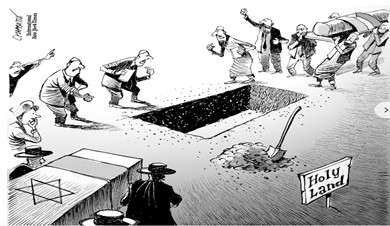
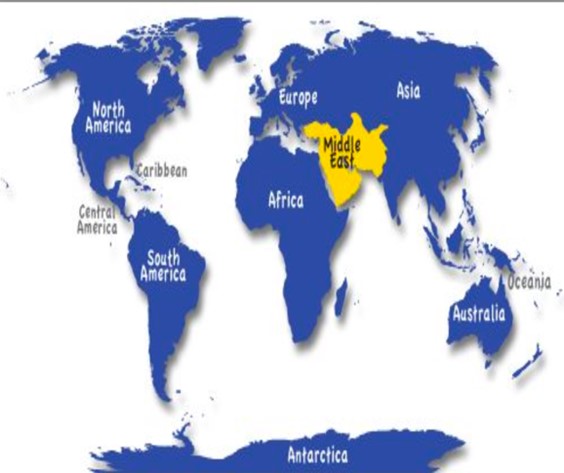
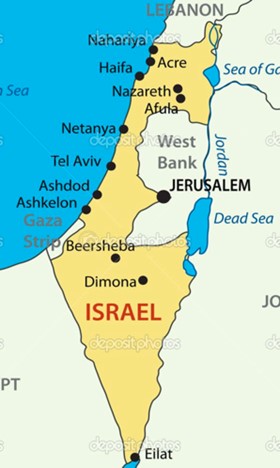


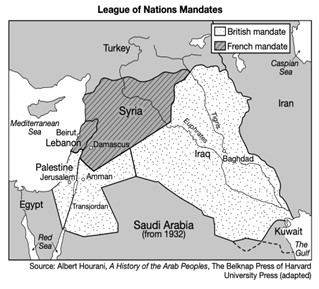


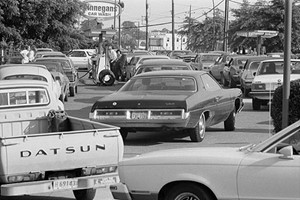

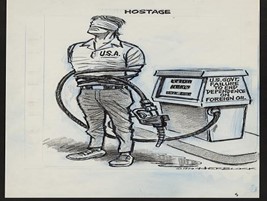
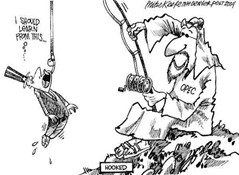

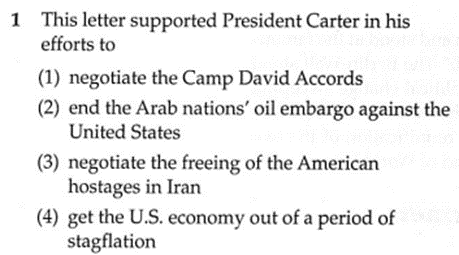


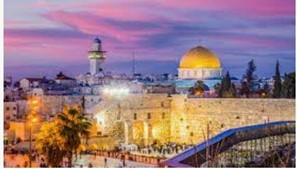
 njcssjournal