Era 14 Contemporary United States: Domestic Policies (1970–Today)
www.njcss.org

Engaging High School Students in Global Civic Education Lessons in U.S. History

The relationship between the individual and the state is present in every country, society, and civilization. Relevant questions about individual liberty, civic engagement, government authority, equality and justice, and protection are important for every demographic group in the population.  In your teaching of World History, consider the examples and questions provided below that should be familiar to students in the history of the United States with application to the experiences of others around the world.

These civic activities are designed to present civics in a global context as civic education happens in every country.  The design is flexible regarding using one of the activities, allowing students to explore multiple activities in groups, and as a lesson for a substitute teacher. The lessons are free, although a donation to the New Jersey Council for the Social Studies is greatly appreciated. www.njcss.org

During the last quarter of the 20th century and the first quarter of the 21st century, the United States and the world experienced rapid changes in the environment, technology, human rights, and world governments. During this period there were three economic crises, a global pandemic, migrations of populations, and a global pandemic. There were also opportunities in health care, biotechnology, and sustainable sources of energy. The debate over individual freedoms, human rights, guns, voting, affordability, and poverty were present in many countries, including the United States.

As the United States became more diverse and inclusive after the 1965 Immigration and Nationality Act, our population became divided on the assimilation of immigrants and restricting the number entering the United States.  The civil liberties in our constitution become challenged as people wanted “law and order.” One civil liberty that has weakened over time is the “Miranda Warning” from the U.S. Supreme Court decision in Miranda v. Arizona, (1966).

“Ernesto Miranda was convicted on charges of kidnapping and rape. He was identified in a police lineup and questioned by the police. He confessed and then signed a written statement without first having been told that he had the right to have a lawyer present to advise him (under the Sixth Amendment) or that he had a right to remain silent (under the Fifth Amendment). Miranda’s confession was later used against him at his trial and a conviction was obtained. When Miranda’s case came before the United States Supreme Court and the Court ruled that, “detained criminal suspects, prior to police questioning, must be informed of their constitutional right against self-incrimination and the right to an attorney.” The court explained, “a defendant’s statement to authorities are inadmissible in court unless the defendant has been informed of their right to have an attorney present during questioning and an understanding that anything, they say will be held against them.” The court reasoned that these procedural safeguards were required under the United States Constitution.”

Miranda rights typically do not apply to individuals stopped for traffic violations until the individual is taken into custody. There are four rights that are usually read to someone about to be interrogated or detained against their will.

  • The Right to Remain Silent: You are not obligated to answer any questions from law enforcement.
  • Anything You Say Can Be Used Against You: Statements you make during questioning can be presented as evidence in court.
  • The Right to an Attorney: You have the right to consult with a lawyer before answering questions and to have one present during interrogation.
  • If You Can’t Afford a Lawyer, One Will Be Provided: This guarantees access to legal counsel, regardless of your financial situation.

This basic civil liberty has weakened over time giving more power to the police (government).  This power has resulted in forced confessions, false statements by the police, accusations of resisting arrest by not providing the police with basic information, and delaying the reading of the Miranda Warning.  In Vega v. Tekoh (2022), the U.S. Supreme Court held, Miranda warnings are not rights but rather judicially crafted rules, significantly weakening this civil liberty as a constitutional protection. 

Unlike in the United states, in Japan, individuals are presumed guilty. There is no right to remain silent or the offer of a lawyer. Many people, including juveniles, may be detained for months as the authorities try to obtain a signed confession. Most people are unaware of these practices because of Japan’s reputation as a democracy and their international human rights record.

“Tomo A., arrested in August 2017 for allegedly killing his six-week-old child by shaking. He spent nine months in detention awaiting trial, and during that time, prosecutors told him that either he or his wife must have killed their baby and his wife would be prosecuted if he did not confess. He was acquitted in November 2018.”

Bail is not an option during the pre-indictment period and it is frequently denied after a person is indicted of a crime. Bail, when granted, is limited to a maximum of 10 days with an appeal for an additional extension of up to 23 days. Individuals who are released, are watched closely and new arrests are fairly common.

“Yusuke Doi, a musician, was held for 10 months without bail after being arrested on suspicion of stealing 10,000 yen (US$90) from a convenience store. His application for bail was denied nine times. Even though he was ultimately acquitted, a contract that Doi had signed with a record company prior to his arrest to produce an album was cancelled, resulting in financial loss and setting back his career.”

Police often use intimidation, threats, verbal abuse, and sleep deprivation to get someone to confess or provide information. The Japanese Constitution states that “no person shall be compelled to testify against himself” and a “confession made under compulsion, torture or threat, or after prolonged arrest or detention shall not be admitted in evidence.”

The accused are not allowed to meet, call, or even exchange letters with anyone else, including family members. Many individuals interviewed by Human Rights Watch cited this ban on communications as a cause of significant anxiety while in detention.

In 2015, Kayo N. was arrested for conspiracy to commit fraud. Kayo N. said that she worked as a secretary at a company from February 2008 to October 2011. In December 2008, the company president asked her to become the interim president of another company owned by her boss while a replacement was sought. She said that she was unaware that the company only existed on paper and that her boss had previously been blacklisted from obtaining loans. After her arrest and detention, the judge issued a contact prohibition order on the grounds that she might conspire to destroy evidence. Kayo N. was not allowed to see anyone but her lawyer for one year, could not receive letters, and could only write to her two adult sons with the permission of the presiding judge.

She said: “After I was moved to the Tokyo detention center, I was kept in the “bird cage” [solitary confinement] from April 2016 to July 2017. It was so cold that it felt like sleeping in a field, I had frostbite. I spoke only twice during the day to call out my number. It felt like I was losing my voice. The contact prohibition order was removed one year after my arrest. However, I remained in solitary confinement.

Kayo N. said she did not know why she had been put in solitary confinement. She says that police also interrogated her sons to compel her to confess. The long trial process also exacerbated financial hardships. She was sentenced to three years’ imprisonment.”

Japan has a 99.8 percent conviction rate in cases that go to trial, according to 2021 Supreme Court statistics.

Questions:

  1. Should the rights of an individual receive greater or lesser weight than the police powers of the state when someone is accused of a criminal offense?
  2. How can the Miranda rights be protected and preserved in the United States or should they be interpreted and implemented at the local or state level?
  3. How is Japan able to continue with its preference for police powers when international human rights organizations have called for reform?
  4. In the context of detainment by federal immigration officers in the United States in 2026, do U.S. citizens (and undocumented immigrants) have any protected rights or an appeal process when detained without cause?

How to Interact with Police (Video, 20 minutes)

The Erosion of Miranda (American Bar Association)

Vega v. Tekoh(2022)

Japan’s “Hostage Justice” System (Human Rights Watch)

Caught Between Hope and Despair: An Analysis of the Japanese Criminal Justice System (University of Denver)

Activity #2: Gun laws in United States and New Zealand

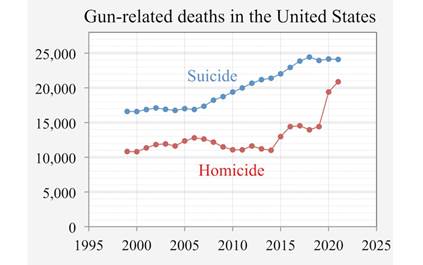
Since 1966, 1,728 people have been killed and 2,697 injured in mass public shootings in the United States. The definition of a mass shooting is three or more individuals being killed. (Investigative Assistance for Violent Crimes Act, 2012) The U.S. Federal Bureau of Investigation does not define a mass shooting with a specific number of deaths. Technology, especially the production of ‘ghost guns’ with   3-D printers has contributed to gun violence.  Handguns are used in 73% of mass shootings and rifles, shotguns, assault weapons, and multiple weapons are also used.
Before 2008, the District of Columbia prohibited the possession of usable handguns in the home. This was challenged by Dick Heller, a special police officer in the District of Columbia who was licensed to carry a firearm while on duty. He applied to the chief of police for permission to have a firearm in his home for one year. The chief of police had the authority to grant a temporary license but denied the license to Dick Heller, who appealed the decision in a federal court.

The Second Amendment states that “A well-regulated Militia, being necessary to the security of a free State, the right of the people to keep and bear Arms, shall not be infringed.” Several state constitutions give citizens the right to bear arms in defense of themselves and outside an organized state militia. Individuals used weapons against Native Americans and enslaved individuals.

The United States has the highest number of registered guns per person in the world. Estimates range from 300 million (one per person) to over 400 million. Even with effective legislation on restricting guns, these weapons would still be availabile. Approximately 10 million firearms are produced annually.

A discussion in your classroom might focus on the debate within the state legislatures during the ratification of the Constitution regarding the use or arms for a state militia and the right of individuals to carry weapons for hunting.  The Bruen decision (2022) requires that gun laws today need to be consistent with the historical understanding from when the states ratified the Bill of Rights.

1. Is this requirement possible and relevant? In 1789 people hunted for their food and today people go shopping in supermarkets.   In 1789, the federal government relied on states to support an army and today we have a highly trained military.  

2. Has the technology on producing guns change the right to keep and bear arms? Assault weapons and the production of ghost guns did not exist 200 years ago.

3. Should the need to restrict the right to keep and bear arms be consider as a result that the population of the United States is now over 300 million?  A significant portion of the population lives in urban areas with high-rise apartment complexes. Should the history of previous centuries alongside the mass shooting events of the 21st century,  be careful considered in the debate to restrict gun ownership?

March 15, 2019 marks one of the darkest days in New Zealand when 51 people were killed and 50 others wounded when a gunman fired at two mosques in the city of ChristChurch.  This was the worst peacetime mass shooting in New Zealand’s history. Within one month New Zealand’s Parliament voted 119-1 on a nationwide ban on semi-automatic weapons and assault rifles.  The gun reform law also set up a commission to establish limits on social media, accessibility to weapons, and education.  In addition to the sweeping reform of gun laws, a special commission is being set up to explore broader issues around accessibility of weapons and the role of social media.

Australia also introduced a ban on automatic and semi-automatic weapons and restrictive licensing laws after a mass shooting in 1996.  Some states in the United States have enacted strict laws restricting ghost guns (New Jersey, Oregon) and automatic weapons (New Jersey). However, the debate has been contentious in these states and the almost unanimous vote in New Zealand is not likely in the United States.

Questions:

  1. How significant would restrictive legislation in the United States be in curtailing mass shootings and/or murders?
  2. In addition to the influence of the gun lobby in the United States, what is the next most powerful influence against gun reforms in the United States?
  3. Is it possible for states to have their own restrictive gun laws with the Bruen decision by the U.S. Supreme Court?
  4. Why do you think restrictive gun laws were enacted in New Zealand and Australia? (absence of a constitutional protection, common national identity, religious beliefs, culture, leadership by the government, public outrage, etc.)
  5. As a class, do you think gun reform laws in the United States are possible in the next 5-10 years?

District of Columbia v. Heller(2008)

Why Heller is Such Bad History(Duke Center for Firearms Law)

15 Years After Heller: Bruen is Unleashing Chaos, But There is Hope for Regulations(Alliance for Justice)

Mass Shooting Factsheet (Rockefeller Institute of Government)

Gun Ownership in the U.S. by State (World Population Review)

Gun Control: New Zealand Shows the Way(International Bar Association)

Firearms Reforms (New Zealand Ministry of Justice)

Activity #3: Affordability in the USA and Italy.

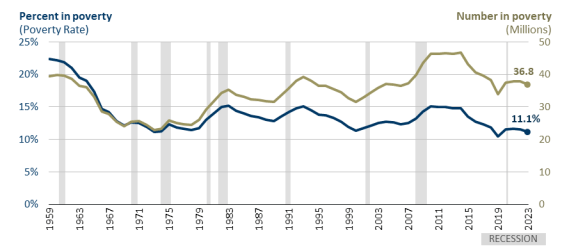
According to the Congressional Research Service (CRS), poverty has decreased in the United States from 15% 2010 to 11.1% in 2023, and in 2025 it is estimated to be 9.2%.  Poverty is measured both as the number of people below a defined income threshold of $31,200 for a family of four in 2025 (absolute poverty or below the poverty line) and as a quality of life issue for people living in a community. (relative poverty)  Source

Figure 1. Official Poverty Rate and Number of Persons in Poverty: 1959 to 2023

(poverty rates in percentages, number of persons in millions; shaded bars indicate recessions)
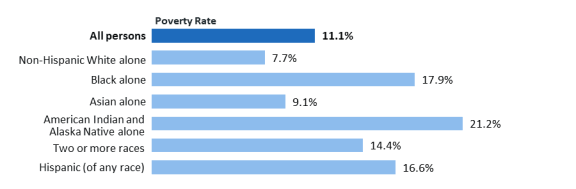
Unfortunately, poverty rates vary by sex, gender, and race. The current ‘affordability’ crisis in the United States is an example of relative poverty with many complex factors contributing to it.

Figure 4. Official Poverty Rates by Race and Hispanic Origin: 2023
A general guideline for budgeting housing expenses (rent or mortgage) is 33% of a household income, although expenses for rent and mortgage will vary by zip code.  The U.S. Census Bureau reported a per capita income of $43,289 (in 2023 dollars) for 2019-2023, while the Federal Reserve Bank reported a personal income per capita of $73,207 for 2024.  Personal income is the total earnings an individual receives from wages, salaries, investments and government benefits before income taxes are deducted. For your discussion consider the following based on $73,207 for one person. A family of four income with two working adults would be $146,414.

Federal Taxes (22%) $16,104

NJ State Taxes (5%) $3,660.

Housing (33%) $24,156 ($2,000 a month)

Food (10%) $7,300 ($140 per week)

Auto Transportation (15%) $10,980

Discretionary Spending (15%) $10,980

Consider the discretionary expenses in your family for phones, cable and internet, car lease or loan payments, vacation, gifts, savings, clothing, credit card debt, education, etc.

As incomes rise people spend more money on food, but it represents a smaller share of their income. In 2023, households with the lowest incomes spent an average of $5,278 on food representing 32.6% of after-tax income. Middle income households spent an average of $8,989 representing 13.5% of after-tax income) and the highest income households spent an average of $16,996 on food representing 8.1 percent of after-tax income.

The starting salary for many individuals with a four-year college education is about $70,000. Living in New Jersey is more expensive than living in many other states but for the purpose of discussion, we will use New Jersey as our reference.

The poverty rate in Italy is 9.8%, similar to the rate in the United States. However, the poverty rate for individuals below the poverty line (income level) is 5%.  Approximately half of the people in poverty are living in southern Italy.  Two contributing factors are the continuing effects from the government shutdown during the Covid-19 pandemic in 2020 and an aging population. These factors are related to Italy’s high unemployment rate of 6.8% (2024), which is higher than the 4.4% in the United States, weak GDP growth of less than 1%.  With a per capita income of $39,000 USD, Italy also has an affordability crisis.  The per capita income in Italy is about one-half of the per capita income in the United States.

In 2017, Italy approved a program of “Inclusion Income: which has been reformed twice since its adoption. Under the current (2024) “Income Allowance” about 50% of the population receives supplemental income. This program supports economic upward mobility through education and health care. Italy has partnered with the World Bank to support this program.  Another benefit of the program is that poverty is not increasing and will be significantly reduced over time.

Questions:

  1. Is the solution for affordability a higher minimum wage, lower taxes, price controls on food and housing, a guaranteed minimum income, or something else?
  2. Is it possible to lower the poverty rate through education and effective budgeting skills?
  3. Where do most Americans overspend their money and how can this best be corrected?
  4. Are transfer payments by the government (child care, Medicaid, Social Security, Unemployment Insurance, SNAP), wasteful or helpful?
  5. As a policy maker in the federal or state government, what is the first action you would take to address the affordability problem in the United States or in your state?
  6. How is Italy addressing the causes of poverty in addition to providing a guaranteed income to support people and families with basic needs?
  7. How is Italy financing its program and is it cost effective?
  8. Are tax cuts or tax credits an effective policy to assist people facing affordability issues?

7 Key Trends in Poverty in the United States (Peter G. Peterson Foundation)

United States Country Profile (World Bank)

Poverty in the United States: 2024(U.S. Census)

2025: Kids Count Data Book (Annie E. Casey Foundation)

Italy’s Poverty Reduction Reforms(World Bank)

Evolving Poverty in Italy: Individual Changes and Social Support Networks(Molecular Diversity Preservation International, MDPI)

ISTAT Report: Poverty and Inequalities in Italy(EGALITE)

Italy’s Fight Against Global Poverty (The Borgen Project)

Voter participation is based on many factors and the structure for electing representatives to Congress is complex and is related to the selection of electors in each state who vote for the president and vice-president every four years.  In the first 25 years of the 21st century, voting has changed significantly in the United States regarding the way citizens vote and in the definition of a legally registered voter. In this activity, you will discuss and analyze the issues of gerrymandering, voter participation, and voter eligibility in the United States and compare our process with voter participation in Greece.

Every 10 years, states redraw the boundaries of congressional districts to reflect population changes reported in the census. The purpose is to create districts/maps that elect legislative bodies that fairly represent communities. In 1929, the number of representatives for the population was set at 435. In the 1920s the debate about fairness was between urban and rural populations and today it is between racial and ethnic populations and political parties. This practice is ‘partisan gerrymandering’. In 2019, the Supreme Court ruled in Rucho v. Common Cause, that gerrymandered maps cannot be challenged in federal court.

Partisan gerrymandering is undemocratic when one party controls the process at the state level.  Cracking is a strategy that places some voters in districts that are a a distance from their immediate geographic area, making it very difficult for them to elect a candidate from their political party preference or racial or ethnic group. The majority of voters in New Jersey favored the Democratic Party making it difficult to establish districts that are fair to residents who favor the Republican Party. The issue of fairness may conflict with what is considered legal, fair, and constitutional. This complexity should engage students in a lively debate regarding its relationship to voter participation.
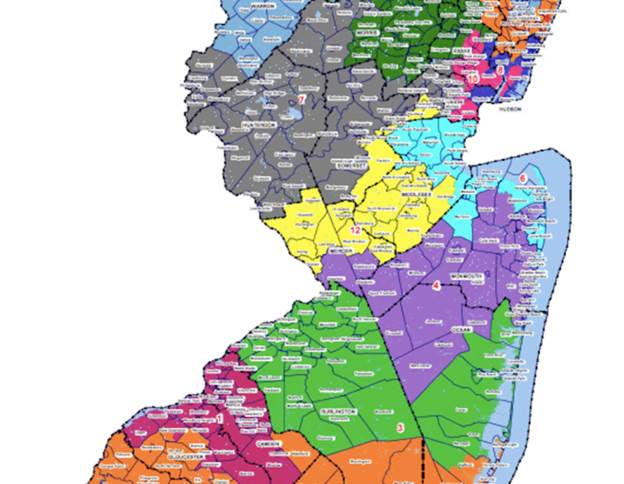
After the 2020 census, Republicans controlled the redistricting process in more states than Democrats.

In Illinois, the Democratic majority designed the congressional map limiting Republicans to just 3 of 17 seats. The use of algorithms and artificial intelligence are assisting the drawing of partisan districts.  South Carolina offers an example of racial bias in a reconfigured district in Charleston that removed many Black voters. However, when challenged under the Voting Rights Act of 1965, the new design was defended based on politics rather than race or ethnicity.

Section 2 of the Voting Rights Act has been challenged in the federal courts and amended in 1982. The decision in Village of Arlington Heights v. Metropolitan Hous Development Corporation (1977) is the current standard regarding a requirement that discrimination would actually harm minority voting strength. This standard is more difficult to prove than an expectation that it might be discriminatory. In 2013, a requirement of photo identification in North Carolina was challenged in Shelby County v. Holder but there was insufficient evidence to meet the standard of discrimination.

Voting is basically controlled by the states, although they must be in compliance with federal laws regarding elections for Congress and the President. Every state, except North Dakota, requires citizens to register to vote. Voter registration can help prevent ineligible voters from voting. The registration process generally includes identification to validate age, residency, citizenship, and a valid signature or state ID. Registration also prevents people from voting multiple times and someone stealing their ballot and submitting it.

There are different ways to measure voter participation regarding trends over time, in years when voters elected a governor or president, by age, race, or ethnicity, when a popular issue was on the ballot, etc.  In New Jersey, voter participation is generally less than 50% of the population.
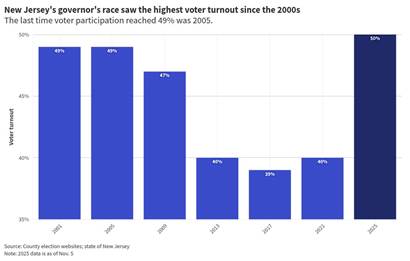
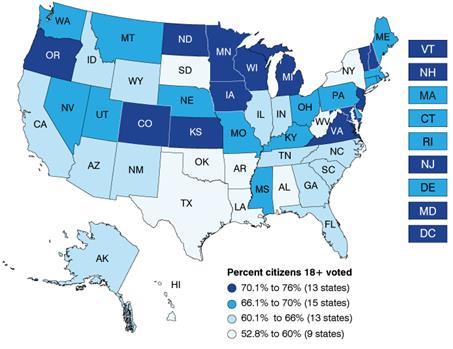
In presidential elections, the voter turnout is between 60% and 70% on average. New Jersey has more than 70% of the population voting. Efforts to increase voter participation include early voting, mail-in ballots, and extended hours at polls.
Greece

Voter Participation:

Voter participation rates in the European Union are less than 50%. The democracies in most European Union countries have multiple political parties, unlike the United States which has two major parties. One of the reasons for the lower voter turnout is pessimism regarding both the candidates and issues. The voter participation rate in Greece is above the average of EU countries, and we will use this as our case study.

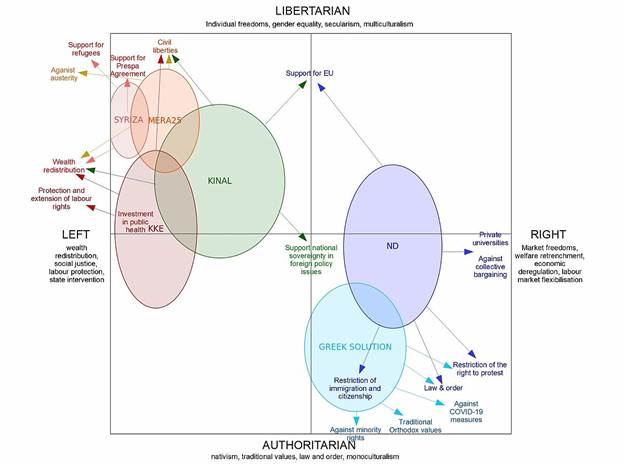
In 2025, Greece’s political scene is dominated by the center-right party, New Democracy. The largest opposition party is the SYRIZA, a left wing of progressive party. Some of the current problems or issues facing the people in Greece are high prices, health care, and public safety. The Russia-Ukraine War and the authoritarian government in Turkey are also concerns.
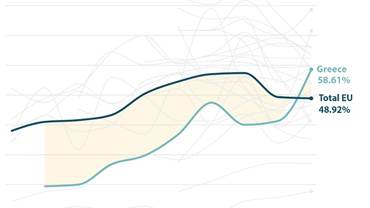
The survey revealed a significant and concerning trend, with recent elections showing record-high abstention rates—46.3% in the June 2023 national elections and 58.8% in the June 2024 European elections. A recent scandal in Greece also impacted the election involving a spyware tool, Predator, which has been associated with associates of the current Prime Minister, Kyriakos Mitsotakis. The illustration below is a guide to the numerous ideologies of the political parties in Greece. There are also restrictions on the freedom of the press, which fosters a credibility gap between the people and their government.
Questions:

  1. Why do you think the U.S. Supreme Court ruled that racial gerrymandering is illegal but partisan gerrymandering is permitted?
  2. In Rucho, the U.S. Supreme Court acknowledged that partisan gerrymandering may be “incompatible with democratic principles.” Do you agree or disagree? Explain your answer.
  3. Even though gerrymandering may benefit one political party over another, it is the people who elect the state representatives who draw the maps for the congressional districts. Is this practice fair or unfair?
  4. What is the best way to significantly increase voter participation in the United States, Greece, and other countries?
  5. Are the requirements for voter registration and proof of identification significant restrictions on voters?
  6. To what extent is voting in New Jersey fair for all eligible voters?

Election Guide: United States(International Foundation for Electoral Systems)

Election Guide: Greece(International Foundation for Electoral Systems)

United States(Freedom House)

The Permanent Apportionment Act of 1929(U.S. House of Representatives)

Freedom to Vote Act(Brennan Center for Justice)

Greece(Freedom House)

Why Greeks are staying Away from the Polls: Key Insights into the 2023-2024 Survey(Kapa Research)

From Right to Privilege: The Hyde Amendment and Abortion Access

When the Supreme Court made their decision on Roe v. Wade in 1973, it seemed as though abortion had finally been secured as a constitutional right. However, this ruling came after more than a century of contested abortion law in the United States. Beginning in the late nineteenth century, the American Medical Association led campaigns to criminalize abortion, which pushed midwives and women healers out of reproductive care[1]. Illegal abortion had been widespread and dangerous; even in the early twentieth century, physicians estimated that thousands of abortions were done annually, many of them resulting in septic infections and hospitalizations[2]. Long before Roe, access to reproductive care was already shaped by race and class, as Rickie Solinger shows in her study of how unwed pregnancy was treated differently for white women and women of color[3]. Within a few years after the Roe v. Wade decision, the promise of abortion access was strategically narrowed. In 1976, Congress passed the Hyde Amendment, which banned the use of federal Medicaid funds for most abortions. This did not overturn Roe v Wade, but it did quietly transform abortion from a legal right into an economic privilege, one that poor women could rarely afford to exercise. As Susan Gunty bluntly stated, “The Hyde Amendment did not eliminate abortion; it eliminated abortion for poor women.”[4] The Hyde Amendment redefined abortion rights by turning a constitutional guarantee into a privilege dependent on income. It represented a shift in strategy among anti-abortion advocates, where instead of directly challenging Roe, they targeted public funding.[5] Representative Henry Hyde himself admitted that his goal was total abortion prohibition, but that the only vehicle available was the Medicaid bill.

Historian Maris Vinovskis emphasizes that this marked a turning point where anti-abortion lawmakers learned to restrict access not by banning abortion, but by eliminating the means to obtain it. They used the appropriations process to accomplish “what could not be achieved through constitutional amendment.”[6] By embedding abortion restrictions into routine spending bills, lawmakers created a powerful way to undermine Roe without technically violating it. An immediate effect was the creation of a two-tiered system of reproductive rights. Wealthier women could continue to obtain abortions, while lower income women, like those on Medicaid, were forced to carry their pregnancies to term. The Supreme Court validated this in Maher v. Roe in 1977 and in Harris v. McRae in 1980, maintaining that while the Constitution guaranteed the right to abortion, it did not require the government to make that right financially accessible to all. As the court stated, the government “need not remove [obstacles] not of its own creation.”[7] This logic fit neatly into the rise of the New Right. The fetus was being recast as a protected moral subject, and as Sara Dubow describes it, it was transformed into “a symbol of national innocence and moral purity.”[8] At the same time, historian Linda Gordon brings up that public funding has never been neutral, and has always reflected judgements about which women should bear children and which should not.[9] In this way, Hyde did not invent reproductive inequality, but it definitely sharpened it.

This raises the question of how the Hyde Amendment reshaped abortion access in the United States between 1976 and 1999, and why it disproportionately affected poor women and women of color. This paper argues that the Hyde Amendment transformed abortion from a constitutional right into an economic privilege. By restricting Medicaid funding, the amendment created a two-tier system of reproductive access in which poor women and women of color were effectively denied the ability to exercise a legal right.

Historians who study reproduction agree that abortion in the United States has always been shaped by race, class, and power. Linda Gordon shows that reproductive control has never been distributed equally, as wealthier white women have long had greater access to contraception and abortion, while poor women and women of color faced barriers or state interference[10]. Johanna Schoen adds to this by examining how public health and welfare systems sometimes pushed sterilization or withheld care, showing that the state has often intervened most heavily in the reproductive lives of marginalized women[11]. Together, these historians argue that Hyde fits into a much older pattern of the government regulating the fertility of women who had the least political power.

Another group of historians focuses on law, policy, and the political meaning of abortion in the late twentieth century. Michele Goodwin analyzes how legal frameworks that claimed to protect fetal life often limited women’s autonomy, especially poor women[12]. Maris Vinovskis explains how anti-abortion lawmakers learned to use the appropriations process to restrict abortion access without challenging Roe directly[13]. Meanwhile, Sara Dubow traces how the fetus became a powerful cultural symbol, which helped conservatives rally support for funding restrictions like Hyde[14]. These scholars help explain how Hyde gained legitimacy both legally and culturally, and why it became such a durable policy.

A third set of historians look at activism, feminism, and the reshaping of abortion politics in the 1970s and 1980s. Rosalind Petchesky shows how abortion became central to the rise of the New Right, as antifeminist and religious groups used the issue to organize a broader conservative movement[15]. Loretta Ross and other reproductive justice scholars explain how women of color challenged the narrow “choice” framework of the mainstream pro-choice movement, arguing that legality meant little without the resources needed to make real decisions[16]. Their work highlights that Hyde did not only restrict abortion for poor women, but also pushed activists to rethink what reproductive rights should even look like.

Taken together, these historians show three major themes of long-standing inequality in reproductive politics, legal tools reinforcing those inequalities, and the political shifts that made Hyde a defining part of conservative identity. What is still less explored, and where this paper enters the conversation, is how the Hyde Amendment created a two-tier system of abortion access between 1976 and 1999, and how that funding gap turned a constitutional right into an economic privilege. This paper brings these together to show how policy, law, and inequality reshaped the meaning of abortion rights in the United States.

The Hyde Amendment did not appear out of nowhere, and rather developed in a very particular political movement where abortion had become one of the most emotionally charged issues in American politics.[17] After Roe v. Wade legalized abortion nationwide in 1973, opponents of abortion had to reconsider their strategy.[18] They could no longer rely on state criminal bans, since they were now unconstitutional. Therefore, instead of attempting to outlaw abortion directly, they began to look for indirect ways to limit who could actually get one. The question became not whether abortion was legal or unconstitutional, but whether it was accessible.[19] This shift happened at the same time that the country was experiencing a wave of distrust towards the federal government after Watergate, along with concerns about inflation and federal spending.[20] Additionally, as a movement over family values escalated, the federal government was infringing on families’ privacy and rights. These anxieties made it easier to frame abortion as both a moral issue, and a financial one as well. Historian Maris Vinovskis notes that the Hyde Amendment represented a new strategy, shifting away from trying to overturn Roe and towards “an effort to restrict the practical ability to obtain abortions through funding limitations.”[21] Anti abortion lawmakers realized that they were still able to limit abortions by cutting off the financial aid that allowed poor women to get them.[22]

To understand this shift, it is important to recognize that the abortion debate had already intensified in the years leading up to Roe. During the late 1960s and early 1970s, Catholic organizations such as the National Right to Life Committee had begun mobilizing against abortion laws in states like New York and California[23]. At the same time, Medicaid, which was created in 1965 as part of the War on Poverty, became central to debates about welfare spending and the moral regulation of poor women[24]. Because Medicaid disproportionately served low income women and women of color, it became an early battleground for questions about who deserved state funded healthcare and reproductive autonomy.

Representative Henry Hyde was the first major figure behind this effort, and he did not try to hide his intentions. During debate in Congress, he stated “I certainly would prevent, if I could legally, anybody having an abortion; unfortunately, the only vehicle available is the Medicaid bill.”[25] He made it clear that the Amendment was not about government budgeting or fiscal responsibility, but was about restricting abortion access by targeting low income women who depended on Medicaid.[26] This strategy also lined up quite well with emerging political alliances, as fiscal conservatives who opposed federal spending could support Hyde because it reduced a publicly funded service.[27] At the same time, religious conservatives who morally opposed abortion also supported Hyde. The idea of “taxpayer conscience”, or that people should not have to financially support something they disagree with, became an effective talking point.[28] However, this strategy also drew on a much longer history of the government controlling the reproductive lives of women, especially poor women and women of color. Nellie Gray, the March for Life national director, made a statement in a 1977 news journal explaining that “pro-life organizations will only have one chance at a human rights amendment and they must do it right by seeing to it that abortion is not permitted in the United States[29].” Gray’s warning reflected how strongly anti-abortion leaders viewed Hyde as a stepping stone toward a much larger project of restricting abortion nationwide. Her statement also highlighted the growing belief among conservative activists that federal funds could be used to reshape reproductive policy, which would disproportionately affect the same women who have already consistently been targeted.

Throughout the twentieth century, the state encouraged childbirth among white, middle class women while discouraging it among women considered “undesirable”, which often meant poor women, Black women, Native American women, etc.[30] In this sense, the Hyde Amendment fit into an existing pattern of allowing privileged women to maintain reproductive autonomy, while placing the greatest burden onto those already facing economic and racial inequality. The structure of the Amendment also built inequality directly into access. Since Hyde was attached to the federal appropriations bill for health and welfare, it had to be renewed every year.[31] This meant that each year, Congress debated what exceptions should be allowed, and whether Medicaid would cover abortion in cases of rape, incest, or a threat to the mother’s life.[32] These exceptions were often extremely limited, difficult to qualify for, or inconsistent across states.[33] When in practice, they rarely resulted in meaningful access.

The impact of Hyde was immediate and severe. There was an enormous drop in Medicaid funded abortions, and while states were technically allowed to use their own funds to pay for abortion services, most did not.[34] As a result, abortion access quickly became dependent not only on personal income, but also on geography. A woman’s ability to exercise a supposedly constitutional right now depended on which state she lived in and whether she had the financial means to pay out of pocket.

By the late 1970s, the Hyde Amendment had created a two-tiered system of reproductive access. Abortion was still legal, but the ability to obtain one became tied to class and race.[35] For many women on Medicaid, especially Black and Latina women who were already disproportionately represented among low-income populations, the right to choose existed only in theory.[36] What Hyde actually accomplished was a shift from abortion as a universal and constitutional right to abortion as something you had to be able to afford. In this way, Hyde did not just restrict funding, it redefined what rights meant in the United States. It showed that a right could remain legally intact, yet still be functionally unreachable for some.

After the Hyde Amendment was passed in 1976, it quickly faced legal challenges from abortion rights advocates who argued that cutting off Medicaid funding violated the constitutional protections that Roe v. Wade put in place.[37] Their basic argument being that if the government recognized the right to choose abortion, then it should not be allowed to create conditions that made that right impossible to exercise.[38] In other words, they argued that a right without access is not really a right at all. However, when these cases reached the Supreme Court, the Court ultimately sided with the federal government, which confirmed that the state could acknowledge a right while also refusing to make it materially available. The first major decision was Maher v. Roe in 1977. This case involved a Connecticut rule that denied Medicaid funding for abortions even when the state continued to cover costs associated with childbirth.[39] The plaintiffs argued that this policy violated the Equal Protection Clause by treating poor women differently from those who could pay privately.[40] However, the Supreme Court rejected this argument, and in the majority opinion stated that “the Constitution does not confer an entitlement to such funds as may be necessary to realize the full advantage of the constitutional freedom.”[41] This reveals the Court’s broader stance, as the justices separated the idea of a right from the state’s obligation to make that right actually meaningful. By framing funding as an “entitlement,” the Court implied that financial accessibility was a luxury, not a constitutional requirement. This language helped transform abortion from a guaranteed right into a conditional one, depending on a woman’s financial status.

This reasoning set the stage for a more consequential case, Harris v. McRae. In 1980, this case dealt specifically with the constitutionality of the Hyde Amendment.[42] The plaintiffs again argued that denying Medicaid funding effectively denied the right to abortion to poor women. They also argued that Hyde violated the Establishment Clause because it reflected religious beliefs, particularly those of the Catholic Church.[43] However, the Court upheld the Amendment, and Justice Potter Stewart wrote for the majority, stating that although the government “may not place obstacles in the path of a woman seeking an abortion, it need not remove those not of its own creation.”[44] This distinction allowed the Court to reinterpret poverty not as a structural condition shaped by state policy but as an individual misfortune that is outside of constitutional concern. Fayle Wattleton, president of Planned Parenthood Federation, challenged the courts findings, stating that “the court has reaffirmed that all women have a constitutionally protected right to an abortion, but has denied poor women the means by which to exercise that right[45].” Scholars like Michele Goodwin have also argued that this logic effectively weaponized economic inequality by making it a neutral, legally permissible barrier to reproductive autonomy[46]. The court drew a clear line between legal rights and material access, claiming that the Constitution protects the first and not the second.

The distinction between rights and access became one of the most influential and damaging ideas in later abortion policy. The Court’s logic suggested that if poverty prevented a woman from obtaining an abortion, that was simply her personal situation and not something the government was responsible for addressing.[47] Though for poor women, this effectively meant that the right to abortion was conditional on wealth. Justice Thurgood Marshall pointed this out directly in his dissent, arguing that the decision reduced the right to choose to “a right in name only for women who cannot afford to exercise it.”[48] Marshall understood that legal recognition was meaningless when economic barriers stood in the way. Historians and legal scholars have also pointed out that these rulings reflected broader anxieties about welfare and poor women’s reproductive autonomy. Johanna Schoen notes that after Hyde, “the issue was no longer legality but economic access. The ability to choose became a measure of one’s class position.”[49] The Court’s decisions essentially cast poverty as a private problem, not a systemic barrier. By accepting the argument that the state did not have to fund abortions, the Court allowed economic inequality to become a legal tool for shaping reproductive outcomes.

The Harris decision also intensified racial disparities in reproductive healthcare, and since women of color were disproportionately represented among Medicaid recipients, they experienced the most direct consequences of the Amendment. Linda Gordon argues that policies like Hyde fit into a longer pattern where the state has “regulated fertility more tightly among poor women and women of color.”[50] This meant that Hyde did not simply limit abortion funding, but it also reinforced existing racial and economic hierarchies within reproductive control. The immediate impact of these decisions can clearly be seen in the data. In states that fully implemented the Hyde restrictions, Medicaid funded abortions dropped by more than ninety nine percent, essentially disappearing within the first year.[51] Clinics that had relied on Medicaid reimbursement closed, and in many communities, the nearest clinic became hours away.[52] For low income women, the cost of travel, time off from work, and childcare created many new layers of burden on top of the medical expense itself.[53]

Once the Supreme Court upheld the Hyde Amendment in Harris v McRae, abortion access in the United States became uneven, and heavily dependent on geography and income. Even though Roe v. Wade technically still guaranteed the constitutional right to abortion, the Hyde Amendment meant that states were able to decide whether they would use their own funds to support abortion services for Medicaid recipients. This resulted in what many scholars describe as a patchwork system of reproductive access, where a woman’s ability to exercise her rights depended on her ZIP code and her bank account instead of a universal legal standard.[54] Since Black, Latina, and Native women were disproportionately represented among low income Medicaid recipients, it is clear that the restrictions had a racial impact, even if the policy did not mention race outright.

This pattern was not new, as Johanna Schoen writes that “the state has historically encouraged childbirth among white, middle class women while discouraging it among poor women and women of color.”[55] Hyde simply reshaped that older system into a modern one, using funding instead of forced sterilization or criminal statutes. Public funding decisions always reflect judgements about who should reproduce and who should not, or in other words, which lives were valued and which were not.[56] Meanwhile, the procedures themselves became more expensive and more difficult to access. Without Medicaid coverage, many women had to delay their abortions while they gathered money to pay for the procedure. This then led to abortions being performed at later gestational stages which made them more medically complicated and more costly. As Schoen explains, delays caused by funding restrictions increased both physical risk and emotional strain for patients.[57] Clinics in poorer regions, especially in the south and midwest, struggled to stay open without Medicaid reimbursement, which left many areas without any providers at all.[58] The combination of travelling long distances and making arrangements to pause their lives for the time being was much harder for lower income women than it would have been for wealthier women. The cost of abortion became a structural burden, one created by the conditions of poverty. For many women, these obstacles made abortion inaccessible, even if they technically had the legal right to obtain one.

By upholding Hyde, the Supreme Court effectively established this two-tiered system, with the Court confirming that constitutional rights did not guarantee the means to exercise them. Reproductive autonomy was made dependent on individual financial circumstances and the state level political culture. The legal battles following Hyde clarified this, and made it clear that the fight over abortion would be decided by who could afford it.

By the 1980s, the Hyde Amendment had become more than a funding restriction. It became a symbol. Beginning in 1976 as a policy decision buried in the federal budget, it grew into one of the defining features of the conservative movement. Hyde showed how questions about family, morality, and religion could be folded into debates about government spending, which linked fiscal and moral conservatism.[59]

Before the late 1970s, abortion had not been clearly split along party lines. There were liberal Republicans who supported Roe v Wade, and conservative Democrats who opposed abortion. But this political landscape changed dramatically as the New Right emerged. Evangelical leaders like Jerry Falwell and Paul Weyrich mobilized conservative Christians around issues such as school desegregation, the Equal Rights Amendment, and sex education[60]. Abortion became the unifying issue they needed, which was a morally charged topic that could bind fiscal conservatives, religious traditionalists, and states’ rights advocates. The political backlash against Roe occurred at the same time that the evangelical Christians were becoming more politically organized.[61] Hyde provided a concrete policy issue around which these groups could mobilize, and helped them forge a new partisan identity. These debates that began over funding became part of a larger cultural conflict about the meaning of family, sexuality, and arguably, national values. The rhetoric that surrounded the Hyde Amendment reflected this shift, because instead of discussing abortion primarily in terms of women’s autonomy or health, conservatives increasingly framed the debate around the fetus. Sara Dubow argues that by the 1980s, the fetus had come to symbolize “a national innocence and moral purity,” a life seen as separate from the woman and one deserving of state protection.[62] This transformation was crucial because it allowed abortion opponents to present themselves as protecting vulnerable life instead of restricting women’s rights.

President Ronald Reagan played a major role in pushing this narrative. Although he had signed an abortion reform law when he was governor of California, by the time of his presidency in 1980, he had fully embraced the anti-abortion cause. In his 1983 essay “Abortion and the Conscience of the Nation,” he argued, “We cannot diminish the value of one category of human life, the unborn, without diminishing the value of all human life.”[63] With this statement, Reagan tied abortion to a broader moral crisis, suggesting that perhaps the nation’s character and spirituality were at stake. This argument resonated strongly with any evangelicals who had helped usher him into office, as he frequently spoke about the United States as a nation in need of moral renewal. His rhetoric helped solidify abortion as a moral anchor in the conservative identity, and made support for Hyde a test for Republican lawmakers.[64] In this environment, opposing the Hyde Amendment became politically risky, as it could be interpreted as rejecting the moral vision that Reagan had tied so closely to national identity.

Meanwhile, the Hyde Amendment’s budget framing allowed conservatives to present the issue in the language of limited government rather than explicitly presenting it as moral regulation. The idea that taxpayers should not be forced to support abortion with public funds gained traction among people who might not have outright embraced the anti-abortion movement. As Maris Vinovskis explains, Hyde represented a new style of policy making in which moral goals were pursued through fiscal restrictions rather than constitutional bans.[65] It was a quieter and more durable form of regulation.

Blending moral politics and fiscal conservatism also helped solidify the broader culture wars of the 1980s and 90s. Issues like school prayers, sex education, gay rights, and welfare reform became linked together as defending “traditional values.”[66] The Hyde Amendment fit neatly into this framework, allowing conservatives to argue that they were simultaneously protecting unborn life and protecting taxpayers from government overreach.[67] They saw abortion as both a moral failure and a misuse of public funds. However, this shift also made it increasingly difficult for Democrats to maintain a unified position on abortion. While most Democratic lawmakers supported the legal right to abortion, many were hesitant to outright oppose the Hyde Amendment, avoiding the risk of being labeled as anti-religion.[68] As a result, the amendment was repeatedly renewed with bipartisan support. A newspaper article from 1993 discussed the twenty years post-Roe, stating that Hyde displayed a “masterful understanding of the rules, procedures, and time constraints of the House,” as he “rounded up 254 of his colleagues (including 98 Democrats) to sustain [his amendment] and prohibit federal funding to pay for abortions for poor women[69].” The article clearly showed that Hyde’s durability did not only rest on conservatives but on a bipartisan reluctance to challenge Hyde as it was framed as fiscally responsible and morally protective.

By the 1990s, the logic behind Hyde had become ingrained in national political identity. The idea that abortion was something the government should not fund became widely accepted. This masked the fact that Hyde had made abortion a class dependent right, one available to those who could afford it and inaccessible to those who could not.[70] It played a key role in shaping these culture wars, by turning the reproductive choices of women into questions of morality and national identity, instead of questions of justice and autonomy.

The widening inequalities created by the Hyde Amendment did more than restrict access, as they exposed the limits of the existing pro-choice framework and set the stage for a new kind of activism. The measures taken by states may have seemed procedural, but combined with the lack of funding, they created this maze of barriers for low income women. Before the inequalities created by Hyde pushed activism in new directions, the reproductive rights movement of the 1970s was dominated by second wave feminist organizations such as NOW and NARAL[71]. These groups framed abortion primarily through the language of privacy and individual choice, relying heavily on Roe’s constitutional logic[72].Yet this framework was limited. It often centered around middle class white women and assumed that once legal barriers were removed, access would naturally follow[73]. Poor women, women of color, and immigrant women repeatedly testified that legality meant little without affordable care, transportation, or childcare[74]. Their experiences highlighted structural inequalities that mainstream pro choice rhetoric did not address. By the late 1980s and 1990s, many reproductive rights organizations began referring to the United States as having two systems of abortion access. In wealthier states, where medicaid or state funds covered abortion, access remained relatively stable. However, in other states, abortion access had become severely limited. The concept of “choice,” which had been the foundation of pro-choice activism, no longer fit the reality. Abortion had shifted from a universal constitutional right to a right that had to be purchased. The Hyde Amendment redrew the map of reproductive freedom, determining where and to whom abortion was available.

While the Hyde Amendment strengthened the conservative movement and reshaped how abortion was discussed in national politics, it also pushed reproductive rights activism in a new and beautiful direction. In the 70s, many mainstream feminist organizations had framed abortion mainly as a matter of individual choice, drawing directly from the privacy language of Roe v. Wade.[75] The assumption was that if abortion was legal, women would be able to access it. But Hyde made it clear that legality and access were not the same thing, and that the concept of “choice” was far less meaningful for women who could not afford the procedure in the first place. At first, mainstream pro-choice organizations struggled to respond. Groups like the National Association for the Repeal of Abortion Laws (now known as Reproductive Freedom for All) and NOW (the National Organization for Women) continued to fight Hyde through legislative appeals and court challenges, and focused on restoring Medicaid coverage.[76] However, these strategies were slow and had little success. Contemporary reports show how quickly grassroots feminist activism responded to Hyde. A 1979 Delaware County Daily Times article described more than forty NOW members and NARAL activists picketing a congressional dinner attended by Henry Hyde[77]. Protesters carried signs reading “Poor people don’t have a choice about my body,” and NOW’s Delaware County president Debbie Rubin told reporters that the Hyde Amendment “eliminates all abortions for poor women except when the life of the mother is in danger[78].” She warned that measures like Hyde did not stop abortion but instead “force a return to back-alley and self-inflicted abortions[79].” Meanwhile, women who were directly affected by Hyde were left to find practical ways to access the care they needed. This led to the early development of abortion funds, which were community based efforts in which volunteers raised money to help low income women pay for their abortions.[80] These funds showed that access could be supported by mutual aid and grassroots networks.

The deeper and more transformative opposition to Hyde came from activists who were already organizing around healthcare inequality, racism, and economic justice. The focus was on the fact that the same systems that restricted abortion access also failed to provide basic healthcare, childcare, housing, and social support.[81] For many women of color, the issue was not only the right to end a pregnancy, but also the right to raise children safely and with dignity[82]. This perspective was rooted in a longer history, as poor women and women of color had often faced contradictory and coercive forms of reproductive control, being denied contraception and abortion.[83] The Hyde Amendment did not create this dynamic, though it did extend it into the post-Roe era by making abortion services unattainable to those without financial resources. Linda Gordon notes that decisions about public funding have long reflected judgments about which women should bear children and which should not, and Hyde reinforces exactly this kind of hierarchy.[84]

By the early 1990s, these critiques began to merge into a new framework known as Reproductive Justice. This term was coined by a group of Black women activists in 1994 who argued that the mainstream pro-choice movement was focusing too narrowly on the legal right to abortion, ignoring the economic and social barriers that shaped many women’s decisions when it came to having an abortion.[85] They insisted that reproductive freedom was not only about ending a pregnancy, but was also about having the conditions necessary to make and sustain meaningful choices in the first place.[86] Reproductive autonomy clearly required more than just legal permission to have an abortion. Access to healthcare, living wages, and safe housing are only a few resources that help in the fight for reproductive autonomy[87]. Organizations like SisterSong, founded in 1997, helped establish reproductive justice as a national movement[88]. It brought together Black, Latina, Indigenous, and Asian American women to argue that reproductive rights should be understood as human rights, grounded more in equality than just privacy.[89] Their work highlighted that access to abortion, childcare, healthcare, and racial and economic justice were all deeply connected. The activism that emerged in response to the Hyde Amendment did not simply resist the policy, but it reframed the entire conversation about reproductive rights and freedoms. “Choice” was an incomplete framework, usually centered on the experiences of white middle class women and overlooking the realities of those with less resources.[90]

Nearly fifty years after its passage, the Hyde Amendment continues to shape reproductive access in the United States. It did not overturn Roe v Wade, and it did not need to. By restricting Medicaid funding, Hyde redefined abortion as something that had to be purchased personally, even though it had been framed as a constitutional right. It set a precedent for how lawmakers could limit rights indirectly, though economic policy rather than outright prohibition. The Supreme Court’s decision in Maher v Roe and Harris v McRae reinforced the shift by drawing a line between the right to choose and the ability for women to exercise that right. The court insisted that poverty was a private circumstance, not something that the state was obligated to help with. This stance made economic equality seem legally neutral, even as it was falling the hardest on poor women and women of color.

The result was a stratified system in which abortion remained legal but unevenly available. Access varied dramatically by state, income level, and race, and the disparities only grew through time as clinics closed and new restrictions were passed. Lawmakers began to justify restrictions as defense of life rather than limitation on women. Additionally, the activism that emerged from groups like the National Black Women’s Health Project and SisterSong reframed abortion access as a part of a broader struggle of reproductive justice, insisting that reproductive freedom means not only the right to end a pregnancy, but also the right to raise children in safe and secure environments. This exposed what Hyde had been showing all along, that rights are only meaningful when people have the resources to act on them.

On the one hand, the Hyde Amendment demonstrated how effectively lawmakers can use economic constraints to reshape constitutional rights without actually touching their legality. This persisted for decades, influencing battles over contraception access, parental consent laws, and clinic closures. On the other hand, Hyde also helped produce a more expansive movement for reproductive freedom, one that recognized the limits of legal victories without material support. The lesson learned from Hyde is that a right that cannot be accessed is not truly a right. The law might claim neutrality in withholding federal funds, but the consequences of that “neutrality” are deeply unequal. The Supreme Court’s ruling in Dobbs v. Jackson Women’s Health Organization in 2022 completed what Hyde set in motion. By allowing states to ban abortion outright, Dobbs transformed the unequal access made byHyde into legal prohibition. The patterns of racial, geographic, and economic inequality exposed by Hyde now define the post-Dobbs landscape, showing that the struggle for reproductive freedom has always been connected to the struggle for equality.

Understanding the Hyde Amendment can also help social studies teachers think about how to teach topics like constitutional rights, inequality, and the ways legal decisions affect people’s everyday lives. For high school students, it can be difficult to understand how a right can exist on paper but still be unreachable in practice. The Hyde Amendment offers a clear example of this. Looking at cases like Maher v. Roe and Harris v. McRae helps students see how the Supreme Court can acknowledge a constitutional right while also allowing policies that make that right not accessible to certain groups. This gives teachers a concrete way to help students think about the difference between what the law says and how people actually experience it, which is an important part of civic learning.

This topic is also useful for teaching about political realignment and the culture wars of the late twentieth century. Abortion was not always a purely partisan issue, and Hyde helps show students how moral, religious, and economic arguments came together to reshape politics on a national level. When teachers use primary sources like congressional testimonies, protest coverage, and presidential speeches, students can trace how different groups framed abortion and funding restrictions, and how these debates shaped the identity of the New Right. This not only builds students’ analytical skills but also shows them how public policy becomes a cultural symbol, not just a legal decision. Hyde also creates an opportunity to introduce the concept of reproductive justice, especially when teaching about movements led by women of color. Many high school students have never considered how race, class, and geography influence who can actually exercise their rights. Discussing how organizations like the National Black Women’s Health Project and later SisterSong responded to Hyde helps students see how activism grows in response to inequality. Teachers never need to take a political stance to guide students through these conversations. Instead, they can highlight how different communities understood the consequences of Hyde and why some activists argued that “choice” alone was not enough.

All in all, the Hyde Amendment is a strong example for teaching disciplinary literacy in social studies. It encourages students to read court cases closely, compare historical interpretations, analyze political speeches, and connect policy decisions to real human outcomes. Using Hyde in the classroom shows students that history is not just about memorizing events, but can also be about understanding how power operates and how policies can reshape people’s lives.

Cofiell, Trisha. “Women Protest at Hyde Dinner.” Delaware County Daily Times (Chester, PA), September 14, 1979. Newspapers.com. https://newspaperarchive.com/delaware-county-daily-times-sep-14-1979-p-1/

Daley, Steve. “Hyde Remains Constant.” Franklin News-Herald (Franklin, PA), July 14, 1993. NewspaperArchive. https://newspaperarchive.com/franklin-news-herald-jul-14-1993-p-4/.

Dubow, Sara. Ourselves Unborn : A History of the Fetus in Modern America. Oxford: Oxford University Press, 2011. https://research.ebsco.com/linkprocessor/plink?id=a4babef6-641b-3719-a368-8aa5e93e8575.

Goodwin, Michele. “Fetal Protection Laws: Moral Panic and the New Constitutional Battlefront.” California Law Review102, no. 4 (2014): 781–875. http://www.jstor.org/stable/23784354.

Gordon, Linda. The Moral Property of Women : A History of Birth Control Politics in America. 3rd ed. Urbana: University of Illinois Press, 2002. https://research.ebsco.com/linkprocessor/plink?id=ea0e3984-56df-3fca-adb6-3fc070515698.

Gunty, Susan. “THE HYDE AMENDMENT AND MEDICAID ABORTIONS.” The Forum (Section of Insurance, Negligence and Compensation Law, American Bar Association) 16, no. 4 (1981): 825–40. http://www.jstor.org/stable/25762558.

Harris v. McRae, 448 U.S. 297 (1980). https://supreme.justia.com/cases/federal/us/448/297/.

Maher v. Roe, 432 U.S. 464 (1977). https://supreme.justia.com/cases/federal/us/432/464/

Neurauter, Juliann R. “Pro-lifers Favor Hyde Amendment.” News Journal (Chicago, IL), December 7, 1977. NewspaperArchive. https://newspaperarchive.com/news-journal-dec-07-1977-p-19/

Olson, Courtney. “Finding a Right to Abortion Coverage: The PPACA, Intersectionality, and Positive Rights.” Seattle University Law Review 41 (2018): 655–690.

Perry, Rachel. “Abortion Ruling to Hit Hard Locally.” Eureka Times-Standard (Eureka, CA), August 27, 1980. NewspaperArchive. https://newspaperarchive.com/eureka-times-standard-aug-27-1980-p-9/

Petchesky, Rosalind Pollack. “Antiabortion, Antifeminism, and the Rise of the New Right.” Feminist Studies 7, no. 2 (1981): 206–46. https://doi.org/10.2307/3177522.

Reagan, Leslie J. “‘About to Meet Her Maker’: Women, Doctors, Dying Declarations, and the State’s Investigation of Abortion, Chicago, 1867-1940.” The Journal of American History 77, no. 4 (1991): 1240–64. https://doi.org/10.2307/2078261.

Reagan, Ronald. “Abortion and the Conscience of the Nation Abortion and the Conscience of the Nation.” The Catholic Lawyer the Catholic Lawyer Volume 30, no. 2 (1986). https://scholarship.law.stjohns.edu/cgi/viewcontent.cgi?article=2212&context=tcl.

Ross, Loretta. “Understanding Reproductive Justice: Transforming the Pro-Choice Movement.” Off Our Backs 36, no. 4 (2006): 14–19. http://www.jstor.org/stable/20838711.

Schoen, Johanna. Choice and Coercion : Birth Control, Sterilization, and Abortion in Public Health and Welfare. Chapel Hill: The University of North Carolina Press, 2005. https://research.ebsco.com/linkprocessor/plink?id=f8bc89c3-f4c2-36da-ba5d-809e9b26a981.

Solinger, Rickie. “‘Wake up Little Susie’: Single Pregnancy and Race in the ‘Pre-Roe v. Wade’ Era.” NWSA Journal 2, no. 4 (1990): 682–83. http://www.jstor.org/stable/4316090.

United States. Congress. House. Committee on Appropriations. Federal Funding of Abortions, 1977–1979. Washington, D.C.: U.S. Government Printing Office, 1979. Gerald R. Ford Presidential Library. https://www.fordlibrarymuseum.gov/library/document/0048/004800738repro.pdf

Vinovskis, Maris A. “The Politics of Abortion in the House of Representatives in 1976.” Michigan Law Review 77, no. 7 (1979): 1790–1827. https://doi.org/10.2307/1288043.


[1] Reagan, Leslie J. “‘About to Meet Her Maker’: Women, Doctors, Dying Declarations, and the State’s Investigation of Abortion, Chicago, 1867-1940.” The Journal of American History 77, no. 4 (1991): 1240–64. https://doi.org/10.2307/2078261.

[2] Reagan 1245

[3] Solinger, Rickie. “‘Wake up Little Susie’: Single Pregnancy and Race in the ‘Pre-Roe v. Wade’ Era.” NWSA Journal 2, no. 4 (1990): 682–83. http://www.jstor.org/stable/4316090.

[4] Gunty, Susan. “THE HYDE AMENDMENT AND MEDICAID ABORTIONS.” The Forum (Section of Insurance, Negligence and Compensation Law, American Bar Association) 16, no. 4 (1981): 825. http://www.jstor.org/stable/25762558.

[5] Vinovskis, Maris A. “The Politics of Abortion in the House of Representatives in 1976.” Michigan Law Review 77, no. 7 (1979). https://doi.org/10.2307/1288043.

[6] Vinovskis 1801

[7] Harris v. McRae, 448 U.S. 297 (1980) https://supreme.justia.com/cases/federal/us/448/297/

[8] Dubow, Sara. Ourselves Unborn : A History of the Fetus in Modern America. Oxford: Oxford University Press, 2011. https://research.ebsco.com/linkprocessor/plink?id=a4babef6-641b-3719-a368-8aa5e93e8575.

[9] Gordon, Linda. The Moral Property of Women : A History of Birth Control Politics in America. 3rd ed. Urbana: University of Illinois Press, 2002. https://research.ebsco.com/linkprocessor/plink?id=ea0e3984-56df-3fca-adb6-3fc070515698.

[10] Gordon 29-34

[11]  Schoen, Johanna. Choice and Coercion : Birth Control, Sterilization, and Abortion in Public Health and Welfare. Chapel Hill: The University of North Carolina Press, 2005. https://research.ebsco.com/linkprocessor/plink?id=f8bc89c3-f4c2-36da-ba5d-809e9b26a981.

[12] Goodwin, Michele. “Fetal Protection Laws: Moral Panic and the New Constitutional Battlefront.” California Law Review102, no. 4 (2014): 781–875. http://www.jstor.org/stable/23784354.

[13] Vinovskis 1793-1796

[14] Dubow 147-155

[15] Petchesky, Rosalind Pollack. “Antiabortion, Antifeminism, and the Rise of the New Right.” Feminist Studies 7, no. 2 (1981): 206–46. https://doi.org/10.2307/3177522.

[16] Ross, Loretta. “Understanding Reproductive Justice: Transforming the Pro-Choice Movement.” Off Our Backs 36, no. 4 (2006): 14–19. http://www.jstor.org/stable/20838711.

[17] Vinovskis 1818

[18] Vinovskis 1794

[19] Gunty 837

[20] Vinovskis 1812

[21] Vinovskis 1801

[22] Gunty 835

[23] Petchesky 120

[24] Schoen, Johanna. Choice and Coercion : Birth Control, Sterilization, and Abortion in Public Health and Welfare. Chapel Hill: The University of North Carolina Press, 2005. https://research.ebsco.com/linkprocessor/plink?id=f8bc89c3-f4c2-36da-ba5d-809e9b26a981.

[25] Olson, Courtney. “Finding a Right to Abortion Coverage: The PPACA, Intersectionality, and Positive Rights.” Seattle University Law Review 41 (2018): 655

[26] Gunty 831

[27] Vinovskis 1811

[28] United States. Congress. House. Committee on Appropriations. Federal Funding of Abortions, 1977–1979. Washington, D.C.: U.S. Government Printing Office, 1979. Gerald R. Ford Presidential Library. https://www.fordlibrarymuseum.gov/library/document/0048/004800738repro.pdf

[29] Neurauter, Juliann R. “Pro-lifers Favor Hyde Amendment.” News Journal (Chicago, IL), December 7, 1977. NewspaperArchive.

[30] Schoen 3-11

[31] Vinovskis 1793

[32] Gunty 826

[33] Gunty 825

[34] Gunty 825

[35] Schoen 5

[36] Schoen 5

[37] Gunty 834

[38] Gunty 836

[39] Maher v. Roe, 432 U.S. 464 (1977). https://supreme.justia.com/cases/federal/us/432/464/

[40] Maher v. Roe

[41] Maher v. Roe

[42] Harris v. McRae

[43] Harris v. McRae

[44] Harris v. McRae

[45] Perry, Rachel. “Abortion Ruling to Hit Hard Locally.” Eureka Times-Standard (Eureka, CA), August 27, 1980. NewspaperArchive.

[46] Goodwin, Michele. “Fetal Protection Laws: Moral Panic and the New Constitutional Battlefront.” California Law Review102, no. 4 (2014): 781–875. http://www.jstor.org/stable/23784354.

[47] Gunty 834

[48] Harris v. McRae

[49] Schoen 147

[50] Gordon 340

[51] Gunty 828

[52] Schoen 225

[53] Schoen 140

[54] Schoen 24

[55] Schoen 5

[56] Schoen 5

[57] Schoen 149

[58] Schoen 32

[59] Vinovskis 1818

[60] Petchesky 216-17

[61] Dubow 162

[62] Dubow 7

[63] Reagan, Ronald. “Abortion and the Conscience of the Nation Abortion and the Conscience of the Nation.” The Catholic Lawyer the Catholic Lawyer Volume 30, no. 2 (1986). https://scholarship.law.stjohns.edu/cgi/viewcontent.cgi?article=2212&context=tcl.

[64] Dubow 154

[65] Vinovskis 1801

[66] Dubow 165

[67] Vinovskis 1795

[68] Vinovskis 1809

[69] Daley, Steve. “Hyde Remains Constant.” Franklin News-Herald (Franklin, PA), July 14, 1993. NewspaperArchive. https://newspaperarchive.com/franklin-news-herald-jul-14-1993-p-4/.

[70] Schoen 5

[71] Gordon 311-323

[72] Gordon 316

[73] Schoen 52

[74] Gunty 827-829

[75] Schoen 74

[76] Dubow 159

[77] Trisha Cofiell, “Women Protest at Hyde Dinner,” Delaware County Daily Times (Chester, PA), September 14, 1979, 1, Newspapers.com.

[78] Cofiell 1

[79] Cofiell 1

[80] Schoen 11

[81] Goodwin, Michele 818

[82] Ross, Loretta. “Understanding Reproductive Justice: Transforming the Pro-Choice Movement.” Off Our Backs 36, no. 4 (2006): 14–19. http://www.jstor.org/stable/20838711.

[83] Schoen 6

[84] Gordon 339

[85] Ross 14-15

[86] Goodwin 785

[87] Ross 14-16

[88] Ross 17

[89] Goodwin 857

[90] Gordon 339