Imperialism in the French and Spanish Caribbean: An Application of 21st Century Themes and Skills for Economic Inquiry

Natalie Keefer

The economic consequences of imperialism in the French and Spanish Caribbean have unwittingly made it the poorest region in the Western Hemisphere. Due to the Caribbean’s relative location to the United States, the flow of people between the French and Spanish Caribbean and United States represents a sizeable population.
The majority of Caribbean immigrants have settled, and continue to settle, in the greater New York-New Jersey and Miami metropolitan areas. Approximately 72% of Caribbean immigrants to the United States come from territories and countries
including Haiti, Martinique, Guadeloupe, the Dominican Republic, and Cuba (Zong & Batalova, 2016). French and Spanish territories and countries in the Caribbean have complicated and deeply entrenched relationships with the countries that historically, economically, politically, and socioculturally oppressed their inhabitants. These
oppressed people include the islands’ indigenous populations and enslaved peoples of African descent that were brought to the islands as involuntary migrants.

As participants in a globalized economy, it is imperative students in social studies classrooms are provided with opportunities to explore abstract economic concepts associated with imperialism in holistic and concrete ways. Furthermore, these concepts should be explored in a manner that is relevant to students as consumers, and in many cases, reflective of the complex identities of students who are immigrants or children of immigrants from the French and Spanish Caribbean
(Ladson-Billings, 2014). Lastly, in today’s evolving educational climate, students need experience applying 21st Century Skills more than ever before. Therefore, the high school curriculum presented in this article offers an amalgamation of the NCSS
(2013) C3 Framework Inquiry Arc and Framework for 21St Century Learning (Partnership for 21st Century Learning, 2015) to scaffold students’ knowledge of how historical patterns of economic imperialism have shaped societies in the French and
Spanish Caribbean. Since the nature of education is shifting beneath our feet and becoming more technology-dependent, all aspects of the inquiry based instructional sequence in this article can be accomplished remotely via computer and internet
technologies.

The National Council for the Social Studies (2013) recognized the symbiotic relationship between social studies education and 21st Century Themes and Skills in its scholarly rationale for the C3 Framework Standards and Inquiry Arc. Overlapping themes and skills among the C3 Framework (NCSS, 2013) and Framework for 21St
Century Learning (2015) include, but are not limited to: civic literacy, global awareness, and economic literacy. Furthermore, many of the “life and career skills listed fall firmly if not exclusively in the social studies: students must be able to work
independently, be self-directed learners, interact effectively with others, and work effectively in diverse teams” (NCSS, 2013, p. 82).

In this sequence, students work interdependently in small groups to conduct inquiry
into imperialism in the French and Spanish Caribbean, to curate internet-based multimedia resources about economics and imperialism, and to construct a multimedia website with images, videos, and articles to respond to compelling and
supporting questions that frame their inquiry. An optional extension activity implores students to investigate the emergence of creole languages as an
economic necessity and product of cultural diffusion in the French and Spanish Caribbean.

An Economic Inquiry Arc

This high school economics curriculum is interdisciplinary in nature and designed to follow the NCSS (2013) C3 Framework Inquiry Arc. Students are likely exposed to content presented in this curriculum in world history, economics, sociology, or anthropology courses. The interdisciplinary nature of this curriculum
strengthens students’ reading, writing, and information and media literacy skills as they consume and evaluate digital resources. In order to frame the direction of this inquiry in a manner that is relevant and intellectually rigorous, students
explore the compelling question (Grant, Swan, & Lee, 2017): What are the consequences of imperialism? Given the present-day economic
situation in the Caribbean, the answer to this compelling question is ambiguous and dependent upon what groups you ask and their status in Caribbean society. For example, more affluent residents of French and Spanish regions of the Caribbean may benefit from the historical legacy of imperialism, while residents who live in poverty may belong to social groups that historically and presently have been exploited through oppressive economic policies. Thus, students need to explore
the history of economic imperialism in the French and Spanish Caribbean in order to understand why people from different social groups in the region might respond differently to the compelling question.

In order to develop a holistic response to the compelling question in this inquiry, and to guide the content focus, students sequentially tackle the following supporting questions:

1. For what economic reasons did France and Spain establish colonies in the Caribbean?

2. How did imperialism impact daily life in the French and Spanish Caribbean?

3. How has the history of imperialism shaped modern economics in the French and Spanish Caribbean?

These questions support the exploration of economic standards in the C3 Framework related to the interdependent nature of the historical and present-day global economy (D2.Eco.14.9-12; D2.Eco15.9-12). Ultimately, students will be able to determine how economic decisions result in policies with a range of costs and benefits for different social groups (D2.Eco.1.6-8.9-12.). While investigating content-driven answers to the compelling and supporting questions, they are required to evaluate digital resources (D3.1.9-12.; D3.2.9-12.) so they can organize reputable evidence to support their findings (D3.3.9-12.; D3.4.9-12.). Lastly, students communicate conclusions from the instructional sequence through a project-based
summative assessment that requires them to construct an informed response to the compelling question with evidence from multiple sources, while also addressing weaknesses in their argument(s) (D4.1.9-12).

21st Century Themes and Skills

The crux of 21st Century learning resides with the notion that there are specific skills students need to master in order to be productive citizens in the world today. In addition to skills such as critical thinking, problem solving, communication, and
collaboration, students must also have a sophisticated knowledge of key subject areas and related interdisciplinary themes. The Partnership for
21st Century Learning (2015) acknowledges the importance of the key subjects such as: language arts, world languages, arts, math, economics, science, geography, history, and government and civics.

It is encouraging to note the dominant importance of social studies disciplines in the 21st Century Skills Framework. However, given the importance of global communication and collaboration, social studies students in the United States would benefit from greater exposure to socioeconomic concepts related to world languages. In a social studies context, the dominance of world languages has played a defining, and often oppressive, role in Caribbean imperialism. An exploration of this dynamic will be offered as a socio-linguistic extension for consideration in the
summative assessment in this instructional sequence. After all, the presence of creole languages in the Caribbean is a direct result of the economic necessity to facilitate communication among social groups that spoke different languages during colonization.

21st Century Themes

In order to support students in the development of a sophisticated understanding of
21st Century subject areas, an interdisciplinary approach is warranted. The Partnership for 21st Century Learning (2015) integrated five interdisciplinary themes into their framework. Two interdisciplinary themes in particular are addressed in this inquiry-based curriculum: Global Awareness, and Financial, Economic, Business, and Entrepreneurial Literacy. Within these two themes,
students explore these strands in depth:
Financial, Economic, Business, and Entrepreneurial Literacy
 Understanding the role of the economy in society.
Global Awareness
 Using 21st century skills to understand and address global issues.
 Learning from and working collaboratively with individuals representing diverse cultures, religions and lifestyles in a spirit of mutual respect and open dialogue in personal, work and community contexts.
 Understanding other nations and cultures, including the use of non-English languages (Partnership for 21st Century Learning, 2015).

As an explicit outcome of this instructional sequence, students develop an awareness of how global economics has impacted the French and Spanish Caribbean. To accomplish this outcome, students consume and evaluate national and international media sources to learn about Caribbean economics and how it influences different social groups and communities. Finally, an understanding of imperialism from multiple perspectives allows students to recognize how economic policies have shaped the socio-cultural and linguistic landscape in the French and Spanish
Caribbean.

Imperialism in the French Caribbean

During the 17th and 18th centuries, France established an economic system of plantation agriculture in the Caribbean colonies of Saint Domingue, Martinique, and Guadeloupe. Plantations focused solely on single-crop production of luxury crops such as sugar cane and coffee. These crops were almost exclusively exported to French markets due to the French exclusif mercantile policy that strictly limited trade between plantations and merchants in major port cities in France (Horan, 2010). Shortly after the arrival of Europeans and enslaved Africans, the
biodiversity of flora and fauna were depleted to the extent that it was necessary to import foods to sustain the transplanted population. Thus, throughout the history of plantation agriculture and enslavement in the French Caribbean, malnutrition
and starvation were rampant among the enslaved population. Starvation occurred, in part, because greedy plantation owners chose to enhance their wealth rather than buy adequate amounts of food for the enslaved labor force (Horan, 2010).

The Code Noir of 1685 (See Appendix A) governed the treatment of enslaved people in the French Caribbean. The Code Noir provided a legal framework to regulate the life, death, sale, religious practices, and care of enslaved people. For example,
enslaved people were required to be baptized as Catholics and were prohibited from working on Sundays and Catholic holidays. Enslaved people were also prohibited from owning legal property and had no legal rights. However, plantation owners
were required to cloth and care for enslaved people when they were ill. The Code Noir also governed marriages, burials, punishments, and delineated circumstances when enslaved people could gain their freedom (Buchanan, 2011). As a legal
document that regulated the life of enslaved people and free people of color in the French Caribbean, the Code Noir provides an understanding of the laws that regulated the daily lives of people who worked, lived, and were oppressed as a direct result of European economic policies.


Imperialism in the Spanish Caribbean

The Spanish infamously began to colonize the Caribbean when Columbus arrived in 1492 in search of gold. From 1492 until the 1550s, the Spanish were the lone European power with a presence in the Caribbean. The Spanish conquest brought the first enslaved Africans and diseases that decimated the indigenous population. Initially, the Spanish established small towns on the Caribbean islands of Cuba and Hispaniola. These towns served as launching pads for further exploration into the
Americas. Once the British, Dutch, and French began establishing colonies in the Caribbean, Spain to take notice of the relative importance of the Caribbean for plantation agriculture and the accumulation of wealth (Bassi, 2020). Under their
system of imperialism, the Spanish monarchy regulated all aspects of the plantation economy, including trade, governance, and established laws regulating the lives of people on the islands (Schmieder, 2013).

The daily lives of enslaved people and freed Blacks in the Spanish colonies of Cuba and on the island of Hispaniola were governed by laws, such as the Código Negro Español of 1574. The Spanish laws governing the lives of enslaved and freed Blacks were similar in nature to the Code Noir in French colonies (National Humanities Center, 2006). For example, the Spanish Black Codes and related laws regulated guidelines for punishments, rules for emancipation, standards for food and cloth
allowances, rules for religious education, and civil rights for freed people (Schmieder, 2013). Although comparable to the French Code Noir, laws regulating enslaved people in Spanish colonies often permitted marriages without a master’s
permission and Spanish laws guiding religious practice were laxer and frequently unenforced. Regardless, both French and Spanish colonies were governed by similar systems of economic imperialism and mercantilism that necessitated the brutal enslavement of people of color for the benefit of European coffers. Furthermore, as students conduct inquiry into the legacy of Caribbean imperial, they will be able to see the vestiges of imperialism in the current economic state of modern Caribbean countries and territories.


The Instructional Sequence

In this instructional sequence, students conduct inquiry into the effects of imperialism in the French and Spanish Caribbean. To accomplish this goal, students work in pairs during vocabulary development and strategic reading activities. Then,
pairs of students are combined to form groups of three or four students to conduct research for the creation of a multimedia website with articles, images, and videos they have curated in response to the compelling and supporting questions. All
activities in this instructional sequence can be accomplished remotely via Internet-based means of collaboration including email, Google Documents, and through the use of a free Internet-based platform to create the website for the summative
assessment.

The following section provides a description of the steps that teachers follow to guide students through this inquiry. In additional to an explanation of the instructional strategies in this sequence, suggestions for resources and ancillary materials are
offered. Many of these resources are located in Appendix A at the end of this article. Teachers are encouraged to modify and adapt these materials to suit their needs and the learning needs of their students.

Resources

Throughout the instructional sequence, students continuously deepen their knowledge on imperialism and related economic concepts as applied to Caribbean contexts. In addition to information provided in textbooks, there are
numerous websites students can visit to begin their exploration of the consequences of imperialism in this region. The World Factbook and BBC Country Profiles are perennial favorites for demographic and economic information about countries. BBC also provides relevant news articles for this instructional sequence. However, considering Martinique and Guadeloupe are domestic territories of France,
Caribbean regional news sources provide more tailored and detailed information from within these territories. Plus, regional news from the French and Spanish Caribbean is more likely to be written by people living in these regions. Thus, these outlets provide more representative and accurate perspectives from citizens, as well as economic, social, and historical experts, living within the boundaries of French and Spanish Caribbean countries and territories (see Appendix A). These Internet resources include international and regional resources such as: Caribya!, Caribbean360, CANANEWS, the Digital Library of the Caribbean (dLOC), and Caribbean News Now.

Instructional Strategies

The instructional sequence in this inquiry guides students through three instructional strategies: vocabulary development to build background knowledge, strategic reading to prepare for writing, and a News Writing Workshop (Scholastic, 2020). Throughout the instructional sequence, teachers can conduct informal, formative assessments based on the completion of graphic organizers and writing samples students produce to process content. The multimedia website where
students integrate images, videos, and authentic writing serves as a summative assessment where they communicate the conclusions of their inquiry and take action to inform others about the consequences of imperialism in the French and
Spanish Caribbean.

Vocabulary Development

This first instructional strategy addresses the supporting question: For what economic reasons did France and Spain establish colonies in the Caribbean? This initial vocabulary development activity can be completed in pairs. To guarantee
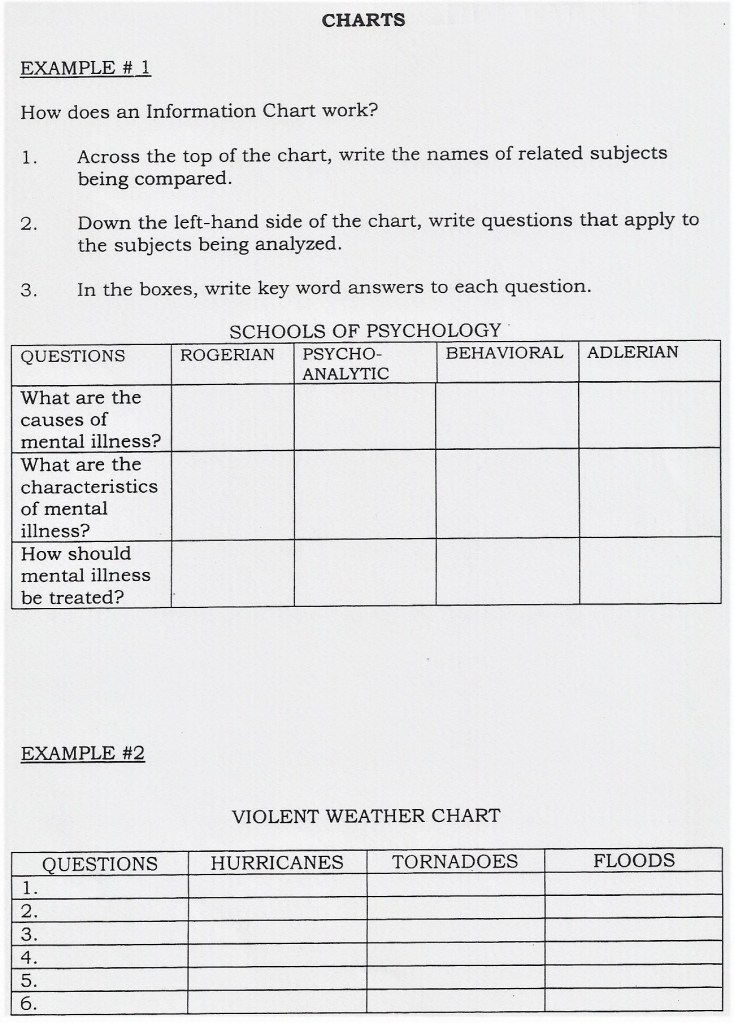
students accumulate background knowledge in an intentional, structured way, teachers can provide them with a graphic organizer that scaffolds their knowledge and maintains focus on the topic. The suggested graphic organizer in Appendix B requires students to define and apply essential concepts such as: imperialism, mercantilism, colony, territory, plantation agriculture, enslavement, imports, and
exports. Based off Marzano’s (2009) steps for vocabulary development, students define each of the terms in the graphic organizer, provide an example in the form of a sentence about the French or Spanish Caribbean, and design an image or symbol for the term. Throughout the inquiry, these terms are be reinforced as students discuss and engage in activities that extend their understanding of the terms as they are applied in Spanish and French Caribbean contexts.

Strategic Reading

While still in pairs, the second instructional strategy requires students to engage in strategic reading to tackle the supporting question: How did imperialism impact daily life in the French and Spanish Caribbean? Whereas the first instructional
strategy focused on vocabulary development to examine the economic rationale and nature of imperialism in the French and Spanish Caribbean, this strategic reading strategy requires students to access and use primary and secondary sources to
explore daily life in this region from the perspectives of enslaved people, people of mixedracial heritage, and plantation-owning families. All resources in Appendix A are appropriate for this strategy although some are provided specifically for this activity. For example, New York University Libraries (2020) has a Caribbean Studies Primary Source website that provides several publicly available leads to many French and Spanish Caribbean archives and databases appropriate for students to conduct their research. Additionally, the Code Noir of 1685 and Spanish Black Code of 1574 are listed as important primary sources for students to familiarize themselves with to understand the legal status of enslaved people and freed people of color in the French and Spanish Caribbean. Although some of these resources are in French or Spanish, students can translate many of the databases using a web browser and museum websites frequently provide English language translations. Alternatively, students who speak French and/or Spanish, or students who are learning to speak these languages, should be encouraged to apply their 21st Century multilingual assets to conduct research.

As students gather information in their quest to determine how imperialism impacted daily life in the French and Spanish Caribbean, they can record their notes in the perspective-taking graphic organizer in Appendix C. Students need to explore
the daily lives of people living in the French and Spanish Caribbean from three perspectives: enslaved people, freed people of color, and plantation owners. In the graphic organizer, they record a minimum of three pieces of information
about daily life for each of these social groups. Students also record information they discover about the role each group fulfilled in the Caribbean economy. After debriefing this activity, pairs of students can be combined into groups of three or
four students to equitably distribute required tasks as they brainstorm, design, and create the content for the summative assessment.

Summative Assessment

In groups of three or four, students create a multimedia website in response to the compelling question: What are the consequences of imperialism? To answer this question, they apply vocabulary from the first instructional strategy with
knowledge they gleaned from the second instructional strategy to research and explain the current state of economic development in a country or territory in the French and Spanish Caribbean. In groups, students select the country or territory they want to focus on for this project: Haiti, Martinique, Guadeloupe, the Dominican Republic, or Cuba. Once they have decided on a country or territory, students assign group members the following roles. If there are four group members, two group
members will be assigned the role of curator:

Webmaster – Assists with brainstorming the website, including layout, website name, and tagline. Contributes an opinion-style article and corresponding image or video in response to the third supporting question. Works with the curator(s) to write the editorial-style article that responds to the compelling question. Proofreads and provides feedback for all articles before they are posted on the website.

Curator (2) – Assists with brainstorming for the website, including layout, website name, and tagline. Contributes an opinion-style article and corresponding image or video in response to the third supporting question. Works with the webmaster to write the editorial-style article that responds to the compelling question. Proofreads and provides feedback for all articles before they are posted on the website.

Multimedia Director – Assists with brainstorming the website, including layout,
website name, and tagline. Contributes an opinion-style article and corresponding image or video in response to the third supporting question. Selects a political cartoon in response to the compelling question. Proof-reads and provides feedback for all articles before they are posted on the website. Posts content to the website in the agreed-upon layout by all group members.


In order to ensure the project is completed interdependently, the roles described above were designed so all group members are responsible for an equitable amount of writing, editing, and selection of visual content. Once it is completed, the website will contain the following elements:

1. A catchy name for the website.

2. A tagline for the website that reflects the compelling question.

3. A reflective, editorial-style article in response to the compelling question.

4. A political cartoon that is related to imperialism in the French or Spanish Caribbean.

5. Three short opinion-piece style articles in response to the supporting questions.

6. Three corresponding images or links to videos for each of the opinion piece articles. These images or videos may include charts, graphic, or maps.

7. An optional extension article that discusses creole cultures and languages in the French or Spanish Caribbean.


News Writing Workshop


To begin the process of creating their multimedia website, students can record their
assigned roles and brainstorm their ideas using the handout provided in Appendix D. Once students have completed Appendix D and received feedback on their plans from the teacher, they can begin researching and writing their articles. Each student
is responsible for writing one opinion-style article in response to the supporting question: How has the history of imperialism shaped modern economics in
the French and Spanish Caribbean?
The teacher should reinforce the importance of researching this question from multiple vantage points in order to support perspective-taking and to ensure the articles are not redundant. This point is reinforced in Appendix D where students must explain how the articles will be written from different perspectives. There are several exemplary resources to
guide students through the process of creating news articles. Scholastic (2020) has a News Writing With Scholastic Editors website to guide teachers and students through this process. The ReadWriteThink (2020) website has graphic organizers for creating
articles for classroom newspapers and reporting tips for writers. Links to these websites are provided in Appendix A

Once students have written, proof-read, and edited their peers’ articles, they can begin to collaborate on the editorial-style article and related political cartoon in response to the compelling question: What are the consequences of
imperialism?
For this last element, the multimedia director is responsible for working in tandem with the curator(s) and webmaster to write an editorial style response to the compelling question and select a corresponding political cartoon. The editorial and political cartoon can focus on imperialism in the Caribbean in general or in the country or territory they selected as a focus for their website.


Extension: The Emergence of Creole Languages as an Economic Necessity

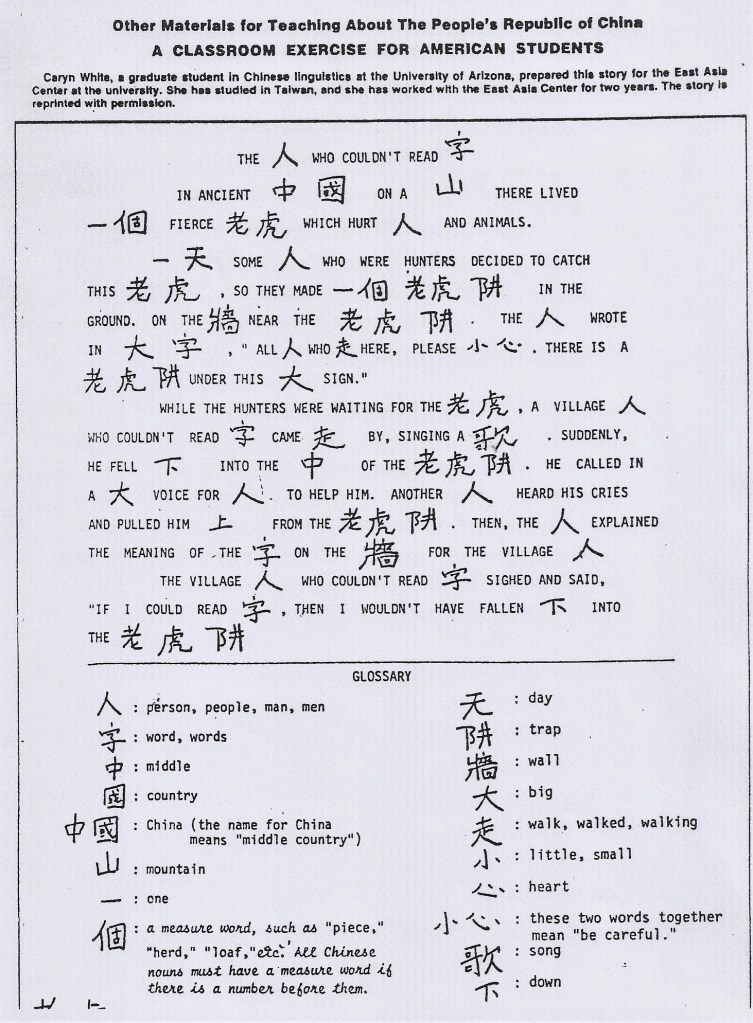
For purposes of differentiation, or to enrich this activity, students may be assigned to create additional sections for their website. One option would require students to create an article and image on the birth of new languages in the Caribbean through the process of creolization. Creolization is a term used to explain how syncretic
languages, religions, and cultures emerge through necessary contact between groups of people who speak different languages (Baron & Cara, 2011). For this article, students would investigate the phenomenon of creolization and how new Caribbean languages emerged as a result of cultural and economic exchanges that necessitated communication between social groups who spoke different languages. Other related topics for extension articles might include the emergence of new forms of music, dance, religion, and cuisines as a result of cultural diffusion in the Caribbean.

Conclusion

Once the webmaster, curator(s), and multimedia director have written, edited, and
polished their articles and curated their multimedia content, they are ready to post their content to a website. There are many freely available websites for posting student-created websites; a top choice for many educators and students is the internet-based platform at www.wix.com (Colorlib, 2020). In this final stage, students widely disseminate the fruits of their economic inquiry in a creative, website format to communicate conclusion and take informed action (NCSS, 2013). As a result of this
inquiry and its summative project, students will have acquired a wealth of content knowledge to help them understand the legacy and present-day economic situation in the French and Spanish Caribbean. Along the way, students applied numerous 21st Century Skills to understand and address economic issues, while at the same time worked collaboratively to learn from individuals who represent divergent perspectives in regional economics (Partnership for 21st Century Learning, 2015).


References:

Baron, R. A. & Cara, A. C. (2011). Creolization as cultural creativity. Jackson, MS: University Press of Mississippi.

Bassi, E. (2020). Neither a Spanish nor U.S. lake: The Caribbean, a region in its own right. The American Historian. Retrieved from https://www.oah.org/tah/issues/2018/may/neither-aspanish-nor-u.s-lake-the caribbean-a-region-in-itsown-right/

Buchanan, L. (2011). Slavery in the French Colonies: Le Code Noir (the Black Code) of 1685. Library of Congress. Retrieved from https://blogs.loc.gov/law/2011/01/slavery-in-thefrench-colonies/

Colorlib. (2020). 24 education websitebuilders for schools & teachers 2020. Retrieved from https://colorlib.com/wp/education-website-builders/

Geggus, D.P. (1993). Sugar and coffee cultivation in Saint Domingue and the shaping of the slave labor force. In I. Berlin & P. D. Morgan (Eds.), Cultivation and culture: Labor and the shaping of slave life in the Americas (pp. 80-83). Charlottesville, VA: University of Virginia Press.

Grant, S.G., Swan, K., Lee, J. (2017). Questions that compel and support. Social Education 81(4), pp. 200–203.

Hodson, C. (2007). “A Bondage So Harsh”: Acadian labor in the French Caribbean, 1763-1766. Early American Studies, 5(1), 95-131.

Horan, J. (2010). The colonial famine plot: Slavery, free trade, and empire in the French Atlantic, 1763–1791. International Review of Social History, 55(S18), 103-121

Ladson-Billings, G. (2014). Culturally relevant pedagogy 2.0: The remix. Harvard Educational Review, 84(1), 74-84.

LaHaye, L. (2019). Mercantilism. The Library of Economics and Liberty. Retrieved from https://www.econlib.org/library/Enc/Mercantilism.html

Marzano, R.J. (2009). The art and science of teaching: Six steps to better vocabulary instruction. Educational Leadership, 67(1), 83-84.

National Council for the Social Studies (NCSS). (2013). The college, career, and civic life (C3) framework for social studies state standards: Guidance for enhancing the rigor of K-12 civics, economics, geography, and history. Silver Spring, MD: Author.

National Humanities Center. (2006). Regulating enslaved and free Africans in Spanish Cuba, 1974). Retrieved from http://nationalhumanitiescenter.org/pds/amerbegin/power/text9/SpanishBlackCode.pdf

New York University. (2020). Caribbean studies: Primary sources. Retrieved from
https://guides.nyu.edu/c.php?g=276599&p=1844966

Partnership for 21st Century Learning. (2015). Framework for 21st century learning. Retrieved from
http://static.battelleforkids.org/documents/p21/P21_Framework_Definitions_New_Logo_2015_9pgs.pdf

Scholastic. (2020). News writing with Scholastic editors. Retrieved from
http://teacher.scholastic.com/writewit/news/index.htm

Schmieder, U. (2013). Martinique and Cuba Grande: Commonalities and differences during the periods of slavery, abolition, and post-emancipation. SUNY Research Foundation Review (Fernand Braudel Center), (36)1, 83-112.

Zong, J., Batalova, J. (2016). Caribbean immigrants in the United States. Migration Policy Institute. Retrieved from
https://www.migrationpolicy.org/article/caribbeanimmigrants-united-states-1


Appendix A
Resources for Teachers and Students

BBC News (n.d.) Latin American and the Caribbean. Retrieved from https://www.bbc.com/news/world/latin_america

CANANEWS. (n.d.). CANANEWSOnline. Retrieved from http://cananewsonline.com/main/

Caribbean360. (n.d.) Caribbean 360 News. Retrieved from http://www.caribbean360.com/

News Now. (n.d.). Caribbean. Retrieved from
https://www.newsnow.co.uk/h/World+News/Caribbean

Caribya!. (2020). History of the Caribbean.
Retrieved from http://caribya.com/caribbean/history/

Central Intelligence Agency. (n.d.). The world factbook. Retrieved from
https://www.cia.gov/library/publications/the-worldfactbook/

The Code Noir (The Black Code). (1685). Liberty, equality, fraternity: Exploring the French Revolution. Retrieved from
https://revolution.chnm.org/items/show/515

Crowell, M. (2018). The island where France’s colonial legacy lives on. The Atlantic. Retrieved from https://www.theatlantic.com/international/archive/2018/04/france-macron-guadeloupe-slaverycolonialism/557996/

Digital Library of the Caribbean (dLOC). (n.d.). The Caribbean digital newspaper collection. Retrieved from https://dloc.com/cndl

France 24. (n.d.). Guadeloupe. Retrieved from https://www.france24.com/en/tag/guadeloupe/

France 24. (n.d.). Martinique. Retrieved from https://www.france24.com/en/tag/martinique/

The John Carter Brown Library. (n.d.). Remember Haiti. Retrieved from
https://www.brown.edu/Facilities/John_Carter_Brown_Library/exhibitions/remember_haiti/index.php

New York University. (2020). Caribbean studies: Primary sources. Retrieved from
https://guides.nyu.edu/c.php?g=276599&p=1844966

ReadWriteThink. (2020). Inverted pyramid format. Retrieved from
http://www.readwritethink.org/files/resources/lesson_images/lesson249/pyramid.pdf

ReadWriteThink. (2020). Newspaper story format. Retrieved from
http://readwritethink.org/files/resources/lesson_images/lesson249/format.pdf?_ga=2.132204557.2047861228.1588102834-973392334.1585586963

ReadWriteThink. (2020). Reporting tips. Retrieved from http://readwritethink.org/files/resources/lesson_images/lesson249/tips.pdf?_ga=2.166823997.2047861228.1588102834-973392334.1585586963

Silva, A.M. (n.d.). Haiti: An Island Luminous (n.d.). Retrieved from http://islandluminous.fiu.edu/indexenglish.html

Spanish Black Code: Regulating enslaved and free Africans in Spanish Cuba, 1574. (2006). National Humanities Center. Retrieved from http://nationalhumanitiescenter.org/pds/amerbegin/power/text9/SpanishBlackCode.pdf

Scholastic. (2020). News writing with Scholastic editors. Retrieved from
http://teacher.scholastic.com/writewit/news/index.htm

American Imperialism and Indigenous Nations: Inquiry through the Lens of Kipling’s “White Man’s Burden”

Janie Hubbard

Click here for link to Inquiry Based Lesson activity

A country’s exploitation of another is a defining characteristic of imperialism. Consider how exploitation affects one small subset of human interactions, both historical and contemporary. For example, terms such as economics may involve
extracting resources and human labor, politics concerns control and power over others more vulnerable, and social relates to the many ways one
country takes measures to change or expunge the original society.

Historians generally consider that the era of American imperialism began with the 1898 Spanish-American War (Odom, 2015) primarily because of its international context. In defeat, Spain relinquished claims on Cuba and ceded sovereignty over Guam, Puerto Rico, and the Philippines (U.S. Department of State, n.d.). The next year, the British writer, Rudyard Kipling, wrote his now famous 1899 poem, “The White Man’s Burden: The United States and The Philippine Islands.” Approaching an imperialist point of view, Kipling’s verses, at the time, seemed, to many individuals in
the white world, to evoke a transcendent and noble cause (Foster & McChesney, 2003). Subsequently, the phrase “White Man’s Burden” came to symbolize the need for white supremacy over indigenous peoples, particularly black- and brownskinned people, around the world.

The “White Man’s Burden” is a concept used to justify imperialism – the underlying theory being paternalism. Paternalism is the idea that colonized native peoples are like children and cannot properly care for themselves. Thus, the task is for so-called superior races to civilize them (Loewen, 2010; Manner, 1998). Identifying
American imperialism a “Burden” validated it as a benevolent cause and in Filipinos’ best interests. “By accident and design – the U.S. recreated the racial climate of North America in Asia” (Van Ells, 1995, p. 621). While race discussions infused late 1800s arguments about annexing the Philippines, the United States eventually did so to continue expansionism. Regarding the imperialism debate, at the time, 1898 U.S. imperialists saw invasions as part of the “mission” of Christian colonialism—
originating with the Pilgrims in 1620, while “antiimperialists argued as if America had never been an imperialist power” (d’Errico, 2017, para. 7). After annexation, Americans viewed Filipino resistance to U.S. sovereignty as insolence by uncivilized people, and U.S. forces eventually extinguished Filipino rebels. Invasions of the southern Tagalog provinces of Luzon in the Philippines (Ileto, 2001) closely resemble those of the Arizona and Dakota Native American Territories in North America, just
decades before (Van Ells, 1995).

As Van Ells (1995) implies that imperialism tactics were used to dominate native peoples in North American territories early in American history. In this article, I describe some of these events, particularly related to the White Man’s Burden ideology. The University of Washington’s Burke Museum describes tips for teaching about Native Americans. Regarding sensitive terminology, they state, “Native American, Native, American Indian, Indian, First Peoples, and Indigenous are all terms used by both Native and non-Native people. When possible, most Native
people prefer being identified by their specific community” (n.d., section 3). Note, some terms are used interchangeably in this narrative, particularly when other writers are quoted.

Impact of American Imperialism on Native Americans

Paul Odom (2015) states, “American imperialism was born as white settlers moved onto land ceded to Native Americans in treaties with Britain” (para. 2). U.S. President James K. Polk’s administration (1845 to 1849) did not formally sanction an imperialistic regime, though systematic invasion of native territories by white settlers and Polk’s campaign to seize much of Mexico’s remaining territory made imperialism evident. “He was a champion of manifest destiny–the belief that the United States was fated to expand across the North American continent” (History, 2019, section 4). Through various means, including the MexicanAmerican War (1846-48), the U.S. acquired territories in what are now known as Texas, California, Arizona, Colorado, Nevada, New Mexico, Utah, Wyoming, Washington, Oregon,
Idaho, and parts of Montana during Polk’s one-term administration (History, 2019). This great government-backed expansion took a tremendous toll on indigenous peoples in these territories.

Early North American Indigenous Population and Nations

For years, researchers have tried to estimate the native population numbers before European arrival on the continent during the 1400s. One of the earliest estimates came from George Catlin, an artist who traveled the western continent to paint about
600 portraits of native life from 1830 to 1838 (Lord, 1997; Smithsonian Museum of Art, n.d; Virginia Museum of Fine Arts, n.d.). Catlin’s diaries claim there were around 16 million natives before 1492. Regarding the number of actual indigenous nations, Hansi Lo Wang (2014) writes about a modern-day mapmaker and part Cherokee, Aaron Carapella, who designed a map of indigenous nations’ locations, which existed before contact with Europeans on the continent. The map contains both the original and commonly known names of some 600 nations. Additionally, though estimates of
how long indigenous peoples lived on the land vary, archaeologists have found substantial evidence of human presence more than 12,000 years ago. Some claim that natives may have lived there as long as 40,000 years (Calloway, 2019).

The White Man’s Burden

Each incident, from the beginning, involving U.S. government exploitation of natives for possession of their lands are too numerous to describe here, though the imperialist White Man’s Burden label is certainly fitting in this context. To illustrate George Washington’s shifting dialogue about indigenous nations, I offer two primary
sources to compare. First, the Dolph Briscoe Center for American History at The University of Texas in Austin recently acquired an original letter written by George Washington to John Armstrong on August 24, 1769 discussing the murder of three
members of the Mingo nation. The letter describes the killings by whites as “villainy” and “mischief.” Washington vowed the U.S. government would not support “wanton quarrels with the Indians.” However, by May 31, 1779, Washington wrote a letter to General John Sullivan giving him orders for “…total destruction and devastation of their settlements and the capture of as many prisoners of every age and sex as possible” (National Archives, 2018, para. 1). Sullivan’s army marched through
Iroquois land, burned around 40 villages, and destroyed all food sources. They left only bare land and timber (Calloway, 2019). These letters illustrate one reason primary sources, including documents deemed dear to our country must be critically
analyzed for recurring signs of discrimination and imperialism.

The U.S. Declaration of Independence (1776) eloquently speaks of “all men being created equal.” However, Grievance 27 in the document, sent to Britain’s King George, III, states, “He has excited domestic insurrections amongst us, and has
endeavored to bring on the inhabitants of our frontiers, the merciless Indian savages, whose known rule of warfare, is undistinguished destruction of all ages, sexes, and conditions.” Adrian Jawort (2017) argues the statement summons “…the image of ferocious warriors propelled into action by a tyrannical monarch” (para. 4). Thus, this representation ensured memories and conceptions of the natives’ role in the American Revolution, which they [Americans] believed justified their subsequent treatment of them (Jawort, 2017). It is true that most nations sided with the British during the war, because they hoped a British victory would stop settlers’ persistent intrusion on their lands (Calloway, 2019). Some nations (e.g., from Stockbridge, Oneida, Tuscaroras) fought alongside the American Patriots or tried to adapt to the Anglo Saxton lifestyle (e.g., Cherokees), yet, in time, even they became victims of Americans’ insatiable desire for land (Calloway, 2019). The U.S. government continued to assert their self-proclaimed authority and westward expansion.

There are countless stories about the U.S. government’s power over indigenous nations on the continent – removal by force (e.g., Trail of Tears), land cessions and seizures, starvation/destitution, broken treaties, illegal land deals, incarceration,
lawless discrimination, anti-Indian racism, cultural ethnocentrism, trickery, military defeat, establishment of the reservation system, taking their autonomy, and so forth. Imperialism in the name of saving souls, civilizing “backward savages”, God-given rights to progress (The White Man’s Burden) shielded the economic, political, and social gains made by defeating the continent’s original inhabitants. Note that natives were not allowed U.S. citizenship until 1924, and they were not allowed to vote in every state until 1962 (Little, 2019). James Loewen (2007) discusses Cherokee removal as just one example of Americans’ attitudes regarding “…unacculturated aborigines helpless in the ways of progress” (p. 132). Loewen states, “Casting
Indian history as a tragedy because Native Americans could or would not acculturate is feelgood history for whites” (2007, p. 131). However, he warns, “…wallowing in the inference that America or whites are bad does not explain the historical complexities of Indian-white relations that dominated our history, particularly between 1622 and 1890” (2007, p. 131). Loewen (2010) argues the inability to know your own history and think critically about historical claims, leaves one powerless to discern truth from fiction. Thus, authentic history learning must include content, critical thinking, and interpretative skills.

In truth, my elementary school learning simply and briefly focused on Cherokees,
Chickasaws, Creeks, and Chickasaws, which were known, in early times, as four of the five “civilized tribes.” The fifth nation was the Seminoles (Florida). Evidently, colonists and early federals adopted the term “civilized tribes” to denote the degree to which nations tried to conform to European ways. The term “civilized tribes”
(especially in our teaching resources) underscores roots of ethnocentrism (Burke Museum, n.d.; Loewen, 2010).

Lovely stories, from textbooks, about the four nations’ lifestyles framed my miniscule understanding of natives. Yet, Moundville is located only a few miles away. Moundville is the secondlargest site in the United States of the classic Middle Mississippian era (approximately 800-1600), from which various indigenous nations
developed and flourished (see Blitz, 2017). Afterwards, more than 30 organized nations lived within the geographic area (Alabama Digital, 2020). For me, no knowledge occurred about the nations or their eventual fates.

Inquiry Lesson

With these thoughts in mind, I wish to emphasize two primary purposes for the lesson. First, the lesson is meant to expand students’ interests and motivation to learn about indigenous people and events, outside their immediate states and territories. Second, it is meant to engage features of the National Council for the Social Studies (NCSS) C3 Framework (2013):

1.Developing questions and planning inquiries;

2. Applying disciplinary concepts and tools;

3. Evaluating sources and using evidence; and

4. Communicating conclusions and taking informed
action (p. 12).

The lesson follows the C3 Inquiry Design Model (IDM) Blueprint (Grant, Swan, &Lee, 2014) as an organizer. Through involvement in this historical inquiry, students may develop sophisticated thinking about complex history and
causation connections (Barton & Levstik, 2004; Beal & Bolick, 2013; Loewen, 2010).

In this lesson, students predominantly focus attention on concepts and questions regarding the Lakota and Dakotas’ long time resistance to the U.S. government. The essential idea is inspired by a trade book entitled, Sitting Bull: Lakota Warrior and Defender of his People by S.D. Nelson (2015), a member of the Standing Rock Nation in the Dakotas. Nelson (2015) writes, “Although of mixed blood, I am a direct descendant of Sitting Bull’s people, who were forced onto a reservation at the end of the nineteenth century” (p. 52). The Burke Museum at the University of Washington in Seattle (n.d.) suggests teachers use books presenting Native perspectives written by Native authors. S.D. Nelson, also an illustrator, combines archived photographs
and his own art inspired by nineteenth century Lakota ledger-art drawings (see McKosato, 2018; Nelson, 2015). This teaching-ready lesson, in the next section, targets 5th– 8th graders using the IDM Blueprint, though it may be adapted for other students.

Inquiry Design Model

Conclusion

There is much recorded and archived U.S. history, which illustrates the often-quoted adage, “history belongs to the victor.” Colin G.Calloway (2019) states that indigenous civilizations “were built on something other than colonialism and imperialism” (p.16). They offer “examples of international relations developed from values other
than personal possessions or competitive consumption of resources” (p. 15). Indigenous civilizations, living on the land thousands of years,
vastly predate America’s entrance into a wider
world in the 1500s.

More inclusive histories do not need good guys and bad guys. We can openly discuss causes and effects of exploitation and bias, for instance why the “The White Man’s Burden” ideology or the, currently, much discussed “white savior” mentality (see Ash, 2015; Blow, 2016; Johnson, 2018) still exist. Calloway (2019) argues that “adding Indian America to the map of global history reorients perspectives, generates new narratives, and encourages new interpretations and comparative studies” (p. 15) – he notes, too, that today’s archaeologists are locating and restoring lost histories. Consequently, more archived records, regarding the 600 or so nations, will be available for history and social studies students. Knowledge about “Native Americans as the “savage” stereotype thrived primarily from dated textbooks and popular culture – especially from Western movies and novels” (Loewen, 2007, p. 116). Using our own, updated media, we can help dispel those images and recognize that indigenous people were and still are not one culture – they are many. Further inquiries might introduce students to the nearly 600 contemporary nations within the contiguous 48 states, Alaska, and Hawaii.

References:

Alabama Digital (2020, April 15). Alabama Native American tribes index. Retrieved from https://digitalalabama.com/alabama-nativeamerican-tribes/alabama-native-american-tribes-ofalabama/12123

Ash, E. (2015, fall). Racial discourse in “The Blind Side”: The economics and ideology behind the white savior format. Studies in Popular Culture, 38(1), 85-103.

Barton, K. & Levstik, L.S. (2004). Teaching history for the common good. New York, NY: Routledge.

Beal, C., & Bolick, C. M. (2013). Teaching social studies in middle and secondary schools. Boston, MA: Pearson.

Blitz, J.H. (2017, August 18). Moundville Archeological Park. Encyclopedia of Alabama. Retrieved from http://www.encyclopediaofalabama.org/article/h1045

Blow, C.M. (2016, June 27). White savior, rape, and romance? The New York Times.

Boundless. (n.d.). Boundless U.S. History. Retrieved from https://courses.lumenlearning.com/boundlessushistory/chapter/american-imperialism/

Burke Museum (n.d.). Tips for teaching about Native peoples. University of Washington. Retrieved from https://www.burkemuseum.org/education/learningresources/tips-teaching-about-nativepeoples/

Calloway, C. G. (2019). First peoples: A documentary survey of American Indian history. Boston, MA: Bedford/St. Martins, Macmillan Learning.

d’Errico , P. (2017, March 31). American Imperialism: America was never innocent. Indian Country Today. Retrieved from https://indiancountrytoday.com/archive/americanimperialism-america-was-never-innocentQhbmKyqu8064U-R1PJjoEQ/

Foster, J. B. & McChesney, R.W. (2003, November). Kipling, the ‘White Man’s Burden,’ and U.S. Imperialism. Monthly Review, 55(6). Retrieved from https://monthlyreview.org/2003/11/01/kiplingthe-white-mans-burden-and-u-s-imperialism/ DOI: https://doi.org/10.14452/MR-055-06-2003-10_1

“From George Washington to Major General John Sullivan, 31 May 1779,” Founders Online, National Archives. Retrieved from https://founders.archives.gov/documents/Washington/03-20-02-0661

Grant, S.G., Swan, K., & Lee, J. (2014). Inquiry Design Model (IDM) Blueprint™. Retrieved from http://www.c3teachers.org/inquiry-design-model/

Harvard Graduate School of Education Project Zero (pz) (2017). Exploring complexity. Retrieved from https://pz.harvard.edu/resources/exploringcomplexity/

History (2019, June 7). James K. Polk. history: A&E Television Networks. Retrieved from https://www.history.com/topics/uspresidents/james-polk/

Ileto, R. (2001). Colonial wars in southern Luzon: remembering and forgetting. Hitotsubashi Journal of Social Studies, 33(1), 103-118.

Indian Country Today. (2013, June 6). George Washington letter describes killing of natives as ‘villainy’. Retrieved from https://indiancountrytoday.com/archive/georgewashington-letter-describes-killing-of-natives-asvillainy-PgAwRp8W2keW1wCvAe1TYw/

Jawort, A. (2017, September 23). The Declaration of Independence – Except for ‘Indian Savages’. Retrieved from https://indiancountrytoday.com/archive/thedeclaration-of-independence-except-for-indiansavages-VeebEvQSV0as6vTpg8_5xg/

Johnson, H. (2018, July 11). The white savior mentality. Medium. Retrieved from
https://medium.com/@KnowledgeisPower/thewhite-savior-mentality-9180970ecb62

Kipling, R. J., & Wise, T. J. (1899). The white mans’ burden. London: Printed for private circulation.

Little, B. (2019, August 20). Native Americans weren’t guaranteed the right to vote in every state until 1962. History. Retrieved from https://www.history.com/news/native-americanvoting-rights-citizenship

Loewen, J.W. (2007). Lies my teacher told me: Everything your American history textbook got wrong. New York, NY: The New Press.

Loewen, J. W. (2010). Teaching what really happened: How to avoid the tyranny of textbooks and get students excited about doing history. New York, NY: Teachers College Press.

Lord, L. (1997, August 18). How many people were here before Columbus? U.S. News and World Reports, 68–70.

Manner, M. (1998, Spring). Student response: Divisive attitudes towards expansionism and the Treaty of Paris. OAH Magazine of History, 12(3), 56-59.

McKosato, H. (2018, August 17). Ledger Art: An homage to the past, creating art for the present and future. Indian Country Today. Retrieved from
https://indiancountrytoday.com/news/ledger-art-anhomage-to-the-past-creating-art-for-the-presentand-future-Z-NnUCaHgUOllkBMarUXxg/

Mvskoke Media Presents Mvskoke Vision (2013, July 23). Aaron Carapella and the Tribal Nations Map. (Video file). Retrieved from https://www.youtube.com/watch?v=-Ukjc7Y1ncc/

National Archives and Records. (2018, December 10). Native communities program. Retrieved from https://www.archives.gov/education/nativecommunities

National Council for the Social Studies (NCSS) (2010). National standards for social studies: A framework for teaching, learning, and assessment. Silver Spring, MD: Author.

National Council for the Social Studies (NCSS) (2013). The college, career, and civic life (C3) framework for social studies state standards: Guidance for enhancing the rigor of k-12 civics, economics, geography, and history. Silver Spring, MD: Author.

Nelson, S.D. (2015). Sitting Bull: Lakota warrior and defender of his people. New York, NY: Abram.

The New York Times (2018, April 15). A conversation with Native Americans on race | Op Docs (Video file). Retrieved from https://www.nytimes.com/video/opinion/100000005352074/a-conversation-with-native-americans-onrace.html

Odom, P. (2015, August 28). The birth of American imperialism. Ashford Humanities Review. Retrieved from https://ahr-ashford.com/the-birth-of-americanimperialism-by-paul-odom/

Reelcontact (2009, June 27). Sitting Bull’s greatgrandson tells oral history film. (Video file). Retrieved from https://www.youtube.com/watch?v=RnPnWgB2QY

Kipling, R. (1929). “The White Man’s Burden: The United States and the Philippine Islands, 1899.” Rudyard Kipling’s Verse: Definitive Edition. Garden City, NY: Doubleday.

Safeshare (n.d.). Retrieved from https://safeshare.tv/

Smithsonian Museum of Art (SAAM) (n.d.). George Catlin. Retrieved from https://americanart.si.edu/artist/george-catlin-782

Troccoli. (n.d.). George Catlin. Smithsonian American Art Museum (SAAM). Retrieved from https://americanart.si.edu/artist/george-catlin-782/

United States Department of State (USDOS) (n.d.).The Spanish-American War, 1898. United States Office of the Historian. Retrieved from https://history.state.gov/milestones/1866-1898/spanish-american-war/

U.S. Declaration of Independence (1776). Grievance 27.

Van Ells, M.D. (1995). Assuming the White Man’s Burden: The seizure of the Philippines, 1898-1902 Philippine Studies, 43(4), 607-622. Retrieved from www.jstor.org/stable/42634171/

The Virginia Museum of Fine Arts, (VMFA) (n.d.). George Catlin. Retrieved from https://www.vmfa.museum/learn/resources/georgecatlin/

Wang, H. L. (2014, June 24). The map of Native American tribes you’ve never seen before. National Public Radio (NPR). Retrieved from https://www.npr.org/sections/codeswitch/2014/06/24/323665644/the-map-of-native-american-tribesyouve-never-seen-before/

Wo Lakota (2016, March 9). Tasunke Witko (Crazy Horse): A documentary film (Video file). Retrieved from https://www.youtube.com/watch?v=qnRzS_voHus

Ziggurathsss (2011, February 25). Sitting Bull -Biography – Sioux Indians. (Video file). Retrieved from https://www.youtube.com/watch?v=3b4-ph1W_1E

Fear Affect as Imperialist Practice in Media Representations of China

Amy Mungur

The ordinary American has never met the ordinary
Chinese. But he dislikes him to his bones.

-Misunderstanding China (CBS News Special, 1972)

In January 2010, Social Education dedicated its issue to teaching about China. The purpose of this issue – the first since 1985 focused entirely on China (p. 7)1 – called for teachers to move past “outdated assumptions; encourage further study
about this important, changing, vast and varied nation; and provide an improved education for students.” The editors’ call for challenging outdated assumptions and Cold War stereotypes intrigued me, and I eagerly read through the issue. With just
over 10 years since that issue of Social Education, we find ourselves in the midst of a global pandemic; a pandemic that has resulted in “racialized fear [manifested] in public discourse” (Dillard, 2020).

Fear tropes surrounding China/Chinese people, and by extension Asian Americans, are historically entrenched, dating back to 19th century immigration and Chinese exclusion. Media discourse has been especially prominent in how these narratives pervade, as content-based resources, i.e. the textbook, often focus on Ancient China and Communist China, with little if any, historicizing in between. In the mid-19th century.

Junk science about people from Asia was used to justify laws leading to exclusion and exploitation of Asian immigrations. It solidified fear and phobia against Chinese people. The “yellow peril” narrative was born. It’s a racist term that plays on the idea that Asian people would disrupt or harm Westerners’ way of life (Dillard, 2020).

In the wake of the COVID-19 pandemic, such racist tropes have resurfaced and pervaded media discourse. Agarwal-Rangath (2013) calls on social studies teachers to connect the past to the present. She notes that “by working to make explicit connections between the past and the present, we provide students with opportunities to see how our society systematically continues to benefit some,
while hurting others” (p. 100). Using the Citizens against Government Waste (CAGW) advertisement, The Chinese Professor (2010), this article examines the affect of fear as an imperialist practice, and suggests pedagogical strategies for disrupting
racialized and imperialized narratives found in both curricular and media resources.

Affecting Fear as Imperialist Practice

Cold war stereotype: I situate this analysis within Masalski and Levy’s (2010) challenge to move past outdated assumptions and Cold War stereotypes (p. 7). The Cold War necessarily draws on affects of fear and paranoia. Using Masalski and Levy’s (2010) “Cold war stereotype” to understand fear as imperialist practice relies heavily on images of China produced in China during the Cold War, but used frequently in contemporary media and curriculum representations of China in the United States. These images include, but are not limited to propaganda posters, “Cult of Mao” images, Red Guards, etc. As noted in the previous section, in the 19th century, “yellow peril warned of Asiatics racially weakening the national body and justified the exclusion of Asian immigrants” (Leong, 2005, p. 129). During the Cold War, “yellow peril” resurfaced to infuse feelings of fear and concern over the communist threat to democracy and freedom. Today, we see similar acts directed at
Asian Americans (see Cho, 2020; Hong, 2020; Tavernise & Oppel, Jr., 2020); or in reference to COVID-19 by right-wing media outlets as the “Wuhan virus” (see Gearan, 2020; Li, 2020), with the U.S. president himself serving to “[stoke] xenophobic panic in a time of crisis” (Lieu, 2020) doubling down with his continued use of “Chinese
virus.” For the purposes of the analysis in this article, here the Cold War stereotype replaces yellow peril (or renames it) through an emphasis of Maoist, and Cold War ideology for explaining and understanding contemporary China to Western,
democratic audiences, specifically, the United States.

Imperialism: Imperialism can be broadly defined as an act of exerting rule or authority over another. More specifically, however, imperialism is about power, and the means through which one entity names, classifies, categorizes, and studies another. Historically, imperialism has worked to extend categories and classifications named during the period of empire, “directed at extending the
dominion of Europe around the globe” (Willinsky, P. 10). These classifications have extended beyond empire. As such, imperialism has become a means through which to see the world; a world dependent upon unequal binaries: East/West; primitive/civilized; irrational/rational.

Said (1978) Orientalism articulates the unequal relationship between the East and the West as a relationship of power. The Westerner exerts this power in the ways in which he shapes and frames the East through Western representation. The “Oriental” does not speak for themselves. Rather, they are described, written about, and “Orientalized” (p. 5) through Western observations. Thus, Orientalism is

Premised upon exteriority, that is on the fact that the Orientalist, poet or scholar, makes the Orient speak, describes the Orient, renders its mysteries plain for and to the
West.
(pp. 20-21)

In the United States, orientalist thinking is rooted in the history of United States immigration. European immigrants, who imagined the East as “more decadent, exotic, and immoral” (Leong, 2005, p. 7) carried with them these attitudes and ideas of the East.

The United States looked at the East (China) as a manifest destiny (Tchen, 1999; Leong, 2005), which Tchen (1999) explained was “not only a colonizing vision of the frontier, but also an Occidentalist view of extending European American Protestant civilization influenced by European ideas” (p. xvi). The East was a place to impose, through missionary projects especially, Western and Christian “civilization.” The binaries of civilized/primitive became a way of seeing not only the Chinese in China, but also Chinese immigrants in the United States. Additionally, in the United States, “measuring oneself against the exoticized and the alien became a means toward
stabilizing, and destabilizing, a sense of belonging and normalcy with a sense of freedom and individuality” (p. xx). We can draw parallels to contemporary media discourse, and by examining representational practices we can make connections
to the past explicit (Agarwal-Rangath, 2013), revealing the ways in which imperialist thinking entrenches narratives of a rational and benevolent U.S. to an irrational and devious China.

Fear affect and its commercial appeal: What does a fear affect mean, and what does it do? According to Massumi (2010), fear is “the anticipatory reality in the present of a threatening future” (p. 54), and this perceived future threat is manifested based on past future threats. Applying Massumi’s postulation to the study of China suggests that because in the past China was a potential threat (“yellow peril,” Cold War,
communist, threat to democracy), there is an anticipation of a potential threat in the future. Though there are several examples of more contemporary applications of this, including a recent Biden campaign advertisement2, (See https://www.youtube.com/watch?v=PmieUrXwKCc&feature=emb_logo) I often use Citizens Against Government Waste (CAGW) advertisement, The Chinese Professor (2010)3, which provides a robust visual and narrative example of fear affect, as well as offers points of historical inquiry. The Chinese Professor (2010) forefronts the issue of government spending and projects what future we in the United States will realize, if, by 2030, the spending does not stop. The final scene of the commercial illustrates both the fear affect that Massumi (2010) theorizes, as well as the Cold War stereotype – “Of course we owned most of their debt, so now they work for us.” This is followed by a voice over narration: “You can change the future. You have to!”

To affect fear in advertising is not new. Identified as fear appeals, in advertising they
involve “some kind of threat of what may happen if one does not buy the product” (Harris, 2009, p. 115). All advertising is intent on selling something. Whether it is a commercial product, politician, or ideology, advertising is meant to be persuasive. Research on the ethicality of using fear appeals has produced mixed results, but some studies illustrate the drawbacks to such an approach, primarily the loss of “credibility of advertisers” and the stirring up of “unnecessary fears and worries among audience members” (LaTour, et. al., 1996, p. 60). Despite these concerns, however, fear appeals are used regularly because they appear to work. Hyman and Tansey (1990) illustrated in their empirical study that viewers remember advertisements that use fear far more than in advertisements that employ humor, warmth, or other emotional appeals (in LaTour et al., 1996, p. 60).

In 1986, CAGW also launched an advertisement, The Deficit Trials 2017 AD. This
advertisement depicted an adolescent boy questioning his witness about the $2 trillion debt the United States faced in 1986. The witness asked the boy, “Will you ever be able to forgive us?” (See https://www.youtube.com/watch?v=OTSQozWP-rM) This is followed immediately by voice-over narration: “No one really knows what another generation of unchecked federal deficits will bring. But we know this much, you can change the future.” The projected fear in these advertisements is actually
quite different, though in both cases, many networks refused to air them because they were too controversial. The fear in 1986 was projected on the debt itself. In the 2010 advertisement, the fear is storied into a narrative of a failing nation, the
United States, and as a result of stimulus and spending, this “great nation” sold itself to another country, China. (taken from http://www.washingtonpost.com/blogs/postpolitics/wp/2012/10/22/ad-watch-chinese-professor-going-back-onthe-air/)

When met with criticism over the representations in this commercial, the producer
responded, “This ad is about America, it’s not about China” (in Smith, 2010). While this is certainly “about [the United States],” I have to wonder how our historical relationship with, and assumptions about China impact this projection of our future
relationship with China. Vukovich (2010) argues that the “use of China as something already known and ready-to-hand saves time” (p. 156). When we consider how representations, in this case, The Chinese Professor, use language and imagery intent
on elevating a narrative of U.S. exceptionalism whereby democracy is threated by Maoist autocracy, we can see how fear is used to exert power over the other, i.e. imperialism.

Challenging the Narratives

I regularly use the Chinese Professor (2010) in my courses to prompt intentional discussions Citizens Against Government Waste (CAGW) about historical marginalization/racialization of Chinese people, and more contemporary
discriminatory practices against Asian Americans. In this lesson, students complete a graphic organizer to record responses to the following questions:

What did you see?

What did you hear?

What did you learn?

What do you now know [from watching this]?

The overall aim is to engage in meaningful examination into our own assumptions about belonging, otherness, inclusion, and exclusion.

Students are exposed to not only curricular representations, but also to representations that pervade popular media in what Kellner and Share (2007) argue, “help construct our images and understanding of the world” (in Sensoy, 2010, p. 40). The Chinese Professor (2010) is so compelling for critique because of the layers of text, its intertextuality. What an intertextual analysis does for a representation like this one is to illuminate how the visual and text-based narrative work together to present a future through what is “known” about the past. As a multiple discursive space, this advertisement speaks to the audience through image, sound, spoken narrative, and the written narrative to support the spoken narrative (subtitles). It is important to point out that this commercial was also reformatted for the 2012
election in support of Republican nominee candidate, Ron Paul. Despite the clearly partisan leanings, this commercial is useful in that it articulates layer upon layer of fear and paranoia through similar historical images, and rhetoric, used in the classroom to teach about China.


What do we see? Visually, this commercial is layered with text – both in English and in Chinese – and with images. In the first full frame of the commercial, the audience (viewer) gets a panoramic view of the professor’s lecture hall (Figure 1)

Figure 1:

Giving the appearance of hovering over the floor is 全球经济学, Mandarin for Global/World Economics. In English, the audience is “told” through script that it is Beijing, China in 2030 A.D.

Adorning the walls of the lecture all are three images – the famous portrait of Mao Zedong, and two propaganda posters from the Cultural Revolution.

As the commercial progresses and the professor gives his lecture, images fade in and out behind him. These images are intended to represent the United States – the Capitol, Lincoln Memorial, and the American flag. While he speaks, a student
of his lecture expands an image on his tablet of a Wall Street sign (Figure 2).

As the professor says, “Of course, we owned most of their debt,” the image of the White House is covered by the Chinese National flag (Figure 3), the White House visible but fading. At this point the professor laughs, his expression somewhat
maniacal, and says, “so now they work for us.” The students in his lecture find this very amusing, and laugh at his comment.

Figure 3:

What do we hear? The space occupied through sound in this commercial is very
significant. In most commercials, aired under the assumption that the particular audience is English proficient, a viewer should be able to close their eyes and listen to the narrative, without the disruptions of the visual. At the start of this
commercial, the audience (listener) hears a waspy gong-like sound, and then the sound of footsteps. The professor speaks in Mandarin throughout the one minute and two second space. Woven throughout his speech is the attempted sound of
wind, and the Chinese bowed instrument zhonghu (中胡). Twice, the audience hears sounds of laughter– a singular laugh by the professor, and then a reasonably louder set of laughs by a group of people [students]. The advertisement’s concluding
statement is a voice-over narration, in English, reminding us, “You can change the future. You have to. Join Citizens Against Government Waste to stop the spending that is bankrupting America.”

Typically, I show this commercial twice. The second time, I have them just listen. Students at times struggle with this because, having watched it once, they “don’t understand Chinese [language].” This is intentionally on my part, because the sounds
that circulate in this commercial – the gong, the violin, blowing wind – evoke imagery that can be, quite problematically described as “typically Chinese.”

Engaging Students in Visual/Textual Analysis

The Chinese Professor (2010) occupies multiple discursive spaces, the discourse
represented through the written/spoken text, and the discourse represented through visual text. The narrative space is complicated because of the spoken Chinese, and then translated, presumably correctly, into English. When CAGW endorsed Ron
Paul in 2012 and reformatted the commercial, the subtitles were altered slightly and some images were added, but the Mandarin remained the same.
When I use these two versions with students, they often notice the changes in the images – more direct at pointing out the other Republican nominee’s shortcomings, specifically Governor Rick Perry.

Text (the narrative: The text is significant, but it is with the juxtaposition of the images that pervade the space of this commercial that provide analytical entry points into how the Cold War stereotype is represented and how fear is used a
means to exert control over another. Fairclough (2003) explains that “discourses not only represent the world as it is (or rather seen to be), they are also projective, imaginaries, representing possible worlds which are different from the actual world,
and tied in to projects to change the world in particular directions” (p. 124). The narratives and visuals are working together to (re)present a particular version of the United States, one in which is perceived out of fear – from the paranoia and fear
that was present during the Cold War period. The questions used to frame this lesson allow students movement to record their findings on the graphic organizer, while simultaneously being prompted to not only question their assumptions about China
more broadly, but also consider what the implications are of representation like this one to understanding more contemporary issues of discrimination and racism in the United States.

Images (the visual): Images are complex. Meaning made through/by photography (image) is arguably more complicated than narrative text in that it “seems to have a more innocent, and therefore more accurate, relation to visible reality than do other mimetic objects” (Sontag, 1977, p. 6). The innocence, however, is what makes the
photograph/image aggressive (p. 7), and potentially problematic. Hall (1997) defines photography as a “representational system, using images on lightsensitive paper to communicate photographic meaning about a particular person, event, or scene”
(emphasis added, p. 5). Within this “system” exist objects, which help the audience/viewer derive meaning (Sturken & Cartwright, 2009). Though The
Chinese Professo
r (2010) is not a single photograph, it is systematically representing a
person/persons/events in order to communicate a particular meaning.

Sontag (1977) describes how “the picture may distort, but there is always a presumption that something exists, or did exist, which is like what it is in the picture” (p. 5). What this suggests is that a reader/audience member/viewer brings to the photograph (or image) an expectation of something similar to what is being viewed. The images that unfold throughout The Chinese Professor (2010)
suggest that we in the United States expect economic advancement of the Chinese, and to some extent are “okay” with that. However, the political and social thought of the Chinese – implicit in the images of 1960s China, the Communist flag draped
over the White House, and the students captivated by their professor, he himself wearing a traditional Mao suit – remains situated in the Cold War, and thus, a (the) continual threat to democracy. Vukovich (2012) captures this sentiment through
scholarship when he argues, “Nor do the complexities and differences of China fare too much better; it is allowed to be an emergent and rising economy, but not so much an emergent society (to put this more conventionally)” (p. 48, emphasis in original).

Conclusion

While The Chinese Professor (2010) was the object of analysis for this article, it is important to note that the strategies I use with students to interrogate this commercial are applicable across a variety of resources. Coupling The Chinese
Professor
(2010) with clips from television shows and/or film trailers provides students with opportunities to analyze similarities and differences
among modes of representation. The aim is for students to begin to see authorship/power in representation, and to use social studies inquiry and
dialogue to challenge the marginalization, discrimination, and racism that often goes
unchecked in the classroom. Because media (and educational) resources often reinforce national narratives – master narratives (Takaki, 1993/2008) that assume belonging for white people, but is questioned for people of color – it is imperative that we employ critical analysis to both historical and contemporary issues so that students can locate “parallels between injustices of today and yesterday” (Agarwal-Rangnath, 2013, p. 101).

References


Agarwal-Ragnanth, R. (2013). Social studies, literacy, and social justice in the common core classroom: A guide for teachers. New York, NY: Teachers College Press.

CAGW (producer). (2010, 2012). The Chinese Professor. United States. Retrieved from
http://www.youtube.com/watch?v=Wpt6IHvEa5I and http://www.youtube.com/watch?v=-iPXYm2iZ0#t=63.

Cho, J. (2020, April 22). Coronavirus reminds Asian Americans like me that our belonging is conditional. The Los Angeles Times. Retrieved from
https://www.latimes.com/opinion/story/2020-04-22/asian-american-discrimination-john-chocoronavirus

Dillard, C. (2020, February 14). Speaking up against racism around the new coronavirus. Teaching Tolerance Magazine. Retrieved from https://www.tolerance.org/magazine/speaking-upagainst-racism-around-the-newcoronavirusfbclid=IwAR3LLU3JGj45xNH8X3BX_KAe4YX6jZTiiwEAHpfCEnbwYmK7h0mmiFHhtk

Fairclough, N. (2003). Analysing discourse: Textual analysis for social research. New York and London: Routledge.

Gearan, A. (2020, March 20). Trump takes direct aim at China as known U.S. infections double and criticism mounts. The Washington Post. Retrieved
from https://link-gale-com-proxy2clmsuedu.proxy1.cl.msu.edu/apps/doc/A618014602/OVIC?u=msu_main&sid=OVIC&xid=ab4d4b30

Hall, S. (Ed.) (1997). Introduction. In S. Hall (Ed.), Representation: Cultural representations and signifying practices (pp. 1-11). London: Sage Publications.

Harris, R.J. (2009). A cognitive psychology of mass communication. New York, NY: Routledge.

Hong, C. P. (2020, April 16). The slur I never expected to hear in 2020. The New York Times. Retrieved from https://www.nytimes.com/2020/04/12/magazine/asi
an-american-discriminationcoronavirus.html?auth=login-email&login=email

Hyman, M., & Tansey, R. (1990). The Ethics of Psychoactive Ads. Journal of Business Ethics, 9(2), 105-114.

Kellner, D., & Share, J. (2007). Critical media literacy is not an option. Learning Inquiry, 1(1), 59- 69. doi: http://dx.doi.org.proxy2.cl.msu.edu/10.1007/s11
519-007-0004-2

Kuralt, C., & United States. (1972/2010). Misunderstanding China: A CBS news
special with Charles Kural
t. Washington, D.C.: National Archives.

LaTour, M.S., Snipes, R.L., & Bliss, S.J. (1996). Don’t be afraid to use fear appeals: An experimental study. Journal of Advertising Research, 36(2), 59-67.

Leong, K. J. (2005). The China mystique: Pearl S. Buck, Anna May Wong, Mayling Song and the transformation of American Orientalism. Berkeley and Los Angeles: University of California Press.

Lieu, T. (2020, March 18). Trump is stoking xenophobic panic in a time of crisis. The
Washington Post
. Retrieved from https://link-galecom-proxy1-clmsuedu.proxy2.cl.msu.edu/apps/doc/A617890881/ITOF?u=msu_main&sid=ITOF&xid=52125803

Li, S. (2020, March 19). As coronavirus spreads, so does anti-Chinese racism. Teen Vogue. Retrieved from https://www.teenvogue.com/story/coronavirus-antichinese-racism

Masalski, K.W. & Levy, T. (2010). Introduction. Social Education, 74(1), 7.

Massumi, B. (2010). The future birth of the affective fact: The political ontology of threat. In M. Gregg & G.J Seigworth (Eds), The affect theory reader (pp. 52-70). Durham, NC: Duke University Press.

Said, E.W. (1978). Orientalism. New York, NY: Vintage Books.

Sensoy, Ö. (2010). “ICKITY-ACKITY OPEN SESAME”: Learning about the Middle East in
images. In B. Subedi (Ed.), Critical global perspectives: Rethinking knowledge about global societies (pp. 39-55). Charlotte, NC: Information Age Publishing, Inc.

Smith, B. (2010, October 22). Behind the ‘Chinese Professor.’ Politico. Retrived from
https://www.politico.com/blogs/bensmith/2010/10/behind-the-chineseprofessor030168

Sontag, S. (1977). On photography. New York, NY: Picador.

Sturken, M. & Cartwright, L. (2009). Practices of looking: An introduction to visual culture. New York and Oxford: Oxford University Press.

Takaki, R. (1993/2008). A different mirror: A history of multicultural America. New York, NY: Bay Back Books.

Tavernise, S. & Oppel, Jr., R. A. (2020, March 23). Spit on, yelled at, attacked: Chinese-Americans fear for their safety. The New York Times. Retrieved from
https://www.nytimes.com/2020/03/23/us/chinesecoronavirus-racist-attacks.html

Tchen, J.K.W. (1999). New York before Chinatown: Orientalism and the shaping of American culture, 1759-1882. Baltimore, MD: Johns Hopkins University Press.

Vukovich, D.F. (2010). China in theory: The Orientalist production of knowledge in the global economy. Cultural Critique, 76, 148-172.

Vukovich, D.F. (2012). China and Orientalism: Western knowledge production and the P.R.C. New York, NY: Routledge.

Willinsky, J. (1998). Learning to divide the world: Education at Empire’s end. Minneapolis, MN: University of Minnesota Press.

The Identity Crisis of U.S. Democracy and its Imperialistic Annexation of the Philippines

Jeremiah Clabough University of Alabama-Birmingham

The United States has always been conflicted about what its role should be in
international affairs. This started early in U.S. history as George Washington warned Americans in his Farewell Address to avoid foreign entanglements. Washington’s Farewell Address provided a vision for the U.S in international
diplomacy that shaped a large portion of Americans’ views until the end of the 19th century.

However, the United States could not resist the urge to engage in imperialistic actions like other European nations with the potential of opening
foreign economic markets and exploiting the natural resources of a country for profit (Pearcy, 2019).

One notable example of American imperialism is the annexation of the Philippines at the end of the Spanish-American War. These imperialistic actions by the administration of President William McKinley created a political backlash. Many
Americans felt the U.S. was betraying its core principles and values. Anti-imperialists found their voice and leadership in William Jennings Bryan.

In this article, I explore William Jennings Bryan’s reasons for protesting U.S. imperialistic practices in regards to the annexation of the Philippines. First, a brief overview of William Jennings Bryan is given. Then, the article shifts to look at the importance of examining political figures’ positions on issues. An analysis of political
figures’ policies can help students develop their own political beliefs about public issues. Then, I provide an activity that allows middle school students to see William Jennings Bryan’s objections to the U.S. replicating the imperialistic practices of
Western European countries. The steps and resources needed to implement this activity are given.

William Jennings Bryan: The Righteous
Champion of Movements

William Jennings Bryan did more than deliver The Cross of Gold speech to advocate for silver as opposed to the use of gold and take part in The Scopes Trial to defend the beliefs of creationism against evolution. He was politically active when the United States was in a time of transition into an industrial power in the back part
of the 19th century and beginning of the 20th century. Like all periods of transition in U.S. society, this era created uncertainty by many about the direction of the United States. William Jennings Bryan became the voice for many Americans about the challenges being created as the U.S. underwent these changes. These challenges included how American farmers and the majority of average citizens were left out of the economic gains by manufacturing during the Gilded Age. The changes brought by U.S. industrialization, issues of using silver as currency, and Bryan’s eloquence as a
public speaker led him to be the Democratic nominee in the 1896 presidential election. Bryan lost the 1896 presidential election to the Republican nominee William McKinley (Cherny, 1994; Koening, 1971; Kazin, 2006). For many state social studies standards, William Jennings Bryan vanishes from the pages of history after his defeat to McKinley in the 1896 presidential election only to reappear in the guise of a publicity speaker in the 1925 Scopes Trial in Dayton, Tennessee to argue against the teaching of evolution and to affirm creationism taught in the Bible. However, Bryan was far from quiet in American politics after his defeat in the 1896 presidential election.

Analyzing U.S. Politicians’ Positions on Public
Issues


U.S. politicians’ stances on public policies are influenced by their political, social, cultural, economic, religious, geographical, and regional values, biases, and beliefs. These factors impact how people perceive the contours of an issue and then construct public policies to grapple with a contemporary challenge. Politicians’ public policy solutions allow middle school students to contextualize an historical time period by analyzing vexing issues of an era (Oliver & Shaver, 1966).

The examination of politicians’ public policies provides a great learning opportunity for middle school students. The National Council for the Social Studies (NCSS) advocates for this type of social studies instruction to strengthen K-12 students’ content-area literacy, thinking, and argumentation skills for the social studies
disciplines in its C3 Framework (NCSS, 2013). Students are able to analyze politicians’ rhetoric to see how they argue for certain policies. This allows students to see how political parties and their candidates differ on solutions to issues. Additionally, students are able to research how political parties’ beliefs are fluid because of how
issues, figures, and events impact, shape, and alter party platforms and values. The ability to analyze political rhetoric is a valuable skill for students to possess as future democratic citizens in order to be able to make informed decisions about political
candidates and public policies to support (Engle & Ochoa, 1988). Students need to be able to decode politicians’ subtle arguments and hold them accountable for statements that negatively impact a person’s local community, state, and nation
(Clabough & Pearcy, 2018; Pearcy & Clabough, 2018).

Our middle school social studies classroom should be a “laboratory for democracy” where students research and generate solutions to historical and contemporary issues (Clabough & Wooten, 2016). These learning experiences equip our students with the knowledge, skills, and dispositions to be actively involved and informed
future democratic citizens. More importantly students can decide for themselves about which political party, candidates, and issues to support; in other words, students are able to develop their own civic identities (Rubin, 2010).

Analyzing the Reasons for William Jennings Bryan’s Arguments against U.S. Imperialism

First, the teacher starts by having middle school students in pairs read the first two paragraphs of the Declaration of Independence, which can be accessed at https://www.archives.gov/foundingdocs/declaration-transcript. Pairs read the first two paragraphs of this seminal document that helped to formulate the political principles and beliefs of the United States and then answer the following two
supporting questions.

1. According to Jefferson, where do governments derive their power? Use evidence to support your arguments.

2. Based on these two paragraphs, what are the political beliefs of United States? How do you think these values will influence U.S. foreign policy? Use evidence to support your arguments.

These two supporting questions help students grasp many of the core political beliefs of the United States. This background knowledge is important for the next steps of this lesson plan because William Jennings Bryan argued that the McKinley administration and supporters of imperialistic practices in the U.S. violated many of
our core political beliefs. These core political beliefs include the ability of a people toward self-determination in their own government and the values of political independence and personal liberty (Glad, 1960; Kosner, 1970; Jessen, 2017).

After students read and answer the two supporting questions about the Declaration of Independence, there is a class discussion. Students add onto their responses based on peers’ comments. The teacher may ask the following extension question. Based on the democratic principles espoused in the Declaration of Independence, how should the United States interact with other countries? This class discussion allows students to learn from their peers. The analysis prompts and extension question help students grasp how principles outlined in the Declaration of Independence should position the United States as an ally to countries espousing democratic ideas and beliefs on a global scale. Again, this step of the activity helps students to see how the core political beliefs of the U.S. stood in contradiction to the imperialistic practices that will be discussed at the end of the 19th century.

Next, students watch a brief Crash Course video (https://www.youtube.com/watch?v=QfsfoFqsFk4) to gain background knowledge about how the Spanish American War led to imperialistic actions by the United States. After watching the Crash Course video, students in the same pairs answer the following two supporting questions.

1. Why did U.S. engage in imperialistic actions? Use evidence from the video to
support your arguments.

2. Why did some people oppose the U.S. engaging in imperialistic actions? Use
evidence from the video to support your arguments.

These two supporting questions help students articulate the reasons that politicians had different beliefs about whether the United States should get involved in imperialistic practices and thus change the ways that it engages in international relations with other countries.

Once the pairs answer these two questions, there is another class discussion. The teacher compiles students’ answers to these two questions on the board and asks the following extension question.

Why did technological changes brought by the Second Industrial Revolution create economic incentives for the U.S. to engage in imperialistic practices abroad?

It is important during this class discussion that the teacher stresses the importance
of supporting answers to these questions with evidence from the video. The discussion of these questions helps students grasp how the potential for
economic wealth in foreign markets was a driving force for U.S. imperialistic practices. The compilation of answers to these questions allows students to draw on notes from this class discussion for the summative writing prompt.

Students need opportunities to analyze texts that capture historical and contemporary figures’ beliefs and public policies (Journell, 2017). To examine
William Jennings Bryan’s beliefs about imperialism, the teacher may use excerpts from his Imperialism: Flag of an Empire speech. This is arguably Bryan’s most well-known speech about his arguments against imperialism. Pairs read excerpts
from this speech. Specifically, they look at paragraphs 24-29 from Bryan’s speech (accessible at https://voicesofdemocracy.umd.edu/williamjennings-bryan-imperialism-speech-text/). After reading these excerpts, students complete the
following graphic organizer.

Graphic Organizer for William Jennings Bryan’s Critique of U.S. Imperialism

The questions in this graphic organizer enable students to articulate Bryan’s beliefs about imperialism. Pairs support their answers to these questions by drawing on evidence from the excerpts of Bryan’s speech. The teacher circulates the classroom to help pairs as they are completing this graphic organizer. By completing this graphic organizer, students gain experience analyzing how historical figures frame and rationalize their arguments. Bryan’s interpretation of America’s political identity created conflict because he saw the McKinley administration as betraying the political values and beliefs of the country (Glad, 1960; Kosner, 1970).

After pairs complete the graphic organizer, students share their responses to the three questions, and they add onto their graphic organizer based on peers’ comments. The teacher asks the following supporting question.

How did the American political identity create conflict with engaging in imperialistic actions for Bryan?

Students share their responses to this question. The teacher should point out that one driving conflict throughout U.S. history in foreign diplomacy is that politicians see the role of the U.S. differently. This can clearly be seen with the U.S. not being involved in the League of Nations after World War I, and the Senate almost passing the Bricker Amendment in the 1950s to limit the power of the President to enter diplomatic agreements like those made at the Yalta Conference (Caro, 2003). These examples help students to understand the reasons for politicians’ differing beliefs about public policies connected to U.S. foreign policy.

Next, pairs use all of the information collected at this point to take civic action. They
select one of the two following prompts and write a one-page op ed similar to those that appear in The New York Times (Clabough & Wooten, 2016).

  1. Assume the role of a supporter of William Jennings Bryan that has just heard his
    Imperialism: Flag of an Empire speech. Use evidence from sources examined to
    articulate Bryan’s arguments and explain his reasons for why the U.S. should not engage in imperialistic actions. You should also explain why U.S. democratic beliefs and imperialism are a contradiction.
  1. Assume the role of a supporter of the McKinley administration’s position on the
    annexation of the Philippines that has just heard William Jennings Bryan’s
    Imperialism: Flag of an Empire speech. Use evidence from sources examined to support your arguments on why Bryan is wrong about imperialism and why the U.S. should engage in imperialistic actions. You should also explain why U.S. democratic beliefs and imperialism are not a contradiction.

Regardless of the writing prompt pairs select, this writing activity allows students to use evidence to make persuasive arguments about a public issue in an historical era. Students use evidence to articulate their beliefs about the U.S. foreign policy
through examining the questions raised by William Jennings Bryan about imperialism. Students gain experience making persuasive arguments about a
public issue, which is a skill that they can apply as future democratic citizens. Democratic citizens must work through the mechanisms of local, state, and federal government to hold politicians accountable for foreign policies that are reflective
of American ideals and principles (Levine, 2007).

After pairs write and edit their op-ed piece, they share their work in class. This allows students to hear their peers’ arguments about William Jennings Bryan’s opinions about the reasons that the U.S. should not annex the Philippines. The
sharing and discussions about pairs’ op eds allow students to explore imperialism in more depth (Hess & McAvoy, 2015). One supporting question that the teacher may ask to extend the discussion is the following. How can U.S. foreign policy create
ripple effects for future interactions with other countries? An examination of this supporting question helps students grasp the long-term ramifications of U.S. action in international diplomacy. The teacher can point out that the U.S. has had to deal with the fallout of some foreign policy decisions for a long time such as the CIA
supported coup of Iran in 1953 (Magliocca, Pellegrino, & Adragna, 2019). These discussions help students grasp the importance of the U.S. having a consistent political philosophy in its international diplomacy.

Afterthoughts

In this article, I discuss how middle school social studies teachers can explore the political contradiction of U.S. democracy engaging in imperialistic actions. Arguably William Jennings Bryan made the most articulate critique of the annexation of the Philippines by the McKinley administration. For Bryan, imperialism violated the
morale character of the United States. A country like the United States that was founded upon the principles of political self-determination and personal liberty should not deny these political rights to others (Kosner, 1970; Cherny, 1994). The
activity in this article could be modified and replicated to look at the contradiction of other Western European countries’ imperialistic actions.

The most famous cases of imperialism tend to be examples where countries espousing democratic values engaged in non-democratic actions for economic benefit (Pearcy, 2019). Some examples include Great Britain in India, the United
States in the Philippines, and Belgium in the Democratic Republic of the Congo. Each example provides an opportunity to explore the political identity of a democratic country when it does not engage in a foreign policy espousing democratic values. After analyzing sources about a democratic country’s imperialistic actions, students can research and discuss how World War II served as a catalyst to end many imperialistic regimes. The hypocrisy of democratic countries fighting for freedom from Nazi Germany while preventing political freedoms of their imperialistic holdings abroad led to numerous countries gaining independence at the end of World War II.

Imperialism has been an underexplored topic in social studies education. The recent NCSS accreditation standards place imperialism as a central topic for social studies education (NCSS, 2018). Middle school students need opportunities to analyze a democratic country’s imperialistic actions. These activities provide examples of
missed opportunities when citizens do not hold their countries responsible for an anti-democratic foreign policies. Students can also research how imperialistic actions create conflict in an interconnected global world that influence countries’ relationships in the past, present, and potential future (Harshman, 2015; Pearcy, 2019).

References

Caro, R. (2003). Master of the Senate: The years of Lyndon Johnson. New York, NY: Random House.

Cherny, R. (1994). A righteous cause: The life of William Jennings Bryan. Norman, OK: University of Oklahoma Press.

Clabough, J. & Pearcy, M. (2018). “Wild words”– Analyzing angry rhetoric in American politics. Social Studies Research and Practice, 13(3), 369-
382.

Clabough, J. & Wooten, D. (2016). Bias, bigotry, and bungling: Teaching about the Port Chicago 50. Social Education, 80(3), 160-165.

Engle, S. & Ochoa, A. (1988). Education for democratic citizenship: Decision making in the social studies. New York, NY: Teachers College Press.

Glad, P. (1960). The trumpet soundeth: William Jennings Bryan and his democracy, 1896-1912. Lincoln, NE: University of Nebraska Press.

Harshman, J. (2015). Introduction to research in global citizenship education. In J. Harshman, T. Augustine, & M. Merryfield (Eds.), Research in global citizenship education (pp. 1-8). Charlotte, NC: Information Age Publishing Inc.

Hess, D. & McAvoy, P. (2015). The political classroom: Evidence and ethics in democratic education. New York, NY: Routledge.

Jessen, N. (2017). Populism and imperialism: Politics, culture, and foreign policy in the American West, 1890-1900. Lawrence, KS: University Press of Kansas.

Journell, W. (2017). Teaching politics in secondary education: Engaging with contentious issues. Albany, NY: SUNY Press.

Kazin, M. (2006). A Godly hero: The life of WilliamJennings Bryan. New York, NY: Alfred Knopf.

Koening, L. (1971). Bryan: A political biography of William Jennings Bryan. New York, NY: G.P. Putnam’s Sons.

Kosner, A. (1970). The voice of the people: William Jennings Bryan. New York, NY: Julian Messner.

Levine, P. (2007). The future of democracy: Developing the next generation of American citizens. Medford, MA: Tufts University Press.

Magliocca, A., Pellegrino, A., & Adragna, J.(2019). Operation TPAJAX: An investigation into the 1953 Iranian coup d’etat. Social Education,
83(1), 35-42.

NCSS. (2013). The college, career, and civic life framework for social studies state standards: Guidance for enhancing the rigor of K-12 civics, economics, geography, and history. Silver Spring, MD: Author.

NCSS. (2018). National Council for the Social Studies National Standards for the Preparation of Social Studies Teachers. Retrieved from https://www.socialstudies.org/sites/default/files/med
ia/2017/Nov/ncss_teacher_standards_2017-rev9-6-
17.pdf

Oliver, D. & Shaver, J. (1966). Teaching public
issues in the high school. Boston, MA: Houghton
Mifflin.

Pearcy, M. (2019). “In one direction only”- Exploring the impact of imperialism between Belgium and the Democratic Republic of the Congo. Oregon Journal of the Social Studies, 7(2), 130-147.

Pearcy, M. & Clabough, J. (2018). Demagogues and the “guardrails of democracy.” Social Studies Research and Practice, 13(3), 345-356.

Rubin, B. (2010). Youth civic identity development in the U.S. history course. Social Education, 74(3), 144-147.

I Survived the Great Molasses Flood, 1919 by Lauren Tarshis

I Survived the Great Molasses Flood, 1919

By Lauren Tarshis

Reviewed by Hank Bitten

I was intrigued by the title because I was not familiar with this event. The opening sentences described the experiences of a pre-teen, Carmen Grasso:

“Twelve-year old Carmen Grasso was drowning.  She was caught in one of the deadliest disasters in the history of Boston.  A gigantic wave had crashed in to the streets – a swirling, raging monster moving faster than a train. It turned buildings to rubble.  It smashed wagons and motorcars and tossed trucks into the harbor.”

A few pages later, I discovered that the story was much larger than the rupture of a 2.3 million gallon molasses storage tank used to make explosives for World War 1. The headline on page 6, “DEADLY FLU HITS BOSTON!” will engage students in multiple questions about 1919. The history in I Survived the Great Molasses Flood, 1919 is also about returning soldiers from World War I, medical care, care for children whose parents died from the flu, immigration, the Messina earthquake in southern Italy, the popularity of The Wizard of Oz (book), poverty, rabies, and living in Boston’s North End.

The narrative of Carmen is compelling as she contrasts her hopes in the American Dream with the reality of her hope in the American Dream.

“Anything is possible in America,” Papa always said. “If you work hard, a person can be anything they want to be.”

You couldn’t be anything you wanted to be in southern Italy, though.  Not unless you were already very rich.  Papa had barely earned money as a farmer.  All the men were farmers or fishermen; there were no other jobs. And girls? They got married and had babies.” (pp. 47-48)

The story of how the explosion injured Carmen leads to an opportunity for inquiry about the causes of the disaster, who should be liable for the deaths, injuries, and damage, and the quality of hospital care. In the tragedy, Carmen received a serious leg injury requiring stitches. Carmen likely received care at Massachusetts General Hospital, one of the first hospitals in New England dating back to 1818. The narrative in I Survived the Great Molasses Flood, 1919 should lead to questions about the ethnicity of her nurse, the management of pain, physical therapy, and hospital wards. Some of these initial questions could lead to scaffolded questions about the changing immigrant population of the North End and proliferation of hospitals in America after the Civil War. This discussion should link to the demographics and hospital care in their communities a century ago and what their communities and medical care might be like in the future. The I Survived series might be relabeled as the I Discovered Series!

The molasses tank looms over Boston’s Commercial Street

What struck me as a fascinating were the next 30 pages at the end of the book, about one-third of the book!  On these insightful pages, Lauren Tarshis, author, reflects on how one young reader informed her about the molasses explosion, how she researched this event, and the importance of historical fiction accounts.

In this section she also raises questions about the responsibility of companies, workers, and government leaders.  The Triangle Shirtwaist fire, fire drills in schools, emergency evacuation procedures, preparation to prevent the spread of disease, are curriculum relevant issues for children studying civics, economics, financial literacy, and history. This book also provides opportunities for learning about science (molecular structure of molasses), economics (using molasses as a substitute for more expensive sugar), literature (Joshua’s Song, Dark Tide), civics (liability and court cases) and history, (World War I and the Spanish flu epidemic).

There are also video resources and news articles available which were published for the centennial anniversary of this disaster.

https://www.history.com/news/the-great-molasses-flood-of-1919

https://www.nbcnews.com/news/us-news/great-boston-molasses-flood-1919-killed-21-after-2-million-n958326

https://abcnews.go.com/US/wireStory/ap-bostons-great-molasses-flood-1919-60384190

https://time.com/5500592/boston-great-molasses-flood-100/

https://www.npr.org/2019/01/15/685154620/a-deadly-tsunami-of-molasses-in-bostons-north-end

https://www.youtube.com/watch?v=4iDK9dk2AEI (Video)

I Survived the American Revolution, 1776 by Lauren Tarshis

I Survived the American Revolution, 1776

Reviewed by Hank Bitten

I was introduced to the I Survived series by Lauren Tarshis through my ten-year old granddaughter. She had visited the battlefields of Gettysburg with her family and discovered the I Survived the Battle of Gettysburg, 1863 book in her classroom. Through the characters in this historical fiction book, she began asking probing questions about slavery, the way people lived, freedom, sickness, and President Lincoln. In fact, she wrote her own 16-page book reflecting her perspective about a family who lived in southern Pennsylvania!

This led me to read the I Survived the American Revolution, 1776 and I Survived the Great Molasses Flood of 1919 books. It also motivated me to suggest to the Board of Directors of the New Jersey Council for the Social Studies to invite Lauren Tarshis to our Fall Conference for K-12 teachers on October 16, 2020 at Rutgers University. These books and the message of Ms. Tarshis is that history is a story and the I Survived books are the stories of ordinary people in the context of significant historical events. The books are recommended for young readers in Grades 3-5 but the story engaged me as a grandfather with a reading age level many years past elementary school.

“There’s so much to be said for sparking interest in history at an early age. Of course, you set the groundwork of facts that students will recall later on as they study American history more deeply, and you begin developing the skills.” https://americanhistory.si.edu/blog/2010/11/teaching-history-by-telling-stories.html  

It is essential for teachers of young children to introduce their students to history through biographies, fictional characters, and monuments.  Children are fascinated about the stories, photographs, and videos of their family.  They enjoy seeing their parents as young children, learning about vacations, artifacts from their high school years, and the stories of great and greater grandparents.  Through stories, children connect the facts and develop an appetite for exploring the story deeper.

This is also the way many adults are learning. The content available on streaming networks are presented to us in episodes. Adults are learning about the history of kings and queens, heroes in wars, and documentaries relating to biographies and events.  Although some identify following the story through several episodes as binge watching, it is also engagement in history.

The core ideas in social studies education support learning how facts are connected through the concept of continuity and change, the validity of historical information, the perspectives of different people, and developing an argument or thesis.  Social Studies education is also about maps, populations, environments. sickness, battles, medical care, (geography) freedom, liberty, equality, tolerance, justice, human rights, taking a stand, (civics), and food, scarcity, trade, taxes, and the quality of life (economics).

The story of I Survived the American Revolution, 1776 is directly related to several Performance Expectations in the New Jersey Learning Outcomes for Grades 3-5.

6.1.5.HistoryCC.1 Analyze key historical events from the past to explain how they led to the creation of the state of New Jersey and the United States.

6.1.5.HistoryCC.2 Use a variety of sources to illustrate how the American identity has evolved over time.

6.1.5.HistoryCC.3     Use multiple sources to describe how George Washington, Thomas Jefferson, Benjamin Franklin, and Governor William Livingston have impacted state and national governments over time.

6.1.5.HistoryUP.5     Compare and contrast historians’ interpretations of important historical ideas, resources and   events.

6.1.5.HistoryUP.6   Evaluate the impact of different interpretations of experiences and events by people with different cultural or individual perspectives.

6.1.5.HistoryCC.14   Compare and contrast the practice of slavery and indentured servitude in Colonial labor  systems.

6.1.5.GeoHE.1      Use a variety of sources from multiple perspectives, including aerial photographs or satellite images to describe how human activity has impacted the physical environment during different periods of time in New Jersey and the United States.

6.1.5.GeoHE.3      Analyze the effects of catastrophic environmental and technological events on human settlements and migration.

The story begins on August 29, 1776, with the battle of Brooklyn Heights but is narrated through events that began seven weeks earlier in Norwalk, Connecticut.  Nate’s mother died when he was only four and he traveled with his father who was captain of a sailing ship. Nate’s father was the victim of an unexpected storm, likely a hurricane or a nor’easter. Nate was orphaned and under the care of his Loyalist uncle and aunt in Connecticut.

Nate (Nathaniel Fox) is introduced to the house slave and son who were the property of his aunt and uncle. Students are introduced to colonial labor systems and the difficult situations that slaves endured.  When an unfortunate incident occurred between Nate and his uncle, he decided to run away.  This is a time for students to explore structured inquiry regarding the choices that young boys had in the 1770s. Although Nate, at age 11, decided to be a stowaway on the Valerie, could he have pursued work on a farm, learned a skill, or attended a school?  Although students should explore a range of choices for a young boy, they will conclude that the life of an orphan was very limited.  Most orphans lacked food, nurturing, and guidance. Students might explore the early life of Alexander Hamilton who was an orphan, the reasons for the untimely death of parents, and the number of children without parents at the time of the American Revolution.

Although Nate’s father had docked his ship in one of the slips along the wharf of Manhattan before, this was several years ago.  Students reading the book will discover a descriptive landscape of hills and trees and the twisting and narrow streets of Old New York. Through the experiences of Nate, they will also experience the difficult and frightening human environment of living in the area of the South Street Seaport in 1776. This is an opportunity to explore paintings and photographs illustrating how communities change over time, the impact of human activities on the environment, and how the occupation of soldiers and war change perspective.

In Chapters 8-11, students are introduced to the preparations for war in a city under siege and the sounds of military weapons. A cognitive understanding of muskets, canons, powder, drummers and Hessians are part of lessons on the Boston Massacre, Boston Tea Party, and Battle of Bunker Hill. The narrative of Nate’s experience in I Survived the American Revolution, 1776 provides an emotional understanding of warfare and the dangers of the new military technology in New York City.

My teaching about the desire for liberty and independence, the importance of equality and the pursuit of happiness, was primarily through the documents of Lexington and Concord, Tom Paine’s Common Sense, and the Declaration of Independence. These primary sources, and others, led to a discussion with students about our identity as Americans. I was satisfied and taught the next lessons on the battles of the Revolution.

The narrative of Nate’s experience in hearing the Declaration of Independence read for the first time gave me a different idea for teaching this important document.

     “And then came the most shocking news: America wasn’t part of England anymore.  Not really.  Just last week, on July 4, 1776, leaders of the American colonies signed a letter to King George.  It had an important-sounding name: the Declaration of independence.

     Our captain read it to us a few nights ago.  I can’t remember the fancy words, but basically it said that the American colonies are joining together to make a brand-new country, a free country: the United States of America.

     That’s what this war is about. We are fighting for our new country.” (p. 59)

This quote captures the essence of the famous quote by Patrick Henry in 1775, “Give me liberty or give me death!” and the words of Nathaniel Hale, “I only regret that I have but one life to give for my country.” It moved me to think of what young Nate was thinking and what he was willing to die for.

The topic sentence in the middle of Chapter 12 forced me to stop and pause in my reading. “But there was something even more dangerous than Hessians, and it was lurking right in the camp. Nate discovered it on a boiling afternoon.” (p. 74) In addition to enabling students to connect a sequence of factual events and analyze different perspectives, stories nurture empathy, build long-term memory and create context in young minds. The visual images of mosquitoes, latrine pits, polluted water, lightning strikes and cloudbursts are vividly described with printed words. Teachers might direct their students to the investigate the decision General Washington made in Morristown, New Jersey in February 1771 to inoculate the soldiers in the Continental Army to stop the spread of this deadly epidemic and win the war.

See the source image

Providing opportunities for students to read historical fiction leads to student inquiry on a variety of topics.  We learn by exploring through internet search engines, visiting museums, interviewing directors at local historical sites, talking with a reference librarian, studying a monument, and analyzing images. For example, in New York City I have taken my students to Clinton Castle, Brooklyn Heights, Fort Greene, Alexander Hamilton’s house, West Point, and Federal Hall.  In New Jersey, I have taken my students to Fort Lee, New Bridge, Princeton Battlefield, Washington’s Crossing, Jockey Hollow, Morristown Museum, and the Old Barracks Museum. There are other places for students to explore but these educational trips allowed my students to experience history in their backyards.

By Beyond My Ken – Own work, CC BY-SA 4.0, https://commons.wikimedia.org/w/index.php?curid=24702440

Chapters 13-17 describe the battle of Brooklyn! It is carefully researched with a rich bibliography of resources by David McCulloch, Joy Hakim, Ron Chernow and others. What a story!

About the Authors – Teaching Social Studies, Vol. 20, No. 1, Winter-Spring 2020

About the Authors
Jessica Acee is the Student Leadership Coordinator at St. Mary’s Academy in Portland, Oregon.

Georgia Belesis is a teacher and adjunct lecturer at Forest Hills High School and Queens College in Queens, NY.

Andy Beutel has been teaching middle school social studies for 13 years. He presents and writes about the challenges and possibilities of critical teaching and learning in an affluent public school.

Mitchell Bickman is the social studies K-12 director in the Oceanside, New York school district.

Hank Bitten is the Executive Director of the New Jersey Council for the Social Studies.

Michael Catelli is the K-12 Supervisor of Social Studies, World Language, and ESL at the Somerset Hills School District in Bernardsville, NJ having been in education for over ten years. Michael works with staff at all grade levels to design instructional strategies and programs.

Sean Demarest is a preservice educator at Rider University.

Scott Eckers is the chair of the social studies department at The Wheatley School in East Williston, NY.

Julianna Ezzo is a preservice educator at Rider University.

Nora Flanagan is anEnglish teacher at Northside College Preparatory High School in Chicago.

Dr. Russell Hammack is an Assistant Professor of Secondary Education at Jacksonville State University.

Dr. Lisa H. Matherson is a Clinical Assistant Professor in the College of Education at The University of Alabama.

Dawn McShane is an award-winning social studies teacher at the ABGS Middle School in Hempstead, NY.

Jamie Megee is a preservice educator at Rider University.

John O’Leary is an eighth grade Social Studies teacher and has been teaching in the Flemington-Raritan School District for seven years, focusing on building active citizenship skills with his students.

LynnAnn Perlin is a social studies teacher at Sayville (NY) High School.

Ryan Pierson is a student at Hillsborough High School in Hillsborough, New Jersey.

Taina Santiago is a preservice educator at Rider University. 

Lindsay Schubiner is the Program Director at the Western States Center, Portland, Oregon.

Alan Singer is the director of social studies education at Hofstra University, Hempstead, New York.

Stephanie Skier is a social studies teacher atDemocracy Prep/Harlem Prep High School.

Kyle Stapinski is a preservice educator at Rider University.

Ben Szczepanik is a preservice educator at Rider University. 

April Francis Taylor is a middle school teacher and the Director of Student Life in the Mamaroneck (NY) School District. 

Dr. Elizabeth K. Wilson serves as Senior Associate Dean and Professor of Social Studies and Literacy Education in the College of Education at The University of Alabama.

Confronting White Nationalism in Schools

Review by Nora Flanagan, Jessica Acee, and Lindsay Schubiner

Americans across the country report a rise in white nationalism and other bigoted extremism. Because schools are hubs of our communities, they have become battlegrounds for extremist organizing. There is evidence that white nationalist groups are specifically targeting young people with their messaging. These groups test market slang on Twitter, rewrite popular songs with white nationalist lyrics, and join mainstream video game platforms, all to reach a young audience.

In this toolkit, we’ll share strategies to counter white nationalist organizing in schools through sample scenarios that schools frequently encounter. Whether a student has been found passing out white nationalist flyers or buttons on school property, or more actively advocating for a “white pride” student group, the following pages offer advice for parents, students, teachers, school administrators, and the wider community. Many resources currently exist that address diversity, inclusion, and bullying in schools; a few of them are listed in the resources section. This toolkit is specifically focused on responding to white nationalist targeting and recruitment of students.

It’s easy to miss an unfamiliar white nationalist symbol, or feel unsure about how to respond to a student citing a white nationalist source in the classroom. There’s a lot to keep track of when working with young people; we want to make it easier to recognize these behaviors (and those responsible), and to take action.

Everyone who engages in the life of a school is in a unique position to isolate and push back against the growing white nationalist movement and the hateful narratives they tout. It’s time to own that power. Our job is to build schools where everyone feels valued, and where our students can grow to be engaged citizens of an inclusive democracy.

What Are We Talking About When We Say “White Nationalism”?

White nationalism is a term that originated among white supremacists in the post-1960s Civil Rights era. While initially used as a euphemism for white supremacy, by the late 1990s, white nationalism emerged as its own distinct ideology with an emphasis on anti-Semitism and the creation of all-white ethno-states through violence and policies that increase the vulnerability, criminalization and removal of minorities and other targeted communities.

White nationalism is implicitly violent, as its goal of an entirely white nation state can only be realized through violent means. Short of achieving its end goal, white nationalism directly and indirectly influences a myriad of policies ranging from immigration enforcement, voter disenfranchisement and suppression, and state disinvestments that continue to marginalize and repress communities of color.

Today white nationalism operates as a bigoted social movement that aims to build political power toward its goal of a white nation. It is distinct from white supremacy, which is a system of oppression designed to maintain control over people of color and the rights of all women.

White nationalists often mask their ideology using positive statements of love for white people rather than overt hate, and they seek to recruit supporters based on disingenuous arguments that white people are victims. They argue that racial diversity and demographic changes are equal to white genocide. “Identity Evropa,” a white nationalist group now rebranded as the American Identity Movement, has disseminated flyers that say “Protect Your Heritage,” or “Our Future Belongs to Us,” for example. White nationalists also use anti-immigrant, anti-Black, and anti-Muslim rhetoric focused on crime or terrorism to appeal to fear and prejudice among their audience. Misogyny, which describes hatred or prejudice against women, is similarly a key recruitment tool for white nationalist groups. These groups also mobilize homophobia and trans-phobia (bigotry directed at lesbian, gay, bisexual, and transgender people) for similar purposes.

Why This Matters

All teenagers seek a sense of identity and belonging. White nationalist organizations know this and look for ways to connect with young people in order to grow their base. It takes vigilance on the part of teachers, administrators and parents to ensure that all members of a school community feel connected in positive ways and are not left vulnerable to extremist rhetoric or recruitment.

Adults often dismiss early indications of hateful ideology as a student ‘pushing boundaries’ or ‘acting out’ and while this might also be true, in many cases they are dismissing warning signs of a dangerous warning signs of a dangerous affiliation taking root. Race may not initially enter the picture; recent events demonstrate strong connections between misogyny, the sexist subculture “InCel” (short for involuntary celibate), and white nationalist ideology. What might seem innocuous or isolated, like a student scratching a swastika into a desk or a sudden spike in misogynistic or anti-Muslim language, warrants a response that clarifies behavioral expectations, affirms the value of all human life, and opens a dialogue with students to interrupt this behavior.

Left unchecked, white nationalist ideology and affiliation are dangerous. Once a student is connected to white nationalism, online or in real life, it is difficult for them to disconnect, so the best time to intervene in a young person’s affiliation is early. After they identify with white nationalism or another bigoted ideology intervening can be very dangerous. We urge the utmost in caution at this stage. White nationalism brings inherently violent and escalating threats to the families and communities it impacts. It is no accident that a number of incidents of mass shootings have involved white nationalist ideology. Scapegoating marginalized communities is one warning sign for violence.

White nationalist groups seek power and an organized base of support. Schools are an obvious target. This toolkit is designed to help you take back any space, however small or large, that white nationalism may try to carve out in your school community.

How to Use This Toolkit

This toolkit works best as a guide with suggestions and resources to help school communities navigate their own questions and challenges. Students, teachers, staff, administrators, parents, and other community entities can collaborate to adapt these approaches and find new solutions. Our goal is to provide effective resources to all members of school communities so that they may place obstacles in the path of those who would attempt to harm them.

We focus on high schools, but many of these resources also apply to middle schools and colleges. While this toolkit was created to offer tips and strategies on how to respond to white nationalist and other extremist organizing in schools, the following resources can and should be applied to any situation where you see potentially harmful activity. We encourage other anchor entities—libraries, faith-based organizations, community centers, and others—to discuss these scenarios and strategies, engage with local schools, and collaborate to strengthen community responses to hate.

A resource section is included at the end of this toolkit to aid your learning and help your school community grow stronger. One key resource is a list of proactive steps and best practices for schools. The section includes related resource guides, sample policies and language, and basic information on the white nationalist groups most likely to recruit in schools. Links to further reading also provide a starting point for your own research.

Please consider reaching out to Western States Center at info@wscpdx.org  to share your experience countering white nationalism in your school. We hope this toolkit is helpful as you strengthen your school community against bigotry.

 Request a free PDF of the toolkit at https://www.westernstatescenter.org/schools

The Songs of America by Jon Meacham

Reviewed by Hank Bitten

This book should be required reading for teachers of American history, interdisciplinary and humanities teachers, and music teachers! America has produced some of the world’s best song writers, musicians, and singers. America is a competitive democracy and the music of our history stirs our conscience and creates a harmony among dissident voices.

“History isn’t just something we read; it is also something we hear.  We hear the musketry on the green at Lexington and Concord and the hoofbeats of Paul Revere’s midnight ride. We hear the moans of the wounded and of the dying on the fields of Antietam and of Gettysburg, the quiet clump of the boots of Grant and Lee on the porch steps of Wilmer McLean’s house at Appomattox-and the crack of a pistol at Ford’s theatre.  We hear the cries of the enslaved, the pleas of suffragists, the surf at Omaha Beach.  We hear a sonorous president, his voice scratchy on the radio, reassuring us that the only thing we have to fear is fear itself; and we hear another president, impossibly young and dashing, his breath white in the inaugural air, telling us to ask not what our country can do for us but what we can do for our country.  And we hear the whoosh of helicopters in the distant jungles of Southeast Asia and the baritone of a minister, standing before the Lincoln Memorial, telling us about his dream.” (p.3)

The Look of Liberty

Perhaps the subtitle of the Songs of America: should be revised to “Patriotism, Protest, and the Music that Made America Great” rather than the music that made a nation.  Although the events in this book are familiar, many of the vivid photographs and illustrations were new to my eyes. The perspective of Tim McGraw is authentic as his words reveal an emotional context of passion for the lyrics and the challenges of singing familiar tunes. Tim McGraw writes about the closing verse in The Liberty Song, composed by John Dickinson (Pennsylvania) and Arthur Lee (Virginia) published on July 18, 1768:

What really speaks to me is the final verse. Dickinson clearly understands that this is a moment in time that will live forever (at least he’s hoping it will, and hope drives so much of art), and he used this idea to inspire real people to take real steps toward independence-and transformation:

‘All ages shall speak with amaze and applause,

Of the courage we’ll show in support of our laws;

To die we can bear-but to serve we disdain,

For shame is to freedom more dreadful than pain.’” (p.10)

The Liberty Song likely inspired Phyllis Wheatley who captured the hope and vision of all Americans in 1775 in her poem, “To His Excellency George Washington”

Proceed, great chief, with virtue on thy side,

Thy ev’ry action let the Goddess guide.

A crown, a mansion, and a throne that shine,

With gold unfading, Washington! Be thine. (p.25)

The Scars of Slavery

Phyllis Wheatley understood the bold American experiment for freedom and equality.  Unfortunately, her voice could not be heard as America became divided between the competing visions of the Federalists led by Washington, Hamilton, and Adams and the Republicans (anti-Federalists) led by Jefferson and Madison.

Lo! Freedom comes. Th’ prescient Muse foretold.

All Eyes th’ accomplished Prophecy behold:

Her port describ’d, “She moves divinely fair,

Olive and Laurel bind her golden Hair.”

She, the bright Progeny of Heaven, descends,

And every Grace her sovereign Step attends;

For now kind Heaven, indulgent to our Prayer,

In smiling Peace resolves the Din of War. (p.27)

A few months before the 55th anniversary of the Declaration of Independence as a twenty-four year old student at Andover Theological Seminary in Massachusetts, Reverend Samuel Francis Smith, was reading some patriotic German songs and wrote on a piece of scrap paper:

My country! ‘tis of thee,

Sweet land of liberty,

Of thee I sing:

Land where my fathers died,

Land of the pilgrims’ pride,

From every mountainside

Let freedom ring! (p.43)

LESSON IDEA: Cite evidence from the lyrics of The Liberty Song and America (My Country ‘tis of Thee) that America is a place of hope.

The vision of Daniel Webster inspired the verses of this hymn which united the majority of the American population when Andrew Jackson was president. Jon Meacham cites that the power of this hymn is in the first word, “My”.  Although the Congress adopted the gag rule to postpone debate on abolition, the passion for freedom was driven in the abolitionist versions of this popular song published under the pen name of “Theta”:

My native country! Thee-

Where all men are born free,

if white their skin:

I love thy hills and dales,

Thy mounts and pleasant vales;

But hate thy negro sales,

As foulest sin.  (p.45)

Harriet Tubman sang spirituals as signals for planning escapes on the network that became known as the Underground Railroad,

When that old chariot comes,

I’m going to leave you,

I’m bound for the promised land,

Friends, I’m going to leave you. (p.57)

In freedom, the freed slaves, perhaps as many as 100,000, sang a new song of thanksgiving:

Glory to God and Jesus, too,

One more soul got safe;

Oh, go and carry the news,

One more soul got safe….

Glory to God in the highest,

Glory to God and Jesus, too,

For all these souls now safe. (p.61)

Unfortunately, America as the land of the free where all races are treated equally was not realized for blacks, Native Americans, women, and immigrants.  President Lincoln’s Second Annual Message to Congress in 1862 testified to the harsh reality that combat, loss of life, the destruction of property, permanent injury, and risk of defeat.

“The fiery trial through which we pass, will light us down, in honor or dishonor, to the latest generation.  We say we are for the Union.  The world will not forget that we say this. We know how to save the Union. The world knows we do know how to save it. We – even we here – hold the power and bear the responsibility. In giving freedom to the slave, we assure freedom to the free – honorable alike in what we give, and what we preserve.  We shall nobly save, or meanly lose, the last best hope of earth.” (pp.67-68)

The Songs of America provides a litany of songs during these uncertain years: “Swing Low, Sweet Chariot,” “Go Down, Moses,” “The First Gun is Fired,” “The Vacant Chair,” “John Brown’s Body,” “The Battle Cry of Freedom,” “Marching Through Georgia,” and “We are Coming, Father Abraham.”

On November 19, 1861, Julia Ward Howe, writer and social activist, attempted to boost the morale of soldiers four months after Bull Run by singing “John Brown’s Body.” Restless from her experience, she awoke at dawn at Willard’s Hotel on 14th Street and Pennsylvania Avenue in Washington, D.C. and scribbled down new verses to “John Brown’s Body” that she later sent to The Atlantic Monthly for $5.00.

“He has sounded forth the trumpet that shall never call retreat;

He is sifting out the hearts of men before His judgment-seat:

Oh, be swift, my soul, to answer Him! Be jubilant, my feet!

Our God is marching on.

In the beauty of the lilies Christ was born across the sea,

With a glory in his bosom that transfigures you and me:

As he died to make men holy, let us die to make men free,

While God is marching on.” (p.76)

As Tim McGraw reflects, “Fighting for the Union was a Christian responsibility, a mission from God that required action and came with God’s blessing.  It was the ultimate religious motivation: Christ saved you, now you must go save freedom. (p.78)

LESSON IDEA: Why did slavery impair the vision of America as a place of hope? Cite evidence from the lyrics in the songs above to support this argument.

The Words of War and Peace

One of the most dramatic and moving chapters in The Songs of America is the patriotic music during the time of World Wars 1 and 2. After reading the headlines in the paper on April 7, 1917 in his home at Great Neck, Long Island, George M. Cohan got a big tin pan and a broom and started marching around his house to the words of “Over There.” The lyrics give us a sense of American identity in making the world safe for democracy and freedom.

“Over there, over there,

Send the word, send the word over there

That the Yanks are coming, the Yanks are coming

The drums rum-tumming everywhere.

So prepare, say a prayer,

Send the word, send the word to beware-We’ll be over, we’re coming over,

And we won’t come back till it’s over, over there.” (p.111)

As a result, 2 million enlisted and 2.8 million were drafted. But as General Sherman said,“War is Hell! You cannot qualify war in harsher terms than I will. War is cruelty, and you cannot refine it; and those who brought war into our country deserve all the curses and maledictions a people can pour out.” 

Alfred Bryan wrote “A Mother’s Pleas for Peace, I Didn’t Raise My Boy to Be a Soldier” and George Graff Jr. wrote “Let Us Have Peace.” These songs marked the beginning of protest songs, which became increasingly popular in the 1960s. As Tim McGraw insightfully writes, “While melodically I’m called to battle, lyrically I’m called to contemplate the price that’s to be paid for waging war.” (p.113)

I didn’t raise my boy to be a soldier,

I brought him up to be my pride and joy,

Who dares to place a musket on his shoulder;

To shoot some their mother’s darling boy?

Let nations arbitrate their future troubles,

It’s time to law the sword and gun away,

There’d be no war today,

If mothers all would say,

‘I didn’t raise my boy to be a soldier.’ (p.112)

It is likely difficult for students in your classes today to understand that many songs in our history are personal and sung as a result of a creative and resourceful music teacher or choir director in a church or school. “America the Beautiful” was composed by Katherine Lee Bates in 1895 on a trip to Pikes Peak in Colorado. The song inspired a generation of young girls and boys and was sung by American soldiers on Armistice Day in the bloody trenches of Verdun. The song inspires immigrants, the neglected, and the troubled because it speaks of the continuing work of what Americans seek.

O beautiful for spacious skies,

For amber waves of grain,

For purple mountain majesties,

Above the fruited plain!

America! America!

God shed His grace on thee

And crown thy good with brotherhood

From sea to shining sea! (p.114)

I learned something new from my reading of the Songs of America about the influence of religious music in the meeting of Churchill and FDR at the signing of the Atlantic Charter. FDR was an Episcopalian and Churchill and Anglican.  Together, they shared a common faith, commitment to good will, and an understanding that they were instruments of God to bring good into the world.  In his Second Inaugural Address (1937), FDR said:

“This new understanding undermines the old admiration of worldly success as such. We are beginning to abandon our tolerance of the abuse of power by those who betray for profit the elementary decencies of life.

In this process evil things formerly accepted will not be so easily condoned. Hard-headedness will not so easily excuse hardheartedness. We are moving toward an era of good feeling. But we realize that there can be no era of good feeling save among men of good will.

For these reasons I am justified in believing that the greatest change we have witnessed has been the change in the moral climate of America.

Among men of good will, science and democracy together offer an ever-richer life and ever-larger satisfaction to the individual. With this change in our moral climate and our rediscovered ability to improve our economic order, we have set our feet upon the road of enduring progress.” http://historymatters.gmu.edu/d/5105/

One can only imagine what happened aboard the HMS Prince of Wales on Sunday, August 9, 1941 with a congregation of British sailors in a declared war, American sailors, and the two statesmen. It was the first of 12 meetings between the two leaders of the free world.

Together, everyone sang “Our God, Our Help in Ages Past, confessed their sins, shared a reading from Joshua 1:9, prayed the Lord’s Prayer followed by other petitions and sang:

Onward, Christian soldiers,

Marching as to war,

With the cross of Jesus

Going on before!

Christ, the Royal Master,

Leads against the foe;

Forward into battle,

See, his banners go… (p.136)

In just four months, the music changed as Irving Berlin, Glenn Miller, Benny Goodman, Frank Sinatra, and Frank Loesser set the new tone following Pearl Harbor.  America needed songs of hope:

“God Bless America”

“We’ll Meet Again”

“You’ll Never Know”

“Praise the Lord and Pass the Ammunition”

“The White Cliffs of Dover”

“Don’t Sit Under the Apple Tree”

“This Land is Your Land”

The Words for Civil and Human Rights

James Weldon Johnson, Bob Cole, and J. Rosamond Johnson, presented an assembly program in Jacksonville, Florida to 500 children at the Stanton School, where James Weldon Johnson was principal. The program was on February 12, 1900 (Lincoln’s birthday) and the school bears the name of Lincoln’s Secretary of War, Edwin Stanton, an advocate for human rights. The Stanton School is the second prep school founded for black children at a time when Americans witnessed an increase in racism and lynchings.  James W. Johnson decided to read a poem instead of delivering a speech and Bob Cole and    J. Rosamond Johnson put it to music.

“Lift every voice and sing

Till earth and heaven ring,

Ring with the harmonies of Liberty;

Let our rejoicing rise

High as the listening skies,

Let it resound loud as the rolling sea.

Sing a song full of faith that the dark past has taught us,

Sing a song full of hope that the present has brought us.

Facing the rising sun of our new day begun,

Let us march on till victory is won.”  (pp.103-104)

This powerful song inspired blacks and whites in the civil rights movement, united a nation when it was sung at Super Bowl 53, and continues to provide hope for us today as it captures the vision of the American Dream. The song was kept alive by the children at the Stanton School for 20 years before in gained a national audience.

The chapter on the songs of the civil rights movement is one of the most engaging in the book.  Perhaps it is because I remember these songs, perhaps it is the music, or perhaps it is our continuing historical challenge in addressing racism, equality, and freedom.  Jon Meacham and Tim McGraw provide perspective to the musical and historical narrative of how music influenced the last third of the 20th century. The death of Emmett Till in 1955 was a lesson that I taught many times and it was a lesson that my students never forgot!

In 1962, Bob Dylan knew about Emmett Till, segregation, Freedom Rides, and the Cuban Missile Crisis,. In Greenwich Village, they began singing “A Hard Rain’s A-Gonna Fall,” “The Times They are A-Changin,” “The Death of Emmett Till,” “With God on Our Side,” “Blowin’ in the Wind,” “This Little Light of Mine,” “The Dogs of Alabama,” “A Change is Gonna Come,” and “We Shall Overcome.” Joan Baez, Sam Cooke, Tom Paxton, Mahalia Jackson, Ray Charles Peter, Paul, and Mary, and Stevie Wonder all contributed to the lyrics of truth and the melody of hope.

They did not die in vain.

They did not die in vain.

We shall overcome

Someday. (p.164)

LESSON IDEA: Did the Civil Rights movement and legislative reforms move America closer to becoming a place of hope for everyone by one small step or by one giant leap?

These were decades of division and confusion. It was the Age of Aquarius, Archie Bunker, Vietnam, Watergate, and equality for women. The future of the world could be shaped by the power of the music and the influence of the media on the message. In March 1974, less than six months before he would resign as President of the United States, Richard Nixon made a rare appearance at the Grand Ole Opry in Nashville. Speaking to a friendly audience, Nixon said:

“Country music, therefore, has those combinations which are so essential to America’s character at a time that America needs character, because today-one serious note-let me tell you, the peace of the world for generations, maybe centuries to come, will depend not just on America’s military might, which is the greatest in the world, or our wealth, which is the greatest in the world, but it is going to depend on our character, our belief in ourselves, our love of country, our willingness to not only wear the flag but to stand up for the flag.  And country music does that.” (p.175)

The choir singing the songs that defined America’s vision in a decade of division included Merle Haggard (“Okie from Muskogee”), Doug Bradley and Craig Werner (“We Gotta Get Out of This Place”), Creedence Clearwater Revival (“Fortunate Son”) , Staff Sgt. Barry Sadler(“The Ballad of the Green Berets”), Pete Seeger (“Bring Them Home” and “Waist Deep in the Big Muddy”), Glen Campbell (“Galveston”), the Animals (“We Gotta Get Out of This Place”), Martha and the Vandellas (“Jimmy Mack”), James Brown (”Papa’s Got a Brand New Bag”), Otis Redding (“R-E-S-P-E-C-T”), Steve Cropper (“Sitting on The Dock of the Bay”) , Johnny Cash (“Ragged Old Falg”), Simon and Garfunkel (”Bridge Over Troubled Waters”), Neil Young, (“Ohio”), Country Joe MacDonald (“One, Two Three What are we Fighting For?/ I Feel Like I’m Fixin to Die Rag”) and Aretha Franklin (“Chain of Fools”). 
This is a time when cultural history connects with our political history with engaging lessons with complex questions for 21st century students to debate.  Students enjoy the music but the powerful application of America’s vision and the character of the civic identity of each individual is the enduring legacy that is essential to a meaningful education. The impact of the influence of music on our culture, as opposed to a response to our culture, over the past 30 years is one that the perspectives of historians will debate and one that teachers cannot ignore. President Reagan said in a speech on September 19, 1984 in Hammonton, New Jersey, America’s future rests in a thousand dreams inside your hearts; it rests in the message of hope in songs so many young Americans admire: New Jersey’s own Bruce Springsteen.  And helping you make those dreams come true is what this job of mine is all about.” (p. 203)

These dreams and messages of hope for the frustrated, alienated, and discriminated are proclaimed in Brue Springsteen’s “Born to Run,” and “Born in the U.S.A,” Diana Ross’s “I’m Coming Out,”  Melissa Etheridge’s “Come to My Window,” Lady Gaga’s “Born This Way,” and Brandi Carlile’s “The Joke.”

The closing pages of the book reflect a different tune following the Attack on America on September 11. Jon Meacham and Tim McGraw cite the music at the national memorial service at the Washington National Cathedral on Friday, September 14, 2001 which included “O God, Our Help in Ages Past,” “A Mighty Fortress is Our God,” “The Lord’s Prayer,” and “God Bless America.”  It was the musicians who united America in a broadcast , “Tribute to Heroes,” ten days after the Attack on America which included consoling and inspiring lyrics from Bruce Springsteen (“My City in Ruins”), Stevie Wonder (“Love’s in Need of Love Today”),  (p.217)

It is important for students to understand perspectives in the context of how the response to horrific events takes place on the historical stage. As Bruce Springsteen’s songs in The Rising album expressed our grieving, hope, and unity, the Dixie Chicks protested against President Bush’s decision to invade Saddam Hussein’s Iraq in 2003. While their perspective was against the decision to go to war, it also raised questions about the implications of free speech and censorship and respect for the Office of the President of the United States.

Perhaps the question to ask and debate at both the beginning of a course in U.S. History and at the end of the course is how much of America’s history is one of debate, dissent, and dispute?  Should we always be restless, fighting, and disagreeing or should we always strive for harmony, peace, and agreement? Does our music reveal evidence of a convincing answer?

Does Democracy Work? An Inquiry into American Democracy

by Dawn McShane & LynnAnn Perlin

Democracy has existed for hundreds of years in this country. Our population today is more informed than ever, have opportunities that our ancestors could only dream of, yet more and more Americans don’t think our democracy is working. Democracy is an important topic for our students to discuss as many people view this current political climate as a crossroads between the expansion of democracy globally vs. a shift towards soft authoritarianism. Many people have posed the question: are we experiencing a fourth wave of democracy with countries like Iraq and Afghanistan in transition? While on the flip side the popularity of the Steven Levitsky and Daniel Ziblatt book, How Democracies Die (2018),has challenged us to questions whether the global trend is going away from democracy towards an eventual death of democracy. These are conversations happening in our world today, and our students have to familiarize themselves with democracy to even engage in such debates. 

The Inquiry Design Model allowed us to create a lesson that challenges students to reflect on the history of democracy, the current state of democracy, and the future of democracy in America. In order to encourage student’s interest in the topic, we suggest starting with a staging question related to the topic, specifically the idea of voting. For our staging question, we used a brief clip on the history of Alice Paul and asked students to consider why Alice Paul and her fellow suffragettes were willing to sacrifice everything for the opportunity to participate in American democracy? You want to use this as an opportunity to engage all students in the conversation so that they can how it relates to them personally. This staging question also challenges students to question the value of democracy and how those included in democracy has expanded through the years. 

The first compelling question of this inquiry asks students to consider the definition of democracy. We suggest starting with a definition of democracy from one of the Founding Fathers and select primary source texts from different points in American history. We selected a variety of different primary sources for this first document set so that students can examine different perspectives of democracy. You want to give students time with these documents and allow them to close read each of them so that they truly understand what is being said. Using analysis strategies along with frequent conversations about the documents gives student confidence with difficult documents. 

With the second compelling question, we want students to analyze data in order to examine how voter turnout has changed throughout American history. Using the data students will create a claim that explains America’s relatively low voter turnout compared with other developed democracies. This task can also be modified for younger students by providing them with three possible claims and allow them to choose one and develop evidence to support their chosen claim. This task pushes students to think about American democracy and what a lack of voter turnout means for the future of our democracy. 

The third compelling question asks students to explore how Americans have developed a negative view of democracy. We wanted to use this inquiry to build upon ideas and help students make connections to ultimately question whether “democracy works.” By asking students to create a visual comparing both the positive and negative views of democracy, the students are able to make those important connections. The students then use all the information to create an argument that answers the question, “Does Democracy Work?” While answering this question, students should consider the following: Are there still groups that are left out of our democracy? Does everyone have an equal voice? Is America the democratic model for the rest of the world? 

Beyond this inquiry, we also encourage students to use what they learned about democracy to take action. Through conversations, students can think of ways to become active members in their communities and practice true democratic values. With so many young activists visible in the news, students are encouraged to fight for change in their local communities based on their own interests. The discussion of democracy and its future is not limited to any one type of student, but is an important discussion for every young person on the cusp of voting to engage in.