Era 5 – Engaging High School Students in Global Civic Education Lessons in U.S. History

New Jersey Council for the Social Studies

www.njcss.org

The relationship between the individual and the state is present in every country, society, and civilization. Relevant questions about individual liberty, civic engagement, government authority, equality and justice, and protection are important for every demographic group in the population.  In your teaching of World History, consider the examples and questions provided below that should be familiar to students in the history of the United States with application to the experiences of others around the world.

These civic activities are designed to present civics in a global context as civic education happens in every country.  The design is flexible regarding using one of the activities, allowing students to explore multiple activities in groups, and as a lesson for a substitute teacher. The lessons are free, although a donation to the New Jersey Council for the Social Studies is greatly appreciated. www.njcss.org

The development of the industrial United States is a transformational period in our history. The United States became more industrial, urban, and diverse during the last quarter of the 19th century. The use of fossil fuels for energy led to mechanized farming, railroads changed the way people traveled and transported raw materials and goods, the demand for labor saw one of the largest migrations in world history to America, and laissez-faire economics provided opportunities for wealth while increasing the divide between the poor and rich. During this period local governments were challenged to meet the needs of large populations in urban areas regarding their health, safety, and education.  

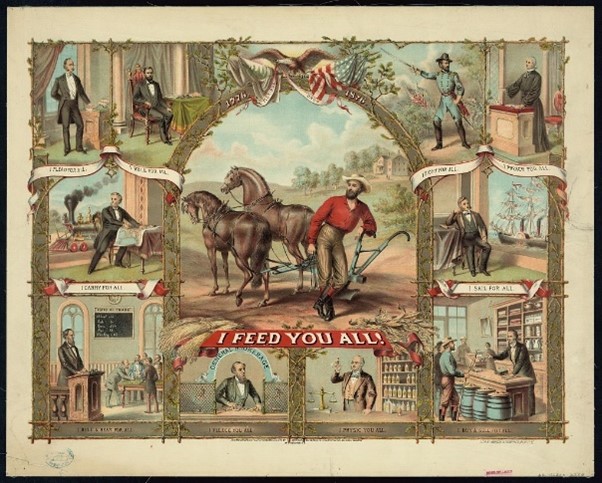
The Patrons of Husbandry, or the Grange, was founded in 1867 to advance methods of agriculture, as well as to promote the social and economic needs of farmers in the United States. The financial crisis of 1873, along with falling crop prices, increases in railroad fees to ship crops, and Congress’s reduction of paper money in favor of gold and silver devastated farmers’ livelihoods and caused a surge in Grange membership in the mid-1870s. Both at the state and national level, Grangers gave their support to reform-minded groups such as the Greenback Party, the Populist Party, and, eventually, the Progressives.

The social turmoil that the Western farmers were in was mainly a result of the complete dependence on outside markets for the selling of their produce. This meant that they had to rely on corporately owned railroads and grain elevators for the transport of their crops. To make matters worse, “elevators, often themselves owned by railroads, charged high prices for their services, weighed and graded grain without supervision, and used their influence with the railroads to ensure that cars were not available to farmers who sought to evade elevator service.” In 1871, Illinois created a new constitution allowing the state to set maximum freight rates but the railroads simply refused to follow the mandates of the state government.

The Grangers became political by encouraging friends to elect only those officials with the same views. Furthermore, while Republicans and Democrats had already been bought out by corporations looking to curry favor in the government, Grangers vowed to create their own independent party devoted to upholding the rights of the general populace.

On Independence Day, 1873 (known as the Farmer’s Fourth of July), the Grangers read their Farmer’s Declaration of Independence, which cited all of their grievances and in which they vowed to free themselves from the tyranny of monopoly.  The Supreme Court decision in Munn v. Illinois stated that businesses of a public nature could, in accordance with the federal constitution, be subject to state regulation. Following this ruling, several pieces of legislation, collectively known as the Granger Laws, were passed. Unfortunately, many of these laws were repealed.

Though the organization did not last, it demonstrated the effects that monopolies have on society. It subjugated these individuals to its whims, and then forced them to take action against it. 

The Yellow Vests Protest in France

Donning the now-famous fluorescent waistcoats that are mandatory in French cars, the  Yellow Vests staged 52 consecutive weeks of protests against economic hardship, mounting inequality and a discredited political establishment. They manned roundabouts across the country night and day, took to the streets on every Saturday since November 17, and at their peak in December even stormed the Arc de Triomphe in central Paris, amid scenes of chaos not witnessed since May ’68. The movement had an indelible mark on France, forcing the government into billions of euros of tax breaks.

“The picture that emerged was that of a movement made up largely of workers and former workers in a situation of financial insecurity, with relatively few unemployed,” said Gonthier. Yellow Vests were present across France, but strongest in small towns and rural areas. They came from all walks of life, but liberal professions were underrepresented, while small business owners and employees, craftspeople and care workers formed the bulk of the movement. About two thirds of respondents earned less than the average wage, and a slightly higher percentage registered as having a “deficit of cultural resources and social links”. This in turn “conditioned the way they defined themselves, and helped distance them from traditional social movements”, Gonthier added.

Another defining feature was the high proportion of women, who made up roughly half the Yellow Vests, whereas social movements traditionally tend to be male-dominated. Gonthier said this reflected the significant mobilization of women in care work, “most notably hospital workers from a public health sector that is plunging deeper into crisis”. They included a high number of single mothers who couldn’t go out and protest, or were scared away by the police’s heavy-handed response, but who supported the movement online.

  1. Are monopolies harmful to a growing economy or are they a necessary ‘evil’?
  2. Is it inevitable that an oppressed people will revolt and attempt to destroy that which has kept them down?
  3. How can governments best address poverty and inequality?
  4. If a significant minority feels oppressed, do they have a right to overthrow their government by protest or violence if they cannot get satisfaction through the process of elections?
  5. Do you support the Grangers, Yellow Vests, both or neither?

The Granger Revolution

The Grange Movement

A Brief Essay on the Grange Movement

Who are France’s Yellow Vest Protestors and What do they Want?

The Yellow Vest Movement Explained

Activity #2: Munn-Wabash Railroad in Illinois and the Trans-Siberian Railroad in Russia

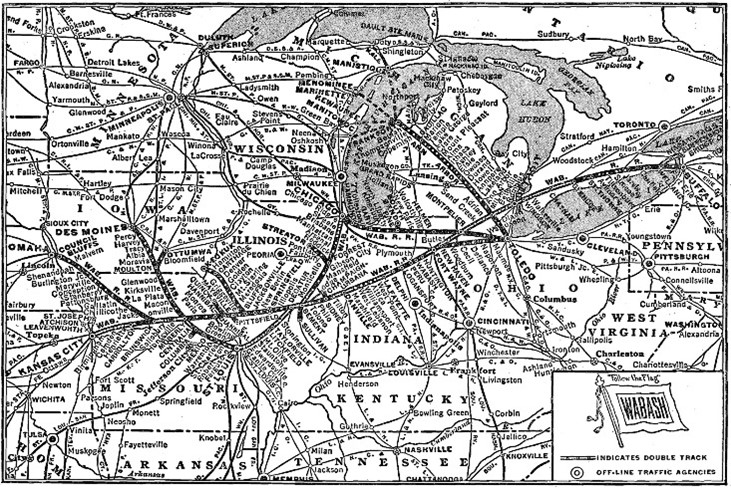
Route of the Wabash Railroad in the Midwest

The Wabash Railroad Company went bankrupt and was sold. The new Toledo and Wabash Railroad Company was chartered October 7, 1858. The Wabash and Western Railroad was chartered on September 27 and acquired the Indiana portion on October 5. On December 15, the two companies merged as the Toledo and Wabash Railway, which merged with the Great Western Railway of Illinois. The right of continuous transportation from one end of the country to the other is essential in modern times to that freedom of commerce. The Commerce Clause in the U.S. Constitution gives Congress the power to regulate commerce among the States and with foreign nations. If Illinois or any other state within whose were permitted to impose regulations concerning the price, compensation, or taxation, or any other restrictive regulation it would be harmful to commerce between states.

The Trans-Siberian Road in Russia

Trans-Siberian Railroad Crossing a large river in Siberia

The construction of the longest railway in the world  was launched in April 1891 and was completed in 1894. Three years later the section between Vladivostok to Khabarovsk with a length of 772km was opened in November 1897. The Central Siberian Railway from the River Ob to Irkutsk with a length of 1839km was built in 1899. The construction involved more than 100,000 workers, including prisoners, and the work was carried out by hand using shovels, axes, crowbars, saws. Despite the many challenges of the taiga, mountains, wide rivers, deep lakes, and floods, the tracks were built with amazing speed – around 740km per year.

  1. Does the protection of technology for the efficiency of commerce justify federal regulations over state regulations?
  2. If a corporation is losing money, do they have a right or obligation to raise rates to become profitable?
  3. Do authoritarian governments have an advantage or disadvantage in the construction of large infrastructure projects?

Consolidation of Railroads in Four States

The Supreme Court Strikes Down Railroad Regulation

Interstate Commerce Act (1887)

Construction of the Trans-Siberian Railroad

History of the Trans-Siberian Road

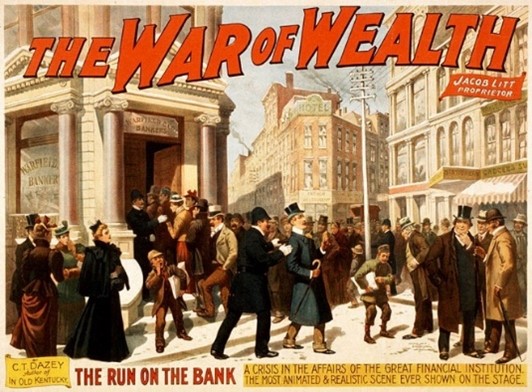
No crisis of the Cleveland presidencies exceeded the magnitude of the financial panic that gripped the nation at the start of his second term in 1893, and which presaged a depression that still lingered when he left office in March 1897.

The Constitution granted Congress the power “to coin money, regulate the value thereof, and of foreign coin, and fix the standard of weights and measures.” (Article 1, Section 8) Article I, Section 8, and Clause 2 The Congress shall have power to borrow money on the credit of the United States. In the 14th Amendment, Section 4, it states that “the validity of the public debt of the United States, authorized by law … shall not be questioned.”

In the century preceding 1893, Congress experimented with two central banks, a national banking system, laws regulating so-called “wildcat banks,” paper money issues, legalized suspension of specie payments, and fixed ratios of gold and silver. Gold and silver rose to prominence as the predominant monies of the civilized world because of their scarcity and value. Under the direction of Alexander Hamilton, the federal government adopted an official policy of bimetallism and a fixed ratio of 15 to 1 in 1792.

In 1875, the newly-formed National Greenback Party called for currency inflation through the issuance of paper money tied, at best, only minimally to the stock of specie. The proposal attracted widespread support in the West and South where many farmers and debtors joined associations to lobby for inflation, knowing that a reduction in the value of the currency unit would alleviate the burden of their debts.

When President Cleveland assumed office on March 4, 1893, the Treasury’s gold reserve stood at the historic low of $100,982,410 — slightly above the $100 million minimum required for protecting the supply of greenbacks. The Panic of 1893 began when the gold reserves fell below $100,000,000. Stocks fell and factories closed with many going bankrupt. Unemployment rose to 9.6%, nearly three times the rate for 1892. By 1894, the unemployment rate was almost 17%. The Sherman Silver Purchase Act was repealed in support of gold as a stable currency.

Cleveland’s position on sound money was not supported by his Democratic Party. The Gold Standard Act of 1900 resulted in a stable gold standard and economic growth. Cleveland’s position on sound money worked.

Hyperinflation in Germany

Under the Treaty of Versailles Germany was forced to make a reparations payment in gold-backed Marks. On June 24, 1922, Walter Rathenau, the foreign minister was assassinated. The French sent their army into the Ruhr to enforce their demands for reparations and the Germans were powerless to resist. More than inflation, the Germans feared unemployment. A cheaper Mark, they reasoned, would make German goods cheap and easy to export, and they needed the export earnings to buy raw materials abroad. Inflation kept everyone working.

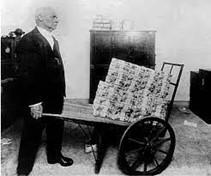
The price increases began to be dizzying. Menus in cafes could not be revised quickly enough. For example, a student at Freiburg University ordered a cup of coffee at a café for 5,000 Marks. He had two cups but when the bill came, it was for 14,000 Marks. When the 1,000-billion Mark note came out, few bothered to collect the change when they spent it. By November 1923, with one dollar equal to one trillion Marks, the breakdown was complete. The currency had lost meaning and value.

Although the currency was worthless, Germany was still a rich country — with mines, farms, factories, forests. The backing for the new Rentenmark was the value of the land for mortgages and bonds for the factories. Since the factories and land couldn’t be turned into cash or used abroad the value of one Rentenmark was equal to one billion of the former Marks. People lost their savings and homes.

Questions:

  1. Is a sound currency policy, where the dollar is backed by gold or some other form of credit, always the best policy for governments to follow?

    2. Does the financial debt of a country matter if its economy is growing?  Does it matter in times of war or the recovery from a natural disaster?

    3. In a financial crisis, a depression, does everyone suffer equally or are some more affected than others?

    4. Which problem should the government address first? High Unemployment of 8% or rising inflation of 5%? Why?

    5. Is foreign investment in a country’s economy necessary to maintain a balance of payments?

    6. Based on the U.S. Constitution, is the debt of our government limited or unlimited?

    The Panic of 1893 and the Election of 1896

    Price Stability and the Fed

    The Weimar Republic

    The German Hyperinflation, 1923

    Hyperinflation in Germany

    Historians often call the period between 1870 and the early 1900s the Gilded Age. This was an era of rapid industrialization, laissez-faire capitalism, and no income tax. Captains of industry like John D. Rockefeller and Andrew Carnegie made fortunes. They also preached “survival of the fittest” in business.

    By the late 1800s, however, monopolies, not competing companies, increasingly controlled the production and prices of goods in many American industries.

    Workers’ wages and working conditions were unregulated. Millions of men, women, and children worked long hours for low pay in dangerous factories and mines. There were few work-safety regulations, no worker compensation laws, no company pensions, and no government social security.

    Starting in the 1880s, worker strikes and protests increased and became more violent. Social reformers demanded a tax on large incomes and the breakup of monopolies. They looked to state and federal governments to regulate capitalism. They sought legislation on working conditions, wages, and child labor.

    Railroad builders accepted grants of land and public subsidies in the 19th century. Industries facing strong competition from abroad have appealed for higher tariffs. American agriculture benefited with land grants and government support. State governments helped finance canals, railroads, and roads.

    It is difficult to separate government intervention, regulation, and laissez-faire in American history. It is likely even more difficult to find the proper balance between government and free enterprise. Perhaps the most serious violations occurred during this era in America’s history with land grants to railroads, regulating the rates railroads could charge, mandating time zones, and allowing paper currency.

    1. Why is limited government and laissez-faire economics popular in the United States over time and today?
    2. Should the federal government regulate education and schools or should this be left to the local and state governments?
    3. Does laissez-faire economics bridge or widen the income gap between the social classes?
    4. Who benefits the most from increasing government regulation?

    Laissez-faire Economics in Practice

    Social Darwinism and Laissez-faire Capitalism in America

    Defending the Free Market from Laissez-faire?

    Era 4 – Engaging High School Students in Global Civic Education Lessons of in U.S. History

    www.njcss.org

    The relationship between the individual and the state is present in every country, society, and civilization.  Relevant questions about individual liberty, civic engagement, government authority, equality and justice, and protection are important for every demographic group in the population.  In your teaching of World History, consider the examples and questions provided below that should be familiar to students in the history of the United States with application to the experiences of others around the world.

    These civic activities are designed to present civics in a global context as civic education happens in every country.  The design is flexible regarding using one of the activities, allowing students to explore multiple activities in groups, and as a lesson for a substitute teacher. The lessons are free, although a donation to the New Jersey Council for the Social Studies is greatly appreciated.

    The Civil War put the constitutional government of the United States to its severest test. It challenged the Legislative, Executive, and Judicial branches of government as well as the federal system of power with state and local government. The activities below provide an opportunity to learn about the breakdown of a democratic political system, the conflict between geographic regions and different subcultural, and the competitive ideas for reconstruction. Students will learn about the hope regarding equality for black Americans through the 13th, 14th, and 15th Amendments and the resistance leading to disenfranchisement, segregation, and debt peonage.

    Did the Supreme Court have jurisdiction to hear the case? The law suit was properly in federal court only if a “citizen” of one State was suing a “citizen” of another State. Sanford was a citizen of New York. Even if we assume, with Scott, that the law made him a free man, was he then a “citizen” of Missouri?  If Scott was a “citizen” and jurisdiction was proper, then what about the basic issue on the merits? Did the law make Scott a free man?

    Was the Dred Scott Decision a failure of the Judicial system in the United States because it violated the fundamental principle in the Magna Carta regarding the rule of law and the individual rights and liberties of all people, regardless of their estate or condition.  Article 39 of the Magna Carta, secured a promise from the monarchy that “no free man shall be arrested or imprisoned, or disseized or outlawed or exiled or in any way victimized, neither will we attack him or send anyone to attack him, except by the lawful judgment of his peers or by the law of the land.” In the fourteenth century, Article 39 was redrafted by Parliament to apply not only to free men but also to any man “of whatever estate or condition he may be.”

    The Supreme Court’s conclusion: It “is the opinion of the Court that the act of Congress, which prohibited a citizen from holding and owning property of this kind . . . is not warranted by the Constitution and is therefore void; and that neither Dred Scott himself, nor any of his family, were made free by being carried into this territory, even if they had been carried there by the owner with the intention of becoming a permanent resident.”

    How do the principles of the Magna Carta and the precedent of the Dred Scott decision apply to the restrictive immigration decisions legislated by Congress in the Emergency Quota Act of 1921 and the Johnson-Reed Immigration Act of 1924? Does the United States, or any country, have the authority to restrict immigration based on race, ethnicity, or geographic location?  Aliens in the United States do not have a right to a court-appointed attorney, Miranda rights, the right to a jury trial, or the right to see all the evidence against them. However, they have the protection of the Due Process of Law clause.

    But one constitutional right that applies to aliens in removal proceedings is Due Process. According to the Supreme Court: “The Due Process Clause applies to all “persons” within the United States, including aliens, whether their presence here is lawful, unlawful, temporary, or permanent. Santa Clara County v. Southern Pacific Railroad Company, (1886)

    Questions:

    1. Did the U.S. Supreme Court have the authority to issue an obiter dictum regarding Mr. Dred Scott?
    2. Did enslaved persons who received freedom also become citizens of the state where they lived? Would their status as citizens change because of their race or ethnicity if they moved to another state?
    3. Does Article 39 of the Magna Carta apply to free blacks who were arrested as fugitives?
    4. Do people living in America, who are not citizens, entitled to rights in addition to the due process of law and should they also receive the equal protection of the laws of the United States?
    5. What about people living in America who entered illegal or have expired documents?
    6. Should birthright citizenship, everyone born in the United States or one of its territories, be considered a full citizen regardless of the status of their immigrant parent(s)?

    Associate Justice Stephen Breyer’s Address to the Supreme Court Historical Society on June 1, 2009

    Slavery and the Magna Carta in the development of Anglo American Constitutionalism

    The Immigration Act of 1924 (Johnson-Reed Act)

    The 1924 Act that Slammed the Door on Immigrants and the Politicians who Pushed it Back Open

    The question is whether the Southern states possessed the legal right to secede. Jefferson Davis, president of the new Confederate States of America, argued that the Tenth Amendment was the legal basis for secession. The U.S. Constitution is silent on the question of secession. Therefore, secession is a right reserved to the states and is supported by the ‘compact theory’ regarding the right to nullify a federal law.

    Another argument in support of the right of secession involves the states of Virginia, New York, and Rhode Island because these states included a clause in their constitutions that permitted them to withdraw from the Union if the government should become oppressive. Virginia cited this provision when it seceded in 1861. The Constitution is also based on the principle that all the states are equal and no state can have more rights than another. The right of secession cited by these three states must extend equally to all the states.  This is an interesting question for debate and discussion.

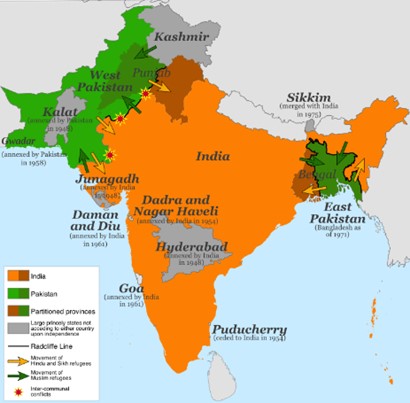
    In 1971, the Pakistan army launched a brutal campaign to suppress its breakaway eastern province.  A large number of people lost their lives, an estimated 300,000 to 500,000 died. The Bangladesh government puts the figure at three million. Bangladesh seceded because of the oppressive genocide against their population. It is now more than 40 years since they became an independent country.

    1. Do the “opt out’ clauses by Virginia, New York, and Rhode Island support secession at a later date from an early agreement to join into the common government or the Union?
    2. If a government violates the natural rights of life, liberty, property, or the pursuit of happiness against a specific group of people or a state, do they have the right to secede?
    3. Would you support the secession of Bangladesh if less than 1,000 people were killed?

    The Secession of East Pakistan in 1971 and the Question of Genocide

    The Secession of Bangladesh in International Law: Setting New Standards?

    Activity #3: Emancipation Act of 1863, 13th Amendment, Civil Rights Act of 1866

    Historians and constitutional scholars question if the Emancipation Proclamation was constitutional. This is a different question than asking if the Proclamation was justified. The debate over constitutionality is based on the question if it was lawful to own another human being if you lived in a state that was loyal to the Union. The Supreme Court in Prigg v. Pennsylvania (1842) upheld the Fugitive Slave Law of 1793  stating that Pennsylvania could not prevent the return of a fugitive slave to its owner. Consequently, The Thirteenth Amendment was necessary to make the Emancipation Proclamation constitutional.

    On January 5, 1866, a few weeks after the ratification of the Thirteenth Amendment, Senator Lyman Trumbull, from Illinois, introduced the first federal civil rights bill in our history. President Andrew Johnson vetoed the bill, opposing laws for the equality of African Americans as compared to the natural progression for this to happen over time. The veto message incensed Congress, who had evidence of widespread mistreatment of African Americans throughout the South by both private and public parties.  Congress overrode Johnson’s veto on April 9, 1866, and elements of the Civil Rights Act of 1866 eventually became the framework for the Fourteenth Amendment.  The constitutional question relates to the argument if the Act applies only to states that discriminate or if it applies to both state governments and private citizens.

    1. Does the U.S. Constitution need to explicitly state that all human beings are guaranteed life, liberty, and the pursuit of happiness?
    2. Did the Civil Rights Act of 1866 go too far or was it too limited in prohibiting discrimination?
    3. Should the Thirteenth Amendment have included a provision for reparations for enslaved persons and a provision for compensating slave owners for their losses?

    Emancipation Proclamation (National Archives)

    Was the Emancipation Proclamation Constitutional? (Illinois Law Review)

    Origin and Purpose of the Thirteenth Amendment (Cornell Law School)

    The Civil Rights Act of 1866

    Racial Discrimination and the Civil Rights Act of 1866

    The 14th amendment explicitly contains an equal protection clause. Miranda warnings and other amendments were not only created to protect certain individuals but all individuals.  Equal protection is a foundational principle in our society. No one should have their rights unjustly taken away from them; and no one should be allowed to get away with crimes because of their ethnicity, gender, socioeconomic status, etc. Everyone is under the rule of law.

    An uneducated or uninformed individual may be pressured by authorities in an interrogation and confess to a crime they did not commit in order to stop the questioning. The right to remain silent and the right to an attorney ensures that all individuals get equal protection regarding of their situation or circumstance.

    1. Does Miranda provide adequate protections for accused persons?
    2. Does the right to remain silent benefit an innocent person who is detained or accused?
    3. Should a detained or accused person have to specifically state and document their request to remain silent?
    4. Do the police have to stop questioning after a person states their intention to remain silent?
    5. If the police need information two or three weeks after the initial detainment, do they need to repeat the Miranda warning a second time?
    6. Should Miranda warnings apply to juveniles in school or only in matters involving questions by the police?

    Miranda v. Arizona, 1966

    Fourteenth Amendment(Cornell Law)

    Journal of Criminal Law and Criminology(Northwestern University School of Law, 1996)

    Era 3 – Engaging High School Students in Global Civic Education Lessons in U.S. History

    New Jersey Council for the Social Studies

    www.njcss.org

    The relationship between the individual and the state is present in every country, society, and civilization.  Relevant questions about individual liberty, civic engagement, government authority, equality and justice, and protection are important for every demographic group in the population.  In your teaching of World History, consider the examples and questions provided below that should be familiar to students in the history of the United States with application to the experiences of others around the world.

    These civic activities are designed to present civics in a global context as civic education happens in every country.  The design is flexible regarding using one of the activities, allowing students to explore multiple activities in groups, and as a lesson for a substitute teacher. The lessons are free, although a donation to the New Jersey Council for the Social Studies is greatly appreciated. www.njcss.org

    Concept of Self-Government

    In the late 17thcentury the colony of New Jersey was divided between East Jersey with a capital city in Perth Amboy and West Jersey with a capital city in Burlington. The situation was chaotic with arguments over property investments and the selection of governors. In 1702, a decision was made for New Jersey to become a royal colony with the appointment of Edward Hyde, Lord Cornbury.

    In the first 50 years of the 19th century the United States expanded its territory from the Atlantic to the Pacific Ocean and from Canada to the Rio Grande River. The expansion of territory also challenged the fundamental principles of democracy in the United States with the debt of purchasing land, wars with other countries, determining the meaning of equality, the migration of populations, and conflicts between the branches of government. In this era, teachers and students will discover that these conflicts in our government are not unique.

    Activity #1: Orders of Nullification and Conflicts over Laws – United States (1832) and Catalonia(2017)

    One of the challenges facing sovereign states is when the right of self-determination conflicts with the rule of law, especially constitutional law. The people of South Carolina opposed the Tariff of 1828, the law of the land, because of the economic harm to their citizens. On November 24, 1832, the state legislature adopted the Orders of Nullification which included the following statement, …”and that the people of this State will henceforth hold themselves absolved from all further obligation to maintain or preserve their political connection with the people of the other States; and will forthwith proceed to organize a separate government, and do all other acts and things which sovereign and independent States may of right do.”

    In 2017, the state of Catalonia, one of Spain’s wealthiest states, filed a petition for independence following the sentencing of nine of their citizens to jail for protests against the government and charges that the government does not tax the people of Catalonia equally with other citizens in Spain.

    1. Do the people of a territory have the legal right to withdraw from a compact or union?
    2. If a federal government violates the rights of the people it promises to protect, does this justify a right to withdraw from the compact or union?
    3. What states or territories have attempted to separate from a federal union? (Quebec,

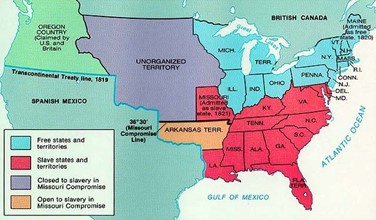
    Missouri applied for statehood in 1819 allowing for slavery.  Congress was already divided and there was a competitive debate over human rights and how Missouri’s application would tip the balance of an equally divided legislature of 11 free states and 11 slave states. The last state admitted was Louisiana in 1812.  Illinois was admitted on December 3, 1818 and Alabama on December 14, 1819.  The compromise was that Maine (part of Massachusetts) would be admitted as a free state and Missouri as a slave state, providing that slavery would be banned north of the latitude line 36o 30’.

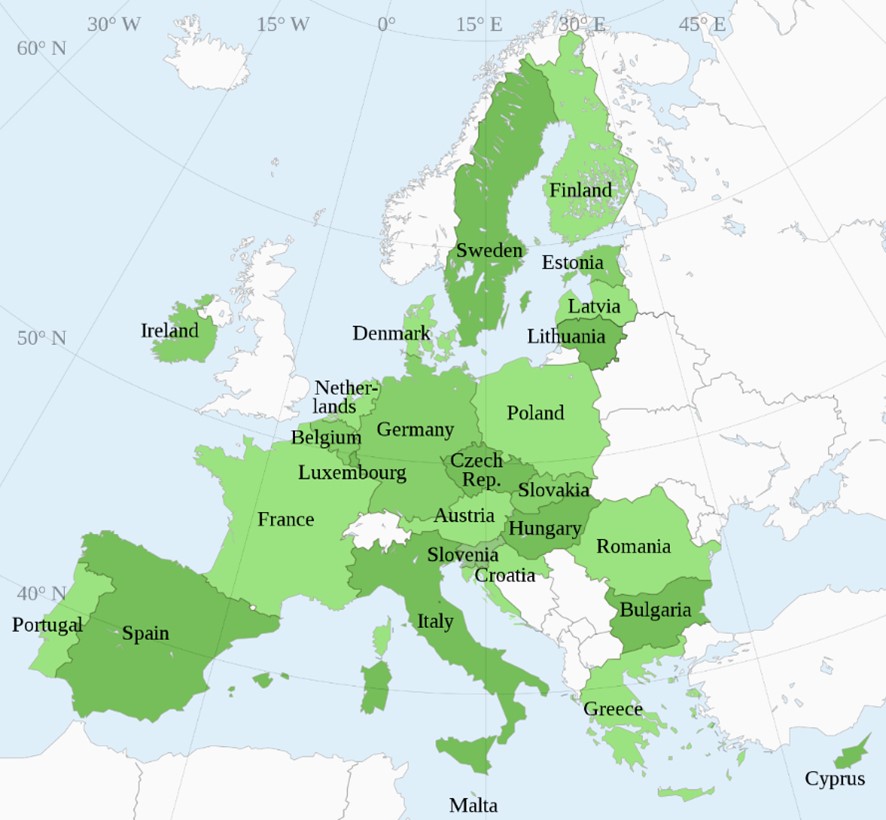
    The European Union was created in 1993 with the signing of the Maastricht Treaty. Today it has 27 states. In 2009 the Lisbon treaty amended the constitution and adopted the Charter of Fundamental Rights of the European Union and the acceptance of this charter and human rights is a requirement for membership. However, Hungary and Poland do not embrace the Charter of Fundamental Rights in the same manner as the other member states.

    The newly elected leaders in Poland and Hungary have taken strong positions against abortion and the equality of individuals identifying as LGBTQ. The constitutional question before the Court of Justice is similar to the Dred Scott v. Sanford case of 1857 which challenged the legal authority of the Missouri Compromise and prohibiting slave property in states.

    1. Why was the United Kingdom allowed to leave the European Union?
    • Should states without an ‘opt out’ clause be allowed to leave the European Union? What conditions should be considered?
    • How does the secession of one state impact its own people and the other states in Europe?
    • Under Article 7 of the Treaty of the European Union, can a state leave if it is suspended?
    • Is it possible for member states to end diplomatic relations with another member state?

    After eight years of government by the Democratic-Republican Party, in 1824, the Democratic-Republican Party splintered as four separate candidates sought the presidency. The election tested the Twelfth Amendment. Since no candidate received a majority of the electoral vote, it was decided by the House of Representatives.  Although Andrew Jackson received the most popular votes and the most electoral votes, he did not become president.  At this time, several states did not have a popular vote for president and electors in some states were chosen by state legislators.

    In 2018, the Green Party in Germany became the second strongest political party. After years of government by the Social Democratic Party and the Christian Democratic Party, the Green Party has rallied the citizens of Germany around environmental issues, specifically climate change. They also have positions against racism and support immigration.  The parliamentary system of government selects the chancellor or leader of Germany through alliances of the political parties elected.

    1. How would you describe a competitive democracy?
    • Are political parties supporting a single issue with limited experience in diplomacy or political administration qualified to govern in countries defined as the G20?
    • Why do populist movements emerge? Is there strength based on the issues or the charisma of an individual?
    • How do new voices and political leaders gain support withing their countries?
    • Does the Electoral College in the United States provide protection against third parties?  Is this appropriate for a 21st century democracy?
    • Do you think the Democratic and Republican parties will be the leaders of the two-party system of government in the United states at mid-century, the election of 2048 or 2052?

    Presidential Election of 1824: A Resource Guide (Virtual Programs & Services, Library of Congress) (loc.gov)

    The ‘gag rule’ was a legislative tactic employed by southern members of Congress beginning in the 1830s to prevent any discussion of enslavement in the House of Representatives. The silencing of enslavement opponents was accomplished by a resolution first passed in 1836 and renewed repeatedly for eight years.

    The suppression of free speech in the House was naturally deemed offensive to northern members of Congress and their constituents. What came to be widely known as the gag rule faced opposition for years, most notably from former president John Quincy Adams. The gag rule was finally rescinded in December 1844.

    Democratic Centralism is essential to the internal political debates withing the Communist Party of the Soviet Union. To what extent is debate permitted withing the Soviet Congress influencing policy and implementing changes?  In the 1920’s there was dissent within the Communist Party regarding the proletariat and farmers. In December 1927, the opposition voices led by Leon Trotsky were expelled from the Congress, a ‘gag rule’ as debate was ended. In the 1980s, some voices within the Communist Party called for reforms and supported market forces in the economy and more democracy. The principle of democratic centralism challenged the authority of Gorbachev in a failed attempt to overthrow his authority. Eventually, democratic centralism changed the government as the former Soviet Union collapsed.

    1. Is a single party system, two-party-system, or a multi-party system the most practical way to govern in the 21st century?
    • In a democracy, should the majority have the right to limit or suppress debate on controversial issues?
    • What is the most effective way for people to change their government: public protests or elections?
    • How effective is a strong leader with charisma in today’s government?
    • To what extent is the news media (including social media) a political influence or force in the United States?
    • What type of government does Russia have today and what type of government does the United States have today?
    • Is a parliamentary system of government more effective than the two-party system of representative government that the United States has?

    Era 2 – Engaging High School Students in Global Civic Education Lessons in U.S. History

    New Jersey Council for the Social Studies

    www.njcss.org

    The relationship between the individual and the state is present in every country, society, and civilization.  Relevant questions about individual liberty, civic engagement, government authority, equality and justice, and protection are important for every demographic group in the population.  In your teaching of World History, consider the examples and questions provided below that should be familiar to students in the history of the United States with application to the experiences of others around the world.

    These civic activities are designed to present civics in a global context as civic education happens in every country.  The design is flexible regarding using one of the activities, allowing students to explore multiple activities in groups, and as a lesson for a substitute teacher. The lessons are free, although a donation to the New Jersey Council for the Social Studies is greatly appreciated. www.njcss.org

    Concept of Self-Government

    In the late 17thcentury the colony of New Jersey was divided between East Jersey with a capital city in Perth Amboy and West Jersey with a capital city in Burlington. The situation was chaotic with arguments over property investments and the selection of governors. In 1702, a decision was made for New Jersey to become a royal colony with the appointment of Edward Hyde, Lord Cornbury.

    The 18th century was a unique time in world history as this was a time when the concept of government changed in Europe from the authority of the divine right of kings to the authority of the social contract and sovereignty of the people.  This period is unique in western civilizations because of its focus on natural rights, limited government, and enlightened ideas.

    The Ujamaa concept was the centerpiece in Tanzania’s Declaration of Independence (1967) and the concept of natural or inalienable rights is the centerpiece of America’s Declaration of Independence (1776). This is an opportunity to analyze how the pursuit of happiness was defined in the 18th century and in the 20th century. To what extent has time and history changed our understanding of equal opportunity, empowerment, property, and the means to establish social justice and independence?

    1. Compare how America and Tanzania defined equality, property, and opportunity for their people in different centuries.
    2. Are there unique advantages or disadvantages in each document?

    The Land Ordinance of 1785 is considered a hallmark for considering future states as equals to the original 13 states which declared independence from Great Britain. Equality is a fundamental principle in democracy. Under the Land Ordinances of 1784, 1785, and 1787, slavery was abolished, religious and civil liberties, and an education about democratic values provided opportunities for all citizens.

    Although Canada was settled around the same time as the thirteen American colonies, the colonies in Canada were divided culturally and politically.  Lower Canada was settled by France and the majority of the people professed the Roman Catholic religion and Upper Canada was influenced by England and the Protestant religion. In the Unification of Upper and Lower Canada in 1867, there was a debate about future territories and democracy.

    1. Compare and contrast the fundamental ideals of democratic government in the United States and Canada regarding the structure of government, role of education, concept of equality and opportunities for all citizens, end the separation of powers in both governments. 
    • Does one country emphasize direct democracy over indirect democracy or do both countries have similar governments?

    Land Ordinance of 1785 – Ohio History Central

    The History of Upper and Lower  Canada

    An Act of Union (1867)

    The Road to Democracy in Canada

    What was the force behind the emancipation of enslaved persons in the 19th century?  Was the movement to end slavery motivated by the abolitionist movement, economics, legislation, resistance, or something else? Liberty is considered a natural or inalienable right and for millions in North America, this basic right was denied.  The Atlantic slave trade ended in 1807 but slavery continued and the population of enslaved persons continued.

    1. What is the role of civic responsibility and empowerment in the movement to abolish slavery in the British colonies in the Caribbean and in the United States of America?  
    2. One defense of slavery in opposition to those who would abolish it was the claim that slaves were private property essential to a slaveowner’s way of life and livelihood. Therefore, to abolish the institution of slavery was to force an owner of slaves into a life of having to work for wages or hire people and pay them wages. Thus, the slaveowner would be enslaved by a law abolishing slavery. Does this claim of individual freedom through the ownership of property have any constitutional support?

    Use the links below for evidence to support your thesis or claim.

    Jamaica                                                                  The Act for the Gradual Abolition of Slavery in NJ (Feb. 15, 1804)

    Jamaica and the Atlantic World                        Legislating Slavery in New Jersey

    Emancipation in Jamaica                                    Resources for the Abolition of Slavery in New Jersey

    The Emancipation Act of 1833

    The history of the United States was determined by compromises regarding the legislature, property, and the importation of slaves.  A controversial compromise was over the counting of enslaved persons in the 13 independent states for purposes of representation and taxation. An agreement was reached to count enslaved persons for the purpose of taxation and representation as only three-fifths of the population. This method of determining representation in the House of Representatives continued until the Thirteenth Amendment abolished slavery.

    Article I, Section 2 of the U.S. Constitution states: “Representatives and direct Taxes shall be apportioned among the several States which may be included within this Union, according to their respective Numbers, which shall be determined by adding to the whole Number of free Persons, including those bound to Service for a Term of Years, and excluding Indians not taxed, three fifths of all other Persons.” The “other Persons” were slaves.  The Southern states wanted to count the entire slave population, which would increase their number of members of Congress. The Northern delegates and others opposed to slavery wanted to count only free persons, including free blacks in the North and South.

    The Continental Congress debated the ratio of slaves to free persons at great length. Northerners favored a 4-to-3 ratio, while southerners favored a 2-to-1 or 4-to-1 ratio. Finally, James Madison suggested a compromise: a 5-to-3 ratio.

    Slavery was essential to the Brazilian economy. 40 percent of the 10 million enslaved African brought to the New World ended up in Brazil. The institution of slavery in Brazil was supported by a majority of white citizens and the Roman Catholic Church. Gradual abolition began in 1871 for children born to enslaved women. Unfortunately, with no plan for assimilation into Brazilian slavery continued into the 20th century with informal agreements for food and housing.

    1. Should the decisions about equality and freedom be determined by governments or by the vote of the citizens?
    2. How should decisions be made about the protection of property when property conflicts with human life and personal liberty?
    3. If automobiles are harmful to the environment should government have the authority to ban them without compensation?

    Thirteenth Amendment to the Constitution of the United States, 1865

    Golden Law of 1883 in Brazil

    Era 1 – Engaging High School Students in Global Civic Education Lessons in U.S. History

    New Jersey Council for the Social Studies

    www.njcss.org

    The relationship between the individual and the state is present in every country, society, and civilization.  Relevant questions about individual liberty, civic engagement, government authority, equality and justice, and protection are important for every demographic group in the population.  In your teaching of World History, consider the examples and questions provided below that should be familiar to students in the history of the United States with application to the experiences of others around the world.

    These civic activities are designed to present civics in a global context as civic education happens in every country.  The design is flexible regarding using one of the activities, allowing students to explore multiple activities in groups, and as a lesson for a substitute teacher. The lessons are free, although a donation to the New Jersey Council for the Social Studies is greatly appreciated. www.njcss.org

    Era 1 Colonization and Settlement

    Concept of Self-Government

    In the late 17thcentury the colony of New Jersey was divided between East Jersey with a capital city in Perth Amboy and West Jersey with a capital city in Burlington. The situation was chaotic with arguments over property investments and the selection of governors. In 1702, a decision was made for New Jersey to become a royal colony with the appointment of Edward Hyde, Lord Cornbury.

    Throughout most of world history, the ownership of property was challenged by trespassers, squatters, and invaders. The amount of autonomy for citizens, especially the wealthiest citizens and the protection of the rights of others is an issue that goes beyond New Jersey and the American colonies.  The desire for protection and rule by law often leads people to a decision involving the exchange of some independence for the authority of a government to provide for order and protection.  As a result of this ‘social contract’ there is competition between the authority of the state and the independent lives of private citizens. 

    Compare the account of Queen Anne’s Instruction to Lord Cornbury (Green. Words That Make NJ History, p.20) with the account in China in 221 B.C.E following the chaos of the warring states and the unification of independent Chinese states under Chu De (Shi Huangdi).

    1. How effective are these instructions in bringing order to chaos in the colony of New Jersey?
    2. How did Chu De (Shi Huangdi) bring order and unity to China?
    3. How important is self-government to people if the government is not willing or able to protect their property and lives?
    4. In a large country like the United States, how would our leaders restore order today in the event of chaos and disorder?

    In the colony of New Jersey during the 18th century there were frequent cases of trespass, stealing, and claiming land.  The reason for this was that titles to property were confusing, lost, and in many cases gave non-owners permission to live or work on a particular tract of land. Although rent was required, it frequently was not paid which resulted in vigilantes or mobs removing offenders and having them imprisoned for theft or treason for disobeying the Crown.

    The migration of people in the Natal province in southern Africa provides another case study over the titles to property and riots that resulted over a shortage of land with thousands of people fleeing for their safety. Research the Mfecane Invasion and how this despotic leader gained control of property and redistributed it to the Zulu. The conflict resulted in the migration of Boers and Bantu to areas outside of the vast resources in Natal.  

    Read the account, Land Riots and the Revolution in NJ and compare it with the Mfecane Invasion in southern Africa.

    1. Should a government have the authority to collect money to improve property and collect taxes on property without their consent?
    2. Are people without property entitled to the same economic and political rights as people with property?
    3. When rulers or invaders gain control of property, what recourse do innocent people have?

    Throughout history, the individual liberty of individuals regarding their freedom to express ideas, defend scientific evidence, and express diverse opinions has frequently been challenged by the state or other powerful institution in the community or state.  In Salem, Massachusetts in 1692-93, more than 200 men and women were accused of being witches and the mass hysteria led to the conviction and execution of 20 women in the Salem Trials. The hysteria was motivated by the fear of the devil in unexplained incidents in the community. The religious bias of the judicial system resulted in injustice.

    In Naples, Italy the scientific research of Copernicus challenged the Biblically based teaching in the Book of Joshua 10:13 that the earth was the center of the universe. Compare the hysteria in support of the Aristotelian view of the universe with the persecution of Giordano Bruno and the house arrest of Galileo Galilei with the hysteria and the religious bias that supported injustice in the Salem trials..

    1. Has the evolution of our system of justice improved since the Salem trials of the 17th century?
    2. Does biased or false testimony in a trial violate the principle of equal justice for all?

    Throughout history, people have been persecuted for their religious beliefs. In many cultures, religious institutions are an important part of the culture. However, when individuals or groups express beliefs different from those accepted by the majority and when new populations migrate into a country or culture, they have frequently been persecuted. Although the freedom to worship is considered as a fundamental right by the United Nations Declaration of Human Rights (1948), there continue to be examples of persecution and conflict.

    Read the accounts of the persecution and exile experienced by Anne Hutchinson & Roger Williams in colonial America and compare their accounts to the religious zeal expressed in the  Taiping Rebellions in China (1850-1867). 

    Have a separate group read about the experience of Quakers in West Jersey and Puritans and Presbyterians in East Jersey in the late 17th century. Discover the reasons for the adoption of religious liberty in Concessions and Agreements of West Jersey and restrictions against atheists in East Jersey.  Read the accounts of persecution against Christians and others for their beliefs by the Taliban in Afghanistan and the reaction of groups in Afghanistan to the mass killings of Hazara, a Shiite community.

    1. To what extent can freedom be restrained?
    2. Is it possible to maintain the separation of church and state and legislate morality that is inherent in the religious teachings of specific faiths?
    3. Do you think the separation of church and state is essential to a democracy when citizens believe in different faiths or are atheists without faith in any deity or religion?