Book Review: The Children of Willesden Lane: Beyond the Kindertransport—A Memoir of Music, Love, and Survival,

The Children of Willesden Lane is based on the true story of the pianist Lisa Jura, a Jewish girl from Vienna, who was sent by her parents to England where she was supposed to be assisted by a cousin there during the time of the Kindertransport, the program sending children out of Austria and Germany to safety. The book is written by her daughter, Mona, who reports on what was happening in Vienna after the Annexation.

When Lisa arrives in England, the cousin who is supposed to house and feed her reneges on the agreement. This leads her to the hostel on Willesden Lane where she and a score of other Jewish children from various countries in Europe form bonds, become strong, and face with dignity and perseverance a very uncertain future.

Lisa fights hard to get her older sister to England, enlisting the help of the other children in the facility to find a sponsor for her. Lisa herself is protected by the woman running the hostel, and Lisa becomes a leader of the other youngsters. Lisa’s father is a tailor, and he has taught her how to use a sewing machine. Because of this, she is hired right away to work in a factory making trousers. Her income helps support the hostel.

A musician, Lisa is faced with a lifetime of servitude until she has some decent breaks because of the woman in charge of the hostel and others who are pulling for her. She is allowed to audition for a scholarship to study classical music.

Teachers, writers, and musicians will appreciate this book because it tells of worlds that sometimes can only be imagined. I was able to understand most (not all!) of the technical information about music here because of my mother filling our home with melodies—and constant discussion of music theory. I too studied the piano, but alas I was not meant to be a pianist!

Lisa perseveres in the story. She fights hard to practice for the scholarship, at the same time she works making uniforms in the factory.

The human spirit is so strong. I am always amazed by this fact.

Lisa’s story is a beautiful one. It includes such hope and so much good news. The story also includes some bad news, however, because of what is happening in Europe with the war and all of Hitler’s policies uprooting and destroying entire threads of history, family ties, destiny of entire peoples, and freedom.

It is freedom itself that is at the core of the themes in this book. Losing freedom and gaining freedom are two of the biggest events we can experience as thinking persons.


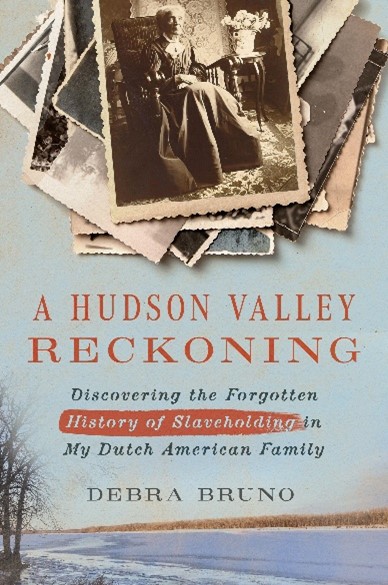
Book Review: A Hudson Valley Reckoning: Discovering the Forgotten History of Slaveholding in My Dutch American Family

For many, slavery in the North is nothing but a long-ago memory, a story that is often untold due to the cruelties of enslavement in the South and the long-lasting impact of enslavement in the Southern part of the United States. The general public is not always aware of the enslavement of African people in the North with only recent discoveries being brought to light. A Hudson Valley Reckoning: Discovering the Forgotten History of Slaveholding in My Dutch American Family showcases the stories of enslaved people who lived in Greene County, New York. The author, Debra Bruno, offers a new perspective on the enslaved in New York by exploring her own lineage and that of a distant cousin named Eleanor.

In this thirteen-chapter narrative, Bruno tells the story of her slave-holding Dutch family and the connection between her relatives and those who they might have enslaved. Eleanor is a descendant of the individuals whom Bruno’s family enslaved. Bruno discusses how historians, politicians, journalists, and every day people have erased significant features of enslavement in the North and painted a quaint picture of enslaved people helping the Dutch with their farms, houses, and livestock. Bruno, however, provides a much clearer picture of the reality of slavery in Dutch New York. She visited Macon, Georgia, and Curacao as she dug deeper into her family’s history.

In the introduction, Bruno describes her upbringing and the proud nature of her family’s Dutch heritage. She draws the reader in by describing her hometown of Athens and Coxsackie, places located along the Hudson River. Her American family began with Lambert Van Valkenburg, who settled in New Amsterdam in the early 1600s and later sold this land relocated on the North River, now the Hudson River. Her ancestor originally owned land in New Amsterdam where the where Empire State Building is located.

While digging into the history of her family, Bruno decided to explore whether they were enslavers. Bruno used Ancestry.com where she found various records including newspaper clippings, census data, photographs, and wills. Valkenburg did not provide significant results, so she searched under Collier, her grandmother’s family name. Bruno found a will from what would be her Great Grandfather five times back. He had many children and grandchildren around the Coxsackie area and left a will bequeathing much of his property to them. As Bruno combed through the pages of the will she saw it, “detailed like inventory along with his property and cows were slaves” (6).

Chapter four illustrates enslavement in the North with an analysis of a painting. “Van Bergen Overmantel” was commissioned by the Van Bergen family in the early 1700s to hang in the family home. It depicted what life was like in 18th century Hudson Valley and “is the first visual evidence of slavery on a New York farm” (56). According to Bruno, in 1714 Coxsackie’s population was 21% enslaved people. and by the 1790s in places such as Brooklyn, New York that number went up to 30%. In the late 18th century New York had an enslaved population of 319,000 enslaved people.

In the following chapters Bruno describes the challenges she faced in finding sources from the enslaved that could detail what their life was like on these farms. She notes that they were threatened with being sold down South or the Caribbean, some ran away killing their masters in the escape, and these details just go to show that enslaved life in the North was not a cakewalk as some may think. Even after being emancipated, African Americans still struggled in New York as they fought their right to be citizens and gain full citizenship rights as discussed in chapter nine.

In a discussion of why this history was so important to recover, Bruno emphasized that the Declaration of Independence and the Constitution, the nation’s founding documents, not grant the same freedoms to all people living on this land, and that individuals must “accept that only some people have benefited from their promises. To deny that and to distance ourselves from that truth is to misunderstand how our county grew, prospered, and exists today” (233.

Book Review: The Hundred Years’ War on Palestine, A History of Settler Colonialism and Resistance, 1917- 2017

A year after the brutal attack on Israel by Hamas on October 7, 2023 and the devastating Israeli military response that has killed over 45,000 Palestinians, I reexamined The Hundred Years’ War on Palestine, A History of Settler Colonialism and Resistance, 1917- 2017 by Columbia University Professor Rashid Khalidi, originally published in 2020. A reviewer for The Nation (Hawa, 2020) described it as “one of the best-researched general surveys of 20th and early 21st century Palestinian life, but it’s also a deeply personal work.” A review in The Guardian (Hughes, 2020) called it “informed and passionate. It pulls no punches in its critique of Jewish-Israeli policies (policies that have had wholehearted US support after 1967), but it also lays out the failings of the Palestinian leadership . . . An elegy for the Palestinians.” The New York Times (Anderson, 2020) reviewer was more critical arguing that Khalidi failed to spell out a resolution to the conflicts between Israel and Palestine and dismissing what he did offer as having an “increasingly fantastic quality.”

Rashid Khalidi’s main arguments are that during the 100-year war on Palestine, the dominant powers, including the United States, favored Zionist ambitions and either ignored or thwarted Palestinian nationalism and that Israel justifies inequality and its aggressive nationalism as part of its need for security. Khalidi’s response is that there are two peoples who legitimately occupy Palestine and there can be no resolution until they both acknowledge the legitimacy of the other. This would require removing external support for the discriminatory and unequal current arrangement. At best the United States has paid lip service to the idea of a two-state solution, but it never placed the needed pressure on Israel to make this possible (245-247). 

Khalidi comes from a prominent Palestinian family, so the history of Palestine is interwoven with his family’s history and his own personal experiences. Khalidi was born and educated in New York City while his father was a United Nations official. He has lived and taught in Lebanon and frequently visited Palestine/Israel for research and family visits. His Palestinian family included generations of Islamic and legal scholars and government officials. One noteworthy relative warned of the threat of Zionism to Palestinians as early as 1899 (4). His grandfather was Hussain al-Khalidi, an advocate for Palestinian rights, a mayor of Jerusalem, and member of the Ottoman parliament. A paternal uncle, Husayn al-Khalidi, was mayor of Jerusalem from 1934 to 1937 when he was sent into exile by the British to the Indian Ocean Seychelles archipelago. He was not able to return to Palestine until 1943.

In The Hundred Years’ War on Palestine, Rashid Khalidi writes a history of the region from a Palestinian lens and deconstructs what he considers to be myths about the founding of Israel and its rise as a regional military power. While Khalidi’s title has the history of the struggle of Palestinians for nationhood beginning in 1917, the book actually begins in the 1890s when Theodore Herzl offered a Zionist vision for a Jewish homeland in Palestine. Herzl proposed a settlement plan based on the expulsion of Palestinians that continued to be implemented after the founding of Israel as an independent state in 1948. Herzl believed that European Jews had to “expropriate gently the private property on the estates assigned to us. We shall try to spirit the penniless population across the border by procuring employment for it in transit countries, while denying it employment in our own country” (4).

Yusuf Diya, the late 19th century Palestinian Mayor of Jerusalem, responded to growing Zionist sentiment in an 1899 letter to the chief rabbi of France. Diya argued that “Palestine is an integral part of the Ottoman Empire, and more gravely, it is inhabited by others.” He concluded the letter “in the name of God, let Palestine be left alone” (5). Herzl answered Diya’s letter acknowledging that a Jewish state in Palestine would be a European settler colony and argued it would “form a part of a wall of defense for Europe in Asia, an outpost of civilization against barbarism” (10). In the 1920s, Ze’ev Jabotinsky, a British World War I veteran who promoted a militaristic Zionism, called for military action to support a Jewish state. In 1925, Jabotinsky wrote “If you wish to colonize a land in which people are already living, you must find a garrison for the land, or find a benefactor who will provide a garrison on your behalf . . . Zionism is a colonizing venture, and therefore, it stands or falls on the question of armed forces” (51).

Khalidi believes that the British Empire was never motivated by altruism towards colonized people, but supported Jewish emigration to Palestine because it would buttress Britain’s position in the eastern Mediterranean and solve its own antisemitic “Jewish Problem.” At the same time during and after World War I the British were promising European Zionists a Jewish state in Palestine with the Balfour Declaration, they were also promising Middle Eastern Arab leaders that independent Arab states including a Palestinian state would be carved out of the Ottoman Empire (25). Balfour recognized the contradictory promises that were made, and in a confidential memo to the British cabinet he wrote “we do not propose even to go through the form of consulting the wishes of the present inhabitants of the country . . . the 700,000 Arabs who now inhabit that ancient land” (38).

The hypocrisy of the British position continued when the League of Nations Mandate for Palestine issued in 1922 formalized British control over Palestine. It included a pledge to honor the Balfour Declaration’s promise of a “national home for the Jewish people” in Palestine and while the mandate included a clause that “nothing should be done which might prejudice the civil and religious rights of existing non-Jewish communities,” it never directly referenced Palestinians as a people with a right to self-determination, something British and the Americans continued to do in Middle East peace talks into the 1990s (34).

In the 1930s, as Jewish migration from Europe to Palestine expanded, there was growing Palestinian nationalist resistance to the British Mandate including armed battles between the British military and Palestinian rebels that resulted in about one-sixth of the Palestinian male population killed, wounded, imprisoned, or exiled. In response to the uprisings, a British Commission recommended the division of the mandate into two separate states with the formation of a small Jewish homeland on less than 20% of the territory from which the Palestinian population would be transferred, a euphonism for expelled. Khalidi argues that prior to and during World War II, the Palestinian nationalist movement was weakened by British repression and internal division while the Zionist movement was strengthened by British policy that included creating a Jewish Brigade that marched under their own banner in the British Army and arming and training Jewish settlers to help defeat a wartime Palestinian uprising (43-47). The Jewish Brigade and the armed settlers became the core of the Israeli army during the war for independence.

As the horrors of the Nazi extermination campaign became known, with increasing support from diasporan Jews living in the United States and the American and British governments, Zionists positioned themselves for creation of a post-war Jewish state either in a portion of the Palestinian Mandate or in the entire territory (61). After the war, the British Empire receded as the British were forced to accept Indian independence, faced armed colonial resistance in a number of areas, and Jewish settler opposed continuation of the Palestinian Mandate. Great Britain finally turned the future of Palestine over to the newly established United Nations which issued a proposal highly favorable to the Jewish settlers. The Jewish minority would receive over half of the mandate territory to establish an independent state while the much larger Palestinian population would receive a significantly smaller amount of land. The proposed revision led to the Nakba, the catastrophe, the expulsion of tens of thousands of Palestinians from what would become the Jewish state and war between Israel and neighboring Arab states. Khalidi describes the forced removal of Palestinians from their land and villages as ethnic cleansing (72-75).

According to Khalidi’s chronology, the expulsion of Palestinians began in November 1947, six months before the declaration of Israeli independence in May 1948 and before the invasion of a well-armed Israel by virtually non-existent Arab armies, an invasion that Khalidi dismisses as ill-conceived at best and not necessarily intended to benefit Palestinians. It is a myth that a small and ill-prepared Jewish state defeated seven powerful Arab nations against overwhelming odds to secure its independence. The reality, according to Khalidi, is that Lebanon, Iraq, Saudi Arabia, and Yemen did not significantly participate, Egypt and Syria were overmatched, and Transjordan, later Jordan, used the Israeli war for independence as an opportunity to seize control over West Bank territory that was intended as part of an independent Palestinian state (75-77).

Israel’s military victory was aided by a shift in American foreign policy from balanced support for both a Jewish state and newly emerging Arab governments in the region, to near total diplomatic and military support for Israel. While elements of the American foreign policy establishment initially expressed concern that support for Israel would hurt American oil interests in the region, that did not manifest as a problem until the 1970s when the United States began sending Israel massive amounts of military aid. Decisions were often made because of domestic political concerns. President Truman reportedly told a meeting of U.S. diplomats “I am sorry gentlemen, but I have to answer to hundreds of thousands who are anxious for the success of Zionism. I do not have hundreds of thousands of Arabs among my constituents” (79-80).

After independence, Israel treated the remaining Palestinians within its territory as second-class citizens subject to martial law. Dispossessed Palestinians within Israel were prevented from leasing or purchasing land that they had been driven off that was now reserved for Jewish settlement. Palestinians forced into refugee camps in Gaza, Jordan, Lebanon, and Syria were completely dependent on the United Nations for relief aid and for maintaining the most basic conditions for survival. They were never integrated into host countries and increasingly they identified as Palestinians with a desire to return to their traditional homes. Military incursions into Israel by Palestinian nationalist groups were met with disproportionate force and collective punishment by Israel which only intensified the desire for an independent Palestinian state (83-88).

One of Khalidi’s more controversial assertions is that justifications given by Israel for the 1967 preemptive strike that destroyed the Egyptian, Syrian, and Jordanian air forces are unfounded. Israel claimed that it faced an impending attack that threatened its existence. Khalidi cites a report by U.S. Secretary of Defense Robert McNamara to President Lyndon Johnson and Israeli Foreign Minister Abba Eban stating that no attack was imminent and that if the Arab states actually did attack Israel, they would be easily defeated by a far superior Israeli military. In support of his argument, Khalidi cites Lyndon Johnson’s The Vantage Point: Perspectives of the Presidency (Holt, Rinehart and Winston, 1971) and a Department of State analysis from 1967 (Foreign Relations, 1964-1968, Volume XIX, Arab-Israeli Crisis and War, 1967). At the meeting, President Johnson added “All of our intelligence people are unanimous” that if Egypt did attack “You will whip hell out of them” (97). According to U.S. documents later published, General Earl Wheeler, the chairman of the Joint Chiefs of Staff, informed the President “The UAR’s [United Arab Republic, Egypt and Syria] dispositions are defensive and do not look as if they are preparatory for an invasion of Israel” and a C.I.A. memorandum reported “Israel could almost certainly attain air superiority over the Sinai Peninsula in 24 hours after the initiative or in two or three days if the UAR struck first” (276). Despite U.S. intelligence reports and the meeting between Johnson, McNamara, and Eban, the head of the Israeli intelligence agency informed McNamara that Israel planned to go ahead with a preemptive attack and McNamara gave tacit approval (104). These documents undermine the myth that the preemptive Israel strike on its neighbors in 1967 was necessitated by survival.

Khalidi accuses the America media of being complicit with this country’s one-sided approach to repeated Middle Eastern crises and the treatment of Palestinians. He opens Chapter 4 with a quote from a 1982 communication between Thomas Friedman, at the time the New York Times Beirut Bureau Chief, with editors at the newspaper. Friedman accuses them of being “afraid to tell our readers and those who might complain to you that the Israelis are capable of indiscriminately shelling an entire city” (139), a telling complaint given Israel’s current bombing campaigns in the Gaza Strip and Lebanon and Israel’s claims that the bombings are carefully directed at military targets.

Pointedly, United Nations efforts to mediate the conflict between Israel and its neighbors with Security Council Resolution 242 in 1967 made no mention of Palestinians except to call for a resolution of the refugee crisis. Ignoring the existence of the Palestinian people as a party to the conflict contributed to a claim by Israeli Prime Minister Golda Meir in an interview published in the Sunday Times of London on June 15, 1969 (106). Khalidi quoted an excerpt from the interview; however, the full statement is worth citing because of its total denial of a Palestinian nationality. According to Meir “There was no such thing as Palestinians. When was there an independent Palestinian people with a Palestinian state? It was either Southern Syria, before the First World War, and then it was a Palestine, including Jordan. It was not as though there was a Palestinian people in Palestine considering itself as a Palestinian people and we came and threw them out and took their country from them. They did not exist.”

Israel’s resounding victory in the 1967 war the exposed military weaknesses of the major Arab nations. Khalidi believes their failure to advance the Palestinian cause spurred a sense of political, literary, and artistic Palestinian nationalism and the emergence of Yassar Arafat, the PLO, and Fatah as dominant forces in Palestinian society. Israel countered this resurgence by continually equating Palestinian with terrorist in efforts to discredit the movement in the United States and on the international stage, although the Fatah and the PLO were never a military threat to Israel (110-119). The 1978 Camp David Accords between Egypt and Israel, Khalidi considers them part of a United States Cold War strategy for pulling Egypt out of the Soviet orbit and effectively dividing the Arab bloc, excluded Palestinians from the negotiations (122). They established as a goal respecting the “legitimate rights of the Palestinian people” and the creation of civilian “autonomy” on the Israeli occupied West Bank, but not statehood, something Khalidi criticized in Brokers of Deceit: How the U.S. Has Undermined Peace in the Middle East (Beacon Press, 2013) as “devoid of meaning and content.” Developments since the 1978 agreement bear out Khalidi’s view as Israel has absorbed East Jerusalem, built West Bank settlements that are illegal under international law, effectively blockaded the Gaza Strip, and it has continually blocked efforts to create an independent Palestinian state, even after the PLO and Fatah endorsed a two-state solution, accepting the legitimacy of a Jewish state (126).

Khalidi provides much greater coverage of the Israeli invasion of Lebanon in 1982, than the 1973 Yom Kippur War. In his view it was much more closely linked to the future of Palestine and argues that proponents of a “Greater Israel,” including Ariel Sharon, Menachim Begin, and Yitzhak Shamir, believed the battle to defeat Palestinian forces in Lebanon would destroy the PLO as an effective military force and severely weaken the Palestinian nationalist movement. He quotes former Israeli Chief of Staff Mordechai Gur’s explanation of the war to a Knesset committee that in the “Occupied Territories” it would provide Israel with “greater freedom of action” (142-143). Khalidi also believes that United States Secretary of State Alexander Haig had prior knowledge of the invasion and gave Israel tacit approval.

In an effort to prevent a broader war, the Reagan administration did propose limiting Israeli settlements on the West Bank and the creation of an autonomous Palestinian Authority, but not an independent Palestinian state (151). Despite warnings to Israel, the United States never limited its support for Israeli action in Lebanon, even after the Western press documented Israel’s role in massacres carried out by its local allies at the Sabra and Shatila Palestinian refugee camps (158-162). We see similar warnings by the U.S. today that continued Israeli attacks on civilians in Gaza and Lebanon will lead to reduced U.S. support, but in both cases the United States took no action.

Unanticipated results of the Israeli invasion of Lebanon were the emergence of Hizballah as a new armed opponent of Israel, growing international sympathy for Palestinians, and increased militancy by Palestinians on the West Bank and in Gaza as they realized they could not rely on the either the major powers or Arab nations to mediate conflicts with Israel or to press for creation of the long promised Palestinian state. This new Palestinian awareness led to the spontaneous eruption of the First Intifada in 1987 in Gaza that then spread to the West Bank with street battles between largely unarmed young Palestinian protesters and heavily armed Israeli troops (168-169). The Intifada also exposed a growing rift between the PLO/Fatah leadership in exile and the local Palestinian population directly challenging the Israeli occupation although in 1988, the PLO did issue a Palestinian “Declaration of Independence “(178).

In his discussion of the Madrid Peace Conference in 1991 and Oslo Accords meetings in 1993, Khalidi believes an important concession by Israel was acceptance that the Palestinians were a people and that the PLO were their legitimate representatives. However, the Palestinian delegation at Oslo was a delegation of exiles who had not been in occupied Palestine for decades; they were not well versed on conditions there and were ill-prepared for negotiations. In exchange for receiving limited administrative responsibility for scattered areas across the West Bank and the ability to return from exile, the PLO leadership conceded the continuation of the Israeli occupation. Arafat mistakenly believed that future negotiations based on the Oslo Accords would bring further concessions from Israel, something the Israeli’s were never prepared to do as they drew out the timeframe for reaching new agreements. The United States, solidly in the same camp as Israel, blamed the PLO and Arafat for any delays. U.S. bias and Israeli intransigence torpedoed the accords despite PLO willingness to acquiesce on virtually every front, acquiescence that further alienated the PLO from Palestinian activists on the West Bank and in Gaza (194-199).

Relocated to the West Bank headquarters, the PLO served at consent of the of the Israeli military, and in 2002, during a Second Intifada set off by Palestinian frustration and Israeli provocations, the headquarters of the Palestinian Authority were forcibly closed (199-203). Khalidi views the Second Intifada as a setback for Palestinians because scenes of violence broadcast globally seemed to justify the Israeli intransigence that caused the violence (2019).

Following Oslo, the Israeli occupation completely sealed off the Gaza Strip. Awareness that Oslo agreements would never end the occupation eventually brought Hamas to power in the Gaza and created the conditions that ultimately forced Israel to close its settlements there and withdraw. Meanwhile, the United States in the wake of the attacks on September 11, 2001, stiffened laws against terrorism making an even remote connection to an organization or individual on its terrorist list impossible to maintain, isolating the groups, reinforcing their alienation, and preventing any attempts to modify their goals or actions (221).

Khalidi cites instances where Israeli actions ran counter to U.S. policy goals, especially during the Cold War with the Soviet Union. In these cases, the United States attempted to put a break on aggressive Israeli actions, however American governments were primarily concerned with its relationship with Arab governments and not with Israel’s treatment of Palestinians. Writing before the October 7, 2023 Hamas attack and the Israeli response, Khalidi believed there was a gradual shift taking place in American public opinion recognizing the legitimacy of Palestinian grievances and aspirations. The problem, he saw, was that the political leadership in the country was non-responsive to this shift. The Republican Party was heavily dependent for votes on Evangelical Christian supporters that perceived the State of Israel as signaling the fulfillment of Biblical prophecy and both parties relied on wealthy pro-Israel donors to finance election campaigns. Israel’s success in equating Palestinians with terrorists undermined sympathy for the Palestinian cause after al Qaeda attacked the United States on September 11, 2001 and the Bush administration launched a war on terror that continued into the Obama presidency (228-232).

In his conclusion, Khalidi addresses possibilities for shifting public opinion in the United States to become more favorable to the Palestinian cause. One approach is to identify the Palestinian cause with other liberation movements by colonized indigenous people, specifically South Africa, Ireland, and Native Americans. However, this has been difficult because Zionism claims biblical roots in Palestine and that the ancient Jews are the indigenous population, not Palestinian Arabs. American perceptions of United States history and a positive view of settler colonialism have also made it difficult to change American views about Palestinian statehood (41-242).

A second tactic proposed by Khalidi is challenging the myth that Israel is David hoping for peace but prepared to fight against a powerful Arab Goliath. Khalidi wants to reverse the idea of who is powerful and who is victimized. He also wants to challenge the moral legitimacy of Israel, that it cannot be both Jewish and democratic. The Israeli charter ensures Jewish supremacy which makes it illiberal and discriminatory (243-244).

Khalidi believes that at this point the United States cannot be relied on to broker a fair solution and a massive campaign within the United States is needed to shift public opinion. Palestinians will also need to win support in Europe, Russia, India, China, and Brazil. In Arab countries, Khalidi argues Palestinians must appeal to sympathetic populations rather than unsympathetic regimes (252). It may also be possible to influence Israelis tired of decades of war and the intense fighting and hostage situation in the latest conflict. Palestinians, for their part, need to reject Oslo gradualism, demand an entirely new timetable, and insist on a set of conditions based on the initial United Nations decision to establish two independent states.

Khalidi’s coverage of most of the events in the hundred years’ war on Palestine are comprehensive, however there is almost no discussion of the 1973 Yom Kipper War. I think it is a significant omission because in that war neighboring Arab states did attack Israel in an attempt to regain territory seized by Israel in 1967, and at least at the start, Israel appeared to be vulnerable. For many American Jews and for Israelis the attack on Israel and the successful Israeli counterattack justified their belief that Israel’s survival as a small country was continually threatened by hostile neighbors, could only be ensured through a dominant military supported by U.S. aid, and that the occupation of Gaza Strip, the Golan Heights, and the West Bank were essential for Israel’s defense. I can only conjecture that the 1973 war is of limited importance in Khalidi’s narrative because the United States was already committed to one-sided support for Israel in Middle Eastern conflicts and because it did not significantly change the situation for Palestinians in the occupied territories.

Anderson, S.  (2020, January 28). “Is There Any Way to End the Israeli-Palestinian Conflict?” New York Times. https://www.nytimes.com/2020/01/28/books/review/the-hundred-years-war-on-palestine-rashid-khalidi.html. Accessed December 23, 2024.

Hawa, K. (2020, August 10/17). “Present Absences, A century of struggle in Palestine,” The Nation. https://www.thenation.com/article/world/hundred-years-war-on-palestine-rashid-khalidi/. Accessed December 23, 2024.

Hughes, M. (2020, May 7). “The Hundred Years’ War on Palestine by Rashid Khalidi review – conquest and resistance,” The Guardian. https://www.theguardian.com/books/2020/may/07/the-hundred-years-war-on-palestine-by-rashid-khalidi-review-conquest-and-resistance#  Accessed December 23, 2024.

Marantz, A. 2023, December 2. “Columbia Suspended Pro-Palestine Student Groups. The Faculty Revolted,” The New Yorker. https://www.newyorker.com/news/our-local-correspondents/columbia-suspended-pro-palestine-student-groups-the-faculty-revolted. Accessed December 23, 2024.

Mashiach, I. (2024, November 30). “Palestinian-American Historian Rashid Khalidi: ‘Israel Has Created a Nightmare Scenario for Itself. The Clock Is Ticking,” Haaretz. https://www.haaretz.com/israel-news/2024-11-30/ty-article-magazine/.highlight/rashid-khalidi-israel-has-created-a-nightmare-scenario-for-itself-the-clock-is-ticking/00000193-7b6a-d1df-a79f-7beab0db0000. Accessed December 23, 2024.

Notes and Commentary 2023, December “Tenured Barbarians, On academic antisemitism,” The New Criterion, v. 42, n. 4. https://newcriterion.com/article/tenured-barbarians/ . Accessed December 23, 2024.

Shezaf, H. (2019, July 5) “Burying the Nakba: How Israel Systematically Hides Evidence of 1948 Expulsion of Arabs,” Haaretz

https://www.haaretz.com/israel-news/2019-07-05/ty-article-magazine/.premium/how-israel-systematically-hides-evidence-of-1948-expulsion-of-arabs/0000017f-f303-d487-abff-f3ff69de0000.  Accessed December 23, 2024.

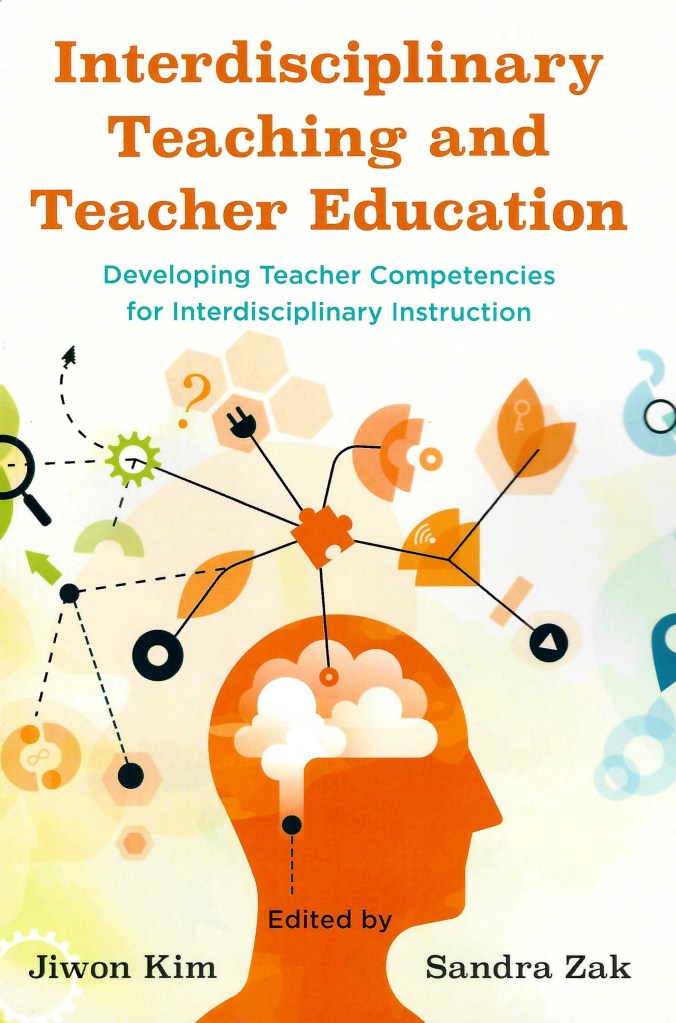
Interdisciplinary Teaching and Teacher Education by Dr. Jiwon Kim and Dr. Sandra Zak

Reviewed by Hank Bitten, NJCSS Executive Director and contributing author.

I am writing to you as a contributing author to Interdisciplinary Teaching and Teacher Education rather than as a reviewer. Through this blog post I am hoping to expand your classroom experience, ask you to begin talking about classroom instruction with your colleagues, and challenge you to develop partnerships or connection groups within and outside of your school. I have the perspective of an educator with more than a half-century of experience as a teacher in elementary, middle, high school, and college classrooms and five school districts.

Public education took a step forward in 1852 when Massachusetts became the first state to pass an Act Concerning the Attendance of Children at School. This was a monumental change because every village and city in Massachusetts was required to have a primary school to teach math and grammar. Students were required to be in school for three months with six weeks or more of continued instruction. Parents who did not send their children between age 8 to 14 to school were fined $20, a little more than a week’s wage for a factory worker. Lessons were passive and based on memory and practice.

Fifty years later in the beginning years of the 20th century, John Dewey dramatically shifted the focus to inquiry and problem-solving. Dewey’s instructional philosophy included brainstorming for solutions, testing hypothesis, experiential learning, and models of student government. His model was revolutionary, emphasized an understanding of the big ideas rather than simplistic true and false or multiple choice answers.

William James, a psychologist, understood the influences of the media on children. Children were exposed to advertising and pictures in newspapers and magazines. The media in the beginning of the 20th century was perhaps just as powerful as today’s social media digital platforms as publications overwhelmed the mailbox of the home instead of the inbox on the phone. James understood motivation, the importance of emotional engagement in learning, and the importance of the educational environment on the character and behavior of students.

My college instruction in the 1960s was influenced by Jerome Bruner.  The emphasis was on cognitive growth and a constructivist model of learning. We were taught concepts and how to use relevant experiences to bring meaning to the content in the curriculum. One of the lessons I applied from Jerome Bruner to the teaching of social studies was the influence of culture on how students learn. 

My education as a teacher was influenced by the sociologist James Coleman.  I developed simulations for understanding the big ideas of revolution, social classes, perspectives, and historical changes. I applied my college experiences of debate, Model United Nations, Model Congress, and Mock Trial to simulations of battles, problems in society, and decisions of presidents.  My graduate studies focused on the French Revolution and the insights of The Anatomy of a Revolution by Crane Brinton.

It is in the context of my simulation game, France, 1789, that interdisciplinary instruction became the focus of my teaching of world history, United States History, and African American History. I integrated literature, art, film, and music into my lessons. The engagement of my students was visible and they were applying knowledge and memory to their experiences.

Dr. Jiwon Kim and Dr. Sandra Zak provide a practical guide with explicit examples of how interdisciplinary models in classrooms and school are essential to learning in a Tik Tok culture and why teachers in departments, faculty in smaller schools, and professors of education need to have discussions about the effectiveness of teaching and the extent that students are learning.

The main concern of social studies teachers is that their students cannot write. We observe  children asking Google for answers, completing assignment worksheets in Google Classroom, and engaging with short videos on BrainPOP and YouTube.  My response to teachers who share with me their observations about how their students are learning in middle school and high school is that they need to be taught how to think before they can write. They need to be asked open-ended questions before they can express what they are thinking.  They need to build memory through interdisciplinary learning experiences.

Interdisciplinary education and interdisciplinary instruction are similar and yet very different experiences for students.  In Chapter 3, Christine Grabowski presents graphic models for planning and practical examples of interdisciplinary connections between social studies, math, reading, and art.  Below are examples relating to civic engagement and spatial recognition.

In Chapter 4, I provide explicit examples for teaching climate, U.S. History, Civics, and world history. Intradisciplinary models with integration of geography, economics, and culture provide students with both relevance and engagement. Below is an example of the diverse contributions of people from New Jersey who have impacted the lives of ordinary people.

In Chapter 5, Dr. Mark Pearcy and I present explanations on why interdisciplinary learning is necessary, models for including this in the education of pre-service teachers, and an example of a school district in New Jersey that has multiple opportunities for high school students.  Below is an example of curriculum connections in a World History course.

Perhaps the most important contribution of the collaborative efforts of Jiwon Kim and Sandra Zak are the prompts suggested for discussions between teachers and curriculum directors.  The importance of shared instruction, differentiated learning, and partnerships with local and academic institutions is a good beginning. I hope you enjoy Interdisciplinary Teaching and Teacher Education as much as I enjoyed contributing to it!

Book Review: The Hope of Glory by Jon Meacham

Reviewed by Hank Bitten

The role of religious belief in world history is both a mystery and a connection to understanding continuity and change over time in history.  The major beliefs of Hinduism, Buddhism, Judaism, Christianity, Islam have had an enduring influence on civilization for the past five millennium. They are also a critical part of the world history curriculum in New Jersey’s public schools. The Hope of Glory by Jon Meacham is a concise perspective of his personal understanding of the Christian faith, his scholarly research of distinguished individuals across several centuries, his years of nurture through Episcopalian clergy, and an understanding of Jesus Christ as an historical and spiritual leader. It is a useful perspective for educators, especially social studies teachers.

Most teachers have their students read the Sermon on the Mount (Matthew 5-7) to understand the teachings of Jesus and in my classroom, I asked students to also read from the teachings of Moses (Ten Commandments), the teachings of Confucius (Analects), Lao Tzu, Muhammed (Koran), Siddhartha Gautama (Four Noble Truths), and the Ramayana.  The enduring teachings about life, love, humility, forgiveness, relationships go beyond the ideas of our civilization.  In fact, they are timeless and have endured more than 50 centuries. It is important that students have a cognitive understanding of the leaders of each faith and for many students in the United States, the Judeo-Christian heritage is familiar through the architecture of temples and churches, holidays and culture, and the experiences of their friends.

The message of the Christian faith, although familiar to many, remains one of mystery.  It is the only major religion that is for everyone in the world (the Gentiles).  Christianity is not defined by birth, geography, or ethnicity.  Jon Meacham states it cleverly: “We are all in a sense, like the Greek philosophers who came to Paul in Athens seeking clarity about the Christian message. ‘May we know what this new teaching is that you are presenting?’ they asked him in the Areopagus. ‘It sounds rather strange to us, so we would like to know what it means.’ The apostle then preached the gospel, saying that God through Jesus, ‘will have the world judged in righteousness by a man whom he has appointed, and of this he has given assurance to all by raising him from the dead.” (Pages 11,12)

The historical context of the thread of a Messiah that began in Judaism is presented in Psalm 98 and the 35th chapter in the Book of Isaiah. In The Hope of Glory, the thread of this context continues into the context of the Roman Empire and the establishment of the teachings of the Christian (Roman Catholic) church.

Students need a reference point in understanding the common and the unique tenets of the major religious beliefs.  Each one references love, relationships, a world order, forces of good and evil, and the power of the divine. Some reference an afterlife, a rebirth, a pilgrimage, prayer, sacrifice, a free will, or a mandate of heaven.  Teaching with visuals supports memory and thinking. Unfortunately, the role of religion in world history is mostly dependent on text sources, although paintings, mosaics, and architecture are useful for student understanding. Here is a perspective that supports continuity and change in chronology:

The sacred writings are expressed prophetically, poetically, historically and perhaps with another form of expression. Students need to understand that context matters, and that criticism engages thinking, analysis, and interpretation. Reason and faith are both helpful starting points for an educational conversation.

The thesis of the book is based on the words of Jesus from the cross on Good Friday. For teachers who have their students read selected verses from the Sermon on the Mount in Matthew 5-7, these words should prompt thinking, analysis, and understanding. The first words spoken from the cross are only written in the gospel of Luke 23:34: “Father, forgive them; for they know not what they do.”

These words are similar to the atonement of sins on Yom Kippur in Judaism, the triumph of good over evil in Islam, and the search for the enlightenment in Buddhism. However, the Christian faith has paradoxes and forgiveness of enemies, our persecutors, and people who do evil is one example. The message of forgiveness is what gave momentum to the acceptance of the Christian faith in the Roman Empire by Constantine and the Edict of Thessalonica by Theodosius in 380 C.E..

The second words are from Luke: 23:43: “Assuredly, I say to you, today you will be with Me in Paradise.”  If your students are engaged with learning history in small groups, the application of the last words of Jesus from the cross fit nicely into seven groups of three or four students. The context of Jesus entrance into Jerusalem for the celebration of the Passover gave reason to speculate over a political or militant uprising to challenge the power of the Roman government in Israel. Jesus was popular and his preaching about the arrival of the kingdom provided hope to the Jewish people in Jerusalem.  However, if this was a political plot of revolutionaries, why were none of the followers who were with Jesus arrested or executed? Students need to think critically about the teachings of Jesus in the Sermon on the Mount or in his parables. 

These words of Jesus are beyond our imagination or comprehension. They speak to the depth of the mercy and grace of an all-powerful God.  Students will likely focus on the clarity of the first word, ‘Assuredly’, the definition of ‘today’, and the etymology of the word ‘Paradise’.  These words have endured twenty centuries and will continue to inspire in the future in the search for answers about the human condition and existence.  It is an example of continuity without change over time.

The third words are spoken first to Mary, Jesus’ mother, “Woman, behold thy son!”  They are followed by the words, “Behold thy mother!”  to one of his disciples.  (John 19: 25-27) These words are spoken as commands, a charge to care for another person. There are links here to the religious teachings of right relationships by Confucius, being your brother’s keeper in Judaism, caring for others as reflected in the Eightfold Path and giving alms in the Five Pillars of Islam.  The application of these words from the cross speaks to how we understand the meaning and purpose of love and serving others.

The fourth words speak to the human suffering of Jesus on the cross. “My God, my God, why hast thou forsaken me?” (Matthew 27: 45,46) There is no other religious teacher associated with the major religious beliefs who experienced the pain and fear that was present in the final day of the life of Jesus. Confucius died a normal death, very little is known about the death of Lao Tzu, Abraham lived beyond a full age of people in 1800 B.C.E., Siddhartha likely died from illness after reaching Nirvana, and Mohammed died peacefully in his home. If Jesus knew that He would return to life in three days, what is the meaning of these words? This is the power of the invisible and the mystery of the unknown. In this context, how do your students understand the meaning of this question and the context of how it was spoken?  Which visual image has best represented the Christian faith over time: the cross, the empty tomb, or something else?

The fifth words spoken are: “I thirst.” (John 19: 28,29) On the surface, these words are unlikely to engage students in a meaningful discussion or application. Jesus was given vinegary wine on a hyssop branch with a sponge attached to it. The symbolism of hyssop is an important connection to the Passover in Judaism as it was used to sprinkle the blood of the lamb on the doorposts to guarantee God’s protection.  Kind David was cleansed in Psalm 51:7 with the hyssop plant.  In this context, it is important to emphasize the spiritual cleansing of forgiveness that is a core belief of the Christian faith.  The ‘thirst’ is connected to the Passover in Judaism, the importance of how forgiveness changes our lives, and how the church forgives sins through confession, baptism, and the Lord’s Supper. For teachers, using the Sermon on the Mount, in addition to the words spoken in the final hours of Jesus, consider the words of Matthew 5:6, “Blessed Are Those Who Hunger and Thirst for Righteousness” support a meaningful discussion with many questions for deeper inquiry and application.

The next to last words spoken from the cross, “It is finished” are written in John 19:30. The meaning of these words for 21st century Christians is different than what the words meant for the first century followers and the eyewitnesses at Calvary. The Greek word, tetelestai means finished, completed, or accomplished. Paul preached to the Romans, “But now the righteousness of God has been manifested…through faith in Jesus Christ for all who believe.  For there is no distinction: since all have sinned and fall short of the glory of God, they are justified by his grace as a gift, through the redemption which is in Christ Jesus, whom God put forward as an expiation by his blood, to be received by faith.” (Page 86)

However, the creeds of the church that were written after the death and resurrection of Jesus have believers professing that all is not finished because Jesus is to return from heaven. Heaven, as mentioned in the Bible, is not a future destiny or a distant place. Instead, it is a hidden dimension in our life. Another way to think about heaven is that it is God’s space. (Page 88) Students will be asking questions about heaven, hell, eternity, war, sickness, and the list will continue.  These questions are important for inquiry by teenagers.  It is also important to understand that answers are determined by knowledge and the only clear knowledge we have in the Christian religion is to love God and to love one another as ourselves. This is the time to ask the essential question about the role of religion in world history, which is likely in your curriculum. There is mystery in all the major religions and students need to understand this difficult concept.

The final words spoken by Jesus are written in Luke 23:46: “Father, into thy hands I commend my spirit.”  The eyewitnesses watching the hours of Jesus dying were left with sadness and confusion. They expected a kingdom, a new earth and a new heaven. They only saw darkness. The most scholarly theologians are unable to fully explain the meaning of redemption.  The religions of Judaism, Hinduism, Buddhism, Islam, and the teachings of Daoism and Confucius also leave students with unanswered questions.  The common thread in each religion is the universal search for grace, a better world where good triumphs over evil, and hope!

The religious faiths of Judaism, Christianity, and Islam have become politicized as people in different periods of historical memory have persecuted, attacked, interpreted morality, and defined culture.  The tenets of their foundational beliefs have endured trade, prosperity, the Crusades, scientific discoveries, schisms, epidemics, Age of Reason, imperialism, World Wars, a journey to the moon, and genocides. It is important for students of world history to understand how ordinary people live their lives with the same questions we are asking.

This is why we teach the role of religion in history.

Book Review – School Climate Change: How Do I Build a Positive Environment for Learning?

DeWitt and Slade give us in this brief ARIAS series book a variety of ways in which schools can be positive environments for learning. They remind us the National School Climate Council recommends the climate include components such as these (p. 2):

  • Norms, values and expectations that support people feeling socially, emotionally, and physically safe.
  • People are engaged and respected.
  • Educators model and nurture attitudes that emphasize the benefits and satisfaction gained from learning.

This very helpful but brief book drives home the point that violence, bullying, harassment, and intimidation have no place in a positive learning environment. Students of all cultures and backgrounds must be made welcome.

Administrators must work hard to make sure all marginalized groups of students are made to feel safe and feel valued in our schools. This attention to the student takes time, and it can be difficult to find that time in this day and age of obsession with test scores and with improvement in the quality
of the instruction.


However, improvement in test scores means little without the safety and comfort of all students, teachers, staff members, parents, visitors, and administrators. Improvement in teaching and learning are indeed important. The authors include three key questions for students and their teachers:
Where am I going? How am I going? …and Where am I going next? (p. 17)

Administrators are the leaders that can help the school climate become more positive. The authors remind us that there are four essential components of a beneficial school climate (p. 14):

  1. Engagement
  2. Empowerment and Autonomy
  3. Inclusivity and Equity
  4. Environment

They also provide some very good ideas on how to make it clear we are striving for a positive school climate. Some examples are: having a student ambassador; using safe space stickers for students of the LGBT community; and embracing a diverse curriculum.

Many states have adopted various outcomes, standards, and guidelines for how K-12 teachers should act and communicate in the classroom. Illinois (because of 2003 legislation) and other states have adopted social and emotional standards for students also.


The Illinois State Board of Education has proposed 10 Standards for Social and Emotional Learning (Social and Emotional Learning (isbe.net)). At the core of these, students and their teachers acquire the knowledge, attitudes, and skills they need to:

  • recognize and manage their emotions;
  • demonstrate caring and concern for others;
  • establish positive relationships;
  • make responsible decisions; and
  • handle challenging situations constructively.

I recommend this book for new administrators and for professional development sessions attended by many types of stakeholders. Including parents, students, and community members in the process of creating a more positive learning environment is important also.

Book Review – Sapiens: A Brief History of Humankind

This book is incredibly interesting and brings up a lot of new information and stresses new and up-to-date theories such as an insistence on the co-existence of several “different types” of humans—including yet another explanation of why Homo sapiens and the Neanderthals must have co-existed.
Also detailed here are a few possible reasons the Neanderthals did not make it but Sapiens did.

This is a big book, full of theories, illustrations, great examples, and of course a lot of information about the origins, descriptors, capacities, abilities, and developmental stages of Homo sapiens. The
book is divided into four main sections all relating directly to Homo sapiens: The Cognitive Revolution; The Agricultural Revolution; The Unification of Mankind, and The Scientific Revolution.

As in most my book reviews, I do not give away too much content because the readers should experience that for themselves. In the case of this particular book, I will talk about the interesting and
entertaining way in which the book is written.

Professor Harari writes in a very readable fashion and uses many clever phrases in addition to humor. For example, he states, “That evolution should select for larger brains may seem to us, like, well, a no-brainer” (p. 9). He explains domestication of animals and the use of certain animals for food: “With each passing generation, the sheep became fatter, more submissive and less curious. Voila! Mary had a little lamb and everywhere that Mary went the lamb was sure to go” (p. 92).

Harari writes with such an enjoyable style, such as in this sentence: “Most likely, both the gossip theory and the there-is-a lion-near-the-river theory are valid” (p. 24). Harari seems to really enjoy the writing of the book, and it comes through very clearly to the reader. Another interesting sentence is this one: “Presumably, everyone reading this book is a Homo sapiens – the species sapiens (wise) of the genus Homo (man)” (p. 4).

I recommend the book to teachers of science and of archeology, social studies, and history. There is technical information here great for the classroom, cultural information wonderful for the salon, and
pensive passages for those times we are alone with our thoughts and we want to reflect on what is written in the clever book we are reading. There is also ample info here for experts in prehistory and for fans of early humankind alike.

I enjoyed reading the book very much and cannot emphasize enough how clever the writing is and how clear the passages are. Harari has done a wonderful job here of explaining very technical information in everyday language so that non-specialists can participate in pondering and discussing
some of the most interesting stages, questions, and stories of sapiens.

Book Review – Mankind: The Story of All of Us

Teachers are going to really enjoy this approach to story-telling that focuses more on themes than on the old fashioned linear method of discussing history. Themes and topics such as the use of tools,
differences in diet, domestication of certain animals and what that has meant for mankind, and the use of weapons, jewelry, boats, and architecture through history will astound and captivate the more technically oriented readers looking into this glossy, beautiful book.

More general readers, perhaps fans of the story of Homo sapiens up to current times will also love this book and will wonder what is next in mankind’s journey. This book tells us of great adventures in the past and gives us hints of what is in store, given our talents, strengths, and weaknesses. Pamela Toler has assembled here some incredibly cool ways to talk about the history of mankind and does something very new and unique: using modern drawings and actors to portray the stages of mankind over time. This makes for very interesting and lively illustrations.

Toler also uses a great deal of scenarios—created to advance theories of how wheat was first sown, how people reacted to the “Sea People” invading around the Mediterranean and bringing their women and children with them, and ways people thought and acted. The rationale for different actions over time are interesting to consider, and she uses them throughout the book to make the major and minor events alike more understandable.

As long as readers understand that is her method, they will be alright as they watch mankind progress through the themes, wars, discoveries, changes in regime, and differences in lifestyles over time. The use of the themes and topics, again, is very interesting. Chapter Five, for example, is
called “Plagues.” The book tells us where the words “algebra” and “algorithm” come from also, in addition to many other facts important to showing the contributions of many cultures to world knowledge

A third thing Toler does is uses clever phrases and humor in the book. This will make the book even more entertaining for those readers who want a little more “fun” in their dealing with the story of us.

For example, when discussing the supposed complete disappearance of Neanderthals from the earth, she reminds us that recent research has shown that the Neanderthal genome makes up between 1 and 4 percent of the DNA of humans who are not from Australia or sub-Saharan Africa. She states comically, “Evidently the rumors of Neanderthal man’s extinction are exaggerated. He lives on in us” (p. 16).

Without giving too much content away, I will say this book is a “must-read” for educators and all other readers who need a new and refreshing way to look at the history of us. It is a shiny, interesting, innovative, and thrilling book indeed. I am so lucky I was able to receive a copy to review!

The book could also be a clever tool to get some students interested in the story of us and to watch as they consider the photos, drawings, and scenarios presented in this lively and colorful presentation of
history. Many short sidebars and other bits of information fill the book, much as in many current high school books and undergraduate textbooks. I would champion the use of this book to see if teachers can “hook” some students into the realms of history, science, and discovery.

The design of the book is shared by the History Channel. It is also available via download to own, in Blu-Ray, DVD, eBook, and graphic novels. These other formats may be just what the teacher ordered for some students to be able to handle—and to reach them using technology they prefer.

As an educator, I can see many great uses for this book. It could also stimulate some wonderful discussions among teachers of science, technology, history, social studies, culture, mathematics, art, design, religion, and language.

As with many such books, interdisciplinary units can be crafted rather easily by creative teachers who will see many possible connections. Helping students become constructivists themselves and see connections is yet another possible use for the book as both a reference source and reading for getting good in-depth conversations going among secondary school students.

As with each and every book teachers use with students in K-12 settings, a thorough reading is important before students are encouraged to read the book. Some adult topics arise in the book and
should be considered, of course.

Book Review – Lies My Teacher Told Me: Everything Your American History Textbook Got Wrong

Reviewed by Thomas Hansen, Ph.D


James Loewen does a great job here of presenting some very interesting and different perspectives on some of the most important events, persons, wars, and traditions in American history. In fact, what he provides here is a lot of information that is the exact opposite of what is reported in the great majority of the high school history books. In some cases, the truth is not presented at all in those textbooks.

Writing this book did cause some large waves at the time, as I remember. I had heard about the book but never read it. I came across a copy the other day and had to see what was so shocking and revealing and other-worldly about Loewen’s revelations about US history.

Experiencing it now, I can see why it was so iconoclastic back when it appeared. The book dispels a huge number of myths and explains how high school US history books are meant to paint a White,
ethnocentric, idyllic, patriotic, and just plain false account of so many things in our past. The way the history books have discussed Native Americans, Blacks, racism, wars, and so many covered up facts and realities is incredible.

I would recommend the book to all those readers who wish to be better informed about the truth about our history and who wish to get the basic information they need to be able to do their own research on the people and places whose pictures have been painted very differently from what one will expect once you get the real explanations of what went on in the past.

Woodrow Wilson, Helen Keller, and others are not presented the same way here as they are in typical high school history books. I urge you to read this book and embark on some interesting research
journeys to get a different version of history. It is an enjoyable and unsettling book, at the same time.

Certainly all teachers should read this book, and obviously teachers of American history need to have this one on their shelf if they are going to engage in discussions with other professionals who want to know the truth. Why textbooks are so general and vague is a theme addressed throughout this revealing book. How we as educators can figure out a way to teach students about the truth of so many magical and mythical stories is a challenge. There has been so much written in the attempt to use a glorifying approach to American history.

Loewen is a good writer and presents his information here completely and through the use of references. Note that he has a long bibliography and is funny and sarcastic throughout the book (e.g., pp. 14, 15, 16). He is not afraid to write down some very controversial and clear information in this book. For example, he includes five key images of the Vietnam War with their explanations (p. 242). Loewen also spells out the most important question regarding why we fought the Vietnam War (p. 248).

Loewen sure did stir things up. I recommend you read this book… see if you agree or disagree… certainly interesting to considering some challenging and different perspectives on some of the most important events, persons, wars, and traditions in American history. Yet another good book to make us think!

Book Review: Legacies of the War on Poverty

Bailey and Danziger assemble here ten papers on the history of the war on poverty, covering its beginnings with JFK to the current great recession creating and disabling the poor in our country. They write the first chapter, explaining how Lyndon B. Johnson took up the torch and planned to eradicate poverty in the USA. They show the origin of many charitable programs, from food stamps to unemployment benefits, and they make it clear the numbers of poor persons in this land have not been small.

The book has more than one use, as it provides in-depth explanations of the origin of programs and the political connections related to funding, legislation, and public perspectives on spending. From
the point of view of historical developments, public policy, and political processes, the book could be not only good background reading for teachers but also very helpful for developing or enriching social science units in the classroom.

What led up to and exploded in 2008 and 2009 is profiled clearly here… great background reading for educators, to say the least.

The readings in the rest of the edition are also helpful, though some include rather technical terminology and concepts from fields such as economics. The text would lend itself well to use in graduate courses or longer summer classes on developing either teacher understanding of the current
recession or on creating more informative units on social science topics in the classroom.

The second part of the book includes four readings on increasing human capital, employment, and earnings. Here, four topics in education are discussed: the origins and impacts of Head Start; K-12 education battles; access to higher education; and workforce development. The third part of the book includes: the safety net for families with children; the safety net for the elderly; and the origins and impact of housing programs for families. The last section covers improvements in access to medical care and health.

These last two chapters on medical care and health are very important as a connection to on Obamacare (and its history), current events, and political processes. Like the other chapters in the
book, these two can provide teachers with one solid reference when designing materials and questions for students to ponder. Much of the data here can be used not only for teachers to come to a better understanding of what has been done to help disadvantaged persons in this nation but also for teachers to design and enrich units related to all of the Social Science Goals within the Illinois Learning Standards.

I would suggest that the themes and data in the book relate to specific strands within the Social Science Goals. Based on the information in this book, I would propose the book includes insights and data helpful specifically related to units addressing these strands in the Illinois Social Science Goals: 14.A, 14.B, 14.C; 14.D; 14.F; 15.A.c; 15.A.d.; 15.E; 16.C.b (US); 16.E.b; 17.C.a; 18.A; 18.B; and 18.C.

These two specific benchmarks could be impacted also, given the global interdependence of economies: 16.C.5b (W) and 16.C.5c (W). We could also impact benchmarks related to the environment, how it contributes to the current poverty in our nation, and ways to remedy the problems: 17.C.5b and 17.D.5. In addition, it would be interesting to look at how the book could be
used as a basis to locate other materials for designing units related to communicating about poverty, politics, social policy, hunger, unemployment, social change, and poverty.

There are cultural and other connections to be made from the materials in this book. To do so, we could impact possibly these specific benchmarks within the Illinois Fine Arts Goals: 26.A.5; 27.A.4b; 27.B.4b; and 27.B.5.

These are only a few suggestions; I would suggest there are more connections, including across subjects. As examples, links could be shown between the above information, plus the various strands and benchmarks suggested, to help impact other learning areas. For districts interested in knowing, they would be possibly impacting these particular Illinois Foreign Language benchmarks: 29.D.5; 29.E.5; 30.A.5a; and 30.A.5c.

To summarize, I would recommend the book for use in various graduate courses and professional development sessions of some length for teachers. I suggest the book is helpful for both developing teacher understanding of the current recession and on creating more informed units on social
science topics in the classroom. Teachers will clearly make their own connections to different strands, benchmarks and subject. The above is simply an attempt on my part to call attention to some possible interesting uses for this detailed text.

Although the text has some dense passages with technical terms and ideas, it is enlightening to read such great detail about poverty and ways it has been addressed in the USA in the last several decades.