My Italian Secret: The Forgotten Heroes

My Italian Secret: The Forgotten Heroes

Italy and the Holocaust Foundation

Reprinted with permission from the Italy and Holocaust Foundation (http://www.italyandtheholocaust.org/education.aspx

MY ITALIAN SECRET: The Forgotten Heroes is a feature length documentary that tells the story of courageous Italians, including sports idol Gino Bartali, who carried out ingenious schemes to rescue and protect Jews in Nazi-occupied Italy. The film is narrated by Isabella Rossellini with Robert Loggia as the voice of Gino Bartali. It is available on disc, at Amazon Video and on iTunes.

MY ITALIAN SECRET tells personal accounts that reflect this little known piece of history. Through witnesses’ stories, viewers revisit a time when an entire continent was engulfed in genocide. They learn how approximately 80% of Jewish people living in Italy, including foreign Jews, survived the Holocaust. On September 8, 1943 the Nazi’s invaded Northern Italy and the deportation of thousands of Jewish people and others to Auschwitz began. This film asks: Why would someone risk his or her own life and put their family in jeopardy to ‘do the right thing’ and protect the life of another person . . . a stranger?

Yad Vashem posthumously recognized Gino Bartali from Italy as ‘Righteous Among the Nations’. Bartali was a champion cyclist and a beloved public figure. During the German occupation of Italy (beginning in September 1943), Bartali, a devout Catholic, was part of a rescue network spearheaded by Rabbi Nathan Cassuto of Florence together with the Archbishop of Florence Cardinal Elia Angelo Dalla Costa (previously recognized as ‘Righteous Among the Nations’). This Jewish-Christian network, set up following the German occupation of Italy and the onset of deportation of Jews, saved hundreds of local Jews and Jewish refugees from territories which had previously been under Italian control, mostly in France and Yugoslavia. Gino Bartali acted as a courier for the network, secreting forged documents and papers in his bicycle and transporting them between cities, all under the guise of training. Knowingly risking his life to rescue Jews, Bartali transferred falsified documents to various contacts, among them Rabbi Cassuto.

Although Gino Bartali is a sports legend, his most daring triumph came when he risked his life countless times to save Jews threatened by Nazi extermination. The story of Bartali and the secret network of which he was a member, is just one example of the heroism exhibited by thousands of ordinary Italians who risked their lives to save others from capture and death. As an entire continent was engulfed in a genocide, which took the lives of most Jews in Nazi-occupied Europe (11 million people perished, including 6 million Jews), approximately 80 percent of Italy’s Jews survived. Bartali, like most of the rescuers, never sought recognition or reward. Few of those he helped knew his name or what role he played in their rescue. In addition to Gino Bartali, thousands of conscientious individual Italians risked their lives in order to assist people who in many cases were complete strangers. Most of these heroes never spoke of their courageous deeds.

Guiding Questions: Use the documentary “My Italian Secret: The Forgotten Heroes of the Holocaust” to provide evidence to answer the following questions.

  1. Identify one segment that is a primary source and one segment that is a secondary source.
  2. Provide one positive example and one negative example of how some Italians treated the Jews during the Holocaust.
  3. Describe three ways in which Italian rescuers helped the Jews during the Holocaust.
  4. In your opinion, which of the six individual characters in the documentary displayed the most courage. (Explain the reason for your answer.)
  5. Can the experiences of the people portrayed in the documentary be related to the current refugee crisis? (Explain)
gino-bartali

A) Who was Gino Bartali?

Gino Bartali is well known in the sport of cycling and holds the record for the longest time span between victories at the Tour de France (ten years). Bartali’s life provides a powerful lesson in how moral endurance can empower from within. As Bartali attained “super star status” in the sport of cycling, he never lost sight of the fact that it was his inner strength that carried him through the most difficult moments of his life.

As he told his son Andrea, “If you’re good at a sport, they attach the medals to your shirt and then they shine in some museum. That which is earned by doing good deeds is attached to the soul and shines elsewhere.”

In 1943, when Italy was under the German army occupation, Archbishop Elia Angelo Dalla Costa and Rabbi Nathan Cassuto organized a resistance network. Bartali was recruited by the network and worked as a courier. In addition, Bartali aided the Assisi resistance movement that was organized by church members from his hometown. He also sheltered a local Jewish family in his home. As part of his job as courier, Bartali hid documents in the handlebar and seat of his bicycle. These documents were primarily export visas, giving numerous Jews the chance to evade deportation to the death camps. Long bike rides were common place for professional cyclists, even during the war. Bartali was able to travel thousands of kilometers around Italy under the guise of training rides, while he smuggled forged identity papers in the frame of his bicycle to Jewish families trying to desperately flee the country.

After the war, Bartali never spoke of his underground activities and refused all attempts at interviews. He simply remarked that “he had been motivated by his conscience and therefore did not want to have his activities documented.” Bartali’s decision to act was heroic not because he felt no fear but rather because he did not let his fear prevent him from doing what he felt was ethically right. He demonstrated moral endurance, forged in a moment of danger that few of us could ever hope to fully understand. Although the exact number of people is unknown due to Bartali’s taciturn nature, he is credited with saving 800 lives. Yad Vashem recognized Gino Bartali as a ‘Righteous Among the Nations’ in 2013. In spite of the heroic title, Bartali never thought of himself as a genuine hero. He once said, “Real heroes are others, those who have suffered in their souls, in their hearts, and their spirit, for their loved ones. Those are the real heroes. I’m just a cyclist.”

Questions

  1. Why is Bartali famous?
  2. What did Bartali mean when he said, “That which is earned by doing good deeds is attached to the soul and shines elsewhere.”
  3. How did Bartali become involved in saving Jews?
  4. What was Bartali’s role in the resistance movement?
  5. How did Bartali demonstrate his moral endurance?

B) The Rescue of Jews in Assisi, Italy

Essay Assessment: Write a response to the following question that includes an introduction, at least two body paragraphs and a conclusion. To what extent was Gino Bartali’s role in the resistance movement in Italy successful? In your response, be sure to address the following: supporting evidence from the reading and website, individual’s actions/participation, and results of the action taken.

Father Brunacci

Father Brunacci in Assisi

The only time in history when there is a record of Jews living in Assisi, Italy was during the Holocaust, when the town and its churches, monasteries and convents became a safe haven for several hundred Jews. Shortly after the German occupation, when the manhunt for Jews began, the Bishop of Assisi, Giuseppe Nicolini, ordered Father Brunacci to head the rescue operation of Jews and to arrange sheltering places in some twenty-six monasteries and convents. The Bishop authorized the hiding of Jews in places that were closed to outsiders by monastic regulations. The Committee of Assistance that Bishop Nicolini organized transformed Assisi into a shelter for many Jews.

In addition, many other Jews were provided with false papers enabling them to travel and survive in other places. Later, Father Brunacci was arrested and tried in court for his involvement in Jewish rescue efforts but was released after the intervention by the Vatican. Father Rufino Niccacci, the Guardian of the St. Damiano Monastery, played an important role in the network. He arranged false papers and found hiding places in the monasteries and convents, disguising the Jews as monks and nuns. The network not only saved Jewish lives, but also made great efforts to supply Jews with some of their religious needs. After the war, Father Brunacci described how during Yom Kipper, the Day of Atonement and the highest holiday in the Jewish religion was celebrated in Assisi in 1943. The convent nuns prepared the special meal for the ending of the fast.

Not only priest and nuns of the church participated in this collective effort, but many others played key roles in the rescue of Jews. One such person was Luigi Brizi who owned a souvenir shop in Assisi that operated a printing press. Brizi and his son became members of the Assisi rescue network and risked their lives by printing false papers for the persecuted Jews. Luigi’s son, Trento, bicycled to Foligno, 20 kilometers from Assisi, to a friend who used his etching skills to produce seals in order to stamp the false documents. The Viterbi family was one of the families that lived openly due to the false papers provided by Brizi. After the war, Brunacci remarked that about 200 Jews had been saved from the persecutors. As a result, Yad Vashem in Israel, honored the following people for their role in saving Jews: Father Rufino Niccacci was recognized as Righteous Among the Nations in 1976; Bishop Giuseppe Nicolini and Father Brunacci were recognized as Righteous Among the Nations in 1977; and Luigi Brizi and his son Trento were recognized as Righteous Among the Nations in 1977.

Questions

  1. Why did Jews move to Assisi?
  2. How did the Bishop of Assisi, Giuseppe Nicolini, react to the German occupation?
  3. Explain what happened to Father Brunacci as a result of his rescue efforts.
  4. How did Father Rufino Nicacci’s role in the rescue network help Jews?
  5. How did Luigi Brizi and his son Trento participate in the saving of Jews?
  6. How did the Jewish people give thanks to those who saved their lives in Assisi?

Essay Assessment: Write a response to the following question that includes an introduction, body paragraph and a conclusion. To what extent were the activities of the Assisi Underground network successful in the saving of Jews during the Holocaust? In your response, be sure to address the following: – supporting evidence from the reading – action of individuals – results of action taken

C. Courageous Hall of Fame

Directions: Review the following list of individuals who performed acts of courage (up-standers). Choose one individual to research the actions taken by the individual and answer the five project questions (only one student researching an individual). After completing the research, the teacher may choose to have students present their arguments for their nominee to the class. The teacher may also have students vote to determine if the arguments/evidence presented was strong enough for the nominee to be inducted into the Courageous Hall of Fame.

Alternative Strategies: Write a letter to the Courageous Hall of Fame award committee presenting your arguments/evidence to nominate your individual person to the Courageous Hall of Fame. Write a thank you letter to the individual researched thanking him or her for his/her acts of courage.

COURAGEOUS HALL OF FAME NOMINEES: Father Joseph Andre; Aristides de Souza Mendes; Mordecai Anieleswicz; Dr. Giuseppe Moreali; Gino Bartali; Father Ruffino Niccacci; Father Arigo Beccari; Bishop Giuseppe Placido Nicolini; Father Marie Benoit; Uri Orley; Tuvia, Zusia, Aasel Bielski (brothers); John Pehle; Dietrich Bonhoeffer; Giorgio Perlasca; Dr. Giovanni Borromeo; Marion Pritchard; Leon Feldhendler; Bishop Angelo Roncalli; Anne Frank; Irene Sandler (Opdyke); Varian Fry; Oskar Schindler; Meep Gies; Monsignor Schivo; Ana Ginno; Sophie Schole; Paul Grueninger; Tempo Sugihara; Alicia Appleman-Jurman; Hanna Szenes; Jan Karski; Marie Agnes Tribbioli; Father Maximillian Kolbe; Andre Trocme; Janusz Korczak; Raoul Wallenberg; Abba Kovner; Elie Wiesel; Take & Edna Lasow; Sir Nicholas Winton (Kindertransport) 

MY ITALIAN SECRET: The Forgotten Heroes is a feature length documentary that tells the story of courageous Italians, including sports idol Gino Bartali, who carried out ingenious schemes to rescue and protect Jews in Nazi-occupied Italy. The film is narrated by Isabella Rossellini with Robert Loggia as the voice of Gino Bartali. It is available on disc, at Amazon Video and on iTunes.

MY ITALIAN SECRET tells personal accounts that reflect this little known piece of history. Through witnesses’ stories, viewers revisit a time when an entire continent was engulfed in genocide. They learn how approximately 80% of Jewish people living in Italy, including foreign Jews, survived the Holocaust. On September 8, 1943 the Nazi’s invaded Northern Italy and the deportation of thousands of Jewish people and others to Auschwitz began. This film asks: Why would someone risk his or her own life and put their family in jeopardy to ‘do the right thing’ and protect the life of another person . . . a stranger?

Yad Vashem posthumously recognized Gino Bartali from Italy as ‘Righteous Among the Nations’. Bartali was a champion cyclist and a beloved public figure. During the German occupation of Italy (beginning in September 1943), Bartali, a devout Catholic, was part of a rescue network spearheaded by Rabbi Nathan Cassuto of Florence together with the Archbishop of Florence Cardinal Elia Angelo Dalla Costa (previously recognized as ‘Righteous Among the Nations’). This Jewish-Christian network, set up following the German occupation of Italy and the onset of deportation of Jews, saved hundreds of local Jews and Jewish refugees from territories which had previously been under Italian control, mostly in France and Yugoslavia. Gino Bartali acted as a courier for the network, secreting forged documents and papers in his bicycle and transporting them between cities, all under the guise of training. Knowingly risking his life to rescue Jews, Bartali transferred falsified documents to various contacts, among them Rabbi Cassuto.

Although Gino Bartali is a sports legend, his most daring triumph came when he risked his life countless times to save Jews threatened by Nazi extermination. The story of Bartali and the secret network of which he was a member, is just one example of the heroism exhibited by thousands of ordinary Italians who risked their lives to save others from capture and death. As an entire continent was engulfed in a genocide, which took the lives of most Jews in Nazi-occupied Europe (11 million people perished, including 6 million Jews), approximately 80 percent of Italy’s Jews survived. Bartali, like most of the rescuers, never sought recognition or reward. Few of those he helped knew his name or what role he played in their rescue. In addition to Gino Bartali, thousands of conscientious individual Italians risked their lives in order to assist people who in many cases were complete strangers. Most of these heroes never spoke of their courageous deeds.

Guiding Questions: Use the documentary “My Italian Secret: The Forgotten Heroes of the Holocaust” to provide evidence to answer the following questions.

  1. Identify one segment that is a primary source and one segment that is a secondary source.
  2. Provide one positive example and one negative example of how some Italians treated the Jews during the Holocaust.
  3. Describe three ways in which Italian rescuers helped the Jews during the Holocaust.
  4. In your opinion, which of the six individual characters in the documentary displayed the most courage. (Explain the reason for your answer.)
  5. Can the experiences of the people portrayed in the documentary be related to the current refugee crisis? (Explain)
gino-bartali
Gino Bartali

A) Who was Gino Bartali?

Gino Bartali is well known in the sport of cycling and holds the record for the longest time span between victories at the Tour de France (ten years). Bartali’s life provides a powerful lesson in how moral endurance can empower from within. As Bartali attained “super star status” in the sport of cycling, he never lost sight of the fact that it was his inner strength that carried him through the most difficult moments of his life.

As he told his son Andrea, “If you’re good at a sport, they attach the medals to your shirt and then they shine in some museum. That which is earned by doing good deeds is attached to the soul and shines elsewhere.”

In 1943, when Italy was under the German army occupation, Archbishop Elia Angelo Dalla Costa and Rabbi Nathan Cassuto organized a resistance network. Bartali was recruited by the network and worked as a courier. In addition, Bartali aided the Assisi resistance movement that was organized by church members from his hometown. He also sheltered a local Jewish family in his home. As part of his job as courier, Bartali hid documents in the handlebar and seat of his bicycle. These documents were primarily export visas, giving numerous Jews the chance to evade deportation to the death camps. Long bike rides were common place for professional cyclists, even during the war. Bartali was able to travel thousands of kilometers around Italy under the guise of training rides, while he smuggled forged identity papers in the frame of his bicycle to Jewish families trying to desperately flee the country.

After the war, Bartali never spoke of his underground activities and refused all attempts at interviews. He simply remarked that “he had been motivated by his conscience and therefore did not want to have his activities documented.” Bartali’s decision to act was heroic not because he felt no fear but rather because he did not let his fear prevent him from doing what he felt was ethically right. He demonstrated moral endurance, forged in a moment of danger that few of us could ever hope to fully understand. Although the exact number of people is unknown due to Bartali’s taciturn nature, he is credited with saving 800 lives. Yad Vashem recognized Gino Bartali as a ‘Righteous Among the Nations’ in 2013. In spite of the heroic title, Bartali never thought of himself as a genuine hero. He once said, “Real heroes are others, those who have suffered in their souls, in their hearts, and their spirit, for their loved ones. Those are the real heroes. I’m just a cyclist.”

Questions

  1. Why is Bartali famous?
  2. What did Bartali mean when he said, “That which is earned by doing good deeds is attached to the soul and shines elsewhere.”
  3. How did Bartali become involved in saving Jews?
  4. What was Bartali’s role in the resistance movement?
  5. How did Bartali demonstrate his moral endurance?

B) The Rescue of Jews in Assisi, Italy

Essay Assessment: Write a response to the following question that includes an introduction, at least two body paragraphs and a conclusion. To what extent was Gino Bartali’s role in the resistance movement in Italy successful? In your response, be sure to address the following: supporting evidence from the reading and website, individual’s actions/participation, and results of the action taken.

Father Brunacci

Father Brunacci in Assisi

The only time in history when there is a record of Jews living in Assisi, Italy was during the Holocaust, when the town and its churches, monasteries and convents became a safe haven for several hundred Jews. Shortly after the German occupation, when the manhunt for Jews began, the Bishop of Assisi, Giuseppe Nicolini, ordered Father Brunacci to head the rescue operation of Jews and to arrange sheltering places in some twenty-six monasteries and convents. The Bishop authorized the hiding of Jews in places that were closed to outsiders by monastic regulations. The Committee of Assistance that Bishop Nicolini organized transformed Assisi into a shelter for many Jews.

In addition, many other Jews were provided with false papers enabling them to travel and survive in other places. Later, Father Brunacci was arrested and tried in court for his involvement in Jewish rescue efforts but was released after the intervention by the Vatican. Father Rufino Niccacci, the Guardian of the St. Damiano Monastery, played an important role in the network. He arranged false papers and found hiding places in the monasteries and convents, disguising the Jews as monks and nuns. The network not only saved Jewish lives, but also made great efforts to supply Jews with some of their religious needs. After the war, Father Brunacci described how during Yom Kipper, the Day of Atonement and the highest holiday in the Jewish religion was celebrated in Assisi in 1943. The convent nuns prepared the special meal for the ending of the fast.

Not only priest and nuns of the church participated in this collective effort, but many others played key roles in the rescue of Jews. One such person was Luigi Brizi who owned a souvenir shop in Assisi that operated a printing press. Brizi and his son became members of the Assisi rescue network and risked their lives by printing false papers for the persecuted Jews. Luigi’s son, Trento, bicycled to Foligno, 20 kilometers from Assisi, to a friend who used his etching skills to produce seals in order to stamp the false documents. The Viterbi family was one of the families that lived openly due to the false papers provided by Brizi. After the war, Brunacci remarked that about 200 Jews had been saved from the persecutors. As a result, Yad Vashem in Israel, honored the following people for their role in saving Jews: Father Rufino Niccacci was recognized as Righteous Among the Nations in 1976; Bishop Giuseppe Nicolini and Father Brunacci were recognized as Righteous Among the Nations in 1977; and Luigi Brizi and his son Trento were recognized as Righteous Among the Nations in 1977.

Questions

  1. Why did Jews move to Assisi?
  2. How did the Bishop of Assisi, Giuseppe Nicolini, react to the German occupation?
  3. Explain what happened to Father Brunacci as a result of his rescue efforts.
  4. How did Father Rufino Nicacci’s role in the rescue network help Jews?
  5. How did Luigi Brizi and his son Trento participate in the saving of Jews?
  6. How did the Jewish people give thanks to those who saved their lives in Assisi?

Essay Assessment: Write a response to the following question that includes an introduction, body paragraph and a conclusion. To what extent were the activities of the Assisi Underground network successful in the saving of Jews during the Holocaust? In your response, be sure to address the following: – supporting evidence from the reading – action of individuals – results of action taken

C. Courageous Hall of Fame

Directions: Review the following list of individuals who performed acts of courage (up-standers). Choose one individual to research the actions taken by the individual and answer the five project questions (only one student researching an individual). After completing the research, the teacher may choose to have students present their arguments for their nominee to the class. The teacher may also have students vote to determine if the arguments/evidence presented was strong enough for the nominee to be inducted into the Courageous Hall of Fame.

Alternative Strategies: Write a letter to the Courageous Hall of Fame award committee presenting your arguments/evidence to nominate your individual person to the Courageous Hall of Fame. Write a thank you letter to the individual researched thanking him or her for his/her acts of courage.

COURAGEOUS HALL OF FAME NOMINEES:

Father Joseph Andre; Aristides de Souza Mendes; Mordecai Anieleswicz; Dr. Giuseppe Moreali; Gino Bartali; Father Ruffino Niccacci; Father Arigo Beccari; Bishop Giuseppe Placido Nicolini; Father Marie Benoit; Uri Orley; Tuvia, Zusia, Aasel Bielski (brothers); John Pehle; Dietrich Bonhoeffer; Giorgio Perlasca; Dr. Giovanni Borromeo; Marion Pritchard; Leon Feldhendler; Bishop Angelo Roncalli; Anne Frank; Irene Sandler (Opdyke); Varian Fry; Oskar Schindler; Meep Gies; Monsignor Schivo; Ana Ginno; Sophie Schole; Paul Grueninger; Tempo Sugihara; Alicia Appleman-Jurman; Hanna Szenes; Jan Karski; Marie Agnes Tribbioli; Father Maximillian Kolbe; Andre Trocme; Janusz Korczak; Raoul Wallenberg; Abba Kovner; Elie Wiesel; Take & Edna Lasow; Sir Nicholas Winton (Kindertransport) 

COURAGEOUS HALL OF FAME RESOURCES·        

A Teacher’s Guide to the Holocaust https://fcit.usf.edu/holocaust/people/rescuer.htm·        

Notable Social Studies trade books for young people http://www.socialstudies.org/notable

Suggested Reading for Young Adults: Altshuler, David. Hitler’s War against the Jews. New York: Berhman House, 1978.

Anflick, Charles. Resistance: Teen Partisans and Resistance Who Fought Nazi Tyranny. NY: Rosen, 1999.

Bartlett, Susan Campbell. Hitler Youth: Growing Up in Hitler’s Shadow. Scholastic, 2012.

Frank, Anne. The Diary of a Girl by Anne Frank. New York: Doubleday & Company, 1947.Lee, Carol Ann. Anne Frank and the Children of the Holocaust. U.S.A.: Puffin Books, 2006.

Rapport, Doreen. Beyond Courage: The Untold Story of Jewish Resistance During the Holocaust. Summerville, Massachusetts: Candlewick Publishers, 2012.

Warren, Andrea. Surviving Hitler: A Boy in the Nazi Death Camps. U.S.A.: Harper Collins, 2001.

Meltzer, Milton. Rescue: The Story of How the Gentiles Saved Jews in the Holocaust. NY: Harper, 1988.

Rogasky, Barbara. Smoke and Ashes: The Story of the Holocaust.New York: Holiday House, 1988.

Websites: ·         I

taly and the Holocaust Foundation (www.italyandtheholocaust.org)·         Anne Frank Online http://annefrank.com/

Cybrary of the Holocaust http://www.remember.org·        

The Simon Wiesenthal Center http://www.wiesenthal.com·        

The Holocaust Rescuers http://holocaustrescuers.blogspot.com·        

The Jewish Foundation for the Righteous https://jfr.org/rescuer-stories·        

United States Holocaust Memorial Museum http://www.USHmm.org·        

Yad Vashem http://www.yadvashem.org/yv/en/exhibitions/righteous-women/·        

http://holocaustrescuers.blogspot.com http://www.un.org/en/holocaustremembrance/index.shtml·        

Non-Fiction Holocaust Literature for Young Adults http://ya-holocaust-lit.weebly.com/non-fiction.html
Princeton and Slavery: Moses Taylor Pyne and the Sugar Plantations of the Americas

Princeton and Slavery: Moses Taylor Pyne and the Sugar Plantations of the Americas

Maeve Glass

This article was adapted from a longer essay that can be found at https://slavery.princeton.edu.

When the heat of the first summer of the 20th century settled over campus, a 45-year-old New York lawyer drafted a check for the ceiling fans that would soon turn overhead in the new wing of the Chancellor Green library. The payment of $37 that offered relief to the students was by far one of the smallest contributions that Moses Taylor Pyne, Class of 1877, made to his beloved alma mater. Since joining the Board of Trustees 16 years earlier, the lawyer had contributed anonymous donations with such frequency that when he died in 1921, obituary writers dared not even venture an estimate. Indeed, by that summer of 1900, Pyne’s support for the new library stacks adjacent to Chancellor Green had accrued to a sum that would alone be worth nearly $14 million today. During his tenure as trustee, Pyne’s financial contributions subsidized not only the new library, but also the construction of two undergraduate dormitories on Nassau Street, a slew of new faculty and graduate housing, and endowments for initiatives ranging from a history seminar to a professorship. Today, the Pyne family name graces some of the most iconic buildings on campus, as well as the résumés of celebrated graduates who have received the Pyne Prize, Princeton’s highest undergraduate honor.

Despite the prominence of Pyne’s financial support to Princeton, the complex roots of that support have remained largely out of view. Pyne’s fortune is most often explained with broad references to either his success as a commercial lawyer in New York or his inheritance of a large estate from his grandfather, Moses Taylor, usually described in his capacity as a successful merchant and founding president of a New York bank. A return to the leather-bound account book in which Pyne or his clerk inscribed the payments for the library fans that July of 1900, however, reveals the beginnings of a more complicated story. These records show that Pyne’s payments stemmed directly from an estate whose earliest foundations lay not simply in the financial industry of New York, but in the daily work of carrying the produce of the continent’s largest sugar plantations to the markets of the world.

Those foundations began to be constructed in the early spring of 1832, in a Manhattan counting house up the road from the city’s bustling wharves. That March, Pyne’s grandfather — 23-year-old Moses Taylor — drafted a handwritten circular announcing the launch of a new commission firm at 44 South St. The letter was succinct and to the point. For a percentage of the profits, Moses Taylor and Co. would transport and sell the produce of the continent’s richest soils to the markets of the world.

Over the next four decades, as Taylor’s son-in-law Percy Rivington Pyne took over the firm’s day-to-day management, the fledgling business grew to become one of the most successful firms in the global sugar trade. By the eve of the Civil War, the firm had secured control of nearly one-fifth of the commercial exchanges between Cuba, the world’s largest sugar exporter, and the United States. In doing so, it created the foundations of an estate whose roots lay inextricably entangled with the rise of the largest sugar plantations in North America, fueled by the labor of the enslaved.

From the outset, the geographic scope of the firm’s shipping business made clear that neither Taylor nor his son-in-law had any aversion to carrying the produce harvested by the enslaved. Like many ship owners in New York starting out in the commission business in the 1830s, Taylor originally cast a broad net, offering to carry the produce of plantations that ran along the full length of the southern Atlantic Coast and the Gulf Coast, from the rice of the Carolinas to the cotton of the Mississippi Delta. Taylor’s incoming correspondence in the opening decade of business teemed with letters and reports listing the most current prices of produce from Charleston to Savannah to New Orleans.

By the mid-1830s, the firm had focused its shipping enterprise on a zone of production that would become the last great bastion of slavery in North America: the island of Cuba, where newly constructed railroads promised a route into the less-depleted interior and where the recently enacted laws of neighboring islands abolishing slave labor did not apply.

For centuries, the great slave ships had arrived from the coast of Africa in the warm waters of the Caribbean Sea, each laden with chained men and a handful of women to work the fields on the archipelago of small islands. The English called the region by its produce: the “Sugar Islands.” By the eve of the American Revolution in 1774, this archipelago had become one of the densest slave societies in the Americas.

Beginning in the early 1800s, however, the fleet of slave ships that arrived from Africa had begun to sail past these smaller islands. Instead, they converged on the ports of Cuba: a place where the slave traders could still find a welcome market for their cargos and where, for the first time, in 1837, iron rails leading out from Havana along the old cart roads into the deep valleys of the interior promised the conquest of some of the most fertile soils in the hemisphere.

Eager to capitalize on the opening of this last sugar frontier, under Percy Pyne’s management, Moses Taylor and Co. began to construct a portfolio of partnerships with some of the island’s most powerful planters — some of whom were engaged in the slave trade itself.

One of the first and most prominent members of the firm’s network was the Havana-based firm of Drake Brothers, said to be responsible for two-thirds of all sugar exported off the island. Although the business was primarily a mercantile firm, its head, Carlos Drake, proudly introduced himself as “… a proprietor … of a sugar plantation” with some 400 slaves. Other key partners in the portfolio included Tomás Terry, a planter with so much sugar to his name he did not even always know how much of it was held in Moses Taylor’s warehouse. Terry — who reportedly had made his initial fortune buying sick slaves and then reselling them for profit — first began doing business with Moses Taylor as early as 1838. By 1865, Terry was consigning more than $1 million worth of sugar and molasses to the firm on an annual basis, from his property holdings in Cuba that grew to include seven of the largest plantations on the island. Indeed, by the time of the American Civil War, the firm had built a network that encompassed at least 24 estates on the island and that profited directly from the labor of thousands of enslaved men and women.

As the ships of Moses Taylor and Co. sailed for the island with ever-increasing frequency, so too did an ever-growing number of ships arrive in Havana from Africa, carrying hundreds of chained men and women who had been sold into slavery. Within the first decade of the first arrival of Taylor’s fleets, 180,000 enslaved people had been brought to the island to work the booming plantation economy. Those who visited the new estates of the interior returned with stories recounting the horrors they had witnessed. Nine years after Moses Taylor and Co. opened for business, for example, one abolitionist declared the conditions on the island to be “more destructive to human life … than in any other slave-holding country on the face of the habitable globe.” Later visitors would remember the bloodhounds who lay in wait at the gates of the estates. Slaves who survived recalled the endless work of turning the forests of cane into sugar, moving as if imprisoned in a state of half-consciousness, harvesting the sugar soon to be sent down to the docks where the cargo ships lay waiting.

The firm’s connection to slave labor was not limited to these formal transactions of carrying the produce of the plantations to market. Increasingly, Moses Taylor and Co. began to offer financial services to the island’s planters, investing the profits from their sugar estates in the United States’ growing number of industries and corporations. In November of 1851, for example, the firm purchased 120 shares of a coal company in Pennsylvania on behalf of Tomás Terry. By 1872, the firm had invested almost $3 million in American securities on behalf of Cuban planters.

The continuous stream of handwritten letters that arrived from the island in the firm’s Manhattan offices, moreover, suggests that beneath these financial transactions lay a series of intimate and long-standing relationships, particularly between the planters and Percy Pyne, who undertook painstaking efforts to learn Spanish. In 1864, for example, the wealthy planter Ramón Fernández Criado, who owned the Ingenio Neda estate and nearly 400 slaves, sought Pyne’s help in resolving a sensitive matter. As he explained in his letter, he had decided to write to Pyne “and not to Moses Taylor because as you know Spanish, it is not necessary for an interpreter to enter into this business, which is very confidential and especially entrusted to you for my protection.”

This level of intimacy appears in the nature of the requests that Pyne fielded from the island, ranging from requests for help with urgently needed financial loans to hosting friends who were planning to visit New York. The planter F.G. Rolando wrote to request the firm’s help in securing machinery for his plantation; nearly 20 years later, the planter’s widow, Mariana Rolando, wrote to request a loan, to be repaid in sugar.

Indeed, amid the firm’s records, one finds the will of a planter named Lorenzo Jay dated 1866 — the year after Congress ratified the 13th Amendment abolishing slavery in the United States. In neat cursive, the will lists both the 220 slaves who worked on Jay’s plantation at the time of his death, as well as a statement of the $322,435 he had on account with Moses Taylor and Co.

On the strength of these networks, Taylor accumulated one of the largest fortunes in the country. By the autumn of 1882, when the estate lawyers assembled in an office in Manhattan to take stock of the recently deceased man’s estate, they calculated his assets at a sum worth the equivalent today of $750 million. And there, amid the paperwork listing the names of the heirs to the estate and executors of the trust was that of Taylor’s grandson: a young lawyer named Moses Taylor Pyne, who at the age of 27 found himself as the guardian of a fortune that could transform a small college in New Jersey into one of the world’s leading universities.

Slavery and Resistance in the Hudson Valley

Slavery and Resistance in the Hudson Valley

A.J. Williams-Myers, State University of New York-New Paltz

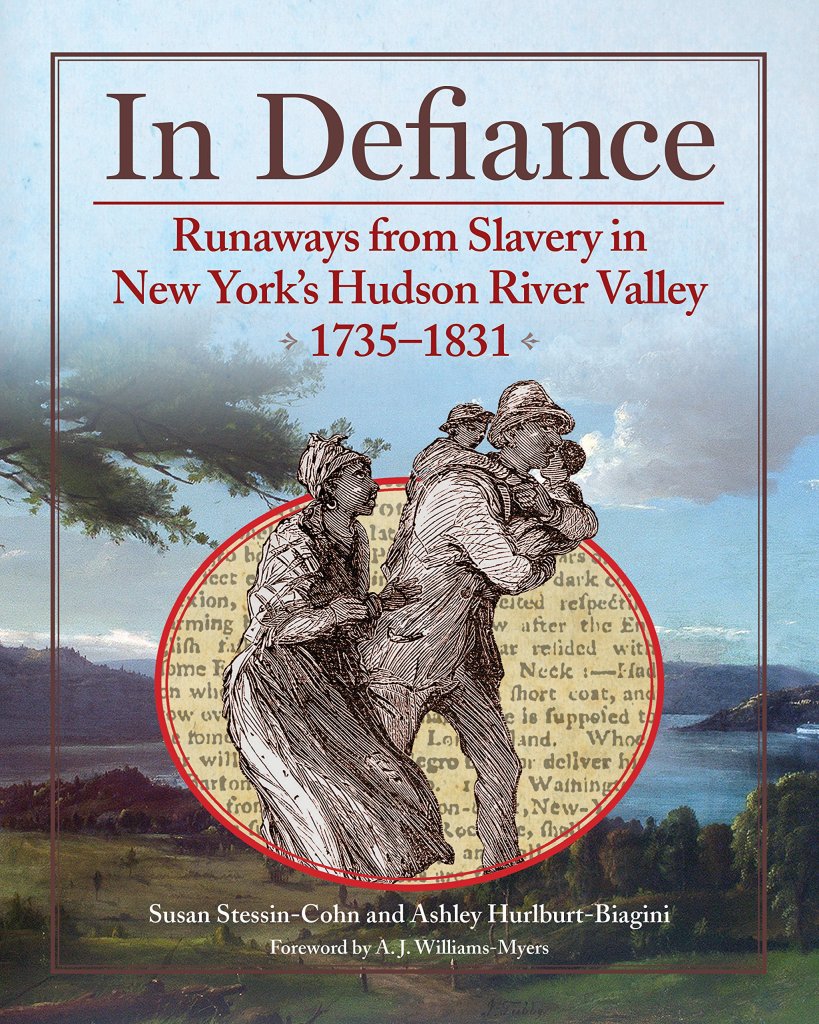
This article is excerpted from the forward to In Defiance: Runaways from Slavery in New York’s Hudson River Valley, 1735-1831 by Susan Stessin-Cohn and Ashley Hulburt Biagini (Black Dome Press, 2016).

In 1805, Ann B. Long of Wappings Creek, Dutchess County, New York, placed a notice for the return of Mary, a young female runaway slave. Long had searched for Mary three years prior, when she fled enslavement at the age of 13. Newspaper notices offering rewards for the capture and return of enslaved human beings were increasingly common in the 18th and early 19th century Hudson River Valley until slavery was officially abolished in New York State in 1827. These notices provide thought provoking glimpses into the lives of New York State’s enslaved population and are the only records that exist for many of the individuals described in the notices.

The vast number of runaway slave notices in this period are indicative not only of how widespread the institution of slavery was in the Hudson Valley, but also speaks to the magnitude of the struggle for freedom being fought by an oppressed and enslaved people. The dangers of running and the consequences if caught were dire and had to have struck abject fear into the hearts of those contemplating such a feat. Yet, for many, the opportunity to live as a human being, out of bondage, able to breathe the air in freedom, was worth the dangers. It was a courageous choice.

The large number of runaway slave notices also gives us a clue to the increasing importance that the enslaved labor force had become to the rise of a vibrant Hudson Valley socioeconomic system. There was an insatiable need for labor in the economic exploits of first the colonial Dutch and later the English. Both colonial powers initially failed to lure families of white tenant farmers to New York to labor on the big estates of the Dutch patroonships and English manors carved out of prime agricultural land in the Hudson Valley. Even with white indentured servants and Native Americans in the workforce, more hands were needed. That labor shortfall was solved through the Atlantic Connection. The Atlantic Connection included the labor-recruiting ground of Africa, the West Indies, and the mainland British colonies of Virginia and South Carolina. Africans had become chattel through capture and sale, were taken across the Atlantic, and were enslaved in the West Indies and the American South. From there, some were sold to Northern owners, although many of the enslaved came directly to the North from Africa.

The runaway slave notices are stark indices of a nation out of step with the tenets of its foundation. Early settlers in the Hudson Valley immigrated to escape political and religious persecution, and yet, upon their arrival here, they saw fit to participate in a culture that removed others involuntarily from their home-lands and forced them to labor for the economic development of a community in which they had no rights. These notices paint a contradictory and inconsistent picture of the nature of slavery juxtaposed against the articulated philosophy of democratic and Christian principles espoused by the enslavers.

Hudson Valley slavery was initially an institution characterized under the Dutch as a “Matter of Custom” where the African as “half free” maneuvered through somewhat of a more open system from 1626 to 1664. As described by Vivienne Kruger, though slavery was a Matter of Custom, “freed Negroes were not legally discriminated against –- no racial legislation existed to restrict their freedom to own property, intermarry with whites, or own white indentured servants.” Nevertheless, the Dutch “[were] vehement supporters of slavery,” as is evident by the inhumane version of the institution constructed under the Dutch West India Company and its holdings in the Caribbean. The time factor (1626-1664) for implanting that version in New Netherlands was cut short with England’s conquest of the colony. Consequently, slavery as a “Matter of Custom” soon metamorphosed under the English into a more viciously closed system, restricting the enslaved African’s access to freedom given that slavery was now characterized by law.

Ann B. Long’s runaway is a “girl named Mary.” Clearly prominent in the notice is the fact of miscegenation; Mary the runaway is described as a mulatto, evidence that despite the degenerative racial classification of the enslaved as less than whites, sexual racial lines were crossed. According to Long, “the reason of her being now advertised is that I have heard of her being at the Nine Partners.” Long is moved to action with the notice three years later because of where Mary was seen, at Nine Partners among the Quakers, longstanding antislavery advocates who would protect Mary – and thus the likelihood that Long could lose her human property.

Why and when Mary decided to become a runaway in defiance of her enslaved status can only be conjectured. Were there family members of hers at Long’s who might have been sold off or fled earlier? Or was she aware of the fact that the 1799 Gradual Emancipation Act was not an articulation for her freedom, but only for those born after that year, and thus her flight from slavery was the only way she might be able to clutch freedom before she died? Mary’s run for freedom positioned her with others who ran before her and after her on a historical continuum stretching back to capture in Africa, through the dreadful Middle Passage, and American enslavement- an integral part of an endless stream of runaways in search of freedom not far distant.

Mary the runaway sought freedom in the shadow of the story of Southern slavery. Her flight from slavery in New York’s Hudson Valley was overwhelmed by that other larger story with its romanticized view of “encouraging the finer moral instincts of paternalism” in the “peculiar institution.” Perhaps Mary was seen as “troublesome property” in a peculiarly psychological model of slavery and represented resistance amid the cries of revolt and revolution. Yet, though overshadowed by that larger Southern story of slavery in America, Mary’s flight was part and parcel of that story as “the violent world surrounding [and engulfing Mary] was a microcosm of in extremis of the American slave system.” The sadism, cruelty, violence, passion, flight, and rebellion, and all the demonical acts of inhumanity perpetrated by the enslaver against the enslaved, so characteristic of Southern slavery, endemically riddled, as well, the very core of Mary’s world- Northern slavery.

Mary’s quest for freedom and the quests of others in these notices reveal images of runaways etched up and down the valley from its most northern extent to its southern terminus abutting New York City. It is an interesting, engaging, and revealing, though at times gripping, view of humanity as chattel in flight from a diabolical instrument of oppression at the hands of fellow humans for the expressed purpose of economic gain. This portraiture, pieced together through the array of runaway notices, is a trove of descriptive information of who the runaways were, to whom they belonged as human property, with whom they ran, their age range, the talents/skills they possessed, their personality characteristics, and their body abrasions/scars- often the end results of violent encounters with their owners. Such master/enslaved encounters “expose the violence and cruelty that were inherent in the slave system.”

Images of that violence and cruelty are evident in that portrait- as characterized by the owner himself in his notice – of the “Indian Servant Wench” in flight from her bondage in North Castle in Westchester County. Kate is 15 years of age and, as a mark of human indignity, she is strapped with an iron collar about her neck as a statement of ownership.

James Gale is a runaway from Judge Horsmanden in New York City. Captured and jailed at Goshen in Orange County, James’s face carries the abrasions/scars of the horrors to which the enslaved were subjected. He has a large scar across his nose, several on his right temple and head, and a large bump on his forehead. James is 23. He and Kate are just two of the many who were subjected to violence and cruelty to make them stand in fear.

The gripping portrayal of Hudson Valley enslaved runaways cries out in silence for refuge. It is no different than the portraiture of that other larger Southern world of slavery, whose images continue to haunt the descendants of both the enslaved and the enslaver. The only difference is scale.

Hudson River Valley Map

Runaway Slave Ads from Hudson Valley

Source: Hodges and Brown, ed. Pretends to be Free (NY: Garland, 1994)

Instructions

  1. List the Hudson Valley towns and counties mentioned in the ads.
  2. List between three and five ways freedom seekers are identified in the ads.
  3. What conclusion (s) can you draw from the spelling and grammar in the ads?
  4. In Ad “D”, why does Chauncy Graham believe Cuff was added in his escape by a white man?
  5. In Ad “E”, Peter is described as a Mollatto or a Mullato. In your opinion, what does this tell us about Peter?
  6. According to Ad “F”, how was Tom able to get a “false Pass”?
  7. In Ad “J”, how was Sambo able to get a pass?
  8. Some of the freedom seekers pretended to be free. What does that tell us about the Hudson Valley at that time?

A. The New-York Gazette, Revived in The Weekly Post-Boy, #227, April 20, 1747. Run away from Theunis De Klerk of Tappan in Orange County, a Negro Man named Sippee, about 30 years of age, of a middle size, is well-set, speaks good and proper English, and has a hoarse voice: Had on when he went away, a brown short watch-coat, a light colour’d red Jacket, a white Jacket bound round the edges with some other colour, and a Felt hat cock’d up and flattened on the Crown. Whoever takes up said Negro and brings him to his Master, or unto William Vredenburgh of New York shall have 40s reward and all reasonable charges paid by Theunis De Klerk.

B. The New-York Weekly Journal, #253, October 2, 1738. Run away from Frederick Zepperly of Rheinbeck in Dutchess County Black Smith, a copper coloured Negro fellow named Jack, aged about 30 years, speaks nothing but English and has been much used to the Sea, Short of Stature, thin Face, strong bearded and hair longer than Negros commonly have and reads English, he had on when he went away an Orange Coloured Drugget Fly Coat somewhat faded, with brass Buttons a Homespun Linnen Coat, two striped Linsey Wolsey Waistcoats and two pair of Breeches the same also one pair of Leather Breeches a pair of Worsted Stockings and a pair of New Blew Yarn stockings, New square toes Shoes with Brass Buckles two homespun Shirts and a very good Hat. Whoever takes up said Run away and secures him so that his Master may have him again or gives notice of him to Henry Beekman, Esq or to John Peter Zenger shall have Forty Shilling reward and all reasonable Charges.

C. The New-York Gazette: or, The Weekly Post-Boy, #542, June 18, 1753. Run away on Sunday the 3rd day of May last, from Jacobus Bruyne, of Bruynswick, in county of Ulster and province of New York, a Negroe Man Slave, named Andrew, aged near 40 year, he is of middle Stature, black skin’d, speaks good English and Dutch: had on when he went away, a coarse Linnen jacket and Trowsers, old shoes and stockings, he has been formerly out of a Privateering with Capt. Tingley, and it is supposed he may attempt to get on board some Vessel carrying him off at their peril. Whoever takes up and secures Said Negroe, so that his master may have him again, shall have Forty Shillings reward, and all reasonable Charges paid by JACOBUS BRUYNE.

D. The New-York Gazette; or, The Weekly Post-Boy, #558, October 15, 1753. Run away on Sabbath Day evening, Sept. 2, 1753, from his Master Chauncy Graham, of Rumbout, in Dutchess County, a likely Negroe Man named Cuff, about 30 years old, well set, has had the Small Pox, is very black, speaks English pretty well for a Guinea Negroe, and very flippant; he is a plausible smooth Tongue Fellow. Had with him a pair of greenish plush breeches about two-thirds worn, and a Pair of russel ditto flowered green and yellow, two white shirts, two Pair of middling short Two Trowsers, one pair of Thread Stockings knit in Squares, one Pair of blue fine wool ditto flowered, one Diaper Cap, one white Cotton ditto, one blue Broad Cloth Jacket with red lining, one blue homespun coat lined with streak’d Lindsey Woolsey, or woolen &c. &c. &c. He is a strong Smoaker. ‘Tis supposed he was seduced away by one Samuel Stanberry, alias Joseph Linley, a white fellow that run away with him, and ‘tis very likely this white man has wrote the Negro a pass; for ‘tis said he has been in Norwalk in Conecticut, and passed there for a free Negro, by the name of Joseph Jennings, and that he was making toward the Eastward. Whoever shall take up and secure said Servant, so that his Master may have him again, shall have FORTY SHILLINGS New-York Money Reward, and all reasonable charges paid by CHAUNCY GRAHAM.

E. The New-York Gazette, Revived in The Weekly Post-Boy, #278, May 16, 1748. Run away the 8th of this instant, from Colonel Francis Brett of the Fish Kills, in Ulster County, a Mollatto slave named Peter, 20, 6 feet high, pretty fair for a Mullato but Negro hair, a scar over both his eyes had on a yellowish Fly Coat of a Broad Cloth, Leather Breeches, grey homespun Stockings, a Beaver Hat, a grey homespun Jacket, a Linnen Shirt, and a Tow Cloth Shirt. Whoever takes up said Negro, and gives Notice to his said Master, or to the Printer hereof,

F. The New-York Gazette: or, The Weekly Post-Boy, #635, March 3, 1755. Run away from the Heirs of Barent Van Cleek, of Poughkeepsie, deceased on Tuesday the 23rd Instant March, a Mulatto colour’d Man Slave named Tom, pock-broken, about 5 feet 10 inches high, a well set likely Fellow, plays well on the Fiddle, and can read and write; perhaps he may have a false Pass: Had on when he went away, a red plush breeches, a full trim’d Coat, a cloth Jacket, and it’s supposed several other clothes: took with him a bay Horse about 13 hands and a half high with a [ ] on his fore head, bridle and sadle: whoever takes up said Negroe, and delivers him to Poughkeepsie, or secures him in a goal, and gives notice thereof to Leonard Van Cleek, or Myndert Veile, of Duchess County, shall receive five Pounds Reward, and all reasonable charges paid by LEONARD VAN CLEEK and MYNDERT VEILE.

G. The New-York Gazette: or, The Weekly Post-Boy, #768, October 10, 1757. Run away from Caleb Ferris, of East-Chester, a Negro Man slave called Joe, aged about 25 years. He is a lusty well fed Fellow every Way, about five Feet Ten inches, thick shoulder’d full round Face, speaks altogether English, his Hair frizzled, being half Indian. He has been voyage privateering, and is a great Fiddler. He has a large Leg and broad Foot, and commonly wears Sailors Habit. He was born at Westchester, and sometimes pretends to be free. Whoever takes up the above described Slave, and will secure him so that his Master can have him again, shall have Six Pounds Reward, paid by CALEB FERRIS.

H. The New-York Gazette; or, The Weekly Post-boy, #1030, September, 30, 1762. Tappan, Sept. 26, 1762. RUN away last Sunday Evening, from his Master, in Orange County, Johannes Blauveldt, Blacksmith, a Negro Fellow, named as he says, Adonia, but by us Duca, he is a yellow Complexion, being a mixed Breed, speaks and reads pretty good Low Dutch, and speaks little English: is a very good Black Smith by Trade, and can make Leather Shoes, and do some thing at the Carpenters Trade, is about 5 and a half Feet high, full Faced, black Hair, but cut off about one Inch long, is 20 or 22 Years old, had on, when he went away, homespun Trowsers, Shirt, gray Waistcoat, and Felt Hat; took with him a check Shirt and Trowsers, a white Shirt and a Pair of blue Cloth Breeches, and one home spun Waist Coat, he had been whip’d the day before he went off, which may be seen pretty much on his right side, he pretends to be free, and perhaps will get a Pass for that Purpose.

I. The New-York Gazette; or, The Weekly Post-Boy, #1082, September 29, 1763. RUN AWAY FROM the subscriber, at Verderica Hook, in Orange County, about Thirty Miles from New-York, on Tuesday the Twentieth Instant, a Negro Man named Harry, about Thirty Years of Age, Five Feet and a Half high, pretty well set, black Complexion, full Faced, has not had the Small Pox, speaks good English and Dutch; two Fingers on his left Hand are somewhat stiff, so that he can neither straighten them, nor shut them close; bred to farming Business: – Had a coarse white Linen Shirt, ruffled at the Boson; a narrow brimmed, half Beaver Hat; a blue broad Cloth Coat, about half worn, four Inches too long waisted for him; a striped linsy Waistcoat, and wide striped Cotton Trowsers; had with him a Pair of grey Worsted, and a Pair of old white Woolen Stockings, and a Pair of very remarkably large broad rim’d Brass Buckles – He carried with him several other wearing Clothes, viz. Two checked Woolen Shirts, blue and white; One or Two Pairs of coarse narrow homespun Tow Trowsers; and had some Money with him, wherewith he may have purchased other Clothes. Whoever secures the said Negro, giving me Notice so that I get him again, shall have Forty Shillings reward, and all reasonable Charges paid by BENJAMIN KNAP.

J. The New-York Gazette; and the Weekly Mercury, #1097, November 2, 1772. Six Pounds Reward. RUN-away from Caleb Morgan, in East-Chester, the eighteenth day of October last, a negro man named Sambo, about 25 years of age, about five feet nine inches high, of a yellow complexion, pretty slim built, a sober looking fellow: Had on when he went away, a blue broad cloth coat, with red lining; a black Manchester velvet jacket without sleeves, a pair of buckskin breeches, and blue stockings, a good pair of thick shoes, two shirts, and an old felt hat; one of his fore fingers (the tip end) is bruised off, so that the skin grows fast to the bone; the other hand the middle finger is something crooked, so that he cannot open it so straight as the others. He talks very good English, and I believe he can talk Dutch, he being brought up among the Dutch the west side of north river. It is mistrusted that a white man has carried him away in order to make sale of him, or has given him a pass; the man’s name that is mistrusted is John Norris, about 30 years of age, often goes down to the Jerseys; perhaps he may have changed his name, he is a lusty man. If any person does discover any white man with the negro, and they have made sale, or does it to make sale of him, and takes up the white man with the negro, and secures them in any of his Majesty’s goals, so that I can come get my negro again, and the white man brought to justice, shall have the above reward; or Five Pounds, and reasonable charges, for the negro alone; paid by CALEB MORGAN. 

Decoder: The Slave Insurance Market

Decoder: The Slave Insurance Market

Michael Ralph and William Rankin

A version of this article originally appeared in the January/February 2017 issue of FP Magazine.
http://foreignpolicy.com/2017/01/16/decoder-slave-insurance-market-aetna-aig-new-york-life/

Recent portrayals of American slavery — from 12 Years a Slave and Django Unchained to Walter Johnson’s River of Dark Dreams and Sven Beckert’s Empire of Cotton — have emphasized the brutal violence on cotton plantations in the years preceding the Civil War. What they miss is that during the same period, slaves that were engaged in other enterprises developed skills that placed them at the heart of industrial capitalism.

Especially after the slave trade was outlawed in 1808, planters found ways to keep human bondage profitable, including smuggling, controlled breeding, and renting slaves to business owners. This last option became especially pervasive in Virginia and the port cities of the Ohio River and Atlantic Coast. A slew of industries — from blacksmithing and carpentry to large-scale railroad construction, coal mining, and steamboat operations — were fortified by the skilled labor of the enslaved.

These men and women became such valuable assets, in fact, that their owners sought to insure them as such. By the 1840s, the number of slaves insured in the South mirrored the number of free whites with life insurance in the North — and both kinds of policies could be issued by the same companies. Slave insurance was one of the earliest forms of industrial risk management, providing an important source of revenue for some of today’s largest multinational insurance companies. It also makes clear that the recent economic crisis, driven by credit default swaps, was not the first time new financial instruments, utilized by AIG and its peers, shaped the lives of U.S. workers. And it won’t be the last.

Occupational Hazards: Steamboat work on the Ohio River and coal mining in Virginia were dangerous jobs and usually involved slaves traveling and living away from their owners. Slaves in coastal cities did not travel as far, but since their specialized skills — whether domestic, artisanal, or industrial — were often procured through short-term contracts, they, too, usually worked without the direct oversight of their owners.

  • In September 1843,Daniel Zacharias of Frederick, Maryland, insured his slave Robert Randall, 27, a brick-maker, for $200. Randall died near the end of the seven-year policy.
  • In October 1853,William Easter of Baltimore insured his slave Jane Cole, 21, for $250 to be a servant in the home of John Denning, a local slave dealer. Cole died just two months later. (Denning later moved out of the city to become a planter; in 1860, he owned 10 slaves.)
  • In January 1855,Thomas Doswell insured seven slaves to work in the coal pits of Kanawha County, in what is now West Virginia. Two older slaves — Nathan and Reuben — were insured for $500 each, and the others — Turner, another slave named Reuben, Richard, Emanuel, and Aaron — were insured for $700. (The average slave price in 1855 was $600.) Doswell owned a large plantation outside Richmond, Virginia; in 1860, he owned 89 slaves.
  • In January 1855,Richmond merchant Joseph Winston insured his slave Andrew, 11, for $400 to work in a cotton factory across the river in Manchester. The policy was for seven years, but Andrew died that December.
  • In February 1857,the hiring agency Tompkins & Co. insured 14 slaves — ages 12 through 50 — to work in the Black Heath Coal Pits in Chesterfield County, Virginia, for one year. They were owned by a few different people, including Joseph Tompkins himself, and the value of the policies was over $800 per slave. (In 1857, the average slave price was $636.)

The Marketplace: Slave insurance was issued by a wide range of companies in the North and South and sold both to people who owned many slaves and to those who owned just a few. There are about 1,300 antebellum-era policies found in the archives of the world’s largest insurance companies, including Aetna, AIG, and New York Life. The archives are incomplete, and evidence suggests that at least 85% of policy records may have been lost over time. Yet the available figures show that the market for slave insurance was mostly urban and especially vibrant in areas where plantation agriculture was in relative decline.

Sources: California Department of Insurance, Slavery Era Insurance Registry, 2002; Nancy Frantel, ed. Chesterfield County, Virginia, Uncovered, 2008; Illinois Department of Insurance, Slavery Era Insurance Policies Registry, 2004; Baltimore Life Insurance Co. collection, MS 175, Maryland Historical Society; and Virginia Historical Society.

Stephen Breyer, Active Liberty: Interpreting Our Democratic Constitution

Stephen Breyer, Active Liberty: Interpreting Our Democratic Constitution

by Mark Vasco

Stephen Breyer’s Active Liberty: Interpreting Our Democratic Constitution (NY: Vintage, 2006) provides an insight on the decision-making process of a United States Supreme Court Justice. Breyer lists several factors that are examined in this process, including language, history, tradition, precedent, purpose, and consequences. Among these factors, Breyer considers purpose and consequence to be the most important. His thesis is that, “courts should take greater account of the Constitution’s democratic nature when they interpret constitutional and statutory texts” (Breyer, 5).

Active Liberty

Breyer’s stance is primarily based upon his belief that the original constitution is too exclusive. He rejects the textual approach taken by many other judges because a literal reading of text can inhibit progress (Breyer, 101). Breyer understands the Framers’ goal as to, “secure the public good and private rights against the danger of (factionalism), and at the same time to preserve the spirit and form of popular government” (Breyer, 29). Accordingly, Breyer attempts to identify how a decision will impact active liberty, before he makes a ruling.

In Active Liberty, Breyer provides several real-world examples of how his philosophy is practically applied. Affirmative action is a particularly controversial subject, as the policy openly favors minorities. However, Breyer refutes the notion that the Constitution is colorblind. Instead, he endorses the idea that the Constitution is color conscious. “The Constitution is color conscious to prevent discrimination being perpetuated and to undo the effects of past discrimination” (Breyer, 79-80). This stance is rooted in Breyer’s interpretation of how affirmative action effectively makes active liberty equally accessible for all Americans.

The main problem with Breyer’s approach is that it can be too subjective. Breyer addresses and attempts to refute this critique at the end of his book, but I remain unconvinced. He claims that his knowledge and involvement enable him to accurately foresee consequences of a ruling. This may be true, and personally, I do agree with many of his views, such as his stance on affirmative action, but maybe that doesn’t matter. Maybe what only matters is basing a ruling on the wording of the Constitution. If there is a flaw in the Constitution, such as its exclusivity, then maybe the Constitution needs to be altered. Obviously changing the Constitution is no easy task, but it might be safer than attempting to circumvent its wording. I don’t think Breyer is doing any harm to our country. However, a different judge with a similar approach could potentially be dangerous. Straying away from a literal interpretation opens the door for subjective approaches that may not be as beneficial as Breyer’s interpretation.

As a Social Studies teacher, this book has many practical uses in the classroom. Understanding and even debating Breyer’s philosophy can be a very suitable topic in a government class. For students, Active Liberty offers a valuable firsthand account of the practical function of a United States Supreme Court Justice. His book displays how a prominent government official is actively taking steps to ensure that power remains with the American people. Accordingly, we as American people must ensure that we are utilizing this power, and we as teachers must ensure that our students are aware of this power.

Harriet Hyman Alonso and Elizabeth Zunon, Martha and the Slave Catchers

Harriet Hyman Alonso and Elizabeth Zunon, Martha and the Slave Catchers

Martha and the Slave Catchers was written for middle grade children and is a story of the effects of the Fugitive Slave Law of 1850 on the lives of two children living in the northeastern area of Connecticut. Here is a brief synopsis of the tale: Danger lurks in every corner of almost fourteen-year-old Martha Bartlett’s life—and all because her mama and papa, agents of the Underground Rail-road in Liberty Falls, Connecticut, decide to claim as their own the orphan of a runaway slave who died in their attic hideaway. They name him Jake.

Martha and Slave Catchers

After the Fugitive Slave Law of 1850 is enacted, two hired slave catchers, Will and Tom, kidnap Jake and take him south to the plantation of Robert Dawes. Always ambivalent about her demanding, mischievous, and learning impaired brother, Martha nonetheless feels guilty about his disappearance. After all, it was her job to watch over him on that very day he was snatched. She pledges to find him and bring him home. Martha becomes part of an Underground Railroad plan to rescue Jake. That journey takes her away from the safe world she has always known to a world full of danger, bigotry, violence and self-discovery.

Missing their connection with famed slave rescuer, Harriet Tubman, Martha and Jake are forced to start their perilous journey north with only each other to depend on. Meanwhile Will and Tom are always close on their heels. Will they receive help from the Underground Railroad in their escape? Will they make it to safety? Will they ever see their home and parents again? These and other questions are answered by the end of the novel.

To accompany the novel, the author’s web page (https://harrietalonso.com/martha-and-the-slave-catchers/) explains the historical context for many episodes in the story. While Martha and the Slave Catchers is a work of historical fiction, there are many historical facts that exist within its pages. The location of the story, Liberty Falls, is not a real place. But if you look at the website of the Connecticut Freedom Trail you will see two maps. They both show antislavery activity and the Underground Railroad in Connecticut. In the upper right hand corner of either map, the Northeast corner of the state, are the towns of Brooklyn and Putnam. Liberty Falls would exist somewhere between these two towns. Martha and Jake’s story ends in Aramintaville, Canada. The name is fictional; a nod to Harriet Tubman whose birth name was Araminta Ross. Tubman led many fugitives to St. Catharines, Ontario, Canada (or Canada West as it was then called) where they developed strong and prosperous communities.

Harriet Hyman Alonso is a Brooklyn based author of five books, including the prize-winning biography, Growing Up Abolitionist: The Story of the Garrison Children, and a recipient of the National Endowment for the Humanities Research Fellowship. She recently retired professor of History at the City College of New York. Martha and the Slave Catchers is her first novel for younger readers.

Thomas B. Allen, Tories: Fighting for the King in America’s First Civil War

Thomas B. Allen, Tories: Fighting for the King in America’s First Civil War

by John Staudt

For a very long time one of the most misunderstood topics of the American Revolution was the role of the American Loyalists or Tories. The historiography of the Revolution, which has been overly one-sided in favor of the American patriots, has often served to perpetuate this confusion. In the past decade or so, however, a number of excellent scholarly and popular works has sought to correct these shortcomings. Among the best of these books are Judith L. Van Buskirk’s Generous Enemies: Patriots and Loyalists in Revolutionary New York (2002), Ruma Chopra’s Unnatural Rebellion: Loyalists in New York City during the Revolution (2012) and Liberty’s Exiles: American Loyalists in the Revolutionary World by Maya Jasanoff (2013). Each one of these authors focus on different aspects of American loyalism. Buskirk examines how preexisting family ties and other relationships confounded relationships between the Tories and Patriots living in and around British-occupied downstate New York. Chopra explores how Loyalists who flocked to New York City and its surrounding islands seeking refuge behind British lines were bewildered by the disregard and lack of support they received by those who they believed were there to defend them. Jasanoff’s work does an excellent job illuminating the refuge crisis of the 60,000 or so Americans who took flight during post-war loyalist exodus to such far-flung places throughout the British Empire as England, Jamaica, India, Sierra Leone, and Canada.

Tories

Thomas B. Allen’s Tories: Fighting For the King in America’s First Civil War (New York: HarperCollins, 2010) takes a more universal approach then the books previously mentioned. In his work, Allen provides a tremendous amount of information about the Loyalists from the political protests in the 1760s through the post-war period. Although his book examines the lives of Tories across all of North America, his greatest focus is on their experiences in the middle and northern colonies as well as across the frontier. His main premise is that the American Revolution was in reality America’s first civil war which tore families, communities and church congregations apart. What began as a hotly contested debate over who should wield political power, the King and his ministers or the Continental and provincial Congress, eventually deteriorated into an agonizing “savage fury” of pillage, devastation and murder. Allen estimates that American Loyalists numbered nearly half a million out of a colonial population of around 2.5 million including a half million enslaved people. Although the book is not a military history of the war, Allen spends a lot of time examining the military contributions of the Loyalists and determines that out of 772 engagements Tories were involved in 576 of them. By the end of America’s War for Independence, the fighting they took part in turned into a virtual blood bath in which Americans slaughtered Americans and sometimes for reasons unrelated to the political issues of the war.

One of the most important contributions Allen’s book makes to the literature is its depiction of the barbarous ferocity that accompanied the agonizing birth of our nation. This is especially true for those areas that were occupied by the armies of both sides. New York City and its environs, including Long Island, coastal New Jersey and southern Connecticut, is a case in point. Following the Battle of Brooklyn in August 1776 and the subsequent battles that drove Washington’s army across the Hudson into New Jersey, the British occupied New York for seven years, longer than any other area during the war. Being caught behind the lines complicated the already perplexing matter of allegiance for both Patriots and Tories alike. Cut off from the mainland by the Royal Navy and confronted with armed Loyalists supported by swift moving British cavalry and light infantry roaming their streets, residents of the colony had no choice but to submit. Residents who had not fled hoped that by surrendering they would be granted the clemency promised by British commanders to all those who “peaceably submitted and supported his Majesty’s forces.” Most adult male inhabitants promised British leaders their “true allegiance” and requested that the commander restore the country to “his Majesty’s protection and peace.” In addition, they begged for clemency and promised to reject all of their prior resolutions and orders issued by the rebel Congress and avowed their allegiance to the British Crown. British officers threatened residents with conscription if they did not voluntarily raise men for the provincials. As Allen explains, local requirements for provincial troops were satisfied by Queens County Loyalists and refugees from other colonies to lower New York.

Throughout the war, the British recruited “Negroes as well as whites” into Loyalist companies. For example, John Thompson, a free black farmer in Riverhead, Long Island served as manservant and confidential messenger to Col. Edmund Fanning, secretary to royal Gov. William Tryon. At the end of the war, Thompson became a Loyalist refugee who evacuated with the British army from Long Island. African-American New Yorkers exploited the need for manpower on both sides. A number of men hired themselves out to the Americans as laborers, teamsters, drivers, commissary attendants and pilots along Long Island’s inland waterways or served on privateers; positions not open to them in peacetime. Meanwhile, the British, rather than trouble themselves with confiscating slaves, promised fugitives who deserted their rebel masters “full security to follow within their lines any Occupation which he shall think proper.” Consequently, numerous runaways served with British units as guides, couriers, cartmen, carpenters, and the like for “the Quartermaster General’s Department, the Wagonmaster, or the Forage and Provision departments.” As Edwin Burrows and Mike Wallace explain in their book Gotham: A History of the City of New York to 1898, the “autonomy, and self-confidence of New York’s freedmen were unmistakable and got a good deal of attention throughout the colonies. ‘Ethiopian Balls,’ where African Americans and British officers mingled freely, drew particular criticism in the rebel press.”

Although the British made limited use of New York’s black population they ignored the few hundred Native American families living on Long Island even when the men volunteered. In March 1778, Colonel Guy Johnson, Superintendent of Indian Affairs in New York, met with the Montaukett Indians who told him that although they were “few in number and surrounded by disaffected people” they offered their services “whenever the General [Howe] shall please to make use of them.” Long Island’s Indian population had hoped to win favor with the British, after years of suffering from local ordinances that limited their freedom of movement, as well as diminished their hunting and fishing rights. Although there are no available records indicating why the British never tried to co-opt the assistance of the Shinnecocks or Montauketts living on Long Island, perhaps since the Indians were so weak in number and resources imperial commanders saw them as potential burdens rather than effective allies. To make matters worse, the war cut off most of the income of the Montaukett agricultural workers when local white farmers became refugees to New England or stopped cultivating their fields in response to British plundering. As Allen points out in Tories, although reluctant to utilize Native Americans living in lower New York, the British readily turned to them to supplement Regular and Loyalist troops fighting along the frontier in Upstate New York.

Regardless of race and residence, as Tories and other books point out, it did not take long for the war in occupied New York to deteriorate from a fight for political independence to a murderous killing, plundering free-for-all devoid of any concern for human dignity or respect of law. The British and Americans robbed, beat and pillaged Loyalists, Patriots and neutrals alike. After the war ended in 1783, Allen claims that 80,000 Tories left the new United States; many starting new lives in Canada. About 2,000 formerly enslaved African-Americans, who were given their freedom for joining the Loyalists, migrated to Africa where they founded what is now Sierra Leone.

Allen has written or coauthored more than 30 books on a wide variety of subjects relating to the American Revolution and other topics including the critically acclaimed children’s book George Washington, Spymaster and Spy Book the Encyclopedia of Espionage. In Tories, Allen makes extensive use of a wide range of primary sources including among others, British archival sources, military orders, state and colonial archives, as well as personal letters and journals. There is a website that accompanies Tories (http://www.toriesfightingfortheking.com/) that may prove useful for college and high school students in U.S. history and social studies classes. The website provides access to a number of primary source materials including a study of the engraving by H. Moses after Benjamin West’s painting Reception of the American Loyalists by Great Britain in the Year 1783, as well as records transcribed from the collections of the Massachusetts Historical Society and the Colonial Albany Social History Project. The site also contains lists such as the names and units of American Loyalist Troops (1775-84), Anti-Tory Laws Passed during the Revolutionary War listed State by State and a useful American Revolution Timeline.

Celebrating the 400th Anniversary of the House of Burgesses – July 30, 2629

Celebrating the 400th Anniversary of the House of Burgesses – July 30, 1619

Hank Bitten, Executive Director, New Jersey Council for the Social Studies

The teaching of colonial American history and civics in the first months of the 2018-19 school year offer a unique opportunity to celebrate the foundations of American democracy! Most lessons on the colonial period are in the beginning of the academic year and the 399th year is the best time to teach the historical significance of the 400th anniversary! It’s a milestone event

During “the starving time” of 1618-19, Jamestown was under martial law. In April 1619, the new governor, George Yeardley arrived and announced that the Virginia Company voted to establish a legislative assembly in the colony. The first assembly met on July 30 in the pews reserved for the church choir in the church at Jamestown and in 1700 was moved to Williamsburg.

The first law passed in the House of Burgesses was to meet in the local church: “The most convenient place we could finde to sitt in was the Quire of the Churche Where Sir George Yeardley, the Governor, being sett downe in his accustomed place, those of the Counsel of Estate sate nexte him on both hands excepte onely the Secretary then appointed Speaker, who sate right before him, John Twine, clerke of the General assembly, being placed nexte the Speaker, and Thomas Pierse, the Sergeant, standing at the barre, to be ready for any service the Assembly shoulde comaund him. But forasmuche as men’s affaires doe little prosper where God’s service is neglected, all the Burgesses tooke their places in the Quire till a prayer was said by Mr. Bucke, the Minister, that it would please God to guide and sanctifie all our proceedings to his owne glory and the good of this Plantation. Prayer being ended, to the intente that as we had begun at God Almighty, so we might proceed with awful and due respecte towards the Lieutenant, our most gratious and dread Soveraigne, all the Burgessess were intreatted to retyre themselves into the body of the Churche, which being done, before they were fully admitted, they were called in order and by name, and so every man (none staggering at it) tooke the oathe of Supremacy, and entred the Assembly.”

(An order concluded by the General assembly concerning Captaine Warde, July 30th, 1619, at the opening of the said Assembly.)

Jamestown Church

One important reason for the success of the American Revolution is with the traditions of these small colonial legislative bodies dedicated to protecting the rights of Englishmen, determining taxes, and making laws on local matters. King James 1 attempted to dissolve the assembly but the Virginians persevered. The colonies of Spain and France were ruled by divine right monarchs and the lessons of history are harsh with popular revolutions in France (1789), Russia, 1917), and China (1949) giving rise to rulers (i.e. Napoleon, Lenin, Mao) more autocratic than the ones the people rebelled against.

The first 22 representatives or burgesses represented 11 plantations in an assembly with Governor Yeardley and the Virginia Council. Representatives had to be male, white, and property owners. One of their first actions was on a fair price for the tobacco trade.

“This being dispatched we fell once more debating of suche instructions given by the Counsell in England to several Governors as might be converted into lawes, the last whereof was the Establishment of the price of Tobacco, namely, of the best at 3d and the second at 18d the pounde. At the reading of this the Assembly thought good to send for Mr. Abraham Persey, the Cape marchant, to publishe this instruction to him, and to demaunde of him if he knewe of any impediment why it might not be admitted of? His answere was that he had not as yet received any suche order from the Adventurers of the in England. And notwithstanding he sawe the authority was good, yet he was unwilling to yield, till suche time as the Governor and Assembly had layd their commandment upon him, out of the authority of the foresaid Instructions as followeth:

By the General Assembly. “We will and require you, Mr. Abraham Persey, Cape Marchant, from this daye forwarde to take notice, that, according to an article in the Instructions confirmed by the Treasurer, Counsell and Company in Englande at a general quarter courte, both by voices and under their hands and the Comon seall, and given to Sir George Yeardley, knight, this present governour, Decemb. 3, 1618, that you are bounde to accepte of the Tobacco of the Colony, either for commodities or upon billes, at three shillings the beste and the second sorte at 18d the punde, and this shalbe your sufficient dischardge. James citty out of the said General Assembly, July 31, 1619.” http://digitalcommons.liberty.edu/cgi/viewcontent.cgi?article=1296&context=masters

House of Burgesses Assembly

Teaching about the 400th anniversary is an opportunity to remember the contributions of Patrick Henry, Edmund Randolph, Peyton Randolph, George Mason, William Byrd, George Washington, John Marshall, Thomas Jefferson and others in the House of Burgesses. There are excellent resources on the web for developing lesson activities on the House of Burgesses including simulations, analysis of documents, images, videos, and biographies. In November 2018, Americans will vote for their representatives in Congress and one-third of the nation will also be voting for their senators. This is an opportunity for students to understand the evolution of democracy in America from its historic origins in 1619, the importance of the franchise to vote, expansion of democracy, and the issues their representatives are voting on.

The extension of the House of Burgesses becomes real for students with applications to the local Board of Education, student government, and city or town councils. Students as citizens need to be educated about the people who are up for election, budget decisions, local issues, public forums, voter registration, how their representatives voted on issues, and the election process.

The House of Burgesses experienced difficulty within its first 30 years because of corruption, the unequal distribution of wealth, the concentration of power in the hands of Governor Berkeley and his supporters, attempts to prevent elections, and Bacon’s armed rebellion in 1676. After the defeat of Bacon’s Rebellion, Nathaniel Bacon was hanged and racist laws were passed. Thomas Jefferson failed in his legislative efforts to end the slave trade and provide freedom for children of a mother who was a slave. The secret of America’s political strength during the past 400 years has been with the perseverance of ordinary citizens who are committed to a durable government. As a result of dedicated representatives in the colonies and over time in our 50 states and territories, democracy has endured.

Photo-Burgesses

The House of Burgesses was relocated to Williamsburg in 1700

Our modern democracy has also experienced difficulty because of corruption, restricting freedoms, forced migration, internment of citizens, and segregation. There are examples of laws that were passed by only one vote, votes influenced by political and economic influence, and laws that were declared unconstitutional. One reason why representative government worked in Virginia is that the burgesses needed the votes of the people to get re-elected. As a result they needed to pass laws that helped the people and maintained a positive relationship with them.

We are living in a time when too many Americans are dissatisfied with their representatives in Washington and in their states and communities. We are frustrated by gridlock, uncertain about the facts, at times uninformed on the issues or candidates, and influenced by the media. Although our representatives are part of our community, we find it difficult to communicate with them and often have no idea as to how they voted on a bill.

According to Jon Meacham in Thomas Jefferson: The Art of Power, Thomas Jefferson learned from his days in the House of Burgesses that constant conversation between the president and the lawmakers was important and necessary. Jefferson thought that “if the members are to know nothing but what is important enough to put into a public message…it becomes a government of chance and not of design. The president had to be able to trust lawmakers with insights and opinions that he might not offer a broader audience,, creating a sense of intimacy and common purpose. Making speeches at other politicians – or appearing to be only making speeches at them – was not the best way to enlist their allegiance or their aid, nor to govern well.” Let your students debate if collaboration or twitter messages best facilitates consensus among lawmakers.

The 400th anniversary is an opportunity for student discussion, presentation, simulation, and engagement in their local community and school. It is a time to become better acquainted with the people who represent them and make decisions for their school district, community, state, and our national government. With all the avenues available for communication – Facebook, live streaming, twitter, Instagram, newspapers, radio and television, and personal attendance at a public meeting, everyone should understand the problems, policies, and reasons for change. During this anniversary year, educate students on the ideas and positions of their decision-makers. The content and inquiry by design model is an integral part of the social studies curriculum

New Jersey Standards, K-5

6.1.4.A.1Explain how rules and laws created by community, state, and national governments protect the rights of people, help resolve conflicts, and promote the common good.
6.1.4.A.2Explain how fundamental rights guaranteed by the United States Constitution and the Bill of Rights (i.e., freedom of expression, freedom of religion, the right to vote, and the right to due process) contribute to the continuation and improvement of American democracy.
6.1.4.A.3Determine how “fairness,” “equality,” and the “common good” have influenced new laws and policies over time at the local and national levels of United States government.
6.1.4.A.4Explain how the United States government is organized and how the United States Constitution defines and checks the power of government.
6.1.4.A.5Distinguish the roles and responsibilities of the three branches of the national government.
6.1.4.A.6Explain how national and state governments share power in the federal system of government.
6.1.4.A.7Explain how the United States functions as a representative democracy, and describe the roles of elected representatives and how they interact with citizens at local, state, and national levels.
6.1.4.A.8Compare and contrast how government functions at the community, county, state, and national levels, the services provided, and the impact of policy decisions made at each level.
6.1.4.A.9Compare and contrast responses of individuals and groups, past and present, to violations of fundamental rights (e.g., fairness, civil rights, human rights).
6.1.4.A.11Explain how the fundamental rights of the individual and the common good of the country depend upon all citizens exercising their civic responsibilities at the community, state, national, and global levels.
6.1.4.A.12Explain the process of creating change at the local, state, or national level.
6.1.4.D.5Relate key historical documents (i.e., the Mayflower Compact, the Declaration of Independence, the United States Constitution, and the Bill of Rights) to present day government and citizenship.
6.1.4.D.6Describe the civic leadership qualities and historical contributions of George Washington, Thomas Jefferson, and Benjamin Franklin toward the development of the United States government.
6.1.4.D.14Trace how the American identity evolved over time.

Grades 6-8

6.1.8.A.2.b  Explain how and why early government structures developed, and determine the impact of these early structures on the evolution of American politics and institutions.

Grades 9-12

6.1.12.A.1.a  Explain how British North American colonies adapted the British governance structure to fit their ideas of individual rights, economic growth, and participatory government.
6.1.12.A.1.bAnalyze how gender, property ownership, religion, and legal status affected political rights.

New York Standards, 11.1c

  • Colonial political developments were influenced by British political traditions, Enlightenment ideas, and the colonial experience. Self-governing structures were common, and yet varied across the colonies.
  • Students will examine colonial political institutions to determine how they were influenced by Enlightenment ideas, British traditions such as the Magna Carta, and the colonial experience.
  • Students will examine colonial democratic principles by studying documents such as the Mayflower Compact and the Maryland Toleration Act of 1649, colonial governmental structures such as New England town meetings and the Virginia House of Burgesses, and the practice of the right of petition in New Netherland.

The Hornblower Decision and Fugitive Slaves in New Jersey

The Hornblower Decision and Fugitive Slaves in New Jersey

John Zen Jackson

Reprinted with permission from the February 12, 2018, issue of the New Jersey Law Journal. © 2018 ALM Media Properties, LLC. Further duplication without permission is prohibited. All rights reserved.
https://www.law.com/njlawjournal/sites/njlawjournal/2018/02/12/the-hornblower-decision-and-fugitive-slaves-in-nj/?slreturn=20180112102020

Joseph C. Hornblower was the Chief Justice of the New Jersey Supreme Court from 1832 to 1846. He died on June 11, 1864. His New York Times obituary described him as a generally well-regarded lawyer and jurist whose decisions were “marked by learning, legal acumen and high moral principle.” His claim to historical importance arises out of his 1836 opinion in State v. Sheriff of Burlington County identifying constitutional deficiencies in the Fugitive Slave Act (FSA) of 1793.

This federal statute allowed escaped slaves to be reclaimed and also permitted misidentified free African-Americans to be kidnapped and placed into slavery. Unfortunately the full opinion was not officially published. There are contemporaneous newspaper accounts summarizing the ruling. In 1851 the opinion’s most important part was published in a pamphlet. It is reprinted in Fugitive Slaves and American Courts: The Pamphlet Literature, Series II, Volume 1, 97-104 (Paul Finkelman ed. 1988).

Overview of the Historical Context

Slavery existed in New Jersey from early colonial times until the Thirteenth Amendment to the Constitution abolished slavery in 1865. In fact, New Jersey was the last Northern state to outlaw slavery. Legislation passed in 1804 had only provided for the “gradual abolition of slavery.” A statute enacted in 1846 stated that “slavery in this state be and it is hereby abolished” but left all the former slaves as “apprentices” or “servants” of their owners for the rest of their lives. That only changed with the Thirteenth Amendment.

The attitude toward slavery in New Jersey has been attributed to the supposed fact that the southern one-third of the state is below the Mason-Dixon Line, the traditional dividing line between free and slave states. However, the Mason-Dixon Line does not actually cross New Jersey. Furthermore, until 1865, the northern counties had more slaves than the southern counties. Most of the southern counties were part of West Jersey, heavily influenced by the Quaker settlers who dominated the area’s population and opposed slavery. The early Quaker abolitionist John Woolman was from Burlington County.

Nonetheless, the southern counties were the frequent hunting ground of slave-catchers tracking down escapees from the slave-holding states who came across the Delaware River into Salem County. The constitutional basis for pursuing the escapees was Article IV, Section 2:

No Person held to Service or Labour in one State, under the Laws thereof, escaping into another, shall, in Consequence of any Law or Regulation therein, be discharged from such Service or Labour, but shall be delivered up on Claim of the Party to whom such Service or Labour may be due.

In 1793 Congress implemented the Fugitive Slave Clause with the FSA. This statute allowed an owner or an owner’s agent to seize someone allegedly a fugitive slave and have them brought before a federal judge or a local magistrate. With undefined “proof to the satisfaction” of the judge or magistrate that the person seized was really a fugitive and was owned by the claimant, the judge or magistrate could issue a certificate authorizing the claimant to remove the fugitive to the state from which he or she had allegedly fled. Even if the captured person contested the claim, no hearing was required. There were no procedural safeguards. The FSA authorized the imposition of criminal penalties on any person who obstructed the capture of a fugitive, or who rescued, aided or concealed the fugitive. Early case law provides an unsettling attitude toward the subject matter of these laws.

In Gibbons v. Morse (1821), New Jersey’s highest court declared: “In New Jersey, all black men are presumed to be slaves until the contrary appears.” A 1798 New Jersey statute supplemented the federal FSA but was replaced in 1826 with another statute requiring a warrant from a local judge before a fugitive slave could be seized and removed. Procedural safeguards were still largely absent.

The Helmsley Case

In 1835 a Maryland slave-owner’s representatives came to New Jersey seeking a warrant for a man known as Alexander Helmsley, claiming Helmsley was actually Nathan Mead who escaped from Maryland in 1820. He was brought before a Burlington County judge. Over several days witnesses from Maryland testified they recognized Helmsley as Nathan.

The Burlington County judge was expected to rule that Helmsley was the claimant’s escaped slave and order his return to Maryland. However, one of Helmsley’s lawyers traveled overnight to Newark to obtain a writ of habeas corpus from Chief Justice Hornblower. The writ was served on the sheriff just as the judge was rendering his decision to send Helmsley back to Maryland.

The writ brought the case to the New Jersey Supreme Court. A three-justice panel in Trenton ruled on March 3, 1836, that Helmsley was to be discharged from custody of the sheriff. Following his release, Helmsley relocated to Canada.

Hornblower’s Analysis

In his opinion for the court, Chief Justice Hornblower noted that both Congress and the New Jersey General Assembly had enacted legislation concerning the Fugitive Slave Clause but with different modes of proceeding. Acknowledging the Constitution and federal law pursuant to the Constitution as “the supreme law of the land,” he questioned Congress’ constitutional authority to determine the manner for resolving a claim in which a person in a free state is to be arrested and transferred to another simply because they are alleged to be slaves. He pointed to the text and structure of the Fugitive Slave Clause in Article IV rather than Article I. Nothing in it gave Congress power to pass such a law. Furthermore, the Clause only required returning those who actually owed service and not those who were merely claimed to have that obligation. While his comments regarding lack of congressional power to enact the legislation presaged a declaration of unconstitutionality, the Chief Justice said it was not necessary to rule on that since the case before him had been based on the New Jersey statute enacted in 1826 and not the 1793 FSA. He highlighted features of the state law. It allowed seizure and transport of a person out of the state with only a summary hearing before a single judge without a jury or right of appeal. Hornblower posed the rhetorical question: “Can such a law be constitutional?” The opinion has several instances of impassioned writing regarding a person “dragged in chains” and being “falsely accused of escaping.” Responding to the contention that a seized suspected fugitive would eventually have a hearing, the Chief Justice wrote:

What, first transport a man out of the state, on the charge of his being a slave, and try the truth of the allegation afterwards separate him from the place, it may be, of his nativity — the abode of his relatives, his friends, and his witnesses — transport him in chains to Missouri or Arkansas, with the cold comfort that if a freeman he may there assert and establish his freedom! No, if a person comes into this state, and here claims the servitude of a human being, whether white or black, here he must prove his case, and here prove it according to law . . .

For Hornblower, this meant a jury trial. The Chief Justice also rejected the presumption of slave status based on skin color and “the danger of oppression and injustice by an unfounded or mistaken claim.” He pointed out that by statute as of the next Fourth of July no person of color in New Jersey under the age of 32 would be a slave because pursuant to the statute providing for “gradual abolition” of slavery “[a]ll that have been born since the 4th July, 1804, are freemen.”

Aftermath

In apparent response to the 1836 Helmsley decision, in 1837 the legislature revised the procedures regarding fugitive slaves to provide for a jury trial. In 1844, New Jersey adopted a new constitution. Article I stated that “All men are by nature free and independent, and have certain natural and unalienable rights, among which are those of enjoying and defending life and liberty, acquiring, possessing, and protecting property, and of pursuing and obtaining safety and happiness.” In State v. Post (1845), the court considered the contention that adoption of the new constitution abolished slavery. A majority of the Supreme Court ruled that it did not. Chief Justice Hornblower dissented. He retired the next year.

The progressive view set forth in the Chief Justice’s opinion in State v. Sheriff of Burlington County was effectively rejected by the United States Supreme Court in the 1842 decision of Prigg v. Pennsylvania, but without any reference to the unpublished New Jersey decision. In his opinion for the court, Justice Joseph Story upheld the constitutionality of the FSA of 1793. This statute was later replaced by the more punitive Fugitive Slave Act of 1850. In correspondence dated Sept. 15, 1851, with Salmon P. Chase, the retired Joseph Hornblower commented on this new Fugitive Slave Act: “The law of 1850, even if Congress has a right to legislate on the recapture of runaway slaves, is a disgrace to our Country, an affront to humanity, an insult to the great principles of the common law, and calculated to provoke disunion and rebellion.” This was a prescient comment. The Fugitive Slave Act of 1850, often referred to as the Man-Stealing Act, is considered one of the precipitating factors for the Civil War.

Teaching with Tunes: An Educator’s Guide to utilizing Hamilton in the Classroom

Teaching with Tunes: An Educator’s Guide to Utilizing Hamilton in the Classroom

Juliana Kong and Heather Pollak, Drew University

The American musical Hamilton took not only the history community, but the entire world, by storm when it premiered on Broadway in 2015. One of the most popular, innovative, and significant musicals of all time, Lin Manuel Miranda’s work has been lauded lyrically and musically. His ability to modernize and popularize the history of the American Revolution and founding of our nation through the eyes of former Secretary of Treasury Alexander Hamilton, has earned him well-deserved praise and global recognition. Through contemporary music spanning multiple genres (primarily hip-hop and rap), Miranda has piqued domestic and global interest in this forgotten Founding Father, revolutionizing the way we think about early American history.

Hamilton spans from the pre-Revolutionary period all the way to Alexander Hamilton’s death in 1804, following his infamous duel with Aaron Burr. Hamilton covers the Revolutionary War, the United States’ first two presidencies, the development of political parties, and, of course, the personal drama of Mr. Alexander Hamilton. Embedded in this groundbreaking hip-hop musical are infinite opportunities for educators to increase student engagement, practice with higher order thinking skills, and develop student analysis and inquiry abilities.

Secondary Level

Farmer Refuted- Conflicting Concerns regarding British Rule in pre-Revolutionary America

Teachers may use the Hamilton (2015) song “Farmer Refuted” to develop student understanding and comprehension of the conflicting perspectives and loyalties regarding the American Revolution and concept of going to war against the ruling British King.

Key Questions:

  1. In “Farmer Refuted”, who is supporting the British? What would this person be referred as?
  2. Why is this person supporting the British?
  3. Who is supporting the idea of the Revolution? What would this person be referred as?
  4. Why are these people supporting the idea of Revolution?
  5. What factors might affect people’s loyalties and why do those factors influence people’s beliefs?
  6. How is the Loyalist in “Farmer Refuted” portrayed? The Patriots?
  7. Why might have Lin Manuel Miranda decided to portray them this way?
  8. Is this a necessarily fair portrayal? Why or why not?
Materials:

The Battle of Yorktown (The World Turned Upside Down)- Content Lesson

Teachers may use Hamilton (2015) song “The Battle of Yorktown (The World Turned Upside Down)” to engage student interest in the historical content of the American Revolution and its conclusion.

Activity: With Personal Devices- Yorktown Research and Timeline

  1. Hand out a copy of “The Battle of Yorktown” lyrics to students (electronic or printed)
  2. Have the class watch The Tony Awards performance of “The Battle of Yorktown” and take note of lyrics they do NOT understand
  3. Have students independently research their noted lyrics
    1. Have student post their lyrics and summarized research on the class Padlet timeline
  4. Project class Padlet
  5. Have students rearrange their posts in (what they believe is) chronological order
  6. Summarize the Battle of Yorktown for student clarification

Materials:

Activity: No personal devices- Lyric Scavenger Hunt

  1. Hand out a printed copy of “The Battle of Yorktown” lyrics to students
  2. Have the class watch The Tony Awards performance of The Battle of Yorktown and take note of lyrics they do NOT understand
  3. Give informational lecture on the Battle of Yorktown. Have students write down/take notes when students “find” their misunderstood/mystery lyrics
  4. At the end of the lecture, ask students if anyone found the answer to their misunderstood/ mystery lyric
  5. Take student volunteers’ answers
    1. (ex. “(Lafayette) I go back to France, I bring freedom to my people if given the chance” = Marquis de Lafayette returns to France after the American Revolution to bring the principles and ideals of the Revolution to monarchist France)
  6. Ask if anyone has an unanswered lyric and clarify any information students have questions on.

Materials:

One Last Time- George Washington’s Farewell Address

Teacher can compare and compare and contrast George Washington’s original/abridged Farewell Address to the Hamilton (2015) song, “One Last Time” in order to highlight key concepts and themes that occur within the Address and early American politics.

Key Questions:

  1. What ideas occur in both the original Address and “One Last Time”?
  2. What does that double occurrence say about the personal importance of those ideas to
    George Washington? To us?
  3. What are three concepts in George Washington’s Farewell Address that DON’T appear in “One Last Time”?
  4. Why do you think these concepts don’t appear in “One Last Time”?
  5. Are George Washington’s concerns still relevant to today’s political concerns?

Materials:

The World Was Wide Enough- Aaron Burr and Alexander Hamilton’s Duel

Teachers may use Hamilton (2015) song “The World Was Wide Enough” about the duel between Aaron Burr and Alexander Hamilton (regarding the severe political disagreements and hostile relationship between the two) to introduce students to the historical literacy skill of sourcing and corroboration. Students can compare and contrast “The World Was Wide Enough” with primary source accounts of the legendary duel and determine the accuracy of Hamilton’s interpretation of the duel.

Key Questions:

  1. From whose perspective did Lin Manuel Miranda base
    Hamilton on?
  2. Whose perspective is “The World Was Wide Enough” from?
  3. Which person is “The World Was Wide Enough” more sympathetic towards?
  4. Does this perspective follow the general trend of the musical’s perspective? Why or why not?
  5. Looking at primary sources, who do you (students) think is the “villain” of the duel, Burr or Hamilton? Why?
  6. Why might Van Ness’s and Pendleton’s joint statement on the duel might be a more accurate account than Angelica Church’s?
  7. What is Van Ness’s and Pendleton’s relationship to Hamilton and Burr?
  8. What is Angelica Church’s?
  9. Why might those relationships affect the accuracy of each primary source’s version of the duel?
  10. Based on primary source perspectives, what do you (students) think really happened?

Materials:

Cabinet Battle 1-Cabinet Debate on Economic Policy

Teachers may use the Hamilton (2015) song “Cabinet Battle 1” either in conjunction with “Cabinet battle 2” to identify the fundamental differences between Federalists and Republicans or to analyze Hamilton’s economic plan to establish a national bank.

Key Questions:

  1. What political party was Alexander Hamilton a part of?
  2. What political party was Thomas Jefferson a part of?
  3. What did Hamilton believe the role of government in economic affairs should be?
  4. What did Jefferson believe the role of government in economic affairs should be?
  5. How did their views differ?
  6. What lyrics from the song support Hamilton’s position?
  7. What lyrics from the song support Jefferson’s position?
  8. According to Jefferson, who does not benefit from Hamilton’s financial plan?
  9. What other major issue is referenced in debate?
  10. Why is this issue of importance?
  11. Whose position do you most agree with? Why (use evidence to support your answer)?

Materials:

http://teachers.d11.org/teachers/knoppsa/Documents/Cabinet%20Battle%201%20Lyrics.pdf
https://www.youtube.com/watch?v=X1e93nQakos

Cabinet Battle 2-Cabinet Debate on America’s involvement in international affairs?

Teachers may use the Hamilton (2015) song “Cabinet Battle 2” either in conjunction with “Cabinet battle 1” to identify the fundamental differences between Federalists and Republicans or to critique the cabinets position on whether or not to aid the French in their Revolution.

Key Questions:

  1. What issue/issues are Hamilton and Jefferson debating over?

     2. Summarize, in your own words, the main points of Hamilton’s argument.

  1. Summarize in your own words, the main points of Jefferson’s argument.
  2. Whose argument do you agree with? Why?
  3. Why did George Washington agree with Hamilton?

Predict: How would this decision affect the future of Washington’s administration?

  1. How might this decision impact the United States future relationship with France?

Materials:

https://genius.com/Lin-manuel-miranda-cabinet-battle-2-lyrics
https://www.youtube.com/watch?v=SAc9pchlMWg

Washington On Your SideThomas Jefferson’s decision to resign as Secretary of State

Teachers may use the Hamilton (2015) song “Washington On Your Side” as an extension lesson following “Cabinet Battle 2,” Students can compare and contrast the lyrics and content of the song with primary source letters written by Jefferson leading up to his resignation.

Key Questions:

  1. Why did Jefferson, Burr, and Madison dislike Hamilton?
  2. Why did Jefferson want to resign from Washington’s cabinet.
  3. How did the song and the primary source differ?
  4. What ideas occur in both the original Jefferson’s letters to Washington and the song “Washington On Your Side”?
  5. How do you predict Hamilton and Washington will take the news of Jefferson’s resignation?

Materials:

https://www.youtube.com/watch?v=8j9I-XN1jto
https://genius.com/Lin-manuel-miranda-washington-on-your-side-lyrics (Teacher will have to edit lyrics before distribution)
https://founders.archives.gov/documents/Washington/05-11-02-0095
https://founders.archives.gov/documents/Washington/05-13-02-0212
https://founders.archives.gov/documents/Washington/05-11-02-0015

Non-Stop-The Federalist Papers

Teachers may use the Hamilton (2015) song “Non-Stop” to examine Hamilton’s role at the Constitutional Convention and the battle for ratification that followed.

Key Questions:

  1. Why was Aaron Burr so adamant about not writing Federalist Papers?
  2. What evidence (lyrics) support your (student) answer?
  3. Why did Hamilton feel it was necessary to ratify the constitution?
  4. What was the purpose of the Federalist Papers?
  5. What did Hamilton and the other founding fathers write in the 85 essays of the Federalists Papers?
  6. What arguments did they make in favor of the Constitution?
  7. What was the response from anti-Federalists?
  8. What other concerns did Hamilton express at the beginning of the song?
  9. Predict: How do you think the nation would have been affected if Hamilton did not write the Federalists Papers? Why?

Materials:

https://genius.com/Lin-manuel-miranda-non-stop-lyrics
https://www.youtube.com/watch?v=q9iLfPP4Ps8

The Room Where It Happens-The Compromise of 1790

Teachers may use Hamilton (2015) song “The Room Where it Happens” to analyze the Compromise of 1790 which agreed to place the U.S. capital on the Potomac and America’s financial center to remain in New York by comparing primary sources to Manuel’s version of what happened.

Key Questions:

  1. What historical event is this song about?
  2. What evidence (lyrics) supports that?
  3. What was at stake in this compromise?
  4. Why is this of historical importance?
  5. What was the outcome of the Compromise?
  6. Whose version of the story seems more reliable, Jefferson or Hamilton? Why?
  7. Whose perspective is “The Room Where It Happens” from?
  8. Is this perspective an accurate account of what happened? Why?
  9. How does Jefferson’s account of the event differ or agree with Manuel?
  10. Is his account trustworthy? Why or why not?
  11. Why does Manuel mean by no one

Materials:

https://genius.com/Lin-manuel-miranda-the-room-where-it-happens-lyrics
https://www.loc.gov/rr/program/bib/ourdocs/Residence.html#American