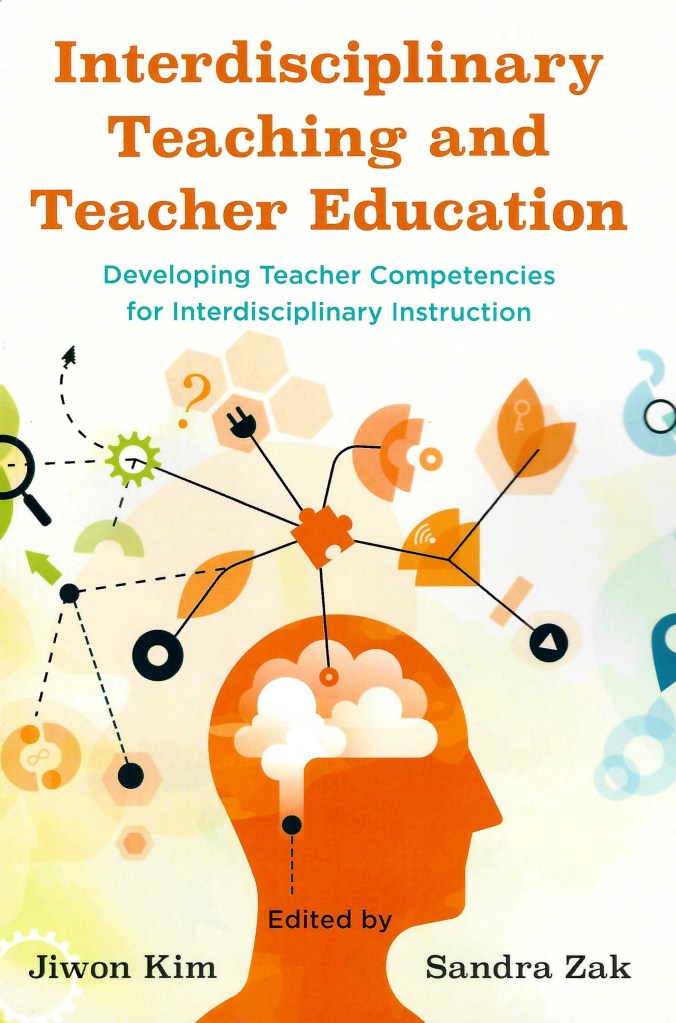
Interdisciplinary Teaching and Teacher Education by Dr. Jiwon Kim and Dr. Sandra Zak

Reviewed by Hank Bitten, NJCSS Executive Director and contributing author.
I am writing to you as a contributing author to Interdisciplinary Teaching and Teacher Education rather than as a reviewer. Through this blog post I am hoping to expand your classroom experience, ask you to begin talking about classroom instruction with your colleagues, and challenge you to develop partnerships or connection groups within and outside of your school. I have the perspective of an educator with more than a half-century of experience as a teacher in elementary, middle, high school, and college classrooms and five school districts.

Public education took a step forward in 1852 when Massachusetts became the first state to pass an Act Concerning the Attendance of Children at School. This was a monumental change because every village and city in Massachusetts was required to have a primary school to teach math and grammar. Students were required to be in school for three months with six weeks or more of continued instruction. Parents who did not send their children between age 8 to 14 to school were fined $20, a little more than a week’s wage for a factory worker. Lessons were passive and based on memory and practice.

Fifty years later in the beginning years of the 20th century, John Dewey dramatically shifted the focus to inquiry and problem-solving. Dewey’s instructional philosophy included brainstorming for solutions, testing hypothesis, experiential learning, and models of student government. His model was revolutionary, emphasized an understanding of the big ideas rather than simplistic true and false or multiple choice answers.

William James, a psychologist, understood the influences of the media on children. Children were exposed to advertising and pictures in newspapers and magazines. The media in the beginning of the 20th century was perhaps just as powerful as today’s social media digital platforms as publications overwhelmed the mailbox of the home instead of the inbox on the phone. James understood motivation, the importance of emotional engagement in learning, and the importance of the educational environment on the character and behavior of students.

My college instruction in the 1960s was influenced by Jerome Bruner.  The emphasis was on cognitive growth and a constructivist model of learning. We were taught concepts and how to use relevant experiences to bring meaning to the content in the curriculum. One of the lessons I applied from Jerome Bruner to the teaching of social studies was the influence of culture on how students learn. 

My education as a teacher was influenced by the sociologist James Coleman.  I developed simulations for understanding the big ideas of revolution, social classes, perspectives, and historical changes. I applied my college experiences of debate, Model United Nations, Model Congress, and Mock Trial to simulations of battles, problems in society, and decisions of presidents.  My graduate studies focused on the French Revolution and the insights of The Anatomy of a Revolution by Crane Brinton.

It is in the context of my simulation game, France, 1789, that interdisciplinary instruction became the focus of my teaching of world history, United States History, and African American History. I integrated literature, art, film, and music into my lessons. The engagement of my students was visible and they were applying knowledge and memory to their experiences.

Dr. Jiwon Kim and Dr. Sandra Zak provide a practical guide with explicit examples of how interdisciplinary models in classrooms and school are essential to learning in a Tik Tok culture and why teachers in departments, faculty in smaller schools, and professors of education need to have discussions about the effectiveness of teaching and the extent that students are learning.

The main concern of social studies teachers is that their students cannot write. We observe  children asking Google for answers, completing assignment worksheets in Google Classroom, and engaging with short videos on BrainPOP and YouTube.  My response to teachers who share with me their observations about how their students are learning in middle school and high school is that they need to be taught how to think before they can write. They need to be asked open-ended questions before they can express what they are thinking.  They need to build memory through interdisciplinary learning experiences.

Interdisciplinary education and interdisciplinary instruction are similar and yet very different experiences for students.  In Chapter 3, Christine Grabowski presents graphic models for planning and practical examples of interdisciplinary connections between social studies, math, reading, and art.  Below are examples relating to civic engagement and spatial recognition.

In Chapter 4, I provide explicit examples for teaching climate, U.S. History, Civics, and world history. Intradisciplinary models with integration of geography, economics, and culture provide students with both relevance and engagement. Below is an example of the diverse contributions of people from New Jersey who have impacted the lives of ordinary people.

In Chapter 5, Dr. Mark Pearcy and I present explanations on why interdisciplinary learning is necessary, models for including this in the education of pre-service teachers, and an example of a school district in New Jersey that has multiple opportunities for high school students.  Below is an example of curriculum connections in a World History course.

Perhaps the most important contribution of the collaborative efforts of Jiwon Kim and Sandra Zak are the prompts suggested for discussions between teachers and curriculum directors.  The importance of shared instruction, differentiated learning, and partnerships with local and academic institutions is a good beginning. I hope you enjoy Interdisciplinary Teaching and Teacher Education as much as I enjoyed contributing to it!

Intentional Use of AI in the Social Studies Classroom for Multilingual Learners


Andy Szeto


The introduction of ChatGPT in 2022 has opened up numerous exciting possibilities for teachers, making AI increasingly relevant in the classroom. For social studies teachers working with multilingual learners, AI offers valuable tools to enhance content comprehension and engagement. The intersection of social studies language demands and AI’s powerful capabilities represents a perfect synergy. The recent proliferation of AI-powered tools has significantly improved educators’ ability to bring social studies content to life and address the diverse needs of multilingual students. This article explores how AI can support these social studies teachers by providing tailored resources and facilitating effective teaching strategies.

In modern social studies education, we must move beyond rote memorization of facts, events, and dates to create more engaging and meaningful experiences for students. The integration of AI presents a significant opportunity to enhance SWIRL—speaking, writing, interacting,
reading, and listening—within lessons.1

1 Andrea Honigsfeld and Maria G. Dove, Collaborating for English Learners: A Foundational Guide to Integrated Practices, 2nd ed. (Thousand Oaks, CA: Corwin, 2020).

For instance, when exploring the decision of the United States to join the League of Nations after World War I, teachers can utilize historical chatbots to offer students diverse perspectives on the issue, fostering interactive learning. An activity could involve students preparing and participating
in a debate, supported by real-time audio translation and captioning to ensure inclusivity. AI can transcribe and translate these debates into multiple languages, allowing all students to engage fully.

Additionally, students can write about the topic in their native language, with AI translating their work for peer review and feedback. Through such applications, AI not only facilitates active participation in all aspects of SWIRL but also enriches the learning experience by bridging language
barriers and promoting deeper engagement with historical content. 2
2Tan Huynh, “3 Strategies to Support English Language Learners in Social Studies,” Edutopia,
January 24, 2022, https://www.edutopia.org/article/3strategies-support-english-language-learners-socialstudies/ .

Teaching academic vocabulary in social studies instruction is crucial as it empowers students to comprehend complex concepts, engage in higher-order thinking, and effectively communicate their
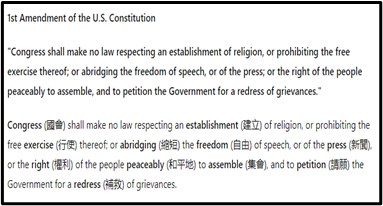
understanding of historical and contemporary issues.3 AI-powered tools can support multilingual learners by offering customized language resources tailored to individual student language needs. These tools can assist social studies teachers by identifying key vocabulary and facilitating the translation or integration of terms in various languages. For example, a government teacher working with primarily Chinese-speaking students, who is covering the First Amendment and individual rights, might use AI to create a presentation slide with key terms highlighted in a complex text. AI can identify these terms in English, translate them into Chinese, and either embed the translations within the text or provide them as a separate reference.

This screenshot displays an output from ChatGPT used to create a handout featuring key vocabulary
words. These words have been identified and translated into Traditional Chinese to assist in understanding and learning.

AI integration in the classroom allows students to use language more expressively and intentionally. It enables teachers to seamlessly plan for the use of academic language while leveraging all of the students’ language resources. In the same example, the teacher can ask students to choose which of the freedoms from the First Amendment they view as most important and discuss their choices with partners in either language, with the aid of AI-powered tools. 3 This approach not only helps students understand critical concepts but also improves their comprehension by offering translations in their native languages, making the content more accessible and inclusive.4

3 Bárbara C. Cruz and Stephen J. Thornton, “Social Studies for English Language Learners: Teaching Social Studies that Matters,” Social Education 73, no.6 (2009): 271–74.
4 WIDA. Focus Bulletin: Translanguaging. Accessed July 20, 2024.

This screenshot displays an output from ChatGPT used to create a handout featuring key vocabulary
words. These words have been identified and translated into Traditional Chinese to assist in understanding and learning.

Additionally, research has shown that cognates can significantly aid language acquisition for multilingual students.5 Social studies teachers can use this concept into their pedagogical strategies to enhance student comprehension. AI-powered tools are particularly useful in this context. For
instance, an American History teacher, serving students who speak French, English, and Spanish might use such tools to generate a slide illustrating all possible cognates in the Gettysburg Address. This visual aid can facilitate students’ understanding of the document. To be inclusive of all students’
languages, the teacher should ensure that the slide includes cognates relevant to each language spoken in the classroom. The table of cognates, produced automatically and efficiently by AI, serves as a valuable resource for these students.

https://wida.wisc.edu/sites/default/files/resource/Focus-Bulletin-Translanguaging.pdf.
5 “Using Cognates to Develop Comprehension inEnglish,” Colorín Colorado, accessed July 19, 2024,
https://www.colorincolorado.org/ellstrategies/cognates.

Screenshot of the output table from the prompt: “Identify any cognates in French and Spanish in the Gettysburg Address.”

AI-powered tools have greatly improved the accessibility of media content, particularly benefiting language acquisition for multilingual students. These tools can produce transcripts and captions for videos found on online platforms such as YouTube and Vimeo, making it easier for educators to
share content in various languages. They can also efficiently create transcripts and captions for student or teacher-created content, presenting material in multiple languages. For instance, a social studies teacher might ask students to share their immigrant arrival stories, which can then be recorded, transcribed, or captioned in multiple languages. This approach honors students’ cultures, facilitates collaboration, and maximizes translanguaging as a pedagogy, helping students understand
themselves and others better. Students can also practice public speaking by presenting their stories to the class and receiving constructive feedback from their peers. With AI tools, feedback can be offered in any language, further supporting diverse language needs and enhancing the learning experience.

Social studies teachers can foster an environment that supports multilingual learners by being flexible with their planning. This involves allowing students to navigate and utilize different language practices as they learn. For instance, in a World History class studying the social aspects during the Industrial Revolution in England, students who speak various native languages might read primary sources translated, in parts or in whole, in their own language, engage in group debates in
English, and annotate texts in any language they choose. Flexibility is crucial here; the goal is to help students process and make sense of what they have learned with direct translation only as needed. AI-powered tools can greatly facilitate this process.

These tools can assist teachers in creating discussion prompts in multiple languages, generating translated texts or primary sources, or even developing multilingual word walls. Such capabilities make it easier to integrate diverse language practices in the classroom and support students’
understanding across different languages.

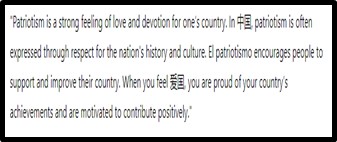
Teachers can design learning objectives that foster bilingualism and multilingualism by emphasizing skills that transcend specific languages. For example, objectives could include: “Students will be able to analyze the concepts of nationalism and patriotism through collaborative research and discussion,” enabling them to engage with diverse perspectives. By utilizing tools like Google Docs or virtual whiteboards, students can collaborate in real-time, contributing in different languages and using AI to translate their contributions effortlessly. AI allows students to navigate and integrate multiple languages in their work, thus enhancing their language acquisition and comprehension. This
approach encourages inclusive participation and deepens understanding of social studies concepts across linguistic boundaries.

Sample Output from ChatGPT: Exploring the question ‘What does patriotism mean to you?’—a
snapshot of sample student reflection on the essence of national pride and identity. 6 (Katie Novak, “Why UDL Matters for English Language Learners,” Language Magazine, March 9, 2018,
https://www.languagemagazine.com/2018/03/09/why-udl-matters-for-english-language-learners/.
7 Anya S. Evmenova, Jered Borup, and Joan Kang Shin, “Harnessing the Power of Generative AI to
AI and Universal Design for Learning (UDL)

AI intersects with Universal Design for Learning (UDL) by promoting flexible language use to support diverse learners, aligning with UDL’s principles of Multiple Means of Representation and Engagement.6

AI can enhance this intersection by using students’ languages as a starting point for brainstorming ideas, creating real-life scenarios that honor their cultures, reducing writer’s block, and producing materials with varying demands and levels.7 Additionally, AI can provide personalized feedback in
multiple languages, facilitate comparisons between student-generated and AI-generated content for reflective learning, and incorporate speech recognition software to support diverse communication needs. For example, a teacher preparing students for a group debate on whether to join the Patriots’ cause or remain loyal to the British at the onset of the Revolutionary War can encourage engagement by allowing students to research in any language and prepare their talking points in both English and their native languages. The debates can then be conducted in the languages of the students’ choosing, with real-time translation and speech recognition software available to support their participation, making the activity inclusive and accessible for all learners. 8
(Support ALL Learners,” Journal of Educational Technology, 2024, https://doi.org/10.1007/s11528
024-00966-x.
(Published May 14, 2024).
8 Cioè-Peña, M. (2022). TrUDL, a path to full inclusion: The intersectional possibilities of translanguaging and Universal Design for Learning.)

The use of AI in education empowers social studies teachers to effectively support multilingual students in academic writing. AI-powered resources, such as Ethiqly and Khanmigo’s Writing Coach, can assist with the writing process by providing sentence starters, suggesting outlines, and brainstorming ideas for multilingual learners.9 In multilingual classrooms where teachers may not be fluent in all languages spoken by their students, this is especially helpful.

AI can also translate and interpret various languages simultaneously, enabling teachers to enhance students’ understanding and expression in their native tongues. For example, a government teacher can use AI to create sentence starters or templates when asking students to write an argumentative
essay on voting rights. These supports can be provided in their native language, in English, or both, as AI offers the flexibility and simplicity needed to accommodate diverse linguistic needs.

The integration of AI in social studies classrooms has emerged as a transformative tool for supporting multilingual learners, offering unprecedented opportunities to enhance engagement, comprehension, and participation. By leveraging AI’s capabilities, educators can create dynamic
and inclusive learning environments that address the diverse linguistic needs of their students. Whether through enhanced media accessibility, flexible lesson planning, or personalized academic support, AI tools enable teachers to break down language barriers and foster a deeper connection to
historical content.
8 TESOL Quarterly, 56(2), 799–812. https://doi.org/10.1002/tesq.3074
9 “AI and Education: Will Chatbots Soon Tutor Your Children?” The New York Times, January 11, 2024,

As we continue to explore the potential of AI in education, it is essential to prioritize intentional and thoughtful integration, ensuring that these tools complement and enhance traditional teaching methods. By embracing AI’s potential, educators can empower multilingual learners, enrich their
educational experiences, and contribute to a more inclusive and equitable learning environment. Through ongoing innovation and adaptation, AI can play a pivotal role in advancing social studies education and supporting the diverse needs of multilingual learners.
https://www.nytimes.com/2024/01/11/technology/ai
chatbots-khan-education-tutoring.html
.