Era 13 Postwar United States: Civil Unrest and Social Change

www.njcss.org

The relationship between the individual and the state is present in every country, society, and civilization. Relevant questions about individual liberty, civic engagement, government authority, equality and justice, and protection are important for every demographic group in the population.  In your teaching of World History, consider the examples and questions provided below that should be familiar to students in the history of the United States with application to the experiences of others around the world.

These civic activities are designed to present civics in a global context as civic education happens in every country.  The design is flexible regarding using one of the activities, allowing students to explore multiple activities in groups, and as a lesson for a substitute teacher. The lessons are free, although a donation to the New Jersey Council for the Social Studies is greatly appreciated. www.njcss.org
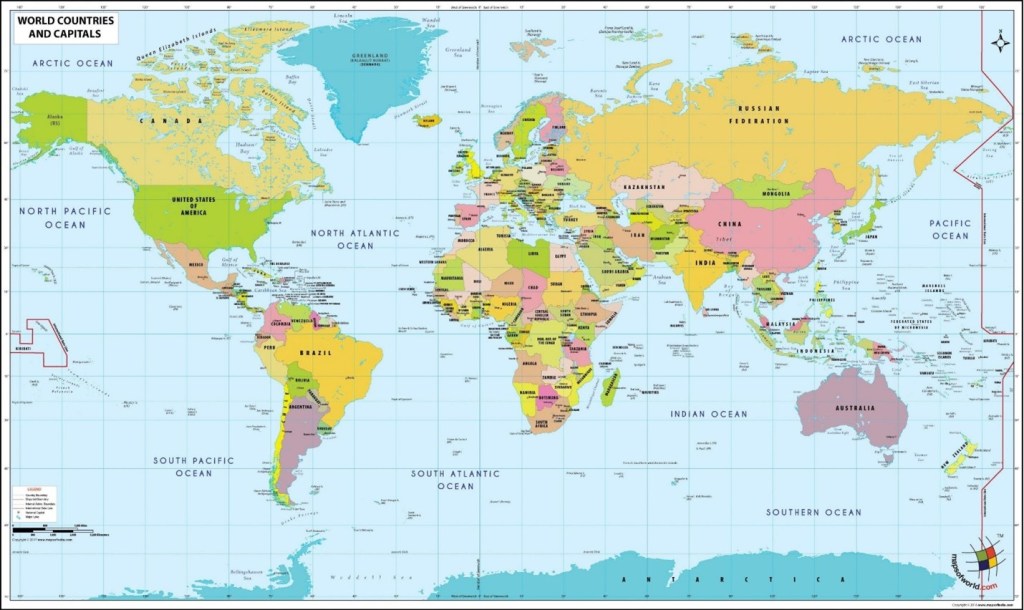
Era 13 Postwar United States: Civil Rights and Social Change (1945 to early 1970s)

The postwar era marked the rise of America as a world power. The new world order established alliance and economic agreements that have led to unprecedented economic growth. However, this period also marks divisions between countries with democratic institutions, authoritarian governments following the ideology of Marxist communism, and developing countries with issues of poverty, disease, debt, and human rights abuses. The United States faced issues or racial segregation, a shrinking middle class, and the expansion of costly federal government programs and a large defense budget causing its national debt to increase. Technology and the media influenced social changes.

Dixiecrats and the Authority of State Government in the United States

The principle of federalism is valued in the way the people of the United States govern themselves. There is a fine line between the division of powers between the states and the national government. The Tenth Amendment specifically protects the powers of the 50 states, and the Ninth Amendment protects the powers of individual citizens.  The powers of the national government are carefully defined and limited.

“The enumeration in the Constitution, of certain rights, shall not be construed to deny or disparage others retained by the people.” (Ninth Amendment)

“The powers not delegated to the United States by the Constitution, nor prohibited by it to the States, are reserved to the States respectively, or to the people.” (Tenth Amendment)

“The President shall be Commander in Chief of the Army and Navy of the United States, and of the Militia of the several States, when called into the actual Service of the United States; he may require the Opinion, in writing, of the principal Officer in each of the executive Departments, upon any Subject relating to the Duties of their respective Offices, and he shall have Power to grant Reprieves and Pardons for Offences against the United States, except in Cases of Impeachment.” (Article 2, Section 2)

“He shall from time to time give to the Congress Information of the State of the Union, and recommend to their Consideration such Measures as he shall judge necessary and expedient; he may, on extraordinary Occasions, convene both Houses, or either of them, and in Case of Disagreement between them, with Respect to the Time of Adjournment, he may adjourn them to such Time as he shall think proper; he shall receive Ambassadors and other public Ministers; he shall take Care that the Laws be faithfully executed, and shall Commission all the Officers of the United States.” (Article 2, Section 3)

The Dixiecrats perceived the legislation passed by the national government (Congress and President Truman) to integrate American society as a threat to their liberty and authority as independent states. In the 1948 presidential election, Southern Democrats walked out of the Democratic National Convention because they disagreed with its civil rights platform. They formed a new political party with South Carolina’s Governor Strom Thurmond as their party’s presidential nominee. Their objective was to deny or ‘nullify’ laws passed by the national government to integrate schools and modes of transportation. Individual states wanted to continue with the 1896 “separate but equal” decision from the U.S. Supreme Court decision in Plessy v. Ferguson

In 1798, Congress passed, and President John Adams signed into law, the Alien and Sedition Acts. The acts outraged Thomas Jefferson and Kentucky declared the Alien and Sedition Acts unconstitutional and “altogether void and of no force” in the state of Kentucky.

Kentucky held that our Constitution was a “compact” among the states that delegated a set of limited powers to the federal government. This meant that “every state” had the power to “nullify of their own authority” any violation of the Constitution. In 1832, South Carolina declared the Tariff of 1832 was unconstitutional, “null, void, and no law” because they disproportionately burdened southern states.

“This Constitution, and the Laws of the United States which shall be made in Pursuance thereof; and all Treaties made, or which shall be made, under the Authority of the United States, shall be the supreme Law of the Land; and the Judges in every State shall be bound thereby, any Thing in the Constitution or Laws of any State to the Contrary notwithstanding.” (Article 6)

Switzerland’s Government
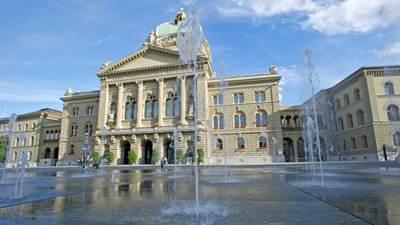
Switzerland is governed under a federal system at three levels: the Confederation, the 26 cantons and the 2,131 communes. The Swiss Confederation of States and its current boundaries were agreed to in 1815 and its current constitution was adopted in 1848. Switzerland has a direct democracy with citizens voting on decisions at all political levels. Switzerland is governed by the Federal Council of seven members representing the different political parties and are elected by the two-house assembly or parliament. whose decisions are made by consensus. Switzerland has a two-house assembly, the National Council is the lower house and represents the people. The upper house is the Council of States and represents the individual cantons. Switzerland also has ten political parties. The powers of cantons include education, culture, healthcare, welfare, law enforcement, taxation, and voting. Cantons have their own constitutions, parliaments, and courts, which are aligned with the federal constitution. 

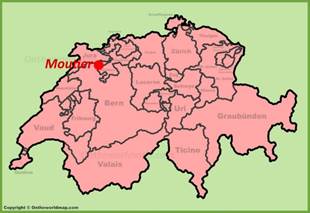
An example of a conflict in Switzerland that challenged the authority of the individual cantons is the city of Moutier with a population of 7,500 in the canton of Bern. Since 1957, the Moutier committee wanted to secede from the canton of Bern and join the canton of Jura. The majority of people in Bern have voted to keep Moutier within its jurisdiction.  Four out of the seven Jura districts narrowly rejected forming a new district. The three northern, majority Roman Catholic, districts voted in favor of a new district.

Since 2013, there have been peaceful protests and at times vandalism. The people of Moutier voted to join the Jura canton making it the second largest town in the canton of Jura. Although a majority, 51%, of the people voted to join, the government and people of Bern declared their vote to be invalid because some people voted whose residency could not be confirmed. There have been nine referendums in the past 70 years with the population voting to secede and join the Canton of Jura in 2021.  The change to the canton of Jura took effect on January 1, 2026, granting Moutier the right to secede from one canton and join another.
Questions:

  1. Should the national government of the United States be able to enforce common laws for holidays, the economy, schools, transportation, public health, and the environment in all 50 states and territories?
  • What are the advantages and disadvantages of the federal system of power between the individual states and the national government in the United States?
  • Does the Swiss government model have any advantages or disadvantages over the structure of government in the United States?
  • What would be the best way to resolve the conflict with the population of Moutier?
  • Will the decision allowing Moutier to secede establish a precedent for future towns or cities to secede in Switzerland?  

Platform of the States Rights Democratic Party, August 14, 1948

Article 1, Section 8: Federalism and the Overall Scope of Federal Power

Keeping the Balance: What a President Can and Cannot Do (Truman Library)

Looking Back: Nullification in American History (National Constitution Center)

Political System of Switzerland

Federalism in Switzerland

Education is primarily a state and local responsibility in the United States. About 92% of the money for elementary and secondary education comes from local taxes and money from the individual states. The role of the federal government in education dates back to 1867 when Congress wanted information on teachers and how students learn. Over time this led to land-grant colleges and vocational schools After World War 2, the federal government enacted the “GI Bill” to provide college and vocational education to returning veterans.

In response to the Soviet launch of a satellite, Sputnik, into space in 1957, Congress passed the National Defense Education Act to provide funds for teachers in the areas of mathematics, science, world languages, and area studies to enable us to compete with the Soviet Union. Perhaps the most significant legislation to increase federal funds for schools came in response to the passage of civil rights laws in the 1960s and 1970s and the Great Society programs to reduce poverty. In 1980, Congress established the Department of Education as a position in the president’s Cabinet. In 2025, the Department of Education’s staff and budget was significantly reduced. The Department of Education before 2025 supported 50 million students in 98,000 public schools and 32,000 private schools. They also provided grants, loans, and work-study programs to 12 million students in colleges and vocational training programs. In addition, they administered $150 billion in loans.

The purpose of federal funds in the United States is to provide equality for disadvantaged students and to improve academic achievement. This is monitored through state assessments based on learning standards. Unfortunately, some states lowered their expectations for student achievement to qualify for the federal funds and the federal government is currently investigating fraud in how federal dollars are being spent.

In the United States, federal funds are designated for after school instruction, English language acquisition, preschools, nutrition, literacy, teaching American history and civics, charter, and  magnet schools.

School Financing in Canada

School funding in Canada is primarily a responsibility of provincial and territorial governments. The federal government contributes money to ensure an equal education for its significant indigenous population. Most funding is from Canada’s 10 provinces. Some provinces provide public funding to private, charter, and religious schools.

The government of Canada views education as a public good from which everyone in society benefits. Education prepares students for jobs, higher education, lowers crime, and reduces poverty. Employers also benefit as educated workers are more productive leading to higher profits for businesses. The only province to fully embrace school choice is Alberta. Canadians fear that school choice may lead wealthier Canadians to benefit from independent, parochial, charter, or magnet schools and this would leave marginalized populations at a disadvantage. Equality and equity are two principles that Canadians value.

According to U.S. News & World Report, the United States is ranked #1 and Canada is ranked #4 in the world in education.

Questions:

  1. Should local communities, states or provinces, or the national government decide the curriculum and funding for public schools?
  2. To what extent should public tax dollars be used to support private or religious schools?
  3. What is the best way to ensure an equal and equitable education for all students?
  4. Should public tax dollars be used for extracurricular activities and sports in schools?
  5. Do you consider education to be a public good that benefits all of society or is it a private good that benefits individual students?
  6. To what extent should public tax dollars be used to support college and vocational education after completing elementary and secondary education?

Elementary and Secondary Education Act

Canada’s Approach to School Funding

Council of Ministers of Education, Canada

De facto Racial Residential Segregation in the United States

The United States ended racial segregation with the Brown v. Board of Education v. Topeka, Kansas decision by the U.S. Supreme Court in 1954, the Civil Rights Act of 1964, and the Voting Rights Act of 1965. However, the United States continues to be a place of segregation, not integration. Residential segregation exists through our zip codes and neighborhoods. Although our laws prohibit discrimination, differences in land use policies, wealth and income, contribute to what is called de facto racial residential segregation. Neighborhoods determine the quality of schools, public safety, quality of drinking water, opportunities for employment, strategies of law enforcement, rates of incarceration, and life expectancy.

A study by the University of California (Source) found that more than 80 percent of metropolitan areas were more segregated in 2019 than in 1990. In 2025, the United States government effectively ended support for DEI (Diversity, Equity, and Inclusion) programs. Racial residential segregation is difficult to    address when resources are not equally available to all communities. The Kerner Commission wrote in its 1968 report that integration is “the only course which explicitly seeks to achieve a single nation” rather than a dual or permanently divided society.

Table 3: Top 10 Most Segregated Metropolitan Statistical Areas (2019, Minimum 200,000 people)

Segregation  RankMetro
1New York-Northern New Jersey-Long Island, NY-NJ-PA
2Chicago-Joliet-Naperville, IL-IN-WI
3Milwaukee-Waukesha-West Allis, WI
4Detroit-Warren-Livonia, MI
5Miami-Fort Lauderdale-Pompano Beach, FL
6Los Angeles-Long Beach-Santa Ana, CA
7Trenton-Ewing, NJ
8Cleveland-Elyria-Mentor, OH
9Philadelphia-Camden-Wilmington, PA-NJ-DE-MD
10 (tied)Beaumont-Port Arthur, TX
10 (tied)New Orleans-Metairie-Kenner, LA

Religious Segregation in India

India ended the caste system in 1947 and yet many Indians live in religiously segregated areas. One of the reasons for this segregation is that friendship circles are often part of the religious community and marriages are within the same faith community. People in southern India are most likely to live in integrated neighborhoods. Indians with a college degree are more accepting of people from other faiths living in their neighborhoods than those with less education.

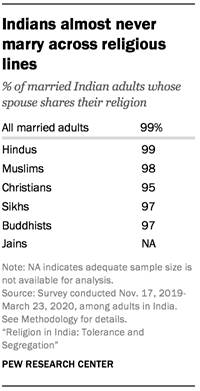
Very few Indians say they are married to someone with a different religion. Almost all married people (99%) reported that their spouse shared their religion. This applies to Hindus, Muslims, Christians, Sikhs and Buddhists.

Indians generally marry within same religion
Religion, especially members of the Hindu faith, is closely connected with views on politics and national identity. Hindus make up 80% of India’s population. A Pew Research study found that 36% of Hindus would not be willing to live near a Muslim, and 31% say they would not want a Christian living in their neighborhood. Jains are even more likely to express such views:. 54% of people who identify with the Jainist faith would not accept a Muslim as a neighbor, and 47% say the same about Christians. People who identify as Buddhist tend to be the most accepting of people from other faith traditions. Eight-in-ten Buddhists in India say they would accept a Muslim, Hindu, Christian, Sikh or Jain as a neighbor.

Members of both large and small religious groups mostly keep friendships within religious lines
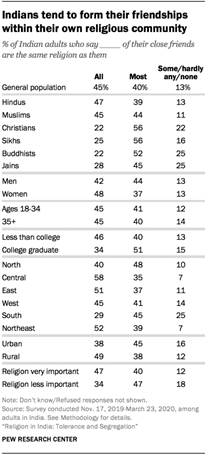
And Indians who live in the Central region of the country are more inclined than people in other regions to say it is very important to stop people from marrying outside of their religion. Among Hindus in the Central region, for instance, 82% say stopping the interreligious marriage of Hindu women is very important, compared with 67% of Hindus nationally. Among Muslims in the region, nearly all (96%) see it as crucial to stop Muslim women from marrying outside the faith, versus 80% of Muslims nationally.

The religious segregation also impacts the quality of education and employment. Muslim student enrollment is dropping. Some states in India are banning religious instruction even though it is protected by the national constitution.

Questions:

  1. Are there common factors (geographic, social, economic, racial, educational, religious, etc.) causing different kinds of segregation in Indian and the United States?
  2. How can countries best establish a social system of equality and integration?
  3. Is segregation present in your school or community?
  4. How do countries/societies unite or define their identity?
  5. Is the problem of segregation about the same, more severe, less severe in India or the United States?

Examples of Government Regulation of Business in the United States

Religious Segregation in India (Pew Research Center)

The Great Society Program in the United States

In 1965, according to the U.S. Census, the poverty rate in the United States was 13.3%. In 2024, it was 10.6%. However, poverty rates often provide mixed data because of inflation, income levels, race, and age. For examples in 1965 45% of the population in South Carolina was below the poverty line and in 2024 the poverty rate for Hispanic (15%), Black Americans (18.4%), and Native Americans (19.3%) is significantly higher than 10.6%. The definition is further complicated by the difference between absolute poverty (below an income of $31,200 for a four-person household) and relative poverty (the quality of life for people in a neighborhood or community).

Social Security and Medicare are for senior citizens who are eligible at age 65 for Medicare and age 67 for Social Security. There are 83 million people, including children, receiving Medicaid, about 25% of the population. The program is offered by the states and the services provided depend on the state. An average estimate for eligibility is an income that is about 140 percent above the federal poverty level ($30,000 for a family of two in New Jersey, as of 2026). In New Jersey, Medicaid costs about 23% of the state’s budget. Approximately 25% of the residents in New Jesey receive Medicaid at an average cost of $2,600 per enrollee. Amounts vary and are higher for families with children and pregnant women.

According to the Congressional Research Services, mandatory spending was only 30% of the federal budget. Today, it is 60%. Medicare and Medicaid together cost nearly $1 trillion annually. Medicare, Medicaid, and Social Security, are the main contributors to our national debt, which is now over $40 trillion (or roughly $59,000 per citizen). According to the Kaiser Family Foundation, Medicare provides health insurance coverage to 68 million Americans. Funding for Medicare is from government contributions, payroll tax revenues, and premiums paid by beneficiaries. Medicare spending is currently about 13.5% of the federal budget or roughly $1.1 trillion. The average cost is $17,000 per enrollee with a $12 billion shortfall in 2023, about $1,300 per enrollee.  The administration of President Trump cut some of the Medicaid programs in 2025 and is negotiating lower prescription drug costs to reduce this shortfall. An aging population and higher health care costs are factors that are expected to continue. Even with these Great Society programs, poverty among the elderly is significantly high. According to USA Today,

“Based on the official measure, which is a simple calculation based on pretax cash income compared with a national threshold, the percentage of seniors in poverty rose to 9.9% last year from 9.7% in 2023, data showed. Using the more comprehensive supplemental measure, which includes noncash government benefits, accounts for taxes and essential expenses like medical care and work-related costs, and adjusts thresholds for regional differences in housing costs, senior poverty rose to 15% from 14.2% − and marked the highest poverty level among all age groups.”

Although these programs are not cost effective and are withdrawing funds from the Trust Fund, they are considered transfer payments because the money is spent at the local and state level which generates income and GDP growth in the economy. They are often referred to as entitlement programs because they were passed by Congress and have been in effect for 90 years (Social Security) and 60 years (Medicaid and Medicare) and revised and expanded over time.

Marshall Plan

In June 1947, Secretary of State George Marshall, announced the U.S. plan to give economic aid to Europe. The offer was made to all of Europe, including the U.S. wartime enemies and the communist countries of Eastern Europe. Sixteen European countries responded by cooperating on a plan that was accepted by the United States. The United States appropriated $13.6 billion (equivalent to $190 billion in 2026 money) was provided. By 1950, the economies of the participating countries returned to their prewar levels.
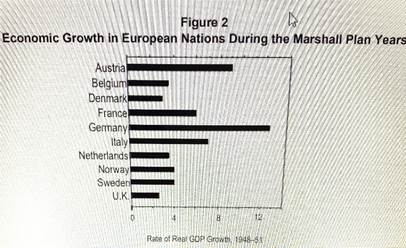
The Marshall Plan required the countries to stabilize their currency, reduce public spending, import goods from the United States and increase their exports to the United States. There were clear expectations that benefited the economy of the United States. The Marshall Plan established the U.S. as a dominant economic power, promoted open trade and prevented the return of economic depression. It was critical in forming NATO and a closer relationship between the United States and Europe.

Questions:

  1. Given the fact that the Great Society programs of Medicaid and Medicare are not cost effective and that the poverty rate for people over the age of 65 has increased, should the United States continue with these programs?
  2. What should the United States or the individual states do to lower the poverty rate among people over the age of 65?
  3. Does the United States have a legal (constitutional) or moral responsibility to provide supplemental or full health care for its citizens, legal residents, and/or undocumented immigrants?
  4. Was the Marshall Plan worth the investment by the United States?
  5. What factors contributed to the success of the Marshall Plan?
  6. Would a ‘Marshall Plan” to support the rebuilding of a sustainable infrastructure based on renewable energy be effective and accomplish similar outcomes within three to five years?

Tallying the Costs and Benefits of LBJ’s Great Society Programs (American Enterprise Institute)

Estimates of the Costs of Federal Credit Programs (Congressional Budget Office)

Kaiser Family Foundation Reports on Medicare-Medicaid Enrollment and Spending

Marshall Plan (1948) (National Archives)

Marshall Plan and U.S. Economic Dominance (EBSCO)

The Marshall Plan: Design, Accomplishments, and Significance (Congressional Research Service)

Eighty Years of Nuclear Terror

By Lawrence Wittner

Reposted from https://znetwork.org/znetarticle/eighty-years-of-nuclear-terror/.

Ever since the atomic bombings of Japanese cities in August 1945, the world has been living on borrowed time. The indications, then and since, that the development of nuclear weapons did not bode well for human survival, were clear enough. The two small atomic bombs dropped on the cities of Hiroshima and Nagasaki killed between 110,000 and 210,000 people and wounded many others, almost all of them civilians. In subsequent years, hundreds of thousands more people around the world lost their lives thanks to the radioactive fallout from nuclear weapons testing, while substantial numbers also died from the mining of uranium for the building of nuclear weapons.  Most startlingly, the construction of nuclear weapons armadas against the backdrop of thousands of years of international conflict portended human extinction. Amid the escalating nuclear terror, Einstein declared: “General annihilation beckons.”

Despite the enormity of the nuclear danger, major governments, in the decades after 1945, were too committed to traditional thinking about international relations to resist the temptation to build nuclear weapons to safeguard what they considered their national security. Whatever the dangers, they concluded, military power still counted in an anarchic world. Consequently, they plunged into a nuclear arms race and, on occasion, threatened one another with nuclear war. At times, they came perilously close to it―not only during the 1962 Cuban missile crisis, but during the October 1973 Arab-Israeli war and on numerous other occasions.

By contrast, much of the public found nuclear weapons and the prospect of nuclear war very unappealing. Appalled by the nuclear menace, they rallied behind organizations like the National Committee for a Sane Nuclear Policy in the United States, the Campaign for Nuclear Disarmament in Britain, and comparable groups elsewhere that pressed for nuclear arms control and disarmament measures. This popular uprising secured its first clear triumph when, in the fall of 1958, the governments of the United States, the Soviet Union, and Britain agreed to halt nuclear weapons testing as they negotiated a test ban treaty. As the movement crested, it played an important role in securing the Partial Test Ban Treaty of 1963 and a cascade of nuclear arms control measures that followed.

Even when U.S. and Soviet officials revived the nuclear arms race in the late 1970s and early 1980s, a massive public uprising halted and reversed the situation, leading to the advent of major nuclear disarmament measures. As a result, the number of nuclear weapons in the world’s arsenals plummeted from about 70,000 to about 12,240 between 1986 and 2025. At a special meeting of the UN Security Council in 2009, the leaders of the major nuclear powers called for the building of a nuclear weapons-free world.

In recent decades, however, the dwindling of the popular movement and the heightening of international conflict have led to a revival of the nuclear arms race. As three nuclear experts from the Federation of American Scientists reported last June: “Every nuclear country is improving its weapons systems, while some are growing their arsenals. Others are doing both.” The new nuclear weaponry currently being tested includes “cruise missiles that can fly for days before hitting their targets; underwater unmanned nuclear torpedoes; fast-flying maneuverable glide vehicles that can evade defenses; and nuclear weapons in space that can attack satellites or targets on Earth without warning.” The financial costs of the nuclear buildup by the nine nuclear powers (the United States, Russia, China, Britain, France, Israel, India, Pakistan, and North Korea) will be immense. The U.S. government will reportedly spend over $1.7 trillion on its nuclear “modernization.”

To facilitate these nuclear war preparations, the major nuclear powers have withdrawn from key nuclear arms control and disarmament treaties. The New START Treaty, the last of the major U.S.-Russian nuclear agreements, terminates in February 2026. 

Furthermore, over the past decade, the governments of North Korea, the United States, and Russia have issued public threats of nuclear war. In line with its threats, the Russian government announced in late 2024 that it had lowered its threshold for using nuclear weapons. In response to these developments, the Doomsday Clock of the Bulletin of the Atomic Scientists has been set at 89 seconds to midnight, the most dangerous level in its 79-year history. 

As the record of the years since 1945 indicates, the catastrophe of nuclear war can be averted. To accomplish this, however, a revival of public pressure for nuclear disarmament is essential, for otherwise governments easily slip into the traditional trap of enhancing military “strength” to cope with a conflict-ridden world―a practice that, in the nuclear age, is a recipe for disaster.

This public pressure could begin, as the Nuclear Freeze movement of the 1980s did, with a call to halt the nuclear arms race, and could continue with the demand for specific nuclear arms control and disarmament measures.  But, simultaneously, the movement needs to champion the strengthening of global institutions―institutions that can provide greater international security than presently exists. The existence of these strengthened institutions―for example, a stronger United Nations―would help resolve the violent conflicts among nations that spawn arms races and would undermine lingering public and official beliefs that nuclear weapons are essential to safeguard national security.

Once the world is back on track toward nuclear disarmament, the movement could focus on its campaign for the signing and ratification of the Treaty on the Prohibition of Nuclear Weapons. This treaty, providing the framework for a nuclear weapons-free world, was adopted in 2017 by most of the world’s nations and went into force in 2021. Thus far, it has been signed by 94 nations and ratified by 73 of them.

Given recent international circumstances, none of the nuclear powers has signed it. But with widespread popular pressure and enhanced international security, they could ultimately be brought on board.

They certainly should be, for human survival depends upon ending the nuclear terror.

The Cost of Conformity: The Lavender Scare & Cold War Masculinity

In 1951 a book by Jack Lait and Lee Mortimer titled “Washington Confidential” was released. This book observed Washington D.C. at the time, and closely perceived the city from a unique lens. Lait and Mortimer referred to many different types of “problems”, but in Chapter 15 “The Garden of Pansies” a specific group of people who reside in Washington D.C. are then described as “fairies” and “mannish women.”[1] This book paints a picture of how society perceived people who were gay in the early fifties, specifically in the nation’s capital. Lait and Mortimer wrote, “There is no geographic section where [these] degenerates generally live. That is part of the general picture, everything, everywhere, in Washington.”[2] They were seen as people who infiltrated the city and were not to be trusted. Another word for an infiltrator is a spy, a word that Joseph McCarthy used all too well in his speeches about communists in the United States, ones that sparked the Second Red Scare in the late 1940s.  

The Second Red Scare was propelled by conservative republican Senator Joseph McCarthy of Wisconsin, who argued that he knew of 205 card holding communists working in the State Department during a speech in Wheeling, West Virginia.[3] A social panic began, as there were already fears of communists infiltrating within the government prior to this speech. Following this, John Peurifoy, the Deputy Undersecretary of State for Administration in 1950, argued that there were not any communist employees within the State Department, but instead 91 known homosexuals who worked in the department.[4] While the public’s main focus remained on communists and the Cold War, gays and lesbians were equally targeted as some feared they posed security risks in an era of panic. This was the start of the Lavender Scare, a phrase first coined by author and historian David K. Johnson.

Through accumulation and analysis of research from primary sources and historians, multiple questions about the Lavender Scare can be asked. The first is how did government intervention through the Lavender Scare both create fear from the public and also stem from public response? This not only creates concerns of how the government, specifically Congressional Subcommittees, decided to act on the information of gays and lesbians who worked within the government but how the public was informed on this information and the actions that were taken. In simpler terms the government and public were in a rotation of push and pull, which created and sustained an atmosphere of fear during the Lavender Scare. The second question that came to mind was, in what ways did the changing views of masculinity at the start of the Cold War contribute to the firing of thousands of gay men and women in the late 1940s and early 1950s, which is now known as the Lavender Scare?  The exaggerated focus on ideas of Cold War masculinity in the late 1940s and 1950s reflected the concerns of America in the early phases of the Cold War, especially when looked at through the Lavender Scare. Finally, it should also be noted that the Lavender Scare directly led to the start of the Gay Rights Movement seen starting during the scare, and can be followed into the present day.

The Lavender Scare is a direct reflection of the government’s fears at the start of the Cold War, similar to the Second Red Scare that occurred at this time. While investigations of gays and lesbians differed from the ways that potential communists were investigated, the government used its resources to find and investigate gays and lesbians who worked in government positions. The public’s fears of the time influenced these investigations by the government, but as years of investigations went on the government also emphasized the fears of the public. It essentially created a push and pull effect, where the government felt pressured by outside forces and the public was forced to respond to what the government found.

The Senate is where much discourse in the government occurred about gays and lesbians who worked in Federal Government. A Congressional Report from March 31, 1950 showcased the homophobic atmosphere surrounding the Senate. Republican Senator Bridges from New Hampshire said, “The President of the United States knows that the only thing I want to sabotage is the enemies of the United States. Who are they? They are the appeasers; they are the subversives; they are the incompetents; they are the homosexuals, who threaten the security of this country and the peace of the world.”[5] Senator Bridges’ rhetoric in this congressional report shows the fear that is aimed to be pushed out to the public as he paints gays and lesbians as enemies, but also the democrats as well referring to them as appeasers. Senator Miller from Nebraska added to this report, “You must know what a homosexual is. It is amazing that in the Capital City of Washington we are plagued with such a large group of those individuals. Washington attracts many lovely folks. The sex crimes in the city are many.”[6] The connotations here paint homosexuals as perverts, like they were years before, but now with the threat of national security. This Congressional Report shows how the 1950s was where homophobic ideology was able to dominate government concerns.

Fear of gays and lesbians who held positions in the government was executed further by local newspapers. One of the most notable newspapers to inform and alert the public was the Washington Evening Star, as it provided updates on the estimated amount of people who were gay and held a job in government. In April of 1950, the newspaper reported that “charges have been aired that there are about 5,000 perverts in this city, many in Federal Employment.”[7] This is the initial public news report about what has been discussed within the government about the concerns of gays and lesbians. The explanations in the news report radiates the fear that the government officials at the time had experienced, onto the public. At the end of May 1950, the same newspaper published a lengthy report about gays and lesbians involved in government employment. It is crucial to note the Congressional Subcommittee of Senators Wheely and Hill, who were the first to investigate government agencies to rid them of gays and lesbians. This specific news report notes their argument for a full investigation of homosexuals employed by the federal government, as they pend Senate approval, and the suspected numbers in all sectors of government, which included the military.[8] This report reflected the way that both the government and public felt like gays and lesbians infiltrated the government, in such a way that needed quick and direct intervention to prevent any threats.

            While the Lavender Scare itself reflects the fear of gays and lesbians in government and society due to the potential security risk they posed, it also deeply reflected the concerns of masculinity in politics during the time period. Joeseph McCarthy was a man who had a strong sense of the ideal masculinity. His masculinity was something new and different, as he aimed to portray himself “as a fighter, gambler and womanizer” which intrigued many people both in government and the public in general.[9] He set a standard on how to respond to threats, in this case communism and homosexuality, through the way he carried himself as a man. Supervisor of the Foreign Service Files, Helen Balog notes during the McCarthy Hearings that many people refer to McCarthy as “a big, bad wolf” and “a dragon of some kind.”[10] Her description of him emphasizes his dominant disposition in government. Additionally, masculinity is an important factor in how gays were received in society as well, especially since they were stereotyped as having qualities and traits that were not typically associated with their gender. The focus on gender during the Lavender Scare is essential to recognize as it aligns completely with the political ideologies that were presented against communism and homosexuality during this time.

            During the McCarthy Era, gender was deeply intertwined with and attributed to politics. The discourse that connected to the fight against communism, and homosexuality in government, was woven into the way that politicians carried themselves. Historian K.A. Cuordileone said, “The power of hard/soft opposition in political discourse lay here, in the gendered symbolic baggage that gave such imagery meaning and resonance.”[11] The public began to associate hardness and excessively masculine traits with a hardness against communism and other security threats, which were gays and lesbians. The public also associated softness, often attributed to liberal politicians, with an unwillingness to take down potential enemies, and a possible contribution or affiliation to the threat itself.[12] This created a split within government, as politicians used this as a strategy against one another as they continued their fight against threats of national security. This new political atmosphere also pushed politicians to strive for a hardness against these threats, so that they aligned with the fight to ease the publics fears.

            While the way someone presented their masculinity in government was commonly used as a political strategic tool, homophobia was as well, no matter how hard or soft the politician was. McCarthy, commonly described as being a hard politician with uncontrolled masculine traits, had his own run in with suspicions of his sexuality.[13] Hank Greenspun, a reporter, had published numerous reports that labeled McCarthy as a homosexual, and suspicion about McCarthy’s sexuality began to run throughout both the public and the government.[14] As McCarthy’s masculinity was debated, Cold War liberals who experienced the sting of softness on their political careers, jumped in on the allegations against McCarthy, to essentially ruin McCarthy’s career through the emphasis that he was not to “be trusted to defend his nation’s interest.”[15] In their efforts to destroy McCarthy through his sexuality, liberal politicians were able to show their stance on the matter of sexuality, which was that it did pose a threat to national security and was able to be hidden even behind the mask of strong masculinity.

            While these politics charged by the notions of gender are important to consider, it is also crucial to weigh the impact on gays and lesbians themselves, who were the direct targets of politicians at the time, and how they were perceived by society. Stereotypes were commonly used to determine whether or not someone was gay. David K. Johnson stated, “Gay men were more likely to be targeted due to lesbians having less access to public space leading to them not being arrested as much as men. It was more typical for women to be close to other women, whereas there were more lines drawn within relationships with men.”[16] This not only reflects the government’s concerns of gays in federal employment, but the attributes of gender in the same sense. The connections between the fear of softness, and the fear of gays and lesbians infiltration in government positions is one that connects and reflects how both gender and sexuality drove the political landscape during the early years of the Cold War.

            The Lavender Scare and the focus on virile masculinity created a ripple effect that is still felt in the society of the United States today. The forced removal of thousands from their careers altered lives, as the government’s interference touched each person who was a part of the gay community. The removal process of gays and lesbians from their federal jobs was done in a quiet manner, so that many of the people removed from their jobs would remain outcasted from society.  When suspicion arose, suspected gays and lesbians would be investigated and questioned about their sexuality, afterwards being asked to resign.[17] It was common that coworkers of government employees would simply disappear, one day at work and the next gone with no explanation.[18] After resignation, many people also fled to other parts of the world where there might have been more acceptance.[19] John E. Matson, a special agent in the State Department’s Division of Security, said, “This particular man is Thomas Hicock. Unfortunately, this man a week later committed suicide, so he is out of the picture. He had been in the Foreign Service for over eighteen years.”[20] While this is one example of what happened after someone was forced from their job, there is much that is still unknown and hidden within history.

Since these removals deeply altered the way of life for gays and lesbians that worked for the government, many acted against the discrimination. The Mattachine Society that was formed in Los Angeles was created by Henry Hay, a gay man and communist, in 1950. The group would become known as one of the first instances where response and retaliation arose against the discriminatory actions of the government. The FBI had a strong focus on the group and their magazines, Mattachine Review and One, which were published to spread their message of equality for gays and lesbians. The FBI looked for subversives throughout the group, but concluded that “the aim of the organization was to educate legislators and educators with respect to homosexuality.”[21] However, this is early in the investigation of the Mattachine Society of Los Angeles, and two more parts to the investigation proceeded this one which showed the desperateness to find something within the group that posed as a threat.

The group’s foundation of communism deeply influenced their agenda for advocacy and equality for gays and lesbians, which created some problems within the organization. Historian James Kirchick said, “Within a few years of its formation, however, the Society decided to distance itself from Hay and others with politically dicey affiliations.”[22] One of the groups to come out of this split was The Mattachine Society of Washington, created by Frank Kameny, an astronomer who worked in government and was fired from his job in 1957. Kameny differed from many others who were asked about their sexuality while at their government job, and fought against his forced removal through court cases that went all the way to the Supreme Court. There he argued that he and 15 million other Americans were treated as “second-class citizens.”[23] The Mattachine Society of Washington D.C. formed after his petition to the Supreme Court was denied. However, Kameny did not let this stop his advocacy, and he continued to lobby government officials and encouraged judicial cases in his fight for equality.[24] Kameny continued to remain at the forefront of the gay rights movement, and never stopped his fight for the change needed to grant equality to gays and lesbians around the country.

At a glance, the impact of these groups does not seem to promote that much change, as discrimination against gays and lesbians continued. The groups that formed from the Lavender Scare created a voice that was not heard often. Additionally, the counterculture that appeared in the sixties featured activism that was never seen before and “challenged American society at its core” which allowed for more people to join the fight against discrimination in all senses. [25] While different groups had dissimilar ideas about how to advocate, each one nevertheless worked toward a common goal of gay and lesbian acceptance in society.

While the Lavender Scare involved the forced removal of thousands from careers in the federal government, it created a political landscape that has been often overlooked in history. As discrimination developed over the years, the government allowed fear to permeate both the political landscape and the public lens especially at the start of the 1950s when the Cold War began. This created a push and pull effect from both sides, where action of removal was the only apparent solution. As gays and lesbians posed a security risk, and were attributed with stereotypical notions of gender, the political landscape began to hyperfocus on both sexuality and gender, mainly in terms of masculinity. The idea of masculinity had a strong influence on both the government and public, which therefore led to a control on the legislative decisions that were made during the Lavender Scare.

The groups that formed from the government’s maltreatment were created out of a response from the prejudiced actions of the government. The Mattachine Societies that began to appear across the country reflected the ambition and need for change. People advocated through speeches, directly to the government or through magazine publications where they were able to draw more people into their cause. They advocated for change, and for an ability to be themselves in society. These groups that arose in a time where fear ran rampant through communities set the stage and provided a framework for the groups to come in the later years. Through the resilience and solidarity of each of these groups, change was able to happen.

The Lavender Scare is still a recently discovered aspect of history, and is one that is often overlooked. The forced removal of thousands of gay men and women from their careers is one that is left relatively unknown, as the second Red Scare dominates this era of history. But the years that followed the harsh 1950s created more and more opportunities for gay men and women. Still, it is only recently that people who are queer have had the opportunities to fully reenter into society, as same-sex marriage was legalized less than 10 years ago by the Supreme Court. However, there are still many people who do not receive the same treatment due to their sexuality or the way the present themselves in society. It is important to understand how deeply rooted homophobia is in the United States society, as it has been since the early twentieth century. By ignoring the hidden history of the LGBTQIA+ community, one is ignoring the current problems at hand. If resolution and reparations are to be made to those who were discriminated against, one has to look back on the past, reflect, and take action.

Lait, Jack, and Lee Mortimer. Washington Confidential. New York: Crown Publishers, Inc., 1951.

McCarthy, Joseph. “Speech in Wheeling, West Virginia.” February, 1950. Accessed through University of Oregon.

Congressional Report. Vol 96, Part 4. 4513-4527. https://www.govinfo.gov/content/pkg/GPO-CRECB-1950-pt4/pdf/GPO-CRECB-1950-pt4-3.pdf

Evening Star, “Initial Report Drafted on Sex Case Hirings” Washington D.C.: W.D. Wallach & Hope, April 28, 1950. From Library of Congress. https://chroniclingamerica.loc.gov/lccn/sn83045462/1950-04-28/ed-1/seq-27/

Evening Star, “Senator Hill Proposes Complete Inquiry Into Hiring of Undesirables.” Washington D.C.: W.D. Wallach & Hope, May 20, 1950.  From Library of Congress. https://chroniclingamerica.loc.gov/lccn/sn83045462/1950-05-20/ed-1/seq-35/  

Executive Sessions of the Senate Permanent Subcommittee on Investigations of the Committee on Government Operations. 1953. https://www.senate.gov/about/resources/pdf/mccarthy-hearings-volume1.pdf

Mattachine Society: Part 01 of 03. FBI Records: The Vault. July 14, 1953. Accessed November 6, 2024. 15.

Cuordileone, K.A. ““Politics in an Age of Anxiety”: Cold War Political Culture and the Crisis in American Masculinity, 1949-1960”. The Journal of American History 87, no. 2 (2000): 515-545. https://www.jstor.org/stable/2568762.

Eaklor, Vicki F. Queer America: A People’s GLBT History of the United States. New York: The New Press, 2008.

Friedman, Andrea. “The Smearing of Joe McCarthy: The Lavender Scare, Gossip, and Cold War Politics.” American Quarterly 57, no. 4 (2005): 1105–29. http://www.jstor.org/stable/40068331

Johnson, David K. The Lavender Scare: The Cold War Persecution of Gays and Lesbians in the Federal Government. Chicago: University of Chicago Press, 2004.

Kirchick, James. Secret City: The Hidden History of Gay Washington. Henry Holt and Co., 2022.

Shibusawa, Naoko. “The Lavender Scare and Empire: Rethinking Cold War Antigay Politics.” Diplomatic History. 36, no. 4 (2012): 723-752.


[1] Ibid, 90-92.

[2] Ibid, 92.

[3] Joseph McCarthy, “Speech in Wheeling, West Virginia,” February, 1950, Accessed through University of Oregon.

[4] David. K. Johnson, The Lavender Scare: The Cold War Persecution of Gays and Lesbians in the Federal Government, (Chicago: University of Chicago Press, 2004), p. 1.

[5] Senator Bridges, Congressional Report. Vol 96, Part 4. 4513. https://www.govinfo.gov/content/pkg/GPO-CRECB-1950-pt4/pdf/GPO-CRECB-1950-pt4-3.pdf

[6] Miller, Congressional Report. Vol 96, Part 4. 4527. https://www.govinfo.gov/content/pkg/GPO-CRECB-1950-pt4/pdf/GPO-CRECB-1950-pt4-3.pdf

[7] Evening Star, “Initial Report Drafted on Sex Case Hirings” Washington D.C.: W.D. Wallach & Hope, April 28, 1950. From Library of Congress. https://chroniclingamerica.loc.gov/lccn/sn83045462/1950-04-28/ed-1/seq-27/

[8] Evening Star, “Senator Hill Proposes Complete Inquiry Into Hiring of Undesirables,” Washington D.C.: W.D. Wallach & Hope, May 20, 1950, From Library of Congress, https://chroniclingamerica.loc.gov/lccn/sn83045462/1950-05-20/ed-1/seq-35/

[9] Andrea Freidman, “The Smearing of Joe McCarthy: The Lavender Scare, Gossip, and Cold War Politics,” American Quarterly 57, no. 4 (2005): 1108, http://www.jstor.org/stable/40068331.

[10] Executive Sessions of the Senate Permanent Subcommittee on Investigations of the Committee on Government Operations. 1953, 187. https://www.senate.gov/about/resources/pdf/mccarthy-hearings-volume1.pdf

[11] K.A Cuordileone, ““Politics in an Age of Anxiety”: Cold War Political Culture and the Crisis in American Masculinity, 1949-1960,” The Journal of American History 87, no. 2 (2000): 516, https://www.jstor.org/stable/2568762.

[12] Ibid, 521.

[13] Andrea Freidman, “The Smearing of Joe McCarthy: The Lavender Scare, Gossip, and Cold War Politics,” American Quarterly 57, no. 4 (2005): 1112, http://www.jstor.org/stable/40068331.

[14] Ibid, 1112.

[15] Ibid, 1123-1124.

[16] David K. Johnson, The Lavender Scare: The Cold War Persecution of Gays and Lesbians in the Federal Government. Chicago: University of Chicago Press, 2004, 155.

[17] David K Johnson, The Lavender Scare: The Cold War Persecution of Gays and Lesbians in the Federal Government, Chicago: University of Chicago Press, 2004, 2.

[18] Ibid, 150-151.

[19] Naoko Shibusawa, “The Lavender Scare and Empire: Rethinking Cold War Antigay Politics,” Diplomatic History, 36, no. 4 (2012): 748.

[20] Executive Sessions of the Senate Permanent Subcommittee on Investigations of the Committee on Government Operations. 1953, 166. https://www.senate.gov/about/resources/pdf/mccarthy-hearings-volume1.pdf

[21] Mattachine Society: Part 01 of 03, FBI Records: The Vault, July 14, 1953, Accessed November 6, 2024, 15.

[22] James Kirchick, Secret City: The Hidden History of Gay Washington, Henry Holt and Co., 2022, 155.

[23] David K. Johnson, The Lavender Scare: The Cold War Persecution of Gays and Lesbians in the Federal Government. Chicago: University of Chicago Press, 2004, 181.

[24] Ibid, 192.

[25] Vicki F Eaklor, Queer America: A People’s GLBT History of the United States, (New York: The New Press, 2008), 108.