Speech by Frances Ellen Watkins Harper at the Eleventh National Women’s Rights Convention in New York City
Background:In May 1866, Frances Ellen Watkins Harper, a leading African American poet, lecturer and civil right activist, addressed the Eleventh National Women’s Rights Convention in New York City. Other speakers included white suffragettes Elizabeth Cady Stanton, Susan B. Anthony, and Lucretia Mott. New York Times columnist Brent Staples (“When the Suffrage Movement Sold Out to White Supremacy,” February 3, 2019) charged that “official suffrage history reduces . . . Harper to a bit player, even though she was central to the struggles for both African-American and women’s rights and delivered what has come to be recognized as a visionary speech on the relationship between the two.” History of Woman Suffrage (six volumes published between 1881 and 1922) by Stanton and Anthony et al report on the 1866 meeting but ignored Harper’s speech. Historian Nell Irvin Painter argues that Harper’s words were “too strong” for white suffrage leaders. They viewed her “polished, self-assured style as antithetical to what they viewed as blackness,” preferring the “uneducated version of black womanhood embodied by the formerly enslaved suffragist Sojourner Truth, who entertained her audiences as she imparted her ideas.”
Instructions: Read excerpts from the speech by Frances Ellen Watkins Harper and answer questions 1-4.
Harper claims that when “the hands of the black were fettered,” white men were also deprived of the liberty. In your opinion, what did she mean by this statement?
According to Harper, what prevents this “grand and glorious revolution” from reaching its “climax of success”?
What is Harper’s view on women achieving the right to vote?
In your opinion, why did some white suffragist react negatively to Harper’s assertion that “white women of America” needed to be “lifted out of their airy nothings and selfishness”?
Harper argued “We are all bound up together”? Do you agree with Harper’s assertion? Explain.
A. I feel I am something of a novice upon this platform. Born of a race whose inheritance has been outrage and wrong, most of my life had been spent in battling against those wrongs. But I did not feel as keenly as others, that I had these rights, in common with other women, which are now demanded . . . We are all bound up together in one great bundle of humanity, and society cannot trample on the weakest and feeblest of its members without receiving the curse in its own soul. You tried that in the case of the Negro. You pressed him down for two centuries; and in so doing you crippled the moral strength and paralyzed the spiritual energies of the white men of the country. When the hands of the black were fettered, white men were deprived of the liberty of speech and the freedom of the press.
B. Society cannot afford to neglect the enlightenment of any class of its members. At the South, the legislation of the country was in behalf of the rich slaveholders, while the poor white man was neglected. What is the consequence today? From that very class of neglected poor white men, comes the man who stands today, with his hand upon the helm of the nation. He fails to catch the watchword of the hour, and throws himself, the incarnation of meanness, across the pathway of the nation. My objection to Andrew Johnson is not that he has been a poor white man; my objection is that he keeps “poor whites” all the way through. That is the trouble with him.
C. This grand and glorious revolution which has commenced, will fail to reach its climax of success, until throughout the length and breadth of the American Republic, the nation shall be so color-blind, as to know no man by the color of his skin or the curl of his hair. It will then have no privileged class, trampling upon outraging the unprivileged classes, but will be then one great privileged nation, whose privilege will be to produce the loftiest manhood and womanhood that humanity can attain.
D. I do not believe that giving the woman the ballot is immediately going to cure all the ills of life. I do not believer that white women are dewdrops just exhaled from the skies. I think that like men they may be divided into three classes, the good, the bad, and the indifferent. The good would vote according to their convictions and principles; the bad, as dictated by prejudice or malice; and the indifferent will vote on the strongest side of the question, with the winning party.
E. You white women speak here of rights. I speak of wrongs. I, as a colored woman, have had in this country an education which has made me feel as if I were in the situation of Ishmael, my hand against every man, and every man’s hand against me. Let me go to-morrow morning and take my seat in one of your street cars — I do not know that they will do it in New York, but they will in Philadelphia — and the conductor will put up his hand and stop the car rather than let me ride.
F. In advocating the cause of the colored man, since the Dred Scott decision, I have sometimes said I thought the nation had touched bottom. But let me tell you there is a depth of infamy lower than that. It is when the nation, standing upon the threshold of a great peril, reached out its hands to a feebler race, and asked that race to help it, and when the peril was over, said, “You are good enough for soldiers, but not good enough for citizens.”
G. Talk of giving women the ballot-box? Go on. It is a normal school, and the white women of this country need it. While there exists this brutal element in society which tramples upon the feeble and treads down the weak, I tell you that if there is any class of people who need to be lifted out of their airy nothings and selfishness, it is the white women of America.
Putnam | Northern Westchester BOCES Integrated Social Studies/ELA Curriculum
April Francis
Editors Note: This is the first multi-day lesson in a three lesson sequence designed for fourth grade on slavery and New York developed by April Francis for the Putnam | Northern Westchester BOCES Integrated Social Studies/ELA Curriculum. Lessons 2 and 3 will be included in future issues of Teaching Social Studies. Lesson 1 addresses the compelling question “What were the experiences of enslaved African Americans in New York State?”
Compelling Question: Why did New Yorkers have differing views of American Slavery in the 1800s?
Supporting Questions
What were the experiences of enslaved African Americans in New York State?
Why did some New Yorkers show support for slavery?
Staging the Compelling Question Narrative & Procedure
This beginning activity will help frame the compelling question and deepen student understanding of this hard history topic. Teachers should be mindful of how they present this information in their classroom, by using techniques that support all students. Teaching Tolerance has a guide entitled “Let’s Talk: Discussing Race, Racism, and other Difficult Topics with Students” that provides strategies and support for teachers in this area. Some of these strategies have been included in this inquiry’s narrative. Additionally, to build their own historical context, teachers can view the videos: New York State & Slavery: Complicity & Resistance (19 minutes) and TedTalk-Ed: The Atlantic Slave Trade. (approx. 6 minutes) Additional Resources for Slavery in the North:https://peoplenotproperty.hudsonvalley.org/
● Make copies of “Vocabulary Terms,” “K-W-L chart,” and “Circle Map”
Lesson 1 / Day 1 Engage (20 minutes)
1. The teacher can begin this unit by informing students that “We will be learning about an important topic this week, this topic often can be hard to discuss because it involves how people’s rights were taken away from them, and the harsh treatment forced on them for many years in our country. This topic is called Slavery in America.”
a. The teacher can introduce some strategies in the “Let’s Talk” booklet to ensure students feel they are in a safe environment to learn about this topic. Some helpful strategies can be found on pgs. 7-11.
2. Next, the teacher should display the compelling question “Why did New Yorkers have differing views of American slavery in the 1800s?” And ask for a student volunteer to read it aloud. The “teacher should also highlight that “when we are referring to people who have been forced into slavery, we state ‘enslaved people’ since no one is born a slave, but can be enslaved.”
3. Next, the teacher should display Source 1 on the smart board and distribute the “K-W-L” chart. Using source 1 as a stimulus, the teacher can have students record what they “know” about slavery in America. This activity will allow students to share their prior knowledge of the topic, as well as what they want to know. (Note: Source 1 is a picture of a Virginia Slave auction)
4. Once students have filled in their charts, the teacher can ask students to share what they “Know” and what they “Want” to know. The teacher can write these answers on chart paper (or students can write their answers on sticky notes and place them on the class chart paper). Teachers can use the following questions to guide their discussion: “What do we know about where slavery was located in the United States? What do we want to know?
Using the lens of social sciences:
Geography: – Where was slavery located? – Where did slavery exist in the U.S.? -Where did enslaved Africans come from? – How did they get here? – How the geography of a place affected the work and conditions for enslaved people?
Economics: – What type of work did enslaved people do? – Who benefited from their labor? – How did the labor and industry for enslaved people change from place to place?
Civics: (Political, Social, Law & Life – Was slavery legal in the U.S.? – What laws existed that protected slavery in the U.S./New York State? – Could you escape slavery? Did many enslaved people escape? – How many enslaved people were there in the U.S./New York State? – What was life like for enslaved people? (And what sources can we turn to help us understand the experiences of enslaved people in America/NYS?)
Explain (15 minutes): Next, the teacher can transition the lesson by displaying the vocabulary terms and review each word with the class as a foundation for the inquiry. (Alternative activity – have the students participate in a “word sort” activity.) After reviewing the vocabulary terms, inform students they will watch a video regarding the history of slavery in America. (This will provide historical context for students, and can be referred back to throughout the lesson) The teacher should have the students watch the video and, and as a class, fill out the circle map based on what they learned. (Teacher can repeat video for emphasis.)
a. After the video the teacher should do a “check-in” with students to ascertain their emotions regarding this topic. The “Thumbs up/Thumbs Down” strategy found on pg. 11 of the Teaching Tolerance “Let’s Talk” booklet can be helpful.
Explore & Elaborate (15 minutes): Next, the teacher can ask students to share some of the information from the video to create a class “circle map.” The teacher should remember this is a sensitive topic, and be mindful of student responses and how information is written on the map (i.e. enslaved person, rather than “slave”) Next, the teacher can have students journal or draw (see “Let’s Talk” guide) how they feel about the video. The teacher should collect this, and follow up with any journal or drawing that may need extra attention and support.
Evaluate (10 minutes)
1. The teacher can ask students to fill out the “L” portion of their K-W-L chart and ask “What are 3 things you learned today about slavery in America?” (an additional strategy- students can write on sticky notes and place it on a class K-W-L chart.)
2. The teacher can close the lesson by informing students, “I know that some of the questions you asked in the “W” portion of your chart may not have been answered today, I do hope by the end of our inquiry, you will have those answers.”
Source 1
“K-W-L” Chart Directions: We are going to be discussing a “hard history” topic. What do you know about the economic system called slavery in America? What would you want to know (questions you have)?
Vocabulary Terms
Circle Map
Directions: As a class, we will watch the video about the history of Slavery in America. While you watch the video, fill in the bubbles with facts that you have learned.
Supporting Question 1: What were the experiences of enslaved African Americans in New York State?
Lesson 1 / Day 1 Narrative & Procedure
In this lesson, students will be introduced to the origins of the slavery system in New Netherlands and later New York. Students will analyze both primary and secondary sources in groups, and then use this information to develop a timeline of important events. Note: Modify this script to meet your classroom needs.
Preparation:
Queue video: Sojourner Truth (History.com) 2:29 minutes
Make copies of Source 1-5, “Map of NYS Counties”, and the “Source Analysis” worksheet
Smart board to project documents for whole class analysis
Chart paper to record student responses
Engage (15 minutes) The teacher should begin the lesson by displaying the Supporting Question for the whole class “Were there enslaved Africans in New York State?” The teacher should ask for a volunteer reader. The teacher should then remind students of what they learned yesterday, using student “K-W-L” chart responses.
Next, the teacher should distribute Source 1, and, as a whole class, read aloud the account of Sojourner Truth, and use the guiding questions to review key points. The teacher should then show the video “Sojourner Truth” (History.com) 2:29 minutes
Explore (15 minutes)
1. Once students complete the guided reading and video, the teacher should distribute and display the Map of NYS Counties, and highlight that in the video, they included a political map of where Sojourner Truth grew up. The teacher can state, “A political map is a map that shows borders and boundaries of a state or country. Let’s review our own political map of the counties in NYS.” The teacher can use these geographic reasoning questions for a whole class map analysis:
a. Place a “star” next to the county we live in. Place a “square” around our state Capital. Place an “X” on NYC. “Circle” the county Sojourner Truth was born (Ulster).
b. How would Sojourner’s environment affect how she lived?
c. What type of work would be needed in Ulster county- farming, fishing, or shipbuilding? Why? (farming- more rural area)
d. What type of work would be needed in the NYC area- farming, fishing, or shipbuilding? Why? (shipbuilding and fishing- near water)
2. After students have shared answers, the teacher can inform students that today they will be working in teams, investigating the supporting question through various source documents. The teacher should review with students the difference between primary vs. secondary sources. The teacher can ask students, “What type of source was the reading on Sojourner Truth?” (Secondary source).
Explain (15 minutes)
3. Next, the teacher should distribute the “Source Analysis” worksheet, and inform students that in their teams, they will analyze sources and record the main ideas on this chart. The teacher should model this activity with the students, using the Sojourner Truth reading (Source 1).
4. The teacher should place students in groups of four and have each student analyze one source from Source 2-5 and record the main idea on the Source Analysis worksheet an (alternative strategy- Jigsaw activity.) Note to Teacher: source modification is encouraged to meet the needs of your students.
5. The teacher should rotate between groups, and ask critical thinking questions:
a. Were there enslaved persons in New York State? How do we know?
b. Using your map, can you locate the counties Jupiter, Frederick, and Thomas were from?
c. Were there Africans who were not enslaved in New York State? How do you know? What does that mean?
d. What were some of the work enslaved persons did in New York State? Did the type of work depend on their geographic area? Why?
Elaborate (15 minutes)
1. Once students have completed analyzing the sources in groups (moderated and supported by the teacher), the whole class should review the “Source Analysis” worksheet. The teacher should record student responses on chart paper.
2. As a closing activity, ask students to identify one positive character trait they believe an enslaved person had to have to survive living in slavery. Students should then explain why they chose that trait.
Preparation for Day 2 – Poster paper and markers for student group timelines
Lesson 1/ Day 2
Evaluate (55-60 minutes)
1. The teacher should ask students “What is a timeline?” “Why do we use timelines?” The teacher should share a sample timeline for students to review. After reviewing the different parts of the timeline the teacher should inform students they will be creating timelines based on the information they analyzed yesterday.
2. The teacher should inform students of the steps needed for them to create their group timelines:
a. Each group must agree on three major events to include on their timeline- these events should be in chronological order and have a connection. The events should be taken from at least three sources.
3. Once student groups complete their timelines, each group will present to their final product to the class. Teacher should model presentation strategies for student groups.
In 1806, 9-year-old Isabella Baumfree and her family lived on the property of Charles Ardinburgh of Ulster County in New York. When Ardinburgh died, Isabella found her mother in tears. “Mau-mau, what makes you cry?” Isabella asked. “Oh, my child, I am thinking of your brothers and sisters that have been sold away from me,” her mother replied. Soon after, Isabella too was separated from her mother. She was auctioned—along with other slaves, horses, and cattle—and purchased for $100. She was sold again and again, from master to master, until she was emancipated in 1828. Students of history know Isabella better by the name she chose as an adult—Sojourner Truth. Truth was an abolitionist. She spoke out against slavery. But what some people may not know is that Truth was one of thousands of slaves who were bought, sold, and forced to do labor in the North. “Many people are surprised when you talk about slavery in the North,” Alan Singer, a professor of education at Hofstra University, told Senior Edition. “We associate slavery with the South, even though the biggest importer of slaves—after South Carolina—was New York City.” Historians are beginning to bring slavery in the North into the spotlight. The New York Historical Society recently presented an exhibition on slavery in that state. Singer, who travels the country to talk to students about slavery in the North, wants people to remember that slavery was a national institution. It’s important to understand how slavery affected the entire country, because its effects linger through discrimination, Singer says. “Kids see slavery as something that happened in the deep past,” he told Senior Edition. “I want children to know that we still live with the effects of that slavery society.
Guided Questions for Source 1
Where did Isabella and her family live? Why was her mother crying?
What were some experiences of Isabella as an enslaved person?
What did Isabella change her name to? Why do you think she did that?
Who was the 2nd biggest importer of enslaved people in the United States? Why are many people surprised at the answer?
According to Alan Singer, why is it important for us to discuss the effects of slavery?
Map of New York Counties
Source 3: Jupiter Hammon: First Colonial Published African American
Jupiter Hammon was born on October 17, 1711 on Lloyd Neck. Jupiter’s father, Obadiah, was a slave belonging to Henry Lloyd and his wife, Rebecca. From the beginning Jupiter was close to the Lloyd family. He lived in the Manor house with the family, and went to school with the Lloyd children. This closeness is further evidenced by the fact that he is referred to as “brother Jupiter” in later correspondence between the Lloyd sons and their father.
Jupiter worked alongside Henry in Henry’s business, and he was often sent to New York City to negotiate trade deals…It is clear from his writings that Jupiter Hammon was also a deeply religious man. His first published poem, which appeared in 1761, was entitled “An Evening Prayer”, when published the credits read: Composed by Jupiter Hammon, a Negro belonging to Mr. Lloyd of Queen’s Village, on Long Island, the 25th of December, 1760.
Henry Lloyd died in 1763, and Jupiter went to live with Henry’s son, Joseph. Joseph Lloyd was a patriot during the Revolutionary War, and when the British captured New York and confiscated his land he fled to Connecticut, taking Jupiter with him. When the war ended they returned to the Manor, where Jupiter continued to write poetry.
Jupiter went on to become a leader in the African American community. In 1787 he delivered a speech to the African Society of New York City entitled “An Address to the Negroes in the State of New York”. In the speech he empathized with their disappointment at not having been emancipated by the new American government…Jupiter Hammon’s death was unrecorded, but historians place it somewhere around 1806. SOURCE: http://www.lloydharborhistoricalsociety.org/jupiter.html
Source 4 from the Autobiography of Thomas James
I was born a slave at Canajoharie, New York, in the year 1804. I was the third of four children, and we were all the property of Asa Kimball, who, when I was in the eighth year of my age, sold my mother, brother and elder sister to purchasers from Smith- town, a village not far distant from Amsterdam in the same part of the state. My mother refused to go, and ran into the garret to seek a hiding place. She was pursued, caught, tied hand and foot and delivered to her new owner. I caught my last sight of my mother as they rode off with her. My elder brother and sister were taken away at the same time. I never saw either my mother or sister again. Long years afterwards my brother and I were reunited, and he died in this city a little over a year ago. From him I learned that my mother died about the year 1846, in the place to which she had been taken. My brother also informed me that he and his sister were separated soon after their transfer to a Smithport master, and he never heard of her… fate. Of my father I never had any personal knowledge, and, indeed, never heard anything. My youngest sister, the other member of the family, died when I was yet a youth. Source: From the Library of Congress: selections from A Slave’s Autobiography by Rev. Thomas James: Post-Express Printing Company, Mill Street (1887).ROCHESTER, N.Y
Source 5 Narrative of Frederick Douglass
In 1845, Frederick Douglass, a runaway enslaved African American wrote about his experiences on two plantations he lived on in the south, before he arrived in New York. He was born, Frederick Washington Bailey, into slavery in 1818 in Maryland. He later changed his last name to Douglass when he arrived in New York City in 1838 to protect his identity.
Background: Climate change may be the major issue of the 21st century as industrialized societies have contributed to the wastes and emissions that are deteriorating the conditions of Earth’s atmosphere and environment. A greater acknowledgement of the natural and human-made dangers of climate change, as well as information on how to improve the environment, could greatly improve efforts to prevent any further damage from occurring. Lesson 1 introduces the concept of climate change through the investigation of the natural disaster of the Krakatoa eruption and Hurricane Katrina. Students work individually and cooperatively to analyze images, texts, and video clips. In Lesson 2, students work independently on a document assessment of the Paris Climate Accord and cooperatively through a gallery walk illustrating impacts on the climate. In Lesson 3, students examine different forms of climate change protest that have occurred over recent years. Activist events such as the Anti-WAAhnsinn festival, the Plane Stupid Protest, the UN Protest, and the March 2019 student strike are investigated through individual and cooperative efforts.
NYS State Frameworks for this mini-unit: 10.9 Globalization and a Changing Global Environment (1900-Present): Technological changes have resulted in a more interconnected world, affecting economic and political relations and in some cases leading to conflict and in others to efforts to cooperate. 10.9c Population pressures, industrialization, and urbanization have increased demands for limited natural resources and food resources, often straining the environment.
Lesson 1 Aim: Is climate change a threat to humanity? Main ideas:
1. Climate Change is a present day issue that could threaten humanity if not taken seriously.
2. Daily actions could be taken by individuals to evade the dangers of climate change.
3. Natural disasters of the past between the 1883 Krakatoa eruption and Hurricane Katrina in 2005 exemplify.
Next Generation Skills:
• Cite textual evidence to support conclusions on how natural disasters have come about due to natural or human activities.
• Determine central ideas about how Climate Change could bring forth harmful effects on the Earth’s environment.
• Analyze events and ideas and causality of the damage done by various natural disasters
Vocabulary:
Climate Change: A change in global or regional climate patterns due to increased levels of carbon dioxide produced by the use of fossil fuels.
Greenhouse Effect: The trapping of the sun’s warmth in Earth’s atmosphere due to the infrared radiation emitted from the planet’s surface.
Renewable Energy: Energy produced from a source that is not depleted when used such as wind power or solar energy. Fossil Fuels: A natural fuel such as coal or gas formed from the remains of living organisms.
Do Now: Students will be given a handout with a political cartoon that characterizes the transparency of a country’s political absence of climate change. Four questions will be provided for students to answer as well as they observe the image. After the students are given a few moments to individually answer the questions, the class will come together to assess the importance of the cartoon. Remaining inactive toward putting forth actions to combat Climate Change will equate to nothing but the continued destruction of Earth’s environment. The sooner countries shift their focus to the issues of climate, the more efficient future actions can be taken to preserve the planet.
Motivation: The lesson will open with discussion unfolding with each question answered from the do now. I will gauge observations from the students about what they saw from the political cartoon and then facilitate their understandings in accordance to the questions that have been provided for them to answer. After this, I will provide students with a questionnaire that indicates if their daily actions contribute to the preservation of the environment. The questions provided for students will connect the actions that could be taken by common individuals to promote the health of the Earth’s conditions.
Individual/Team/Full Class Activities: Cooperative groups will be formed for students to read and analyze together the two short texts that present differing effects from Climate Change. Students will fill in their graphic organizer with significant evidence on either the natural or human causes of damage from the natural disasters of the 1883 Krakatoa eruption and Hurricane Katrina. The class will then examine a video clip that assesses the conditions of Climate Change, what properties perpetuate its influence on the environment, and its potentially devastating effects on the planet.
Differentiation and Multiple Entry Points: Multiple entry points include political cartoon analysis, discussion, textual analysis, evaluating arguments, and video analysis. Students will work individually and in teams to support different learners and learning styles.
Compelling Questions:
Do global countries tend to make Climate Change their number one focus?
Are the consequences of greenhouse gases forever irreversible?
How can the individuals communicate with one another to protect the environment?
Assessment:
Informal: Teachers work as an ex officio member of student groups and review work as teams conduct research and reach conclusions.
Formal: Collect and evaluate an exit ticket where students answer the question: Is climate change truly a threat to humanity? Form your answer while using a specific example.
Closure: The class ends with student discussion of the question: Is Climate Change truly a threat to humanity? I will link the question back to the focus of the Do Now political cartoon and ask students to determine if it is difficult for countries to direct their efforts to resolving Climate Change.
Classroom Applications: Students will have access to other images and video of Climate Change and its influence on natural disasters.
Your Personal Carbon Footprint
Directions: Do you care for your planet? Prove it. Answer the questionnaire below to see how much action you take daily to prevent climate change. Count every question you answer “Yes” and tally your total “I care about the environment” score. Once you finish the poll, answer the additional question below.
Why do you believe it is essential for individuals to keep their environment clean using methods such as the ones listed above?
“Causes and Effects of Climate Change”
Instructions: View the video “Causes and Effects of Climate Change” then answer the following questions. Be prepared to share your interpretations to the class.
How does the Greenhouse Effect impact the temperature of Earth’s surface?
Describe the various consequences of Climate Change.
How can humans combat the harmful effects of Climate Change?
Exit Ticket: Based on evidence presented in this lesson and your knowledge of the issues, in your opinion, is climate change truly a threat to humanity? Explain citing evidence.
Natural or Human Disaster?
Directions: Read the historical context below and analyze the following sources. Examine how the Earth’s environment can be altered from natural or human causes then interpret how climate change has influenced the damages accrued from natural disasters.
Historical Context: Climate Change refers to the change in global climate patterns from sea level rises to ice glacier losses. It has existed for the past hundreds of thousands of years as the conditions of the Earth have been adjusted due to natural alterations of the environmental properties. However, recent human activity since the Industrial Revolution has been severely influencing Earth’s environment to the point of no return. If further human activity remains unmonitored for the consideration of Earth’s properties, unforeseen consequences could result in negative impacts for all living beings.
Natural phenomenon like volcanic eruptions give scientists clues to how climate can rapidly change and the impact of these changes on human civilizations. Krakatoa is a volcanic island in the Sunda Strait between Java and Sumatra. It is about 3 miles wide and less than miles long. Prior to a massive eruption in 416 A.D., it was actually an isthmus connecting the other two islands. There were also volcanic eruptions in 535, 850, 950, 1050, 1150, 1320, 1530, 1680, and 1883. The 1883 eruption spewed so much volcanic ash into the atmosphere that average global temperatures fell by 2.2 °F the following year and weather patterns did not return to normal until 1888. The 535 eruption combined with suspected volcanic activity in Central America and Iceland in 540 to low average global temperature by 3.6°F producing the coldest decade in the last 2,000 years. A sun-blocking blanket of sulfur particles in the stratosphere led to famine across much of Europe, the continents first recorded pandemic of Bubonic Plague, and may have been the final blow causing the end of the Roman Empire. The eruptions also contributed to crop failure and mass starvation in China where it snowed in August, drought in Peru, a dense fog covering North Africa and Southwest Asia, the decline of native civilizations in Mesoamerica, and the migration of Mongolian tribes westward.
Krakatoa Eruption (1883)
1. Were damages caused by natural or human activity? Explain using evidence.
2. How does this article provide evidence to support concerns about climate change?
The political and engineering failures that caused the devastation in New Orleans were decades in the making. First, the storm surge was amplified by years of oil and natural gas companies degrading the integrity of the wetlands with pipelines, causing the land to sink at an alarming rate. The Mississippi River levee system was created in response to the sinking wetlands, but this system actually compounds the problem by preventing much of the river’s silt from being deposited in the ocean where it creates a natural buffer. Combined, these factors have eroded one million square acres of Bayou since 1930, bringing the coastline 30 miles closer to New Orleans and leaving only a 20 mile buffer from hurricanes. Katrina surges of 10 – 20 feet in New Orleans would have been 0 – 9 feet with better oversight of corporations carving up the wetlands – not big enough to breach the levees.
Another preventable human aspect of Katrina was a network of levees suffering from poor design and disrepair from bureaucratic bickering; an 80% cut to levee repair funds under the Bush Administration and misspent money. After Katrina, the Corps admitted that “the hurricane protection system in New Orleans and southeast Louisiana was a system in name only,” “an inconsistent patchwork of protection, containing flaws in design and construction, and not built to handle a hurricane anywhere near the size of Katrina.”
Hurricane Katrina (2005)
Were damages caused by natural or human activity? Explain using evidence.
How does this article provide evidence to support concerns about climate change?
Lesson 2 Aim: How do a country’s policies influence climate change?
Main Ideas:
The governments of the world must take active and responsible actions to support the sustainability of Earth’s environment.
Collaborative efforts amongst countries can be a constructive approach to advance the world’s actions to limit the wastes emitted onto Earth’s atmosphere such as the composition of the Paris Climate Deal.
Irresponsible actions of various countries such as the commencement of the Syrian Civil War equate to worsening conditions of the Earth’s climate.
Next Generation Skills:
Determine central ideas of a government’s influence on the conditions of Climate Change.
• Compare viewpoints and assess reasoning on the differing advantages and disadvantages of the Paris Climate Deal.
• Use of multiple sources of information to assess the various consequences of actions on the environment as exhibited through the Syrian Civil War.
Vocabulary:
Paris Climate Accord: An agreement within the United Nations Framework Convention on Climate Change to limit the amount of greenhouse gases produced by each individual country.
Syrian Civil War: An ongoing armed conflict between the forces of the Ba’ath government who is determined to remove its current government.
Emissions: The Greenhouse gases released into the air produced by human activities, including the burning of fossil fuels.
Carbon Footprint: The amount of carbon dioxide produced due to the consumption of fossil fuels by a particular group, person, etc.
Do Now: Students will be given a handout with a political cartoon that characterizes the inactive state country governments may take prior to the escalation of harmful Climate Change effects. Four questions will be provided for students to answer as well as they observe the image. After the students are given a few moments to individually answer the questions, the class will come together to assess the importance of the cartoon. A country’s agenda should be devoted to preventing any disasters from occurring that could harm the safety of a country’s people. This notion should also pertain to the threat Climate Change could potentially have if it is not properly addressed in an urgent matter.
Motivation: The inactivity of a country’s government toward Climate Change can be related to a student’s decision to procrastinate from a school assignment. Although it may be tempting to focus on matters that can be viewed more significant at the moment, the failure to execute a task in a timely matter could evolve into an urgent matter that is rushed and not properly taken care of. A poor grade on a rushed assignment can signify a future result of a deteriorating environment of the planet if government officials do not take the necessary actions that are needed. This connection can communicate to students the current state of the political issue of Climate Change and how significant it is for the world’s leaders to collaborate their efforts to formulate a solution before it is too late.
Individual/Team/Full Class Activities: Individuals will view the article on the Paris Climate Accord, formulate their interpretations, and then offer their findings to the class. Differing views will be opened to a class discussion for all to contribute. Cooperative groups will then be formed to participate in a gallery walk of the three sources related to the Syrian Civil War. Groups will observe each source and then answer the guiding questions provided to them. Once each source has been observed by the groups, all students will participate in a class discussion to discuss the significant qualities from each source and how it relates to the issue of a government’s irresponsible actions toward Climate Change.
Differentiation and Multiple Entry Points: Multiple entry points include political cartoon examination, document analysis, discussion, and evaluating opinions. Students will work individually and in teams to support different learners and learning styles.
Compelling Questions:
What are the dangers of leaving decision makers unaccounted for?
• Could government acts with good intentions be as ineffective as taking no action at all?
• How could the wars of foreign countries indirectly influence our world?
Assessment:
Informal: I will be an ex officio member of student teams and review work as teams conduct research and reach conclusions on the various consequences of good and bad government action to combat Climate Change.
Formal: Teacher collects and evaluate an exit ticket where students answer the question: how could the actions of countries positively and negatively influence Climate Change?
Closure: The class will end with and exit ticket student discussion of the question: how could the actions of countries positively and negatively influence Climate Change? I will allow students to evaluate for themselves how government actions are capable of the best and worst possible results possible in regards to the monitoring of Climate Change.
Classroom Application: Students will have access to other images and videos that analyze the consequences of climate change on a society.
Paris Climate Accord of 2015
Directions: Analyze the article excerpt below on the details surrounding the ratified Paris Climate Accord to stop Climate Change, then answer the following questions. Be prepared to present your findings.
The world has agreed the first universal, legally binding deal to tackle global warming, in a move that David Cameron said marked “a huge step forward in helping to secure the future of our planet”. The deal, agreed at UN talks in Paris, commits countries to try to keep global temperature rises “well below” 2C, the level that is likely to herald the worst effects of climate change. It also commits them to “pursue efforts” to limit warming to 1.5C – a highly ambitious goal that could require the U.K. to take even more radical action than under its existing Climate Change Act.
Amber Rudd, the Energy Secretary, admitted that the world did not “have the answers yet” as to how it would meet the long-term goals of the Paris deal, which would require carbon to be extracted from the atmosphere by the second half of this century. The deal requires countries to set increasingly ambitious targets for cutting their national emissions and to report on their progress – but, crucially, leaves the actual targets, which are not legally binding, for countries to decide for themselves. The deal also requires developed nations to continue to provide funding to help poorer countries cut their carbon emissions and adapt to the effects of climate change – but does not set a legally binding level of money.
Questions:
What was decided by the Paris Climate Accord?
How could the agreement benefit the world’s efforts to stop Climate Change?
Why would politicians oppose the Paris Climate Deal?
In your opinion, do you believe the Paris Climate Deal is an effective measure for the entire world to combat Climate Change?
Climate Change and War
Directions: Read the historical context below and then analyze the following sources. Consider the information from each source then answer the following questions.
Historical Context: In recent time, governments of various countries have become more mindful of their actions regarding Climate Change to prevent environmental conditions from worsening. Some governments have taken progressive steps through actions devoted to stop climate change, such as the Paris Climate Deal. Other countries, however, have committed questionable actions that threaten the health of the environment as well as the conditions of their society, such as the Syrian Civil War.
Source #1: Water, Drought, Climate Change, and Conflict in Syria
2. How have environmental conditions been affected as a result of the Syrian war efforts?
The devastating civil war that began in Syria in March 2011 is the result of complex interrelated factors. The focus of the conflict is regime change, but the triggers include a broad set of religious and sociopolitical factors, the erosion of the economic health of the country, a wave of political reform sweeping over the Middle East and North Africa region, and challenges associated with climate variability and change and the availability and use of freshwater. Water and climatic conditions have played a direct role in the deterioration of Syria’s economic conditions. There is a long history of conflicts over water in these regions because of the natural water scarcity, the early development of irrigated agriculture, and complex religious and ethnic diversity. In recent years, there has been an increase in incidences of water-related violence around the world at the subnational level attributable to the role that water plays in development disputes and economic activities.
Source # 2: Syrian Civil War Climate Change Graphics
What does the map implicate about the targets in Syria as well as the act of making war advancements in general?
How could foreign influence in war efforts be detrimental toward Climate Change efforts?
Exit Ticket: Based on the information from today’s lesson, how could the actions of countries positively and negatively influence Climate Change? Use specific examples in your answer.
Lesson 3 Aim: What actions can individuals take to stop or reduce the threat of climate change?
Main Ideas:
Activists across the world have the capability to influence an organization’s actions on issues; including Climate Change.
Not all activist efforts are peacefully negotiated and must be considered with care.
The simple act of informing the public can qualify as an honest activist effort.
Next Generation Skills:
Determine central ideas of the influences of activism on the agendas of organizations toward Climate Change
Compare the different viewpoints of varying activist efforts and consider why certain protests ended more viciously than others.
Vocabulary:
Activism: The policy or action of using vigorous campaigning to bring about political or social change.
Anti-WAAhnsinn Festival: Protest involving a series of rock concerts to raise awareness to stop the construction of Power Plants in Germany.
Plane Stupid Protest: Protest involving the blocking of airplanes from leaving the Heathrow Airport to prevent further construction that could induce Climate Change to increase. 2018 UN Protest: Protest effort from young adults to coerce national leaders to shift their agenda focuses on stopping Climate Change
Do Now: Students will view a video on the “Rise for Climate” March and assess the characteristics of the protest. Students will be asked to investigate the qualities of the protest from the attitude, the protest itself, and the end results, This evaluation will provide a proper introduction to the nature of activism and how it influences the decisions of lawmakers and the public.
Motivation: Students discuss if they have ever participated in or witnessed a protest. Once experiences are shared, the class will discuss if they believe activist efforts influenced government policy. This will transition into the conversation of activism in general and how it plays a pinnacle role in advocating for Climate Change reform.
Individual/Team/Full Class Activities: Students will form into cooperative groups read and analyze three protests across history around the world and assess the significant qualities from each protest. The class will then come together to assess their findings from each source and determine the overall effectiveness of each protest. Students will discuss the process that creates an effective protest and how its success differentiates itself from the efforts of individual contributors with personal agendas.
Differentiation And Multiple Entry Points: Multiple entry points include document analysis, discussion, evaluating opinions, image analysis, and video. Students will work individually and in teams to support different learners and learning styles.
Compelling Questions:
• When should people engage in activism and protest?
• What makes a protest effective or ineffective?
• How do we decide if a protest achieved its goals?
Assessment:
Informally: I will be an ex officio member of student teams and review work as teams conduct research and reach conclusions on the various protests that have been conducted regarding Climate Change.
Formally: I will collect and evaluate an exit ticket where students answer the question: what kinds of actions can individuals take to stop Climate Change?
Closure: The class will end with and exit ticket student discussion of the question: what kinds of actions can individuals take to stop Climate Change? I will allow students to evaluate for themselves if it is logical to make act differently from a country’s status quo if a collective interest is achieved to alter the decision of the private majority.
Classroom Application: Students prepare a “protest campaign” to stop or reduce climate change.
PROTESTS TO SAVE THE ENVIRONMENT
Historical Context: The concept of activism has existed for centuries as individuals aim to voice their concerns about the current state of their country’s government. Whether it intends to spread awareness on a certain matter or bring about immediate change to an issue, activism has been an essential tool for the common public to influence the state of their societal rights. In regard to Climate Change, plenty of individuals have taken activist action throughout the years to preserve the health of the Earth’s environment.
Because the Upper Palatinate in Wackersdorf wanted no nuclear waste, they organized in 1986 the “antiWAAhnsinns” festival. 120,000 spectators and the first league of German rock musicians gathered for a unique protest event. The grounds of the “Anti-WAAhnsinns” rock festival on 26 and 27 July 1986 in Burglengenfeld is surprisingly well documented. In Wackersdorf in Upper Palatinate, a reprocessing plant for nuclear waste was planned, and the resistance benefit concert with the then top staff of Deutschrock, held by youth center activists in the nearby Burglengenfeld, is still the second largest music festival with 120,000 spectators. The rallies offered the bands unimaginable publicity, in return brought the new stars the much needed by citizens’ initiatives anthems on the radio. But above all, the “Anti-Waahnsinns” festival is a monument to a huge civic movement.
Thirteen activists who cut through a fence at Heathrow Airport and chained themselves together on a runway have been told to “expect jail sentences”. The protesters, part of action group Plane Stupid, were found guilty at Willesden Magistrates’ Court of aggravated trespass and entering a security restricted area. They oppose the planned expansion of the Heathrow Airport and its environmental impact. District Judge Deborah Wright said all the defendants were people of integrity who were concerned about climate change and Heathrow expansion. The activists previously admitted to being on the runway but said such action was necessary to stop people dying from the effects of pollution and climate change.
The summit agreed rules for implementing the 2015 Paris agreement, which aims to keep global warming as close to 1.5C (2.7F) as possible, but it made little progress in increasing governments’ commitments to cut emissions. The world remains on track for 3C of warming, which scientists says will bring catastrophic extreme weather. National leaders at the summit, however, had failed to address the urgency of climate change, which is already making heatwaves and storms more frequent and intense, harming millions of people. May Boeve, the executive director of the 350.orgclimate change campaign group, said: “Hope now rests on the shoulders of the many people who are rising to take action: the inspiring children who started an unprecedented wave of strikes in schools to support a fossil-free future; the 1,000-plus institutions that committed to pull their money out of coal, oil, and gas, and the many communities worldwide who keep resisting fossil fuel development.”
On March 15, 2019 hundreds of thousands of high school and middle school students around the world will walk out of school to demand immediate government action to reverse the global climate crisis. As of Sunday March 10, over 950 protests were planned in more than 80 countries. In an op-ed published in the British newspaper The Guardian, the global coordination group of the youth-led climate strike wrote: “We, the young, are deeply concerned about our future. Humanity is currently causing the sixth mass extinction of species and the global climate system is at the brink of a catastrophic crisis. It’s devastating impacts are already felt by millions of people around the globe . . . The youth of this world has started to move and we will not rest again.”
Political Documentary Activism
Instructions: Sometimes, activism can take place simply by informing the public of a present-day issue. View the clip from the Harrison Ford documentary “Last Stand” and then answer the following questions. Prepare to share your answers to the class. Last Stand Clip (2 min) https://www.youtube.com/watch?time_continue=9&v=1RFP0B_gdv8
Questions:
1. How does deforestation impact the environment?
2. How is the production of palm oil related to Climate Change?
3. What was this documentary piece successful in communicating?
Exit Ticket: Based on the information from today’s lesson, what kinds of actions can individuals take to stop Climate Change? Compose your answer with a specific example.
Three historians debate whether the Electoral College was written into the United States Constitution to provide a defense of slavery. Sean Wilentz is a professor of history at Princeton and the author, most recently, of No Property in Man: Slavery and Antislavery at the Nation’s Founding. Akhil Reed Amar is a professor at Yale Law School. Alan Singer is a historian and teacher educator at Hofstra University. Their essays are briefly edited for length (each entire essay is available online). Read the three positions and write a Letter-to-the-Editor of approximately 250-words explaining your view using supporting evidence from the essays, the Constitution, and other sources.
Like many historians, I thought the evidence clearly showed the Electoral College arose from a calculated power play by the slaveholders. By the time the delegates at the Constitutional Convention in 1787 debated how the president ought to be chosen, they had already approved the three-fifths clause — the notorious provision that counted slaves as three-fifths of a person to inflate the slave states’ apportionment in the new House of Representatives. The Electoral College, as approved by the convention in its final form, in effect enshrined the three-fifths clause in the selection of the president. Instead of election by direct popular vote, each state would name electors (chosen however each state legislature approved), who would actually do the electing.
The framers’ own damning words seem to cinch the case that the Electoral College was a proslavery ploy. Above all, the Virginia slaveholder James Madison — the most influential delegate at the convention — insisted that while direct popular election of the president was the “fittest” system, it would hurt the South, whose population included nonvoting slaves.
On further and closer inspection, however, the case against the framers begins to unravel. First, the slaveholders did not need to invent the Electoral College to fend off direct popular election of the president. The convention, deeply suspicious of what one Virginian in another context called “the fury of democracy,” crushed the proposal on two separate occasions.
The winning, plan, which became known as the Electoral College only some years later, certainly gave the slaveholding states the advantage of the three-fifths clause. But the connection was incidental, and no more of an advantage than if Congress had been named the electors. Most important, once the possibility of direct popular election of the president was defeated, how much did the slaveholding states rush to support the concept of presidential electors? Not at all. In the initial vote over having electors select the president, the only states voting “nay” were North Carolina, South Carolina and Georgia — the three most ardently proslavery states in the convention.
When it first took shape at the convention, the Electoral College would not have significantly helped the slaveowning states. Under the initial apportionment of the House approved by the framers, the slaveholding states would have held 39 out of 92 electoral votes, or about 42 percent. Based on the 1790 census, about 41 percent of the nation’s total white population lived in those same states, a minuscule difference.
There are ample grounds for criticizing the Constitution’s provisions for electing the president. That the system enabled the election in 2016 of precisely the kind of demagogic figure the framers designed the system to block suggests the framework may need serious repair. But the myth that the Electoral College began as a slaveholders’ instrument needs debunking — which I hope to help with in my book’s revised paperback.
Actually, the Electoral College Was a ProSlavery Ploy
As James Madison made clear at the Constitutional Convention in 1787 in Philadelphia, the big political divide in America was not between big and small states; it was between North and South and was all about slavery. Behind closed doors at the Constitutional Convention, when the idea of direct presidential election was proposed by the Northerner James Wilson, the Southerner James Madison explained why this was a political nonstarter: Slaves couldn’t vote, so the slaveholding South would basically lose every time in a national direct vote. But if slaves could somehow be counted in an indirect system, maybe at a discount (say, three-fifths), well, that might sell in the South. Thus were planted the early seeds of an Electoral College system.
Some have argued that direct election was doomed because the Philadelphia delegates disdained democracy. Behind closed doors these elites did indeed bad-mouth the masses (as do elites today). But look at what the framers of the Constitution did, rather than what they said. They put the Constitution itself to a far more democratic vote than had been seen before. They provided for a directly elected House of Representatives (which the earlier Articles of Confederation did not do). They omitted all property qualifications for leading federal positions, unlike almost every state constitution then on the books.
So why didn’t they go even further, providing direct presidential election? Because of Madison’s political calculation: Direct election would have been a dealbreaker for the South.
When George Washington left the political stage in the mid-1790s, America witnessed its first two contested presidential elections. Twice, most Southerners backed a Southerner (Thomas Jefferson) and most Northerners backed a Northerner (John Adams). Without the extra electoral votes generated by its enormous slave population, the South would have lost the election of 1800, which Jefferson won.
When the Constitution was amended to modify the Electoral College after 1800, all America had seen the pro-slavery tilt of the system, but Jefferson’s Southern allies steamrollered over Northern congressmen who explicitly proposed eliminating the system’s pro-slavery bias. As a result, every president until Abraham Lincoln was either a Southerner or a Northerner who was willing (while president) to accommodate the slaveholding South. The dominant political figure in antebellum America was the pro-slavery Andrew Jackson, who in 1829 proposed eliminating electors while retaining pro-slavery apportionment rules rooted in the three-fifths clause — in effect creating a system of pro-slavery electoral-vote counts without the need for electors themselves.
Today, of course, slavery no longer skews and stains our system — and maybe the Electoral College system should remain intact. The best argument in its favor is simply inertia: Any reforms might backfire, with unforeseen and adverse consequences. The Electoral College is the devil we know.
But we should not kid ourselves: This devil does indeed have devilish origins.
If I understand Sean Wilentz’s new position on the origin of the Electoral College, it, like slavery, was an undemocratic element of the new Constitution endorsed by writers from the North and South who feared slave insurrection, democratic insurgencies like Shay’s Rebellion, and popular government, who represented slave states (there was still slavery in most of the North) or commercial interests tied into the slave trade, and probably got a slaveholder elected President in 1800, but historians shouldn’t conclude that they considered that the Electoral College, like the 3/5 clause, the fugitive slave clause, and the ban on banning the slave trade for 20 years, might protect slavery.
On July 25, 1787, the Constitutional Convention debated a series of proposals for selecting a national “Executive.” According to James Madison in his Notes of the Constitutional Convention, “The Option before us then lay between an appointment by Electors chosen by the people — and an immediate appointment by the people.” The idea of an Electoral College was reintroduced by Pierce Butler, a South Carolina rice planter, one of the largest slaveholders in the United States, and one of slavery’s strongest defenders. Butler also introduced the Fugitive Slave Clause into the Constitution, supported the Constitution provision prohibiting regulation of the trade for twenty year, and demanded that the entire slave population of a state be counted for Congressional apportionment. According to Butler, “the Govt. should not be made so complex & unwieldy as to disgust the States. This would be the case, if the election should be referred to the people. He liked best an election by Electors chosen by the Legislatures of the States.”
The issue of selecting an Executive was then referred to a special Committee of Eleven, also known as the Brearly Committee. On September 4, the Brearly Committee reported its recommendation that “Each State shall appoint in such manner as its Legislature may direct, a number of electors equal to the whole number of Senators and members of the House of Representatives, to which the State may be entitled in the Legislature.” Pierce Butler defended the recommendation, although “the mode not free from objections, but much more so than an election by the Legislature, where as in elective monarchies, cabal faction & violence would be sure to prevail.” The motion was then put on hold while the committee considered objection, not to the selection of the Executive, but to the process for removal. The Brearly Committee’s recommendations for the organization of the Executive branch and acceptance of the Electoral College was finally accepted by the Constitutional Convention and submitted to the states for approval.
What I find most suggestive in the debate is the role played by Pierce Butler, one of the Convention’s greatest slavery champions. The Electoral College may not have been expressly designed only to protect African slavery, but based on Madison’s notes, it was the mode most preferred by pro-slavery forces
Underground Railroad History Project of the Capital Region
The mission of the UGRRHP is to research and preserve the local and national history of the anti-slavery and Underground Railroad movements, their international connections, and their legacies to later struggles, engaging in public education and dialogue about these movements and their relationship with us today. They sponsor an annual conference and the restoration of the he Stephen and Harriet Myers Residence on Livingston Avenue in Albany. In 2004 it was listed on the National Register of Historic Places. Stephen Myers was probably the most important leader of the Albany Underground Railroad movement from the 1830s through the 1850s. Albany was a thriving port city on the Hudson River near its junction with the Erie Canal. By the 1850s the port could dock at one time fifty steamboats and a thousand canal boats. Albany was home to seven daily newspapers and twentyfour hotels. From 1830-1850, Albany’s population doubled to 48,000 people. The picture below is an 1853 lithograph Birdseye View of Albany, depicting the port of Albany and providing a view of the vitality and activity of the port.
The first stop on your tour is at the Albany Heritage Area Visitors Center at 25 Quackenbush Square, which was built in the 1870s as a water pumping station. Today this building is a staffed tourist center that houses gallery exhibits related to Albany’s history. Locate the Underground Railroad exhibit in the Albany Business and Capital City Exhibit Area. This exhibit provides some introductory information about the Underground Railroad in Albany and its relationship with Underground Railroad efforts in other parts of New York State.
Walk west of Clinton Ave. to N. Pearl St. Cross to the west side of N. Pearl St. and arrive at your second tour stop at First Church in Albany located at 110 N. Pearl St. Sam Schuyler of the Black Schuyler family was a member of First Church. Sam Schuyler was enslaved until he purchased his freedom in 1805. Schuyler owned a home at Westerlo and Ashgrove Streets and established himself as a successful, sought after towboat operator. Schuyler provided contributions that supported local Underground Railroad activities.
Continuing south along N. Pearl St., your third tour stop will be at the pedestrian walkway across from 67 N. Pearl and alongside the Steuben Club. Look up at the front facade and you should see Young Men’s Christian Association (YMCA) which used to be housed in this building after the days of the UGRR movement. A previous building on this location was a boarding house managed by Quaker sisters Lydia and Abigail Mott. The sisters assisted Freedom Seekers, organized abolition meetings, and Lydia Mott taught Frederick Douglass’ daughter Rose. At this stop we like to recognize the work of women in the Underground Railroad movement. Women, like Sarah Johnson worked together to organize bazaars at which they would raise money that was used to meet the needs of Freedom Seekers. While they held their knitting and sewing circles they would discuss their plans for working together to abolish the institution of slavery. They organized the Lundy Society and Lovejoy Society and the Albany Female AntiSlavery Society as a means to work together and network with other women outside the local area in educational, fundraising, and advocacy pursuits. Lundy and Lovejoy were respected abolitionists.
Continue south on N. Pearl St. to Pine. Turn right (west) onto Pine and walk up to Eagle St. turn left (south) on Eagle to your fourth stop, Albany City Hall located at 24 Eagle Street. At this location, though in another City Hall building torn down in the 1890s, the Eastern NY Anti-Slavery Society was formed in 1842 and the Jerry Rescue trial was conducted in 1851.
The Eastern NY Anti-Slavery Society was composed of members from the Mohawk and Hudson River Valleys and from the neighboring states of Vermont, Rhode Island and Massachusetts. This organization provided the network support throughout New York State that was essential for abolitionists to have an impact at the state and national levels of government. It also provided the network necessary for providing effective assistance to Freedom Seekers in their journeys.
The Jerry Rescue was an effort by abolitionists in Syracuse to protect William Jerry Henry from being apprehended and returned to enslavement. Although William Jerry Henry was ultimately able to escape to freedom in Canada, those involved in the rescue were prosecuted under the 1850 Federal Fugitive Slave Law. The trial was held in Albany’s City Hall, bringing to the city abolitionists from around the state and nation, where the abolitionists won their case!
As you walk east down Pine St. to N. Pearl St., take a right at N. Pearl St. and proceed toward State St. At the corner of N. Pearl and State St. is a building that today is home to a Starbucks and Citizens Bank. This is your fifth tour stop. The Albany Evening Gazette newspaper used to be published at this location.
Crossing over State St., continue straight ahead on S. Pearl and turn left (east) onto Hudson Avenue. Walk on to the intersection of Green Street and Hudson. You should be standing in front of a parking garage. This is the sixth tour stop. You are standing at the spot where the Northern Star and Freeman’s Advocate Newspaper was published in the 1840s. Spearheaded by Stephen Myers, a man born enslaved in New York State and given his legal freedom in 1818, this newspaper was used to educate readers about the real experiences of people who were enslaved, to provide public information about Freedom Seekers’ and abolitionists’ activities, and encourage the uncommitted to join the cause of abolition. Stephen Myers was assisting Freedom Seekers as early as 1831, four years after he married Harriet Johnson and New York State abolished the institution of slavery. However, the Underground Railroad work in which he engaged, along with wife Harriet and other colleagues, put them at risk for prosecution under the New York State and Federal laws that protected the enslaver-enslaved relationship even in New York State. These laws did not deter them from doing what they believed was right, working to abolish the institution of slavery.
To arrive at your seventh tour stop walk east on Hudson Avenue toward S. Pearl St. Turn left (north) onto S. Pearl St. and walk past the SUNY Administration building and the Old Post Office. On your right is a small parking area. You will also see a plaque with the name Exchange Street on it. At the end of the parking area once stood a red brick, three-story building which housed The Eastern New York Anti-Slavery Society. Interviews of Freedom Seekers would take place here and arrangements made to meet their needs.
Cross to the west side of S. Pearl St. and continue walking north until you arrive at Tricentennial Park where you will find a bronze statue of Mayor Whalen III with his dog Finn McCool, a monument commemorating Dutch and Native American heritage and industry This is your eighth UGRR tour stop. Look across the street to Peter D. Kiernan Plaza and you are looking at the site where the Delavan House once stood, a grand, five story full-service hotel at which abolition meetings were held and Stephen Myers worked as Head Waiter. Meetings were intense, tempers would flare, but eventually strategies would be agreed to on what to do to abolish the institution of slavery, and the meeting would close with song.
For more than a century, education providers throughout the United States have strived and struggled to meet the diverse needs of American children and families. A complex system of biases and structural inequities is at play, deeply rooted in our country’s history, culture, and institutions. This system of inequity — which routinely confers advantage and disadvantage based on linguistic background, gender, skin color, and other characteristics — must be clearly understood, directly challenged, and fundamentally transformed. The New York State Education Department (NYSED) has come to understand that the results we seek for all our children can never be fully achieved without incorporating an equity and inclusion lens in every facet of our work (see also New York State’s Every Student Succeeds Act (ESSA) Plan).
This understanding has created an urgency around promoting equitable opportunities that help all children thrive. New York State understands that the responsibility of education is not only to prevent the exclusion of historically silenced, erased, and disenfranchised groups, but also to assist in the promotion and perpetuation of cultures, languages and ways of knowing that have been devalued, suppressed, and imperiled by years of educational, social, political, economic neglect and other forms of oppression.
In January 2018, the New York State Board of Regents directed the Office of P-12 Education and Higher Education to convene a panel of experts, engage with stakeholders, and develop from the ground up a framework for culturally responsivesustaining education. The New York University Metropolitan Center for Research on Equity and the Transformation of Schools, under the leadership of Dr. David Kirkland, drafted a robust guidance document that served as a springboard for this initiative. The New York State Education Department presented this guidance document to students, teachers, parents, school and district leaders, higher education faculty, community advocates, and policymakers. The guidelines in this document represent the collective insight of this work.
The Culturally Responsive-Sustaining (CRS) framework is intended to help education stakeholders create student-centered learning environments that affirm cultural identities; foster positive academic outcomes; develop students’ abilities to connect across lines of difference; elevate historically marginalized voices; empower students as agents of social change; and contribute to individual student engagement, learning, growth, and achievement through the cultivation of critical thinking. The framework was designed to support education stakeholders in developing and implementing policies that educate all students effectively and equitably, as well as provide appropriate supports and services to promote positive student outcomes. Historically, education debates have been polarized, with difference sometimes being viewed as an individual deficit. The CR-S Framework marks our journey forward and begins the evolution toward leveraging difference as an asset. The framework is grounded in four principles:
Welcoming and Affirming Environment
High Expectations and Rigorous Instruction
Inclusive Curriculum and Assessment
Ongoing Professional Learning
Each principle is illustrated by a set of features rooted in elements of quality education that illustrate how CR-S might look in practice across a range of domains, from the State Education Department to the classroom. The framework represents an opportunity for stakeholders to continue to work together and plan for the unique needs of their communities. The New York State Education Department recognizes much of this work is already happening across the state and looks forward to an even deeper understanding of culturally responsive sustaining education in New York State schools, districts, and communities. This framework reflects the State’s commitment to improving learning results for all students by creating well developed, culturally responsivesustaining, equitable systems of support for achieving dramatic gains in student outcomes.
The New York State guidelines for culturally responsive sustaining education are grounded in a VISION of an education system that creates:
I. Students who experience academic success.
Students are prepared for rigor and independent learning. Students understand themselves as contributing members of an academically rigorous, intellectually-challenging school and classroom community. Students demonstrate an ability to use critical reasoning, take academic risks, and leverage a growth mindset to learn from mistakes. Students are self-motivated, setting and revising academic personal goals to drive their own learning and growth.
II. Students who have a critical lens through which they challenge inequitable systems of access, power, and privilege.
Students acknowledge the limitations of their own perspectives. They have empathy for others while they appreciate and respect others’ differences. They demonstrate cooperation and teamwork, using active listening and communication skills to resolve conflict. They use interpersonal skills to build and maintain strong relationships, including those along lines of difference, in their class and school communities. All layers of the environment in which students learn (classroom, school, family, and community) affirm and value the various aspects of students’ cultural identities (i.e. race, ethnicity, age, gender, sexual orientation, disability, religion, socioeconomic background). Role models in the classroom, school, family, and community recognize student strengths and offer opportunities for students to grow and learn.
III. Students who are sociopolitically conscious and socioculturally responsive.
Students bring a critical lens to the world as they study historical and contemporary conditions of inequity and learn from historically marginalized voices. Students learn about power and privilege in the context of various communities and are empowered as agents of positive social change. This vision is grounded in Gloria LadsonBillings’ early work on culturally relevant teaching, specifically the three criteria for culturally relevant pedagogy she puts forth in Ladson-Billings (1995). The New York State Culturally Responsive – Sustaining Framework includes guidelines for students, teachers, school leaders, district leaders, families and community members, higher education faculty, and Education Department policymakers. For guidelines to be effective, all stakeholders must work together, prioritize and implement systems and structures that facilitate the scale of culturally responsive-sustaining practices, and hold each other accountable to short- and long-term goals. When stakeholders work together to implement culturally responsive-sustaining practices, educators will grow in their ability to be:
The social studies curriculum positions the Civil Rights Movement as an era when individuals and groups promoted the collective rights of marginalized individuals. Yet, the Civil Rights Movement is often viewed as a Southernbased campaign (Fernandez, 2003). This awareness has been solidified in social studies classrooms with a focus on civil rights leaders such as Dr. Martin Luther King and Rosa Parks (Brown Buchanan, 2015). While other individuals such as Cesar Chavez and Dolores Huerta, civil rights leaders in California, have been included in the study, social studies neglects to mention movements in other geographical settings (Loewen, 2018). New York State and New Jersey social studies curricula maintain this perspective. The limited geographical scope implies that the Civil Rights Movement did not happen in a setting like New York City. The inclusion of the Young Lords Party (YLP) in social studies (SS) curricula expands the view of the Civil Rights Movement.
The YLP advocated for the civil rights of Puerto Ricans and other Latinos living in New York City and New Jersey. This article provides: 1) a concise overview of the YLP during this time period, 2) explanations on how the New York State (NYS) and New Jersey (NJ) curricula fail to mention local civil rights movements, and 3) support for the inclusion of the YLP. Incorporating the YLP into the NYS and NJ SS curricula will help students learn how one aspect of the Civil Rights Movement occurred in the heart of New York City.
Overview of the Young Lords Party
The Young Lords Party of New York City officially existed from 1969 to 1972. The YLP leadership consisted of college-educated individuals, such as Juan Gonzalez, Pablo Guzman, Felipe Luciano, Mickey Melendez, Iris Morales, and Denise Oliver. The YLP originally worked as the New York chapter of the Young Lords Organization (YLO). Based in Chicago, the YLO backed civic empowerment and selfdetermination for Puerto Ricans in the United States (Enck-Wanzer, 2010). However, political differences led to their separation. Pablo Guzman (1998) argues that the YLO maintained a street gang mindset, relying on violence as a movement tactic. Mickey Melendez (2003), contends that the YLP maintained a different level of social understanding than the YLO. The YLP cited community dialogue as the driving force in their movement. The YLP, after separating from the YLO, created the Young Lords Party: 13 Point Program and Platform. The declaration called for the “liberation of all third world people,” “equality for women,” “community control,” and “self-determination for all Latinos” (The Young Lords Party & Abramson, 1971, p. 150). The YLP addressed the plight of Puerto Ricans and Latinos in New York City through community-based actions.
Three major actions reveal the scope of the YLP movement. The Garbage Offensive was the first major act of the YLP. Residents living in El Barrio (At the time of the movement, it was the largest Pureto Rican neighborhood in New York City) complained about the inconsistent garbage pick-up and vermin infestations (Melendez, 2003). After listening to their concerns, the YLP leadership attempted a dialogue with city officials. The city officials, however, refused to change their policy. On August 17, 1969, the YLP lined up hundreds of garbage bags across Third Avenue and burned it for hours (Enck-Wanzer, 2006). While the garbage burned, residents interviewed by local reporters verbally supported the YLP (NegronMuntaner, 2015). The results from the Garbage Offensive led to an agreement with the Mayor’s Office. The sanitation department restarted regular garbage pick-ups in El Barrio (Melendez 2003).
The YLP also learned that anemia was a chronic health issue affecting residents. The YLP developed the idea of implementing a freebreakfast program for children to combat anemia (Enck-Wanzer, 2010). However, finding a location posed to be a problem. The Young Lords started communications with Reverend Humberto Carranzana, leader of the First Spanish Methodist Church. Reverend Carranza was a Cuban refugee who established the church on the premise of providing community outreach in El Barrio (Enck-Wanzer, 2010). The church, with a renovated basement and meeting rooms, sat unused during the week (Morales, 1996).
However, Reverend Carranzana routinely refused to open the church up to the YLP during the week. The leadership decided to attend one Sunday service where members of the congregation could offer public testimonials. Reverend Carranzana notified the police upon hearing the plan. Felipe Luciano, during the testimonial portion of the service, asked the congregation for support (Morales, 1996). As Luciano tried to engage in dialogue with the congregation, police attacked YLP members inside the church (Morales, 1998). While members of the YLP were assaulted by police in house of worship and jailed for their actions, the publicity from the action gained new supporters for the YLP. The new-found support encouraged the formal take-over of the same church weeks later.
The church occupation lasted eleven days. The YLP renamed it the First People’s Church (The Young Lords Party & Abramson, 1971). The YLP used the space to run a free daily breakfast program, clothing drives, a day care center, lead poisoning tests, and other community-based initiatives (De Jesus, 2015). The YLP also engaged with local and national media. The leadership disclaimed any premisconceptions about the movement or the takeover of the church, focusing on city institutions oppressing communities of color (Morales, 1996). By the 12th day, the YLP and the church leadership agreed to end the occupation. The potential for regional influence existed when the YLP expanded into New Jersey in 1970. Internal divisions, however, led to the disintegration of the YLP.
A combination of government intrusion and debates on future actions led to the collapse of the YLP. The Federal Bureau of Investigation (F.B.I.) had infiltrated the movement. The F.B.I. positioned Latino subversives within the movement as part of its COINTELPRO program (Morales, 1996). The YLP leadership split on expanding the movement outside the NYC area. The dissension centered on the idea of opening YLP branches in Puerto Rico as part of a focus on liberating the island from U.S. control. The decision to expand to Puerto Rico forced Juan Gonzalez, Pablo Guzman, and Denise Oliver to exit the YLP (Guzman, 1998).
The subsequent focus towards the island and the loss of original leaders fortified the disintegration. One branch closed, and the second branch struggled to maintain a presence within six months of expanding to Puerto Rico (Melendez, 2003). The YLP’s hyper-focus on Puerto Rico caused an erosion of support in New York City (Melendez, 2003). By 1972, the YLP officially changed their name to the Puerto Rican Revolutionary Workers Organization (EnckWanzer, 2010). While the organization continued to advocate the liberation of Puerto Rico from the United States, the name change signaled the end of the movement.
The Curricula on the Civil Rights Movement
Analyses of the NYS SS frameworks and the NJ SS curriculum suggest two interpretations: the absence of civil rights movements happening in New York and New Jersey and minimal representations of Latino civil rights movements.
The New Jersey Student Learning Standards for Social Studies (2014) advocates the analysis of “the successes and failures of women’s rights organizations, the American Indian Movement, and La Raza in their pursuit of civil rights and equal opportunities” under Standard 6.1 (p. 30-31). This statement suggests that La Raza represented all Latinos in the United States during this time period. According to Mintz and McNeil (2018), La Raza supported voting drives, rights for agricultural workers, and the appropriation of land stolen from Mexican landowners. It also suggests a view of New Jersey Latinos not participating in the Civil Rights Movement. The statement excludes other Latino movements during this time period. A similar view is found in the two New York State social studies curricula.
The NYS K-8 Social Studies Framework (2016) omits direct references of Latinos in the Civil Rights Movement. For 5th grade, Standard 5.6c, students “examine at least one group of people, such as Native Americans, African Americans, women, or another cultural, ethnic, or racial minority in the Western Hemisphere, who have struggled or are struggling for equality and civil rights or sovereignty” (p. 77). For 8th grade, Standard 8.9b, the curriculum states that “the civil rights movement prompted renewed efforts for equality by women and other groups” (p. 109). The standards imply that Latinos were not part of the movement. The standards do not mandate a specific examination of Latino civil rights movements. The standards lack references to movements taking place in New York State, such as the YLP, during this time. The 9-12 framework is more specific.
The NYS 9-12 Social Studies Framework (2016) formally references Latino movements. Standard 11.10 encourages the study of “Brown Power (Chicano) movement” who “sought to bring about change in American society through a variety of methods” (p. 43). This curriculum again positions Latino movements as an experience outside New York State. However, the standard provides some flexibility in introducing other Latino civil movements into the curriculum. In a study of New York City high school students engaging with culturally responsive teaching, Epstein, Mayorga, and Nelson (2011) note that the majority of students in humanities classes selected different movements that aligned with their racial/ethnic identities. Students who identified as Latino chose the YLP. The potential exists for thoughtful study of the Young Lords Party in New Jersey and New York in social studies classrooms.
Including the Young Lords Party in the Curriculum
Including the Young Lords Party in the New Jersey and New York State curricula as part of the learning does the following: 1) positions Latinos as diverse, active participants during the Civil Rights Movement era, 2) redefines the geographic scope of the Civil Rights Movement to include New York and New Jersey, and 3) examines the legacy of a Latino civil rights movement.
Positioning of Latinos as Active and Diverse Participants
Including the YLP positions Latinos as a diverse group of individuals addressing social problems in the United States following World War II. First, the YLP represented Puerto Ricans and other Latinos who experienced systemic
First, the YLP represented Puerto Ricans and other Latinos who experienced systemic prejudice. The leadership saw their comunidades(Spanish for communities) suffer under government policies. They sought to be a collective voice for them, similarly to the Black Panther Party (The Young Lords Party & Abramson, 1971). Second, the YLP worked within urban contexts. The Puerto Rican diaspora, escaping rural poverty in Puerto Rico brought on by U.S. colonialism, resulted in Puerto Ricans moving to cities such as Chicago, New York, Philadelphia, and Boston (Lee, 2014; Korrol, 2010). Finally, the YLP promoted gender equality. While internal struggles over gender equality are documented (Enck-Wanzer, 2010; Nelson, 2001), the YLP publicly advocated for the rights of women. Palante, the YLP newspaper, included section on women’s rights on every issue (Enck-Wanzer 2010). The YLP also established the Men’s Caucus, a suborganization aimed at eliminating male chauvinism within the movement (The Young Lords Party & Abramson, 1971). Along with expanding the view of Latinos during this time, the YLP also helps redefine the geography of the Civil Rights Movement.
Redefining the Geography of the Civil Rights Movement
The YLP provides the curricula with local contexts. Standard 6.1 in the New Jersey curriculum states that thinking analytically about the past develops “knowledge and skills” need to “make informed decisions that reflect fundamental rights and core democratic values as productive citizens in local, national, and global communities” (p. 30). Only Strand A (Civics, Government, and Human Rights) positions New Jersey as a local community. The YLP enhances New Jersey as a local setting under Strand D (History, Culture, and Perspectives). The YLP opened branches in Newark and Jersey City in 1970 (The Young Lords Party & Abramson, 1971). In the New York State K-8 social studies curriculum, Standard 8.8b calls on students to “examine migration and immigration trends in New York State and New York City such as the increase in Spanish-speaking…populations and the contributions of these groups” (p. 108). In Standard 8.8a, students need to “examine the effects of suburbanization, including urban decay,…both nationally and with New York State” (p.108). Students studying the history of the YLP learn how the promise of employment and white flight created an environment where Puerto Ricans became the dominant social group living in urban poverty (Berman, 1982). While poverty continues to affect millions of residents in New York and New Jersey, the recent popularity illustrates the need to examine the legacies of the YLP.
Examining the YLP Legacy
Books, museums, and cultural centers in recent years have illustrated the lasting societal impact of the Young Lords Party. Scholars such as Darrel Enck-Wanzer, Johanna Fernandez, and Yasmin Ramirez have introduced the words and images of the YLP to new generations of students and scholars. Darrel Enck-Wanzer edited The Young Lords: A Reader, a collection of YLP writings on the 40th anniversary of the movement’s founding. Johanna Fernandez is current writing a historical narrative on the YLP. The Bronx Museum of the Arts and El Museo del Barrio coordinated exhibitions on the YLP in 2015, curated by Johanna Fernandez and Yasmin Ramirez (Lo Wang, 2015). The Caribbean Cultural Center African Diaspora Institute and the King Juan Carlos I of Spain Center in New York City hosted lectures with former YLP leaders. The public appeal for the YLP extends to members of the YLP leadership.
Former leadership members transitioned to the public stage in different ways. Juan Gonzalez became an award-winning journalist for the New York Daily News and author, writing Harvest of Empire: A History of Latinos in America. Pablo Guzman became an awardwinning television reporter for WCBS-TV in New York City. Iris Morales became an awardwinning author and documentarian, most notably Through the Eyes of Rebel Women, The Young Lords: 1969-1976. Denise Oliver-Velez cofounded WPFW-FM, a radio station serving communities of color in Washington, DC (She’s Beautiful When She’s Angry, n.d.). The continued public interest in the YLP translates into learning opportunities for K-12 students studying the Civil Rights Movement.
Conclusion
The Young Lords Party invokes new views and interpretations of the Civil Rights Movement. The YLP created a civil rights movement based on the experiences of Puerto Ricans and other Latinos. The YLP established urban contexts, such as New York City, as pivotal locations in the overall narrative on the Civil Rights Movement. The continued public involvement of former YLP members and recent historical exhibitions demonstrate a wide appeal for the YLP in contemporary times. Social studies students, especially students of color, would benefit from learning about the Young Lords Party.
References:
Berman, M. (1982). All that is solid melts into air. New York, NY: Penguin Books.
Brown Buchanan, L. (2015). Fostering historical thinking toward civil rights movement counternarratives: Documentary film in elementary social studies. The Social Studies, 106, 47-56.
Enck-Wanzer, D. (2006). “Trashing the system: Social movement, intersectional rhetoric, and collective agency in the young lords organization’s garbage offensive.” Quarterly Journal of Speech, 92(2), 174-201.
Enck-Wanzer, D. (Ed.) (2010). The young lords: A reader. New York, NY: New York University Press.
Epstein, T., Mayorga, E., & Nelson, J. (2011). Teaching about race in an urban history class: The effects of culturally responsive teaching. Journal of Social Studies Research, 35(1), 2-21.
Fernandez, J. (2003). Between social service reform and revolutionary politics: The young lords, late sixties radicalism, and community organizing in New York City.” In J.F. Theoharis & K. Woodward (Eds.), Freedom North: Black Freedom Struggles Outside the South, 1940-1980 (pp. 255-285). New York, NY: Palgrave Macmillan.
Guzman, P. (1998). “La vida pura: A Lord of the barrio.” In A. Torres & J.E. Velazquez (Eds.) The puerto rican movement: Voices from the diaspora (pp. 155-172). Philadelphia, PA: Temple University Press.
Lee, S. (2014). Building a Latino civil rights movement: Puerto ricans, african americans, and the pursuit of racial justice in New York City. Chapel Hill, NC: The University of North Carolina Press.
Loewen, J. (2018). Lies my teacher told me. New York, NY: The New Press.
Morales, I. (1996). ¡Palante, siempre palante!. New York, NY: Latino Education Network Service – Third World Newsreel.
Morales, I. (1998). ¡PALANTE, SIEMPRE PALANTE!” In A. Torres & J.E. Velazquez (Eds.) The puerto rican movement: Voices from the diaspora (pp. 210-227). Philadelphia, PA: Temple University Press.
Negron-Muntaner, F. (2015). The look of sovereignty: Style and politics in the young lords.” Centro Journal, 27(1), 4-33.
Nelson, J. (2001). Abortions under community control: Feminism, nationalism, and the politics of reproduction among New York City’s young lords.” Journal of Women’s History, 13(1), 157180.
As curriculum directors and teachers begin to review the revised New Jersey Learning Outcomes when they are adopted later this year or sometime next year, it is essential to remember that writing supports critical thinking and enduring memory. Teachers understand the importance of engaging students in the beginning of a lesson or activity with essential questions and inquiry into the content. We also know that each student responds differently to each document, image, motivating activity, and question. One perfectly planned lesson does not necessarily engage every student.
There are many ways to write. Perhaps it is NOT what we write or how we write BUT that students write! The right answer is the write answer!
The story of The Battle of Gettysburg is written by my ten year old granddaughter, in Grade 4, after her family visited Gettysburg. Her story on The Battle of Gettysburg is self-initiated and represents her reflection on the ride back from Gettysburg to her home. As a grandparent I was taken by the impact of what she learned from the monuments, posters, and words of the tour guide, although most of her time was on a self-guided tour. She left Gettysburg with questions with answers accessible through the web.
The art of thinking became deeper as she read, wrote, found pictures, asked questions, developed perspectives, wrote, revised, and talked about her secret manuscript. When her Grade 4 teacher learned about her story, she invited her to read it to her class. As a teacher who taught about the significance of the Battle of Gettysburg as a turning point in the war, as a costly battle in the heat of the summer, as a victory for democratic freedom and emancipation, I realized that what was important to me may not have had lasting importance to the hundreds of students I taught over 45 years.
Enjoy the essay and find ways to engage your students from Kindergarten to college to write-think-and-write!
The Battle of Gettysburg by Samantha Bitten
In this book you will meet two soldiers that are best friends, Paul, from the north and Mark, from the south. You will also meet Henry who is a slave and a family who is all worried about their son Jake who has to fight in the war with Paul, his uncle.
The Battle of Gettysburg was the major turning point of the civil war. It was also one of the bloodiest battles. This battle lasted from July 1-3 1863. During those three days it was so hot outside. Also, the “hospitals” were really in a bad quality. Usually you would like to be wounded because you could relax in the hospital and you won’t have to fight. But these hospitals were either barns or even people’s houses! Sometimes the “hospital” would get so full that they would lay the people on the ground!
FAMILY
Jake, Sarah, Bob and Kate
“Mom! Let’s go, I got to get to the battlefield by 10:00 and it is already 9:50!” Jake yelled to his mom. “O.K. sweetie, let me just hug you goodbye!” Sarah told Jake. They walked down to the battlefield and the only person Jake knew was his Uncle Paul. Paul introduced Jake to three of his friends. William, Ethan, and of course, Mark. I kind of already knew Mark. He used to come over every Christmas before the war started. Mark is Uncle Paul’s best friend. Also, the reason my dad wasn’t fighting was because in the last battle at Antietam, he got hurt very badly so he couldn’t fight anymore. The battle was about to start, everyone was practicing so I joined them.
BACK AT HOME
“I can’t believe Jake is on that battlefield fighting and could get shot any minute!” Sarah cried. “Don’t worry Sarah, Jake will be O.K. As you know, he is very strong.” Bob explained. “Is anything going to happen to Jake?” Kate worried. “No Kate, like I said, everything will be O.K.” Bob told her. Kate walked outside to sit by the lake across from their small, stone home. She sat and thought about many things. She thought about when there was no war and when things were normal. She thought about when her dad got hurt and everyone was panicking. She thought about Jake. “What would happen if he got hurt and couldn’t fight! It was his dream to fight like the older kids and adults! I remember he used to watch the smoke from the shots slowly go up into the sky. Then he would go and ask his mom when he would be able to fight. And, her answer every time was “soon Jake, soon.” If he got hurt all his dreams would be crushed! Kate thought about it for a little while but then she remembered her dad said Jake would be O.K. She kept those words in her mind and started walking inside. “Everything will be O.K., everything will be O.K., everything will be O.K.” Kate whispered to herself over and over again as she walked inside.
When she got inside her mom asked her where she was. She just said she was picking some flowers for when Jake comes home. Sarah thought that was so sweet of her to do that. “Kate, where are the flowers?” Sarah questioned her. “Ummmm they are ummm, by the lake. I forgot to bring them inside.” Kate ran outside to pick just about five flowers so it looked like she was doing that the whole time. “Here they are mom!” Kate yelled from the front lawn. “Exactly five flowers, just for Jake.” She explained. “Perfect. now go put them in your room so Jake won’t see them.”
As Kate ran upstairs the parents saw lots of smoke from the field across town. “I hope Jake is O.K.,” Bob mumbled. “Bob, I have something to tell you.” Sarah said while tearing up. “Yes Sarah, what is it?” Bob asked. “I didn’t know the right time to tell you, but-” Sarah talked fast. “What is it? It can’t be that bad.” Bob cut her off. “Jake, ummm, Jake got hurt.” Sarah mumbled. “No, no this can’t be happening! I need to go and don’t follow me; I want to be alone.” Bob explained. “O.K. but whatever you do, don’t tell Kate; she can’t know!” Sarah yelled. “Know what?” Kate questioned. “Ummmm” Sarah froze.
SLAVES
Includes: Henry
“…. and that is how I got this scratch on my leg.” Henry told some kids. He was telling them about the many times he tried to escape slavery.
“Henry, are you doing your work or telling stories again!” The Master explained. His real name is Charles but he forced us to call him, “The Master.” Anyway, back to the farm. “Sorry Master, I will do my work now.” Henry explained. “Thank you.” Said the Master.
Henry grabbed an ax and started to chop wood. Since he was older than most of the slaves, he had to do the hard work. When Henry was just about eight years old, he thought the jobs that the older kids did were so cool! But now that he is experiencing it, he hates it.
The only thing Henry enjoyed was getting to tell stories to the kids and hang out with them. They told jokes while washing The Master’s suit and they played games while cooking The Master’s food. He had so much fun with the kids but what ruined it was the second The Master heard a peep from them he would run downstairs and give an entire speech about the meaning of slavery. So, unless Henry and the kids wanted to hear that speech said for the 90th time, they all had to stay quiet.
Then, all of a sudden, an idea popped into Henry’s head. Henry needed a plan to escape. He couldn’t live another day there. If he had to wash The Mast- Charles suit again he would die! He needed a big plan, a HUGE plan to get EVERYONE out of there. Henry gathered all the slaves when they had a small break. He said they needed a plan to escape. He drew a map in the dirt of the entire field. Henry said they needed a certain path to follow so they could make it safely. Everyone gave plenty of ideas. They all agreed they should run at 12:00 a.m. on Wednesday. They agreed that day because the guard only worked half his time on Wednesdays. Emma, a 5-year-old slave who had a huge imagination, suggested they dress up so they all look like civilians.
“That is a great idea Emma.” Henry explained. They all looked at the clothes drying on the thin, white string and found all of The Master’s clothes. “Are you guys thinking what I’m thinking.?” Henry asked. “We use The Master’s clothes to dress up!” They all yelled at the same time. They all grabbed a piece of clothing that was their size and started putting it on. “Ready guys?” Henry asked. “Ready!” They all yelled back.
SOLDIERS
Includes: Mark and Paul
3 weeks before the battle
“Hey Paul, are you going to sail to where I live to fight with me?” Mark asked Paul. “Yes, definitely.” Paul explained.
ON THE FIELD
Boom! Soldiers shot each other left and right. But right there in the center was Mark looking for Paul. He was looking all over. Then right there he saw Paul. But the problem was, Paul wasn’t on his side. He was fighting for the other side! How could Paul betray him like that?
O.K. so here is my (Paul’s) story. So, I was all packed with my things and I walked down to the dock. The next ship was coming any minute now. I waited a little when I hear a voice yell: Please get on the ship now! I went to the dock when I froze.
“Do I really want to do this?” I thought. The captain got in his ship and started sailing away. “No!” I yelled. “Sorry, too late!” The captain screamed from a distance. So, yeah that was my (Paul’s) story. “Paul why are you over there?” Mark yelled. “It’s a long story, let me tell you later.” Paul explained. After the battle Paul and Mark met up. “So, tell me why didn’t you come with me?” Mark asked Paul. “O.K., let me tell you.” Paul said.
After Paul told Mark, Mark was really angry. He didn’t actually say he was angry because he hid it. All Mark did was laugh at the story acting like it was funny. Mark went home and Paul went to sleep. They had a big battle the next day, the Battle of Gettysburg.
When they got to the field they fought right away. Bullets flew everywhere. When the battle was over, about 7,058 people had died. It had been one of the bloodiest battles ever fought! There was blood all over the field. But then something happened. Mark’s uniform got caught to a fence. When Paul saw what happened, he saved him before he got shot. But Mark’s anger came out and he shot Paul! He was just so angry that Paul didn’t sail across the river to fight with him. He just shot his best friend! And, he walked away.
AFTERWARDS
So, after about five weeks of recovery Jake was O.K. and was ready to fight again.
Henry and the kids were able to escape after lots of hard work. Emma and a boy, Conner got captured but Henry went back for them.
Mark found another friend and he fought the war. That battle changed slavery so now Henry was quite happy too.
Kate found out about Jake and was very disappointed but she helped him recover.
CONCLUSION
In this story you met Mark, Paul, Jake, Kate, Sarah, Bob, and Henry. All of them went through something terrible. All these characters represented someone at the Battle of Gettysburg, the bloodiest battle in the Civil War. Many people died in this battle, just like the character Paul did. Slaves were working very hard, like Henry. It is estimated that there were 100,000 children, as young as 15, who were fighting in battles while their parents were worried sick, just like Kate, Jake, Sarah, and Bob. I hope you enjoyed my story and learned some new things about the Battle of Gettysburg.
At first thought, it might seem odd to teach about race and racism in the United States with the music of Bruce Springsteen. One of the more famous long-time musicians in this country and around the world, Springsteen is likely not often associated with these topics, perhaps foremost because he is White. Yet race and racism are important topics in and across his music. Further, many of his musical influences—like James Brown and Curtis Mayfield—were Black, as was his most influential musical collaborator, Clarence Clemons, his longstanding friend and band-mate known as “the Big Man.”
For decades, Springsteen has written and sung about race and racism, particularly America struggling with racism. Yes, he writes about cars and love and the Jersey Shore, too, but race and racism are, importantly, also there in the mix. He has often uttered a line in interviews that his music charts the gap between the American dream and everyday living in America (e.g., Pelley, 2007). In doing this he takes up the question, what does it mean to be an American? This work includes—sometimes explicitly, sometimes implicitly—race and racism. Shortly after the death of Clemons in 2011, Springsteen biographer Dave Marsh noted that “Springsteen set out to write about the heart of the country, and race was central to what he found there” (2011, paragraph 7).
With Springsteen’s voice as one of the more prominent American cultural voices over the past several decades, it is relevant to most all social issues, but this doesn’t mean it’s the lone voice to consider about race and racism. Indeed, the voices of people of color must be central to social studies teaching about race and racism. The curriculum cannot be directed solely by White voices, especially those attached to great fame and wealth.
Yet, famous, wealthy, White voices are not useless. Racial justice cannot come about without progress in all corners of society, including—maybe even particularly—White America. Toward this end, White voices calling for racial justice need to be heard and considered (and undoubtedly not just those of famous, wealthy, White men). Springsteen’s voice reaches the ears of many, particularly in White America, in ways that most other voices do not. It can be an important model for White students to learn to speak out against racism, and it can be an important example for students of color of how some well-known White people do speak out in favor of racial justice.
Teaching about Race and Racism—with Music
In Between the World and Me, Ta-Nehisi Coates writes about learning to “ruthlessly interrogate” (2015, p. 29) his social world. Such critical investigation is central to powerful social studies teaching and learning. The United States was founded on—and today, in 2019, remains structured by—racism. The evidence is strewn across the country’s history (e.g., Kendi, 2016; Lepore, 2018), including 400 years ago, when the first ship with Africans landed at the Jamestown colonial settlement. The evidence is also strewn across contemporary America, in the form of staggering gaps in wealth, education, incarceration, housing, and other areas between White and non-White (e.g., Alexander, 2012; Rothstein, 2017). Social studies teachers have the precious responsibility of shining a light on this evidence and wrestling with questions of why and how.
Because teaching about race and racism is not easy, music is a great avenue for inquiring into and discussing these topics. Songs introduce stories, characters, and ideas that make us feel and think, consider and investigate. For example, for many teachers addressing the U.S. Civil Rights Movement of the mid-Twentieth Century, spirituals and protest songs—freedom songs—sung primarily by the participants themselves are foundational resources in their lessons. Songs like “Oh Freedom” and “We Shall Overcome” are examples of the larger theme that music has a long and important history (and present) in the United States of calling for and activating wheels of social change.
Race and Racism in Springsteen’s Life and Songs
Born in 1949, Springsteen grew up in Freehold, New Jersey. Issues of race and racism were not foreign to him. In “My Hometown” (1984) he writes and sings,
In ’65 tension was running high at my high school. There was a lot of fights between the black and white. There was nothing you could do. Two cars at a light on a Saturday night, in the back seat there was a gun. Words were passed in a shotgun blast. Troubled times had come to my hometown.
Freehold, like many others, was a struggling American town and racial tension was one of its struggles. Like his hometown, Springsteen personally struggled. In “Tenth Avenue FreezeOut” (1975) he writes and sings,
Tear drops on the city, Bad Scooter searching for his groove. Seem like the whole world walking pretty, And you can’t find the room to move.
Scooter is Springsteen, a working-class White male trying to find his way as a young musician (“stranded in the jungle,” he sings in the next stanza), not buying into the rhetoric of his father, schooling, or the mainstream establishment calling for him to cut his hair and get a traditional job. His prospects seemingly change when he partners up with an older, massive, saxophone-blowing Black male—Clarence Clemons, the Big Man. As “Tenth Avenue Freeze-Out” turns triumphant, Springsteen exclaims,
When the change was made uptown And the Big Man joined the band From the coastline to the city, All the little pretties raise their hands. I’m gonna sit back right easy and laugh, When Scooter and the Big Man bust this city in half.
To be sure, the E Street Band, Springsteen’s band, was not simply Scooter and the Big Man but it revolved around and was built upon their dynamism. The cover of Springsteen’s breakout album, Born to Run, in which a bemused Springsteen with his guitar leans on Clemons as he plays his sax, is telling. Year later, reflecting on the relationship between Clemons and Springsteen in a society marked by racism, the biographer Marsh wrote,
Bruce and Clarence could not pull down the tower in which America is shackled, no two humans could do that, but they inflicted their share of damage…They were these two guys who imagined that if they acted free, then other people would understand better that it was possible to be free. (2011, paragraph 15)
“Gonna be a judgment that’s a fact”
Hurricane Katrina ravaged New Orleans and the surrounding Gulf area in late August of 2005. The aftermath of the hurricane was environmentally and socially disastrous. Not only was New Orleans flooded, social relations within the city were characterized by utter disregard of the city’s poorest people, particularly people of color. Nine months after Katrina hit, Springsteen and his accompanying group of musicians known as the Seeger Sessions Band played the New Orleans Jazz and Heritage Festival. Reviewing the performance for the Times-Picayune, music writer Keith Spera wrote,
“No other artist could have spoken to, and for, the city of New Orleans at this most important of Jazzfests more purposefully, more passionately and more effectively than Bruce Springsteen and the Seeger Sessions Band” (Spera, 2012).
One song Springsteen sang was “How Can A Poor Man Stand Such Times and Live,” an adaptation of Blind Alfred Reed’s Great Depression-era song of the same name. After singing Reed’s opening stanza about a doctor and his “humbug pill,” Springsteen departed from Reed’s story in order to tell a story about New Orleans post-Katrina:
“Me and my old school pals had some mighty high times down here And what happened to you poor black folks, well it just ain’t fair” He took a look around, gave a little pep talk, said “I’m with you” then he took a little walk Tell me how can a poor man stand such times and live
There’s bodies floatin’ on Canal and the levees gone to Hell Martha, get me my sixteen gauge and some dry shells Them who’s got out of town and them who ain’t got left to drown Tell me how can a poor man stand such times and live
Got family scattered from Texas all the way to Baltimore Yeah and I ain’t got no home in this world no more Gonna be a judgment that’s a fact, a righteous train rollin’ down this track Tell me how can a poor man stand such times and live
The second stanza focuses on the response by then-President George Bush. The president metaphorically takes a walk, signifying the way in which the people most struggling in New Orleans, many of whom were poor and Black, were left behind by all levels of government.
In the third stanza, the folks who “got (money)” fled the town. Those who “ain’t got (money)” were left to drown. As I read this stanza, the simple Black-White binary is troubled. The speaker, as I imagine, is a small business owner, or even simply a homeowner, of any race who is looking to protect his business or home, and family. All who “ain’t got,” of all races, were left behind. Importantly, though, those who “ain’t got” were overwhelmingly Black.
The fourth stanza faces the reality of the exodus from New Orleans from the point of view of someone who was able to flee. The reality of families and communities scattered to the winds is plainly acknowledged. Springsteen sings “I ain’t got no home in this world no more,” echoing Woody Guthrie’s lament (“I ain’t got no home, I’m just a ramblin’ round”) during the Dust Bowl and westward migration that John Steinbeck’s The Grapes of Wrath characterizes. But there is also a hope expressed in the idea of a “righteous train”: a judgment is coming. It may not be present yet but it’s coming.
“It ain’t no secret”
In February of 1999, a 23-year old Guinean immigrant named Amadou Diallo was shot 19 times by four police officers while he stood in the entryway of his apartment building in the Bronx in New York City. Diallo was unarmed. The officers shot 41 times. Diallo died.
At the time, Springsteen and the E Street Band were in the midst of a reunion tour. In the wake of Diallo’s shooting, Springsteen wrote a song titled “American Skin.” The subtitle is “41 Shots.” He writes/sings:
Lena gets her son ready for school She says “on these streets, Charles You’ve got to understand the rules If an officer stops you Promise you’ll always be polite, that you’ll never ever run away Promise Mama you’ll keep your hands in sight”
The chorus repeats:
Is it a gun, is it a knife Is it a wallet, this is your life It ain’t no secret It ain’t no secret No secret my friend You can get killed just for living In your American skin
Springsteen first played “American Skin” in Atlanta, during the reunion tour. It was big news, particularly in the New York press as the tour concluded with a 10-night stand at Madison Square Garden in New York City (Barnes, 2000). Springsteen played “American Skin” each night at the Garden despite protests from the New York City Police Department and the Police Benevolent Association. A recording of the song from one of these performances, which is serious and haunting, was included on a DVD released after the tour. The repetition of “41 Shots” by Springsteen and other members of the band—seemingly 41 times, even if not really— serves as the song’s heartbeat.
In 2012, Trayvon Martin, a 17-year old Black male, was murdered by George Zimmerman, a 28-year old biracial (Latino and White) male, in a gated community in Sanford, Florida, where Zimmerman was the neighborhood watch coordinator. After the shooting, Springsteen began regularly singing “American Skin” during his ongoing tour, including at shows in Florida. Two years later, just months before Eric Garner was strangled in New York City and Michael Brown was shot in Ferguson, Missouri—two of the events that precipitated the Black Lives Matter movement— Springsteen released the album High Hopes, featuring a first-ever studio version of “American Skin.”
Ideas for Teaching with Springsteen Songs
The songs featured above are just several of many Springsteen songs that engage race and racism. I chose these both for their personal significance to Springsteen (“Tenth Avenue Freeze-Out”; “My Hometown”) and their relevance, including commentary, on important cultural and political events (“My Hometown”; “How Can A Poor Man Stand Such Times and Live”; “American Skin”). These songs can be engaged in the classroom in numerous ways. Here are curricular possibilities for each one. I intentionally do not affix grade levels to these suggestions as I believe they could span across many grade levels with appropriate adaptation. As a beginning, a teacher might play audio (and possibly video) for the song and hand out a copy of the lyrics so that students can examine and annotate them.
“Tenth Avenue Freeze-Out”
• Focus: Personal Reflection
• Context: Our personal experiences shape how we interact with the world. They also provide the boundaries around our imagination for what might be possible. Thinking about the relationship of Bruce and Clarence, students can examine in their own lives the influences and roles of people from different backgrounds.
• Guiding Questions: What are your experiences with people from different racial and ethnic backgrounds than you? Thinking about what Bruce and Clarence meant to each other, how has your life been bettered, directly or indirectly, by the actions of people from different backgrounds than you?
• Additional Considerations: Student might write narratively in response to these questions; they might also gather artifacts related to their experiences and compile them in a scrapbook or memory box
“My Hometown”
• Focus: Attending to the Local
• Context: So much attention in the social studies curriculum is focused on the national level, sometimes obscuring more local levels. While learning about race and racism across the United States, it’s important for students and teachers to study these topics locally.
• Guiding Questions: What are ‘race relations’ (or ‘struggles for racial justice’) like in your local community? What is the history of ‘race relations’ in your local community, including during the 1950s and 1960s when Springsteen was growing up in Freehold, New Jersey?
• Additional Considerations: Local libraries can be a wonderful resource for such investigations, as well as local newspaper archives; interviews with community elders can also be quite powerful
“American Skin (41 Shots)”
• Focus: Studying Examples of Racial Injustice
• Context: The murder of Amadou Diallo is one of many instances in U.S. history of people being killed “just for living in [their] American skin.” Students might study two instances of this kind of injustice, one historical and one contemporary.
• Guiding Questions: What social context precipitated each instance? What happened in each instance? What were the ramifications of what happened? How do the instances compare and contrast?
• Additional Considerations: Having both national and local dimensions to this investigation can be quite meaningful as students come to see that injustice is not solely ‘here’ or ‘elsewhere’
“How Can a Poor Man Stand Such Times and Live”
• Focus: Extending the Tradition
• Context: Many folks songs, including freedom songs sung during the Civil Rights Movement, are adapted across time and place to speak to new contexts. Just as Springsteen adapted Blind Alfred Reed’s song to the context of New Orleans after Hurricane Katrina, students can write an adaptation of the song (or any song) for a new, present-day context.
• Guiding Questions: What is a justice issue that needs particular attention? What details of the issue are important and should be worked into the song? Who is the audience for the song and what particular words, phrases, or ideas will be meaningful to that audience?
• Additional Considerations: Students can record and/or perform their songs to bring awareness to, and spur action of, others in their schools and/or communities Additionally, in working with each of these songs, I encourage teachers to ask students to find other songs, especially in other musical genres, which have similar themes and bring them into the inquiry.
Conclusion
Social studies teachers must grapple with the history and present of race and racism in the United States and across the world. This is simply non-negotiable if we are to take seriously our charge to create effective citizens, as stated by the National Council for the Social Studies (2010). In doing this, we must work with and see to it that our students hear many voices; Bruce Springteen’s is one of so many potential curricular resources. While his voice cannot stand alone in the inquiry, it can be a powerful part of it, particularly as it is firmly rooted in the places of New Jersey and New York. Thinking about the significance of place, and what it might mean for students learning about their places, I am reminded of something that Springsteen said to me when I was able to an interview him about Woody Guthrie’s song “This Land Is Your Land”:
[“This Land Is Your Land” is] enormously beautiful. It’s one of the most beautiful statements of ownership of your own Americanness. The insistence of your place, that this is your place. That you have a place, not just geographically, but by birthright you are a player in history. By your belonging to this place, at this time, and making your claim of ownership of this place, at this time, marks you as a player in this moment in history. As such you are empowered, rather than disenfranchised. (Author, 2018, p. 14)
References:
Alexander, M. (2012). The new Jim Crow: Mass incarceration in the age of colorblindness. New York: The New Press.
Coates, T. (2015). Between the world and me. New York, NY: Spiegel & Grau.
Kendi, I. X. (2016). Stamped from the beginning: The definitive history of racist ideas in America. New York: Nation Books.
Lepore, J. (2018). These truths: A history of the United States. New York: Norton.
Marsh, D. (2011). MIGHTY MIGHTY, SPADE AND WHITEY: Clarence and Bruce, friendship and race. Virtual Dave Marsh [blog]. Retrieved from http://davemarsh.us/?p=918
National Council for the Social Studies (2010). National curriculum standards for social studies: A framework for teaching, learning, and assessment. Washington, D.C.: NCSS.
The National Council of the Social Studies (NCSS) suggests that social studies instruction in the elementary classroom should offer opportunities for students to recognize societal problems, investigate those problems through questioning, consider the possible solutions and consequences, and act upon their learning (NCSS, 2017). Nonetheless, Heafner and Fitchett (2012) documented the diminishing role of social studies in the elementary curriculum in a notable meta-analysis. Further analysis of the literature (Hubbard, 2013; Britt & Howe, 2014; Heafner & Fitchett, 2015) indicates that social studies instruction in the elementary grades is marginalized as a direct result of the attention required in high-stakes tested subject area such as English language arts (ELA) and math. Even though tenets of equity are set forth in Common Core State Standards, the emphasis on teaching to standardized test still undermine quality efforts to teach social justice issues in most classrooms (Dover, 2015; Agarwal, 2011; Alsup & Miller, 2014). Although the focus on ELA and math are deemed necessary, so are the skills introduced to elementary students through quality social studies instruction. It is often through this instruction that students learn to investigate structural inequities, analyze multiple perspectives, critically examine history, and envision how they can enact social change in their world (Nieto, 2000; Sleeter, 2015; Picower, 2012)
Rethinking the curriculum could benefit students significantly. Using culturally sustaining trade books to supplement the curriculum benefits students in important ways (Tschida & Buchanan, 2017). Providing opportunities for students to learn historical context of subject matter through inquiry based curricular activities allow students to construct deeper knowledge of subject matter introduced in core reading programs. That deeper knowledge positions students to do history through hands-on activities rather than just receive it through transmission from the teacher (Levstik & Barton, 2015).
In elementary core reading programs, there are often stories that show main characters in leadership positions. Each of these lessons is an opportunity to expound upon the concept with additional material which makes the learning personal while providing historical context. The addition of well-thought out activities supplemented with developmentally-appropriate trade books encourage students to delve deeper into the curriculum. Students need to examine these topics to more fully understand acts of resistance such as organized protest. They benefit by gaining a firmer grasp of the historical context of children advocates so they can better understand how they are capable to effect comparable change (Witherspoon, Clabough & Elliott, 2017). The activities in this article introduce a method of extending a reading lesson on leadership with a trade book, For the Right to Learn: Malala Yousafzai’s Story.
The value of trade books
Students must be able to utilize the inquiry process, collect and analyze data, and collaborate with others in decision-making and problem-solving activities as described in the NCSS C3 Framework (NCSS, 2013). To ensure that students develop agency, they must be intentionally introduced to texts which are rich in historical value. Trade books are an excellent means to provide such experiences (Moore, 2018).
Trade books allow students to explore historical events in depth through factual accounts (Clabough, Wooten & Turner, 2014). Trade books are usually levelized (Bickford & Schuette, 2016) so they readily offer themselves to teachers for differentiated lessons (Schwebel, 2011). Paperback versions of trade books are economical and they are often used in elementary classrooms as independent and readaloud options. Such developmentally appropriate opportunities allow students to learn about historical events through the integration of social studies and literacy instruction (Bickford & Schuette, 2016; Agarwal-Rangnath, 2013).
Rather than experiencing leadership through a singular perspective, trade books allow students to connect to literature through multiple perspectives. Trade books also provide students with a springboard from which they can critically evaluate those perspectives as begin to formulate and analyze their own position (Allen, 2018). Trade books tap into the emotional elements of events in ways that textbooks often lack (Krey, 1998). Culturally-sustaining trade books allow students to see themselves and their cultures represented in positive ways which affect their emotions, attitudes and connections to information (McCarty, 2007). Students are drawn to characters and themes which are relatable to them (Bickford, 2018). These relatable experiences allow students to understand the value and importance of their history within the larger history of America. The following activity for working with trade books afford students the ability to develop personal agency.
Engagement
I begin the lesson by writing the overarching question on chart paper so that it visible for the duration of the lesson. The question is “How can children act as leaders to effect change?” I explain that all of the activities in this lesson are based on this question. Further, I explain that events in the past have allowed young children to act as leaders on behalf of themselves or others. Their actions at specific moments in history had implications for others which are still felt today. Next, we work collaboratively to define leaders, effect, and change. The definitions are added to the chart paper with the inquiry question. We discuss synonyms, and I elicit synonyms for the word leaders so that students understand the meaning of other words they may hear that define leaders (i.e. advocate, agent).
I ask students to describe their education by completing the left portion of a t-chart entitled “My Education.” This activity allows students to thoroughly examine their feelings about the educational process they experience as they formulate their own thoughts and ideas. When students are expected to speak on an issue, they should be able to determine their perspective based on their background, their culture, and the empathy they may either share with others or that will stand in defiance to the voice of others. This is an integral step in students connecting themselves, their emotions, and their attitudes to information they encounter (Ladson-Billings, 1995; 2014). Students will share and explain their responses with the larger group.
Next, I explain to students that they will have the opportunity to research the life of Malala Yousafzai. They are told that they should consider the ways their educational experience parallels or differs during the reading. Students read the book, For the Right to Learn: Malala Yousafzai’s Story. For students with reading difficulties, the text can be read aloud by the teacher, pre-recorded and independently accessed by a QR code, or peer-read with a reading buddy. This ensures that each student has the opportunity to read and comprehend the story before extending the learning.
Students work collaboratively with peers to identify the person(s) being discriminated against in the text. The graphic organizer that follows allows students to chart their ideas as they work. Their responses should include text evidence. The text evidence should indicate a quote from the story or a paraphrase of the author’s words along with a page number from which those words were taken. This facilitates students’ ability to cite specific textual evidence when writing or speaking so they can support conclusions they have drawn from the text. Students meet together to discuss their findings. The teacher serves to clarify information disclosed using prompts such as “Tell me how you arrived that that conclusion” or “Can you tell us more about your thinking?” This activity is important as students learn how to substantiate their claims with textual information. Having students attend to textual information and applying that information to authentic discussions call for higher order thinking. Higher order thinking skills associated with such text analysis has been related to better comprehension in elementary students Deeney, 2016).
Figure 1: Graphic organizer for text analysis
Next, students summarize the steps taken in the text to address the restrictive policy. This step ensure that students recognize advocacy. Further, it ensures that students are able to distinguish how they can act as agents of change. This benefits students as they further develop comprehension skills through determining central ideas and summarizing key ideas and details from text.
When students complete their graphic organizer, they share and discuss their findings with their group through Socratic activities. These activities encourage students to think critically and ask questions about the text they have read. Further, students engage in questioning their perspectives and the perspectives of those in the larger communities in which they live. This discussion is instrumental in aiding students in participating effectively in conversations with diverse partners as they listen to the ideas of others and express their own ideas persuasively.
An example of a Socratic activity engages students in analysis of the text. As young students may be novice participants in these types of discussions, the teacher leads the whole group discussion by asking questions such as:
1.Analyze how the educational expectations for students in the text differ from those in your community.
2. In what ways are students that you may know prevented from attending school?
3. What are some reasons people may have for keeping children out of school?
The teacher listens to the responses and asks students to clarify necessary information by using prompts such as “Tell me more about that” or “Can you explain what you mean?” The teacher charts the students’ responses and encourages students to evaluate or connect to them. Next, the teacher explains the importance of the Nobel Peace Prize. She acknowledges that in 2014 Malala was the youngest recipient of the award. Students then watch a short clip of the video at accessible at https://youtu.be/MOqIotJrFVM. The teacher explains that characters in books can impart multiple perspectives. She asks students to think about the ways in which Malala’s perspective may differ from the perspective of her father or her mother. Then, students choose one of the following prompts and work in pairs or small groups to discuss and write about their prompt through perspective writing.
1. What does it mean when Malala says “Thank you to my father, for not clipping my wings, and letting me fly?”
2. Malala thanks her mother for inspiring her to always speak the truth. Discuss how someone has inspired you to speak the truth. What was that truth?
3. Malala thanks her teachers for inspiring her to believe in herself and be brave. How have teachers (or others) inspired you to believe in yourself or to be brave?
This activity benefits students as they learn to acknowledge the importance of multiple perspectives. Such diverse perspectives encourage students to acknowledge how values and cultures other than their own are represented and experienced by those around them. Further, students are able to construct knowledge about the world in which they live (Bickford & Rich, 2017). Students are also able to distinguish their own point of view from the author’s.
After working through the activities, students move into a whole group area. Collectively, they summarize prior learning by highlighting their group work. I chart the students’ responses. Then, I ask the group to evaluate if the restrictive policies they have identified are still problematic for individuals or groups today. I chart the responses and facilitate the discussion as necessary. Facilitation of the discussion includes clarifying erroneous presumptions that young students may offer through supplemental discussion or primary source information. For the policies identified by the students, I ask them to evaluate the ways in which they can act to effect change. I facilitate a discussion in which students plan their next steps as agents of change to restrictive policies they have identified.
Finally, students will complete the Tchart they completed at the beginning of the activity. As students have been immersed in the learning, they have encountered multiple perspectives through independent, small group, and whole group efforts. Completion of the graphic organizer allows students to compare and contrast their educational experience with Malala. Most importantly, it allows students an opportunity to recognize and address internal conflicts they may have encountered through this learning. Students will have choice in how they utilize this segment of the activity. They may choose evaluate the comparison privately. Otherwise, they may choose to expound upon their learning by constructing a poem, composing a song, producing a video response or writing a letter to Malala. Options such as these are important to students. Although some students may be emotionally ready to delve into such important works, others may require more time to analyze how their feelings align with those they have encountered.
Conclusion
Students need to understand that children can act as advocates for change. They need to understand that even as young students, they have the ability to address restrictive policies in important ways. Doing history rather than learning facts allows students to delve deeply into historical content as they read expository and narrative text, collaborate with peers, and write about their learning (Levstik & Barton, 2015). Through identification of policies and appropriate actions, students have the ability to create more equitable communities.
Presenting students with opportunities to learn about children in other parts of the world or at other times in history allows them to understand other cultures and multiple perspectives. In doing so, students learn to question the decisions and choices of others as well as their own. Developing the ability to understand issues from multiple perspectives allow students to better understand the complex society in which they live. Through social studies literacy skills, students learn to engage in practices which are transformational.
Students can use social studies literacy skills to challenge and change systems they view as oppressive. Participatory actions such as those discussed in this article encourage students to develop developmentally appropriate responses to these systems which benefit themselves and others. As students become more aware, they are more capable of acting upon socially constructed rules which serve some while marginalizing others.
References
Agarwal, R. (2011). Negotiating visions of teaching: Teaching social studies for social justice. Social Studies Research and Practice, 6(3), 52–64.
Agarwal-Rangnath, R. (2013). Social studies, literacy, and social justice in the common core classroom: A guide for teachers. New York, NY: Teachers College Press.
Allen, A. (2018). Teach like Socrates: Encouraging critical thinking in elementary social studies. Social Studies and the Young Learner, 31(1), p. 4-9.
Alsup, J., & Miller, S. (2014). Reclaiming English education: Rooting social justice in dispositions. English Education, 46(3), 195–215.
Bickford, J. (2018). Examining LGBTQ-based literature intended for primary and intermediate elementary students. The Elementary School Journal, 118(3), 409-425.
Bickford, J. & Rich, C. (2017). Using disciplinary literacy to fill the historical gaps in trade books. Social Studies and the Young Learner, 30(2), 811.
Bickford, J. & Schuette, L. (2016). Trade books’ historical representation of the Black Freedom Movement, slavery through civil rights. Journal of Children’s Literature, 42(1), 20-43.
Britt, J. & Howe, M. (2014). Developing a vision for the common core classroom: What does elementary social studies look like? The Social Studies, 105(3), 158-163.
Clabough, J., Wooten, D. & Turner, T. (2014). Digging deeper with biographical trade books. AMLE Magazine, 1(6), 34-37.
Deeney, T.A. (2016). Pre- and in-service teachers reading and discussing informational text: Implications for preparing teachers to meet the common core. Sage Open, 1-15. doi.org/10.1177/2158244016647994
Dover A.G. (2015). Teaching for social justice and the common core: A justice-oriented curriculum for language arts and literacy. Journal of Adolescent & Adult Literacy, 59(5), 517–527. doi: 10.1002/jaal.488
Heafner, T. & Fitchett, P. (2012). Tipping the scales: National trends of declining social studies instructional time in elementary schools. The Journal of Social Studies Research, 36(2) 190215.
Heafner, T. & Fitchett, P. (2015). Principals’ and teachers’ reports of instructional time allocations in third grade. Journal of International Social Studies, 5(1), 81-100.
Krey, D. (1998). Children’s literature in social studies: Teaching to the standards. NCSS Bulletin 95, Washington D.C.: National Council for the Social Studies.
Levstik, L. S. & Barton, K. C. (2015). Doing history investigating with children in elementary and middle schools (5th ed.). New York, NY: Routledge.
McCarty, D. (2007). Using multicultural national council for the social studies notable books in the elementary classroom. The Social Studies, 98(2), 49-53.
Moore, M. (2018). Using trade books to identify and change discriminatory practices. The Councilor: A Journal of the Social Studies, 79(2), 1-10.
Neito, S. (2000). Affirming diversity: The sociopolitical context of multicultural education. New York: NY: Longman.
Picower, B. (2012). Practice what you teach: Social justice education in the classroom and the streets. New York, NY: Routledge.
Schwebel, S. (2011). Child-sized history: Fictions of the past in U.S. classrooms. Nashville: Vanderbilt University Press.
Tschida, C.M. & Buchanan, L.B. (2017). What makes a family? Sharing multiple perspectives through an inclusive text set. Social Studies and the Young Learner, 30(2), 3-7.
Witherspoon, T., Clabough, J., & Elliott, A. (2017). Marching into Birmingham: Children as agents of social change. Social Studies and the Young Learner, 30(1), 22-26.


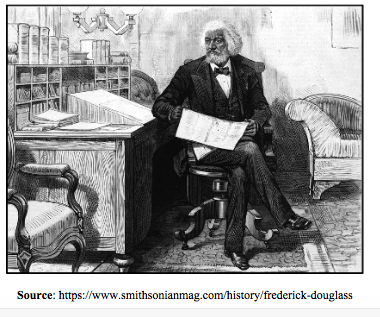
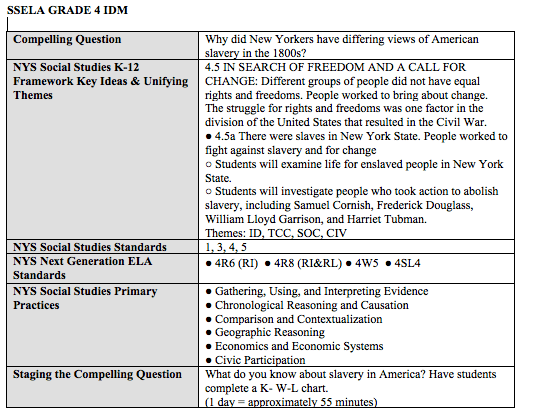
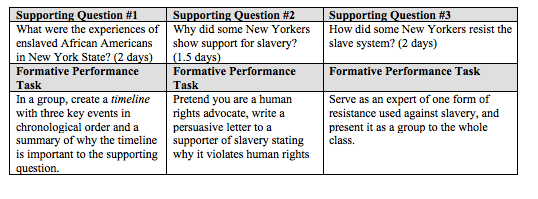
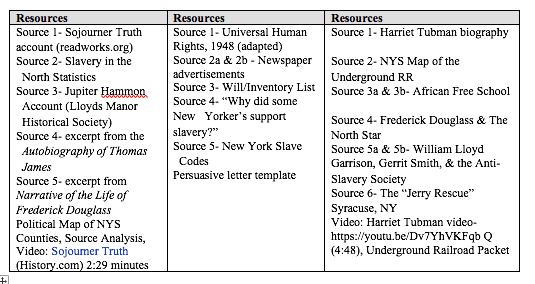

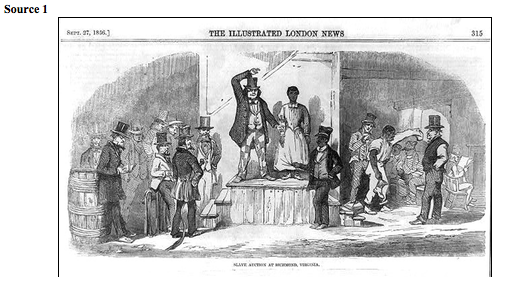
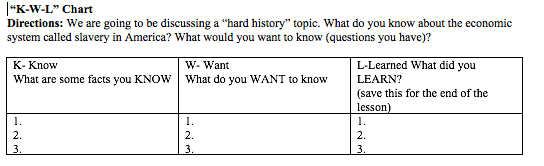
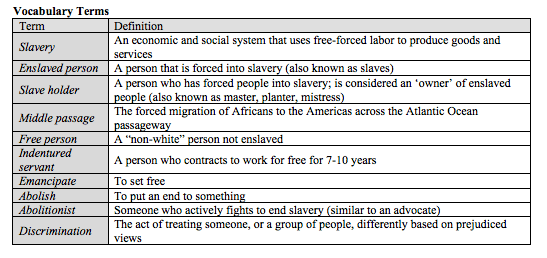
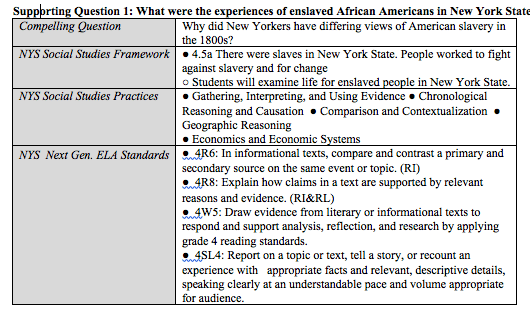
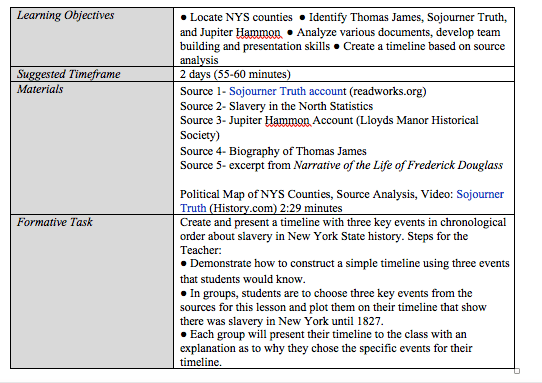
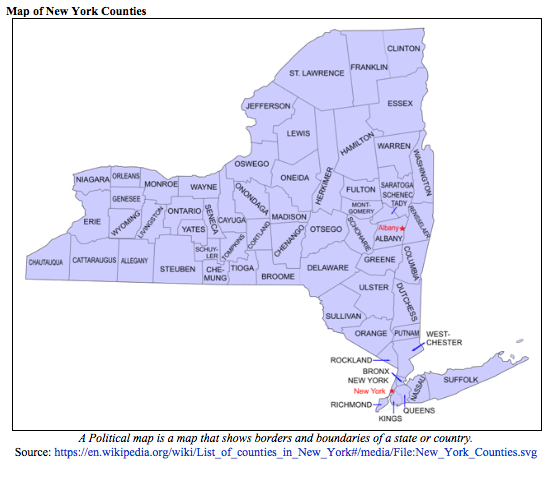
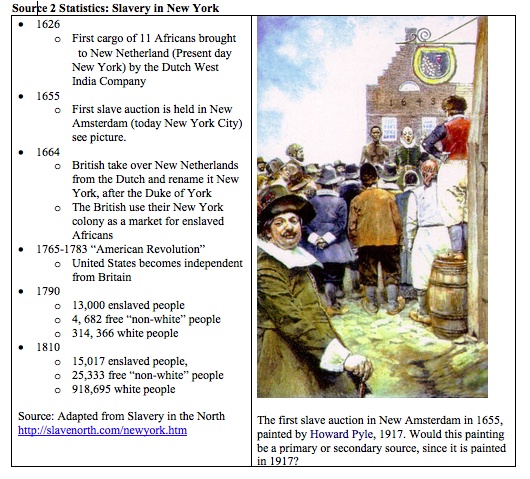
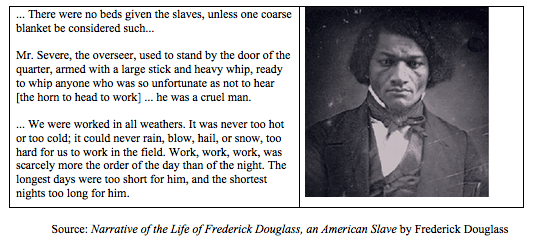
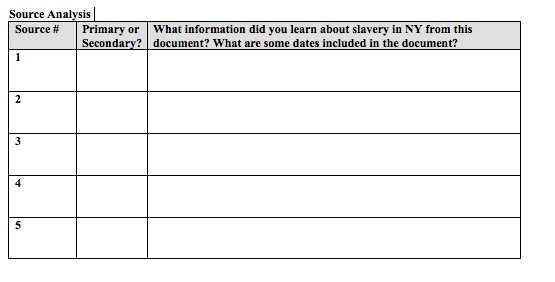
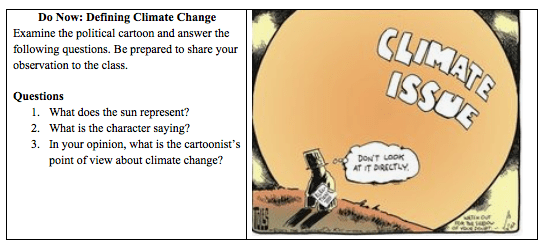
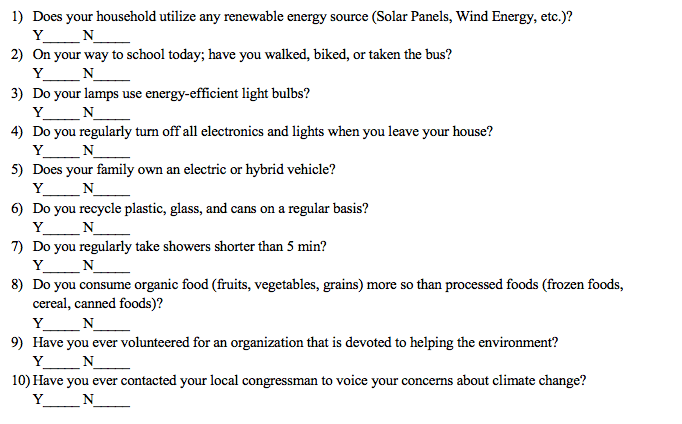
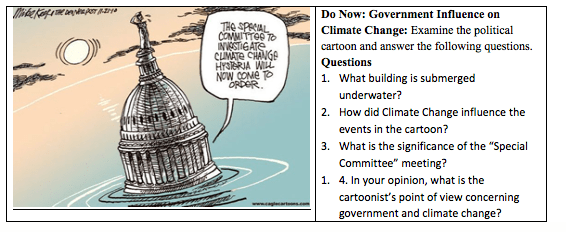


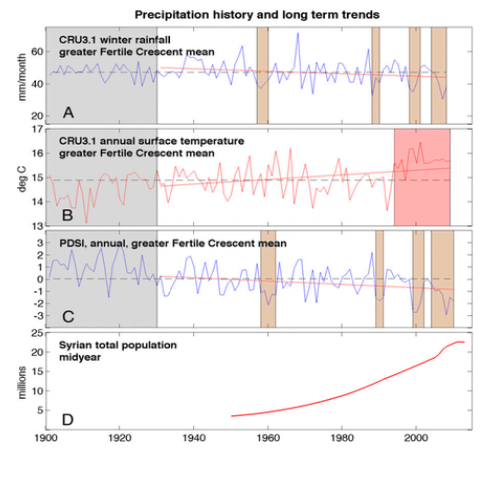
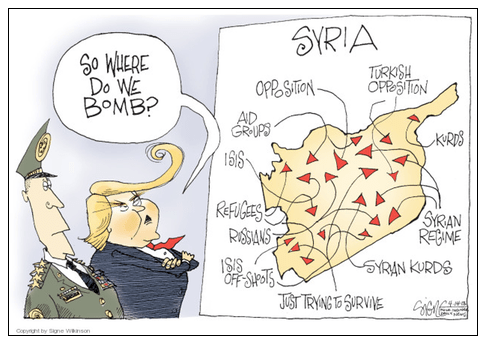


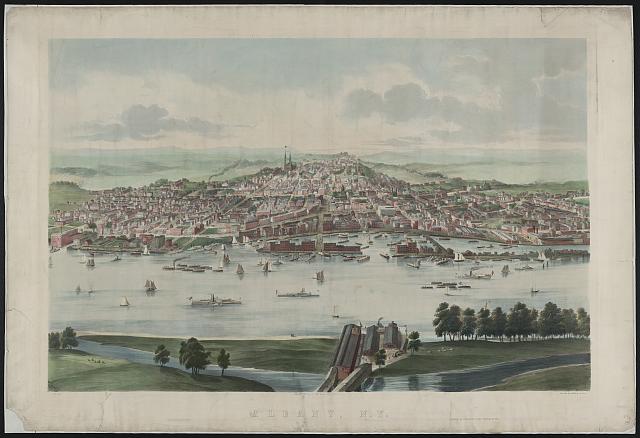

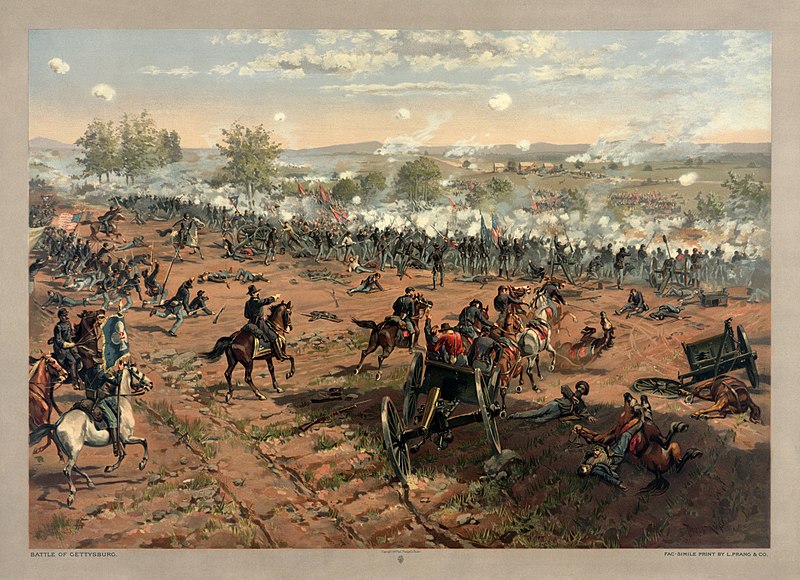

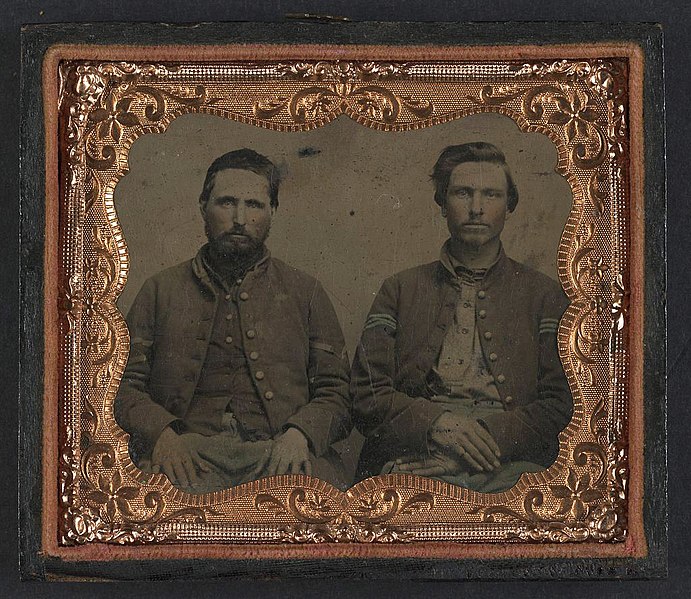
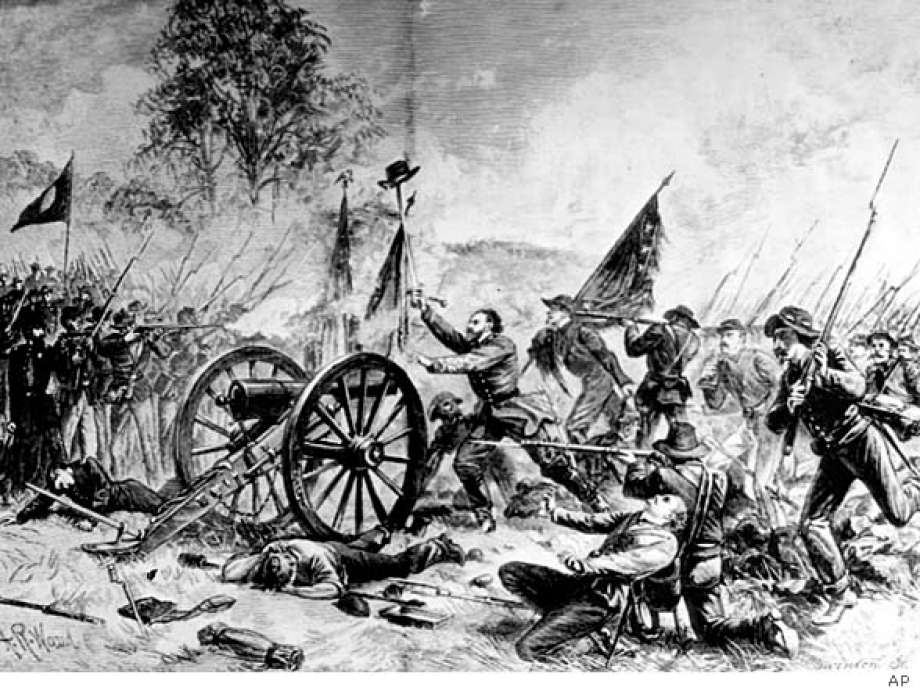
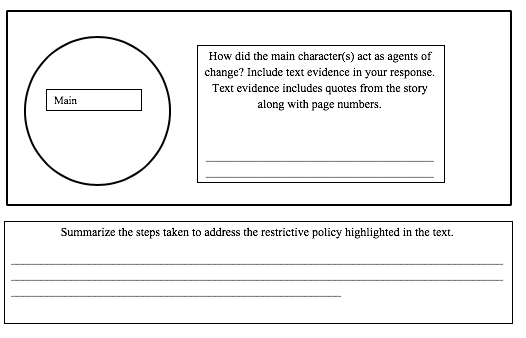
 njcssjournal