
A Brief History of the Third Reich: The Rise and Fall of the Nazis, by Martyn Whittock.
Reviewed by Thomas Hansen, Ph.D
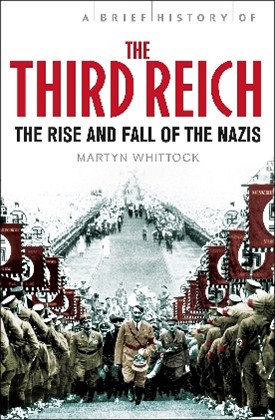
Martyn Whittock assembles here the accounts of what is what like to be a German and go through all the things that happened before, during, and after World War II. He includes stories from people coming from all walks of life, and he adds his own theories and ideas.
In 22 chapters, Whittock describes the economic, political, and spiritual life in Germany leading to the Nazis seizing power and discusses both German complacency and involvement in contributing to the party’s rise to leading the nation. Whittock talks a great deal about Hitler’s reasons and motivations leading to some of the worst decisions possible.
Hitler had a tendency to make very dramatic and quick decisions without listening to the advice of those who would try to help him, or help Germany, in times of crisis. Hitler tended to stretch resources too thin and to make decisions which caused other greater problems unforeseen.
Without giving away too much content, I will say that this book does include the strength of using so many different persons’ stories to give the reader different perspectives on how the Nazis were actually able to get as far as they did. It is important to continue to read such accounts to try to sort out what makes sense and what does not.
Whittock gives the reader a great deal of information on the concentration camps and on how they were run. He does give us a glimpse into the desperate lives of the Germans who assisted in the murders, as he does regarding all of the persons who helped Hitler come to power.
There was something in it for everyone, it appears, and Whittock attempts to explain how and why the Germans allowed the Nazis to take so much power. He also provides the death tolls and discusses the methods used for murdering the inmates. Whittock provides a full description of the murders and numbers. However, he also uses more contemporary examples of bloodshed such as the Rwanda murders.
Maybe this is done to show that murder on a huge scale is to be expected in the world? Nothing could compare to the Nazis’ slaughter of entire peoples and communities, so that idea is lost on this reader—and on most all readers, I would assume.
The reader can profit from trying to understand what happened in Germany during those say 50 years of time. Teachers can perhaps get a little better understanding of how to begin to explain what was going on in the minds of Germans who watched all of it.
This is important reading because of the different perspectives revealed here.
 njcssjournal